Long before the perfect, herbicide-green lawn became a suburban status symbol, many families looked at the plants underfoot and saw food, medicine, livestock forage, and free soil improvement.
Several “weeds” we now attack were once deliberately planted, harvested, or simply welcomed. Meet seven stubborn yard regulars your grandparents may have spared on purpose—and learn how to recognize them, what made them useful, and when leaving a patch alone is smarter than reaching for the weed puller.
1. White Clover Was Part of the Lawn, Not an Intruder
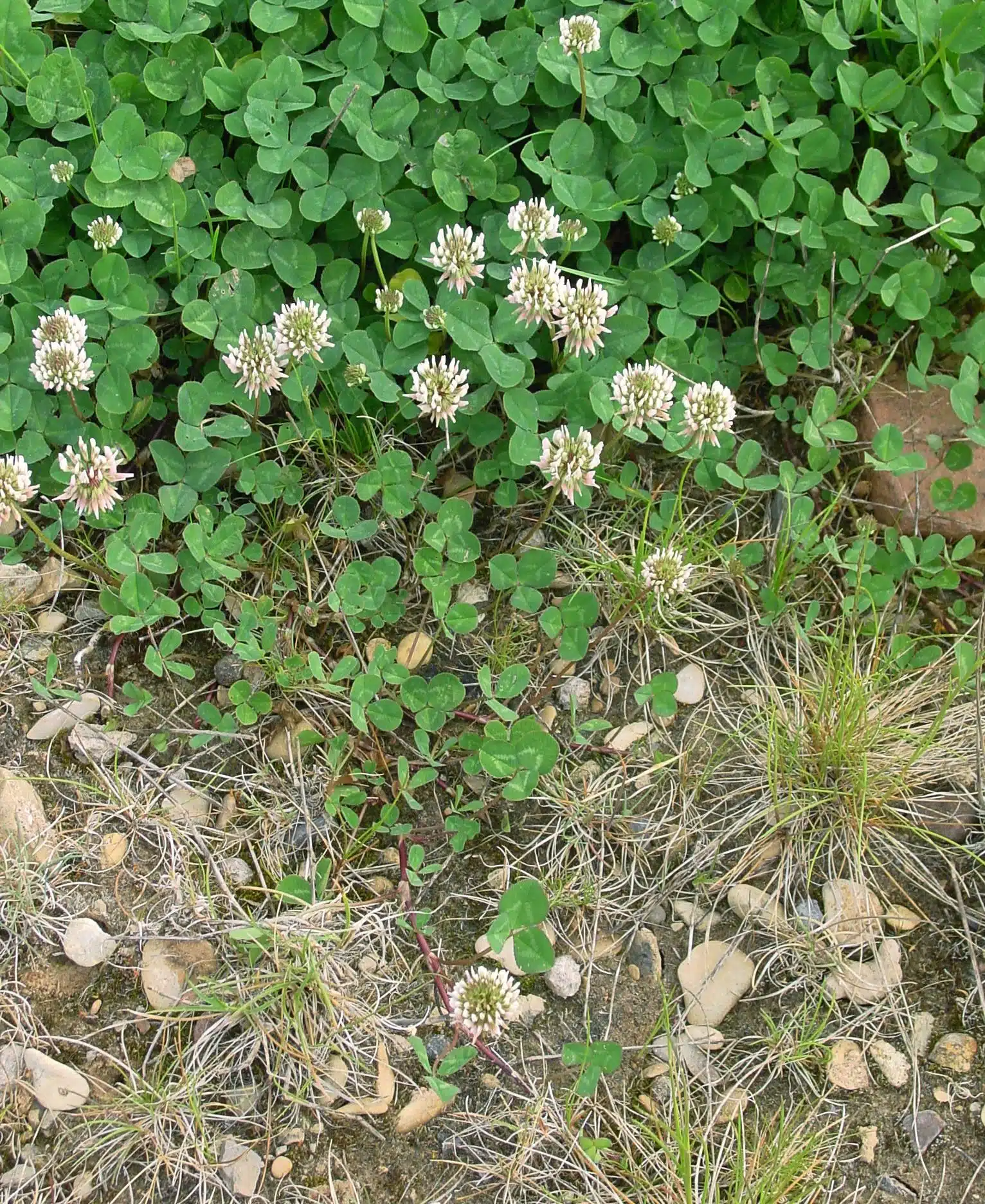
White clover’s fall from grace was not botanical. It was cultural. For years, it appeared in lawn seed mixtures because it filled gaps, stayed low, fed grazing animals, and helped grass grow.
Then broadleaf lawn herbicides became common in the mid-20th century. Those products killed clover along with plants people wanted gone. Instead of admitting that the chemical could not tell a useful clover from an unwanted broadleaf, the lawn industry increasingly sold homeowners on a new ideal: grass and nothing else.
Clover partners with bacteria in root nodules to capture nitrogen from the air. Some of that nitrogen becomes available to nearby grass as roots, leaves, and clippings break down, so a grass-and-clover lawn may need less added fertilizer.
Look for three rounded leaflets, often marked with a pale crescent or V, and ball-shaped flower heads that age from white or pinkish white to brown. Creeping stems, called stolons, root at their joints and turn one plant into a patch.
There is a tradeoff: flowering clover attracts bees. That is wonderful along a lawn edge and less convenient beside a barefoot play area. Mow the flowers in high-traffic zones and let them bloom where feet rarely land. For a deeper look at the plant, see our complete white clover guide.
2. Dandelions Were Pantry Plants With Excellent Timing

Dandelions arrived in North America with European settlers in the 1600s as useful plants, not accidental stowaways. Their bitter spring greens, flowers, and roots all found places in kitchens and household traditions.
The youngest leaves are the least bitter. They can be used fresh, while larger leaves are usually more pleasant when cooked. Flowers have been turned into fritters, jelly, syrup, and wine, and the roots have long been roasted for a dark, earthy drink.
A true dandelion forms a flat rosette of hairless, deeply toothed leaves. Each leafless, hollow flower stalk carries one yellow head and releases milky sap when broken. Several look-alikes produce branched flower stems or hairy leaves, so do not rely on color alone.
The plant’s long taproot helps it survive mowing and resprout after a hurried tug. That root also opens compacted ground and draws nutrients upward. Its early blooms can offer nectar and pollen when few other flowers are open, although dandelions are not a complete substitute for a diverse pollinator garden.
If you like the flowers but not the flying seeds, enjoy the yellow stage and clip the heads before they turn into puffballs. A small managed patch gives you the benefits without volunteering the whole yard.
3. Common Blue Violets Hid a Second Set of Flowers

A patch of violets under an old shade tree was once more likely to be admired than sprayed. Common blue violet is a North American native that can cover places where sun-loving turf never looks comfortable.
Its familiar spring flowers have five blue-purple petals, dark veins, and a pale throat. The leaves are heart-shaped to rounded with gently toothed edges, and the plant spreads by both rhizomes and seed.
Here is the clever part: violets produce a second type of flower that stays closed and fertilizes itself. Those small green flowers are easy to miss, but they still make seed. Ants help move the seeds after collecting a nutritious coating attached to them.
Common blue violet is also a host plant for fritillary butterfly caterpillars. Its flowers can decorate salads or be infused into vinegar and syrup.
However, violet leaves can be confused with other plants, including toxic lesser celandine. Beginning foragers should harvest only flowers they have positively identified. In the landscape, the simplest choice is often to keep violets in shady beds and thin them where they push into more formal turf.
4. Broadleaf Plantain Was the Sidewalk-Surviving Utility Plant

This is plantain the lawn plant, not the banana-like fruit. Broadleaf plantain thrives where soil is compacted and feet are frequent. Its low crown ducks under mower blades, while its tough leaf fibers tolerate trampling that thins nearby grass.
Identify it by the strong veins that run from the leaf base toward the tip. Wide oval leaves radiate from one central crown, and mature plants send up narrow, leafless spikes covered with tiny greenish flowers and seeds.
The youngest leaves have been eaten as cooked greens. Older ones become stringy enough to explain why the plant also supplied fiber for cordage and weaving. Plantain belongs to the same genus that gives us psyllium; when its seeds get wet, they develop sticky mucilage that helps them hitch rides.
Broadleaf plantain can produce thousands of seeds, so “keep it” does not have to mean “give it the driveway.” Remove seed spikes if you want a contained patch.
It is also a useful lawn clue. A large colony often points to compacted, damp, or thin turf. Fixing the soil and traffic problem does more lasting good than repeatedly pulling the messenger.
5. Chickweed Supplied Fresh Green Growth in Cool Weather

Chickweed does its best work when many garden plants are taking the season off. It germinates in cool weather, sprawls across moist soil, and can remain green through surprisingly cold spells.
The tender tips of correctly identified common chickweed have a mild, fresh flavor. They have long been added to salads and spring greens, especially before hot weather makes the plant tired and stringy.
Look closely before tasting. Common chickweed has small, opposite, pointed oval leaves and tiny white flowers. Each flower has five petals split so deeply that it appears to have ten. A single line of fine hairs runs along the stem and changes sides at the leaf joints—a wonderful hand-lens detail for experienced plant spotters.
The same creeping stems can root at their nodes, which is why one loose mat can become many plants. If chickweed is welcome only in one corner, harvest or pull it before seed capsules mature.
Chickweed also tells you something about the site: it favors cool, moist, often shaded ground. Where it repeatedly outcompetes lawn grass, the location may be better suited to shade plants or a mulched bed than to more grass seed.
6. Purslane Turned Hot, Dry Soil Into a Summer Vegetable

When summer heat makes lettuce sulk, purslane looks delighted. This sprawling annual stores water in its smooth, fleshy leaves and stems, allowing it to grow in compacted beds, gravel, and cracks that seem too dry for a salad green.
Purslane is a leafy vegetable with unusually high levels of alpha-linolenic acid, a plant-based omega-3 fat. Its crisp leaves and tender stems have a lightly tart, salty flavor and can be eaten fresh or cooked.
Common purslane has thick, spoon-shaped leaves, smooth reddish stems, and tiny yellow flowers. The plant lies flat and often radiates from a central point.
The important warning is spotted spurge, a common lawn weed that can grow in the same places. Spurge usually has thinner leaves, often with a dark spot, and broken stems release irritating white latex. Purslane is succulent and does not produce that milky sap.
Never eat from a mixed mat until every stem has been checked. Wear gloves when investigating an unknown plant and see our guide to plants that resemble safe garden favorites for a closer purslane-versus-spurge comparison.
If you do not want a permanent purslane patch, harvest before seed forms and remove cut pieces. Succulent fragments can stay alive long enough to reroot on damp soil—a trick worthy of a plant that treats a July driveway like prime real estate.
7. Lambsquarters Was Wild Spinach With a Quinoa Connection
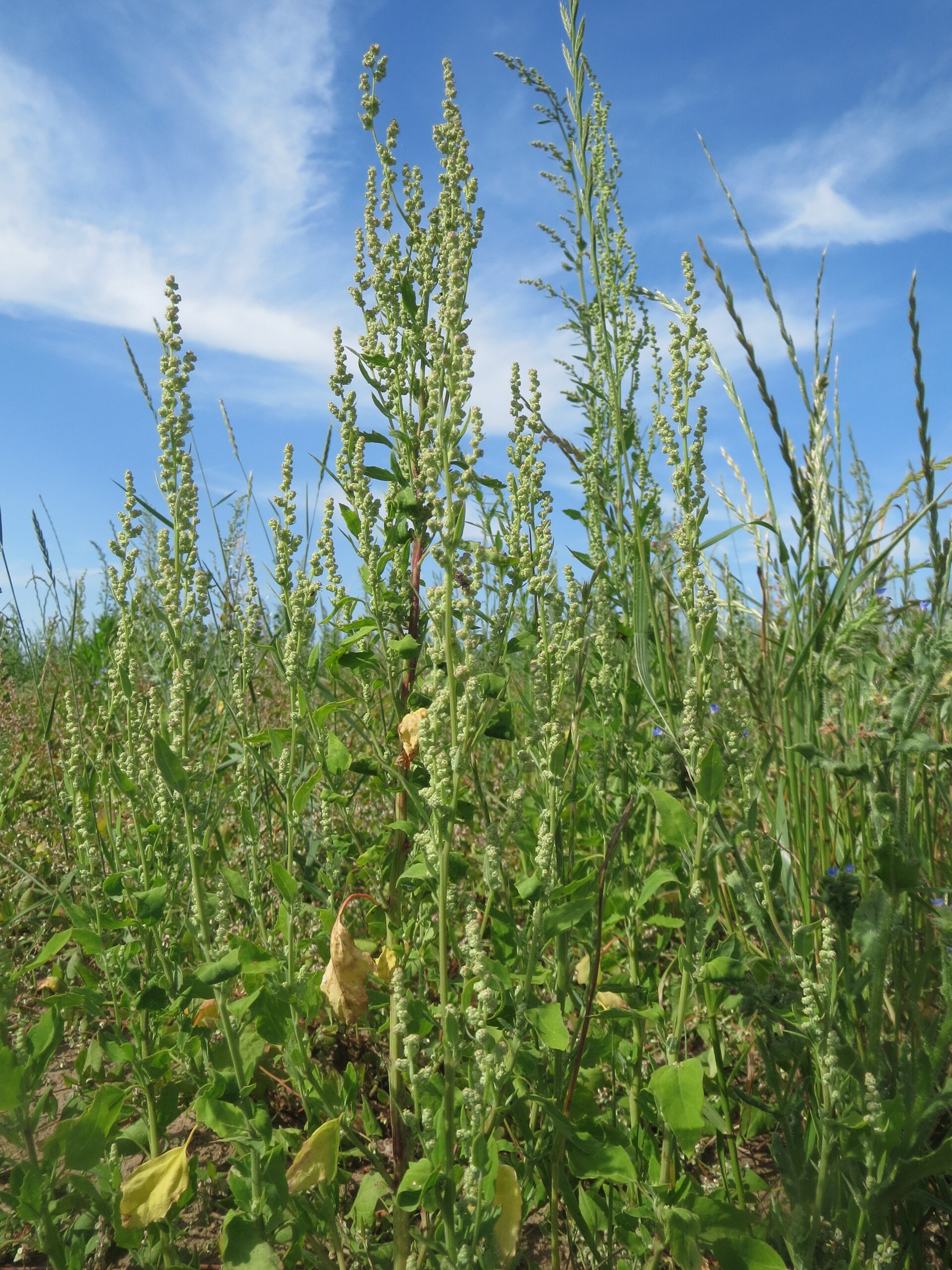
Lambsquarters appears in freshly disturbed garden soil with the confidence of a crop that planted itself. That is fitting: it is a close relative of quinoa, spinach, beets, and chard.
Young leaves and shoots have long been cooked as greens, earning the plant nicknames such as wild spinach. The flavor is mild, and regular picking encourages tender new growth.
Identification gets easier once you notice the surface. The newest leaves often look dusted with white meal or wax. Lower leaves may resemble a goose’s foot, with irregular teeth or lobes, while the upright stem can carry pink or red stripes.
Once mature, the plant may reach several feet and produce dense clusters of tiny green flowers. One plant can make tens of thousands of seeds, so the old kitchen-garden compromise was sensible: harvest a few young plants and pull the rest before they flower.
Like spinach, lambsquarters contains oxalates, and it can also accumulate nitrates—especially under stressful growing conditions. Cook it, eat moderate portions, and avoid making drought-stressed or heavily fertilized plants a regular food. People with kidney concerns or other diet restrictions should check with a healthcare professional first.
You do not have to surrender the garden to prove your grandparents had a point. Keep the useful patches where they make sense, prevent heavy seed set, and pull plants that crowd vegetables, invade paths, or create a safety problem.
The real lesson is not that every weed deserves a pardon. It is that “weed” is a job description, not a botanical identity. Before you yank the next volunteer, ask what it is doing, what it reveals about the soil, and whether it might be more useful than the bare spot it leaves behind.
Photo credits
- White clover: Trifolium repens IP.jpg by Leo Michels, CC0 1.0.
- Dandelion: Taraxacum officinale flower.jpg by Boboseiptu, CC BY 2.5.
- Common blue violet: Viola sororia common violet.jpg by Dcrjsr, CC BY 3.0.
- Broadleaf plantain: Plantago major.jpg by Iorsh, public domain.
- Common chickweed: 20150306Stellaria media.jpg by AnRo0002, CC0 1.0.
- Purslane: Purslane Portulaca oleracea.jpg by Bondigoldwiki, CC0 1.0.
- Lambsquarters: 20170613Chenopodium album.jpg by AnRo0002, CC0 1.0.


Images were resized and compressed for web delivery; no content edits were made. License links: CC0 1.0, CC BY 2.5, and CC BY 3.0.