The swan on the pond looks like it belongs on a postcard. The vine on the stone wall looks ready for a fall wreath. Neither comes with a warning label explaining what happened after somebody brought it here.
Massachusetts has a surprisingly crowded lineup of imported troublemakers hiding in familiar scenery.
From backyard experiments to shipboard hitchhikers, these 25 arrivals have changed our woods, waterways, gardens, and homes. Some are everywhere; others have more limited Massachusetts footholds.
Birds We Invited—and Kept
1. Mute Swan
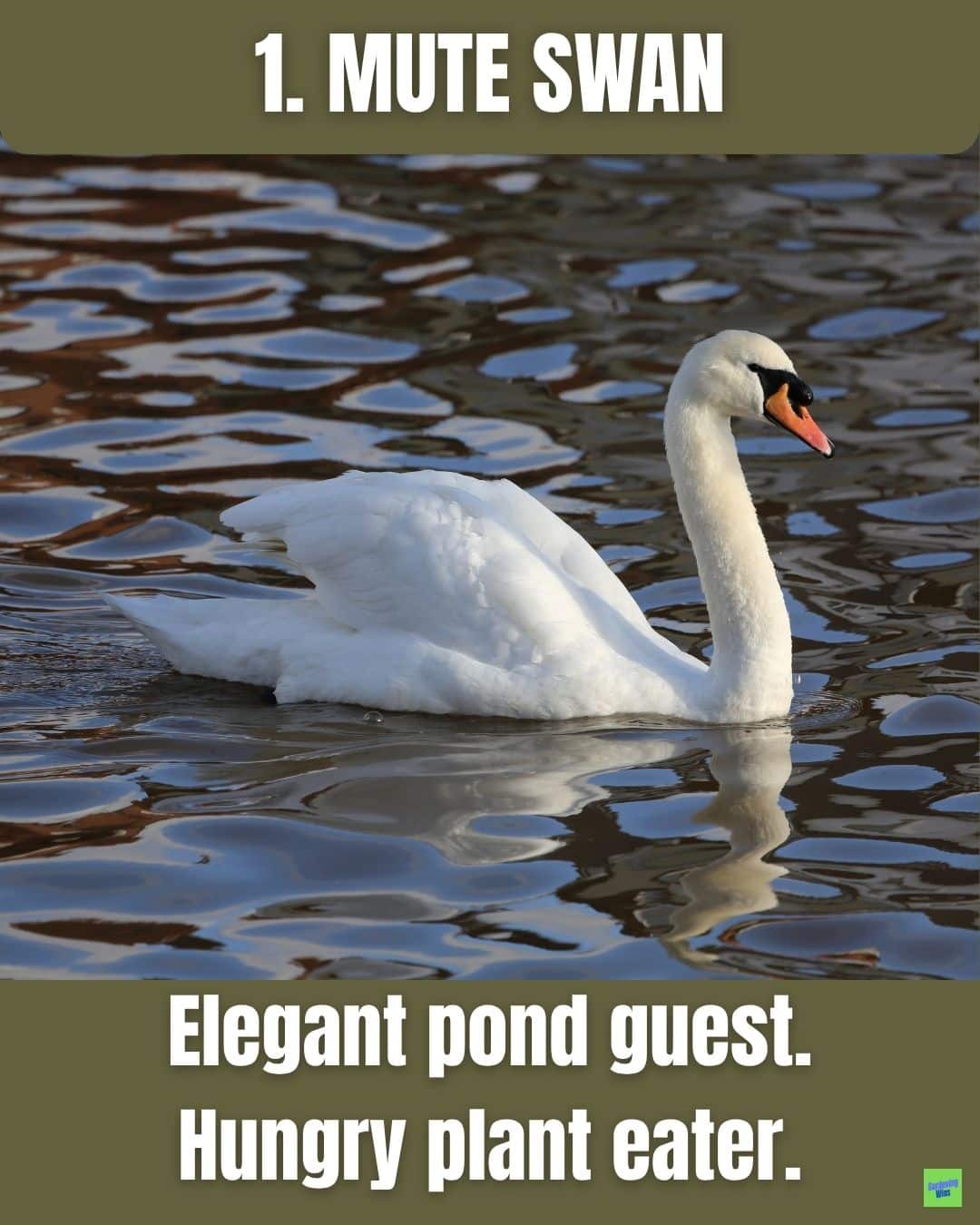
Cygnus olor
A mute swan can make an ordinary pond look like the grounds of an English estate. That was essentially the sales pitch: Americans imported these enormous white birds to decorate parks and private properties.
Massachusetts’ wild population probably descends from birds that escaped estates around Long Island and the Hudson Valley. By the 1960s, occasional nesting here was becoming something more permanent, especially in the southeast.
The orange bill and black knob help distinguish this familiar swan. Beneath that elegant exterior is a bird with a substantial appetite for aquatic vegetation, including plants growing in the Cape’s shallow ponds.
A picturesque flock can put serious pressure on a small pond’s plant life. The swans may improve the view while making the habitat poorer for less photogenic residents.
2. European Starling

Sturnus vulgaris
The starling’s American story includes an awkward detail: people kept trying to establish it. Worcester had an introduction attempt in 1884; Springfield’s Forest Park had another in 1897. Those early Massachusetts attempts apparently fizzled.
The successful New York population eventually spread here anyway. A bird was recorded in Essex County in 1908, and the species went on to occupy cities, suburbs, and farmland across the state.
In good light, the glossy plumage is spectacular. At nesting time, the manners are less appealing. Starlings compete for cavities and can take nesting places from native birds.
Their abundance has declined in Massachusetts, so this is no tale of an endlessly growing army. It is a reminder that a bird can become familiar enough to seem native without ever having started here.
3. House Sparrow

Passer domesticus
Boston welcomed house sparrows in 1858. The little birds were part of a nineteenth-century enthusiasm for importing help against the worms and caterpillars chewing city trees. A useful bird, people thought. Let’s have more.
Buildings, grain, and human leftovers suited them beautifully. Today, the brown birds inspecting crumbs outside a café are the descendants of a remarkably successful international relocation project.
The trouble comes when a sheltered hole becomes contested property. House sparrows can aggressively displace native cavity nesters, turning a well-intentioned birdhouse into a struggle over the lease.
Being small does not make a bird a gentle neighbor. Nor does every brown sparrow belong to this species: Massachusetts has plenty of native sparrows that deserve to keep their good names.
Small Insects, Long Shadows
4. Spongy Moth

Lymantria dispar
Few invasions have a Massachusetts origin story this uncomfortable. In 1869, Étienne Léopold Trouvelot was raising European moths in Medford as part of an effort associated with silk production. Some escaped.
The resulting problem outlived the experiment by generations. The caterpillars stripped trees, and by 1922 the pest had spread to every Massachusetts city and town. Today we call it the spongy moth.
The caterpillar stage does the eating. Oaks are favorite hosts, and repeated heavy defoliation, especially combined with drought, can leave trees declining or dead. A woodland can look disturbingly wintry in the middle of the growing season.
Populations rise and fall; fungi and other natural enemies can knock them back. A quiet year does not erase the astonishing legacy of one backyard escape.
5. Spotted Lanternfly

Lycorma delicatula
With spotted gray forewings and flashes of red underneath, the adult lanternfly looks too carefully decorated to be a nuisance. Then its sticky honeydew starts landing on the outdoor furniture.
This Asian insect travels well with people, including as inconspicuous egg masses attached to movable objects. By August 2025, Massachusetts had confirmed it in more than 50 cities and towns.

Lanternflies feed on plant sap. Grapevines and young saplings can suffer badly, while mature trees generally face much smaller risks. The most obvious backyard complaint is often the sticky mess.
They do not bite or sting people. The irritation is watching an attractive little insect turn the patio into something that feels as if somebody spilled soda everywhere.
6. Emerald Ash Borer

Agrilus planipennis
The emerald ash borer is a beautiful beetle with a dreadful résumé. Its metallic green adult is easy to admire; its larvae spend their time beneath ash bark, damaging the tissues the tree depends on.
Native to Asia, it was first discovered in North America in Michigan in 2002. Massachusetts’ first detection came in 2012, when a single adult turned up on a purple monitoring trap in Dalton.

Since then, it has spread widely across the Commonwealth. Our white, green, and black ash trees provide plenty of potential hosts, from forest stands to streets and yards.
The destructive work happens largely out of sight. By the time a homeowner notices a thinning crown or unusual bark damage, the infestation may already be well underway. That jewel-colored shell disguises an expensive tree problem.
7. Asian Longhorned Beetle

Anoplophora glabripennis
Worcester learned how much upheaval a beetle can cause in 2008. An Asian longhorned beetle infestation meant trees had to be inspected, infested trees removed, and wood movement restricted to keep the problem contained.
The likely route into the United States was wood packaging from Asia. A shipping crate is supposed to deliver what is inside it; this one came with the possibility of something living inside the wood itself.
The glossy black adult has white spots and extravagant antennae. Its larvae bore into hardwood trees, making this a far bigger concern than a few chewed leaves.
This is a localized Massachusetts infestation, not a beetle spread across every backyard. Boston’s separate infestation was eradicated. The Worcester-area effort continues, a costly demonstration of why early discoveries matter.
8. Winter Moth

Operophtera brumata
A moth fluttering around a porch light in December seems to have missed an important seasonal memo. Male winter moths really do fly in the colder months; the damaging green caterpillars arrive with spring growth.
Outbreaks appeared along Massachusetts’ eastern coast in the late 1990s, but the European invader was not definitively identified until 2003. Native look-alikes helped it hide in plain sight.
The caterpillars chewed buds and leaves on oaks, maples, apples, and other plants. Then researchers introduced a carefully selected parasitic fly, and the story changed.
Biological control dramatically reduced the damage without eradicating the moth. A little brown winter-flying moth is not automatically this invader; some native species look frustratingly similar.
9. Hemlock Woolly Adelgid

Adelges tsugae
The first clue can resemble tiny scraps of cotton caught beneath hemlock twigs. The white wool belongs to an insect so small that the packaging is much easier to notice than the animal.
The invasive eastern population of hemlock woolly adelgid came from Japan. Massachusetts detections date to the late 1980s, followed by a spread that has made it a statewide forest concern.
Adelgids feed at the bases of hemlock needles, draining resources and weakening trees. Infestations can travel on wind, animals, and infested nursery material; the insect does not need impressive wings to get around.
Losing hemlocks changes the character of an entire patch of woods. Their dense evergreen shade is part of what makes a hemlock stand feel cool and sheltered. Those little white tufts can be the beginning of a very different forest.
10. Brown Marmorated Stink Bug

Halyomorpha halys
There is a particular autumn indignity in finding a stink bug inside the house just as the outdoor mosquito season winds down. The brown marmorated stink bug is looking for somewhere protected to spend winter.
This Asian species was first noticed in the United States in Pennsylvania and became a Massachusetts arrival by 2007. It is now found across the state. Pale bands on the antennae help separate it from other shield-shaped bugs.
Indoors it is an unwelcome guest. Outside, its piercing mouthparts can scar developing fruits and vegetables, reducing the quality of apples, peaches, peppers, and other crops.
The smell is only the most memorable part of the problem. A bug crawling across a curtain is annoying; the same feeding damage repeated through an orchard has much bigger consequences.
Uninvited Company Close to Home
11. Jumping Worms

Amynthas spp.
Most gardeners were raised to consider an earthworm good news. Jumping worms complicate that lesson. Disturb one and it can thrash with an energy that hardly fits the usual image of a slow, helpful soil dweller.
Several related Asian species fall under the common name. They are increasingly reported in Massachusetts gardens and forests, where they consume the organic layer near the surface and change the soil’s structure.
Their spread often gets a lift from us. Soil, mulch, compost, and potted plants can carry adults or tiny cocoons, making an innocent plant swap a possible relocation service.
In a forest, rapidly consuming the leaf layer is no small favor. Nutrient loss and erosion can follow. A worm’s presence alone does not prove a problem, but the blanket rule that every earthworm improves every habitat needs retiring.
12. Norway Rat

Rattus norvegicus
Boston has been sharing space with Norway rats since the eighteenth century. By now, the relationship has generated enough frustration to require a formal city action plan, complete with surveys of parks, alleys, housing, and sewers.
The 2024 fieldwork found rats in neighborhoods across the city, with activity ranging from low to severe. These are established residents of a human-built ecosystem that supplies food, hiding places, and connected travel routes.
Our discarded meals help keep that system running. A rat does not need someone deliberately feeding it when a bag of restaurant scraps is waiting outside.
Control gets harder when the buffet stays open. The familiar brown rat is more than a startling movement beside a trash can: it damages property, contaminates food, and makes managing shared urban spaces considerably more expensive.
13. House Mouse

Mus musculus
A house mouse does not see a building the way its owner does. We see walls and doors. It finds the small unfinished gap around a pipe and treats the rest as a welcoming floor plan.
This Eurasian species has traveled with people and their supplies, thriving in houses and outbuildings. Massachusetts offers the same advantages that made it successful elsewhere: shelter, nesting material, and food stored in convenient containers.
An opening about a quarter-inch wide can be enough. Once inside, a mouse can gnaw cardboard, soft plastic, and other materials while contaminating food meant for people or pets.
The cereal box is particularly generous: packaging to chew and dinner behind it. Native deer mice are different animals, though both may enter buildings. The house mouse has made human company a specialty.
Plants That Outgrew the Welcome
14. Japanese Knotweed

Reynoutria japonica
The tall stand beside a driveway might get called bamboo, but Japanese knotweed belongs to the buckwheat family. Its hollow, jointed stems and broad leaves are convincing enough to cause years of neighborhood misidentification.
It arrived as an ornamental plant in the nineteenth century, valued for quick, dense growth. Anyone trying to create privacy could understand the appeal. Anyone trying to remove it later could explain the catch.
In Massachusetts it forms thickets along waterways, roadsides, and disturbed ground, shading out other vegetation. Underground rhizomes keep the colony going even after the tall stems die back.
Moving contaminated soil can move the problem. Small surviving fragments can regenerate, so a patch that looks cleared may be preparing its next appearance. The privacy screen has a remarkably persistent memory of where it was planted.
15. Oriental Bittersweet

Celastrus orbiculatus
The red-and-yellow fruits look tailor-made for a fall wreath. Oriental bittersweet’s ornamental appeal was recognized long before people fully appreciated what the vine could do after escaping cultivation.
Its Massachusetts paper trail runs through the Arnold Arboretum, which received a plant in 1879 and later praised its colorful fruit. The exact earlier introduction story is less tidy than many retellings suggest.
Birds and people spread the seeds. Once established, the woody vine climbs, wraps around stems, and blankets other vegetation. A decorative vine can become a tree-smothering load.
Native American bittersweet is a different species. One useful clue is fruit placement: the invasive kind carries clusters along the stems, while the native species bears them at branch tips. That cheerful roadside color deserves a second look before it comes home.
16. Purple Loosestrife

Lythrum salicaria
A wetland full of purple loosestrife is easy to photograph and surprisingly easy to misread. What looks like an abundance of wildflowers may actually be one aggressive species replacing a much more varied plant community.
This Eurasian perennial reached North America through more than one route, including ship ballast and deliberate ornamental planting. Its tall magenta spikes made a strong argument for keeping it around.
The argument weakens when dense stands crowd out native sedges, grasses, and flowers. A wall of one attractive plant can offer poorer habitat than the messy mixture it replaced.
Massachusetts has used specialist beetles to help suppress it, with a state biocontrol project beginning in 2000. That is the less visible story behind the flowers: people trying to restore variety to a wetland that became too purple.
17. Garlic Mustard

Alliaria petiolata
Garlic mustard’s name gives away part of its appeal. Crush the leaves and the scent suggests something that belongs near a kitchen. It was likely brought to North America for food or medicinal use.
The first United States record dates to Long Island around 1868. In Massachusetts woods, it now competes with the spring wildflowers that briefly take advantage of sunlight before the tree canopy closes.
Its two-year schedule makes it easy to underestimate. The first year brings a low cluster of leaves; the second sends up flowering stems with small white, four-petaled blossoms and, eventually, many seeds.
One spring’s modest-looking plants can supply another season’s invasion. A green woodland floor is not necessarily a diverse woodland floor. Sometimes the plant filling the gaps is steadily making those gaps less available to everything else.
18. Japanese Barberry

Berberis thunbergii
Japanese barberry can be a piece of landscaping history still spreading long after the house disappears. Around the Quabbin, researchers linked scattered populations to larger stands near the cellar holes of former homesteads.
The species’ documented American introduction goes back to seed sent to Boston’s Arnold Arboretum in 1875. Attractive fruit and dense growth later helped make it a familiar ornamental shrub.
Birds can carry the seeds beyond the garden. In Massachusetts forests, barberry can dominate the understory, producing thorny tangles and leaving less space for native herbs, shrubs, and young trees.
A shrub planted for one property can outlast the property itself. The small leaves and bright berries are pleasant enough from a distance. Trying to walk through a dense patch provides a much more convincing explanation of the problem.
19. Water Chestnut

Trapa natans
Water chestnut’s Massachusetts history includes a botanical garden and an escape into the Charles River. It was growing at Harvard in 1877; by 1879, it had escaped cultivation and was growing in the river.
The floating rosettes can look like little green decorations on the surface. Given room to spread, they knit together into dense mats that crowd other aquatic plants and make paddling or boating difficult.

Below that attractive surface is another surprise: hard fruits armed with sharp projections. The plant can create trouble both afloat and along the shore. Old fruits can linger after the summer greenery is gone.
This is the invasive floating water chestnut, not the crunchy vegetable sold in cans. The shared name has probably done more for its innocent image than the actual plant deserves.
A Different Crowd in the Water
20. European Green Crab

Carcinus maenas
The green crab has been here so long that it can feel like standard New England scenery. It arrived on the Atlantic coast from Europe in the early nineteenth century and was recorded around Martha’s Vineyard by 1841.
Shipping helped move it beyond its native range. Massachusetts’ sheltered coastal waters offered prey and habitat, and the crab established itself as a persistent part of the shoreline food web.
Its menu is the problem. Green crabs eat shellfish, including clams, and can put heavy pressure on the young animals that would otherwise help replenish beds.
A small crab can be a large problem when there are enough of them. The damage is easy to miss from a beach towel: the interesting little creature scuttling past is also a determined shellfish predator.
21. Asian Shore Crab

Hemigrapsus sanguineus
Look beneath a shoreline rock and the little square-bodied crab may be an Asian shore crab. Its mottled shell and banded legs belong to a species that was first recorded in North America in New Jersey in 1988.
The likely initial ride was ship ballast water. By 1995, its documented range already reached Sagamore at the Cape Cod Canal, and it went on to become abundant along rocky shores.
These crabs eat small intertidal animals and compete with other shore residents. They can even displace green crabs in some habitats, a reminder that one invader does not necessarily welcome the next.
The busy world under a rock can change without the beach looking different. A childhood tide-pool memory and today’s tide pool may contain very different casts, even when the same boulders are still there.
22. Zebra Mussel

Dreissena polymorpha
Zebra mussels turn solid surfaces into crowded real estate. Rocks, docks, boat equipment, and water intakes can acquire layers of small shells, each animal attached and filtering food from the water.
Native to eastern Europe, they likely reached the Great Lakes in ship ballast water during the 1980s. Smaller boats and water-holding equipment then helped create opportunities for them to reach other waters.
Massachusetts’ established populations include Laurel Lake in Lee and Lenox, its outlet Laurel Brook, and the Housatonic downstream of that brook. They are not established in every Massachusetts lake.
Dense colonies can clog equipment and interfere with native mussels. The clearer water their filtering sometimes produces is deceptive: removing that much suspended food changes the food web. A lake looking cleaner does not automatically mean it is healthier.
23. Asian Clam

Corbicula fluminea
A small, ridged shell in a freshwater lake seems easy to dismiss. Asian clams do not need to be imposing individually; rapid reproduction and dense populations are enough to make them troublesome.
The species spread through the United States after early West Coast records. Its original arrival is often linked to food use, although that explanation should not be mistaken for a fully documented account of every introduction.
Massachusetts has established populations, including Webster Lake and Tispaquin Pond. Young clams and contaminated equipment or water can travel unnoticed, helping a local infestation become somebody else’s problem.
Large numbers compete for food with native aquatic animals and can foul water-handling equipment. The shell’s raised concentric ridges are worth noticing. Something small enough to overlook can still help reorganize a lake from the bottom up.
24. Common Carp

Cyprinus carpio
The common carp was not simply a stowaway. Americans asked for it. After earlier imports and fish farming, the federal fish commission began distributing carp into the wild in 1877 as a useful food fish.
It was an understandable idea with consequences. Hardy fish that tolerate a wide range of water conditions are very good at surviving after people lose enthusiasm for the original plan.
Carp became established in Massachusetts waters, including the Merrimack. Their feeding can disturb the bottom and uproot aquatic vegetation, changing the conditions used by native fish and other wildlife.
The same persistence that appealed to fish promoters made the carp hard to undo. Anglers may admire the fight of a big one, while habitat managers see the effects of a population that was actively encouraged to settle in.
25. Carpet Sea Squirt

Didemnum vexillum
It looks less like an animal than something spilled on a dock line. Carpet sea squirt, or Didemnum vexillum, forms pale, leathery colonies made of many tiny animals living together.
Its likely native home is the northwest Pacific. Shipping is a suspected part of its journey, and Massachusetts records include Woods Hole, Buzzards Bay, and offshore banks. The exact travel itinerary remains less certain than the creature’s presence.
The colony spreads across hard surfaces and can overgrow shellfish and other marine life. It has also fouled aquaculture gear and cultivated bay scallops around Martha’s Vineyard.
It changes the surface other animals have to live on. A coating on a rope might look like a routine waterfront mess; across shellfish gear or the seabed, that same habit becomes a much more consequential renovation.
These arrivals did not all come here the same way, and they do not cause the same problems. What they share is a knack for using the opportunities people provide: a garden bed, a shipment, a boat, or an open food supply. Recognizing them makes familiar Massachusetts scenery a little less anonymous.
Photo Credits
Identification cards include cropped photographs, added titles and impact text, and the Gardening Wins logo. Adaptations of ShareAlike photographs are available under CC BY-SA 4.0; original licenses are linked below. The Gardening Wins name and logo remain trademarks. Detail photographs are resized but otherwise unchanged.
1. Mute Swan: Geni; source photograph; CC BY-SA 4.0.

2. European Starling: Charles J. Sharp; source photograph; CC BY-SA 4.0.
_Leek_Wootton.jpg)
3. House Sparrow: Hobbyfotowiki; source photograph; CC0.
,_Amrum.jpg)
4. Spongy Moth: Ryan Hodnett; source photograph; CC BY-SA 4.0.
_Caterpillar_-_Kitchener,_Ontario.jpg)
5. Spotted Lanternfly: Cbaile19; source photograph; CC0.
_adult_in_Pittsburgh,_2022-07-23,_01.jpg)
5. Spotted Lanternfly detail: Cbaile19; source photograph; CC0.
_late-stage_nymph_in_Pittsburgh,_2022-07-23,_01.jpg)
6. Emerald Ash Borer: Benjamin Smith from United States; source photograph; CC BY 2.0.
_(12127981265).jpg)
6. Emerald Ash Borer detail: ImagePerson; source photograph; CC BY 4.0.

7. Asian Longhorned Beetle: Pudding4brains; source photograph; Public domain.

8. Winter Moth: Ermell; source photograph; CC BY-SA 4.0.
_focus_stacking-20230508-RM-131624.jpg)
9. Hemlock Woolly Adelgid: Beatriz Moisset; source photograph; CC BY-SA 4.0.

10. Brown Marmorated Stink Bug: David R. Lance, USDA APHIS PPQ; source photograph; CC BY 3.0 us.

11. Jumping Worms: Njh5880; source photograph; CC BY-SA 4.0.
.jpg)
12. Norway Rat: Chuck Homler d/b/a Focus On Wildlife; source photograph; CC BY-SA 4.0.
_also_called_Norway_Rat_or_Common_Rat_-with_food_container_-_Mathias_Baldwin_Park,_Philadelphia,_Pennsylvania,_USA.jpg)
13. House Mouse: Андрей Перцев 1967 at Russian Wikipedia; source photograph; CC0.

14. Japanese Knotweed: Tulipasylvestris; source photograph; CC0.

15. Oriental Bittersweet: Cbaile19; source photograph; CC0.

16. Purple Loosestrife: Robert Flogaus-Faust; source photograph; CC BY 4.0.

17. Garlic Mustard: Robert Flogaus-Faust; source photograph; CC BY 4.0.

18. Japanese Barberry: Dominicus Johannes Bergsma; source photograph; CC BY-SA 3.0.

19. Water Chestnut: Agnieszka Kwiecień, Nova; source photograph; CC BY-SA 4.0.

19. Water Chestnut detail: Étienne Dupuis; source photograph; CC BY-SA 3.0.

20. European Green Crab: Hans Hillewaert; source photograph; CC BY-SA 4.0.

21. Asian Shore Crab: Chuck Homler d/b/a Focus On Wildlife; source photograph; CC BY-SA 4.0.
_Little_Egg_Harbor_Township,_New_Jersey,_USA.jpg)
22. Zebra Mussel: Ryan Hodnett; source photograph; CC BY-SA 4.0.
_Shells_-_Long_Point,_Ontario_2013-04-26_(01).jpg)
23. Asian Clam: USFWS Mountain-Prairie; source photograph; Public domain.
.jpg)
24. Common Carp: George Chernilevsky; source photograph; CC BY-SA 4.0.

25. Carpet Sea Squirt: U.S. Geological Survey/photo by Dann Blackwood (USGS); source photograph; Public domain.
