For decades, homeowners have been taught to see white clover as a lawn problem. Its round leaves interrupt the grass. Its flowers attract bees. Its creeping stems refuse to stay inside neat boundaries.
But white clover may be one of the most useful plants already growing in your yard.
It can create its own usable nitrogen, cover bare soil, feed pollinators, and remain green with less attention than many lawn grasses. That does not make it perfect. Clover can spread into unwanted areas, struggle in deep shade, and turn a barefoot play lawn into a busy feeding ground for bees.
The trick is understanding what white clover does well—and deciding whether those qualities fit the way your family uses the yard.
Meet the Plant Hiding in Plain Sight

White clover, or Trifolium repens, is a low-growing perennial in the pea family. It originated in Europe and parts of Asia but is now common in lawns, parks, roadsides, pastures, and disturbed ground across much of North America.
The word repens means creeping, which describes the plant perfectly. White clover sends slender stems called stolons across the soil. Those stems can form new roots wherever a node touches the ground.
That is why one small clover plant can slowly become a wide patch without appearing to grow especially tall.
How to Recognize White Clover
Most leaves contain three rounded leaflets. Each leaflet often has a pale crescent or V-shaped marking, although the marking can be faint or missing.
The round flower heads are made from dozens of tiny pea-shaped flowers. Fresh flowers are usually creamy white, sometimes with a pink tint. Older flower heads gradually turn brown.

White clover commonly grows between 3 and 12 inches tall, depending on moisture, mowing, soil, and competition from surrounding plants. Regular mowing keeps it lower, but the plant can still flower on short stems.
Clover Was Not Always Considered a Lawn Weed
White clover was once a valued ingredient in lawn seed mixtures. It helped lawns stay green without repeated fertilizer applications and filled spaces between grass plants.
That changed as broadleaf lawn herbicides became common during the 1950s. The chemicals killed clover along with the weeds homeowners were trying to remove. A clover-free lawn eventually became the look many people expected.
Today, that expectation is changing again. Gardeners interested in pollinators, reduced fertilizer use, and lower-maintenance yards are deliberately adding clover back into their grass.
Why White Clover Can Be So Helpful to a Lawn

White clover has a skill that ordinary lawn grass does not: it can work with soil bacteria to capture nitrogen from the air.
Bacteria called rhizobia live inside small nodules on the clover’s roots. The bacteria convert atmospheric nitrogen into a form the plant can use. In exchange, the clover supplies the bacteria with sugars produced through photosynthesis.
This does not mean clover immediately pumps free fertilizer into every grass plant around it. Much of the nitrogen first supports the clover itself. More becomes available to neighboring plants as roots, leaves, and lawn clippings break down.
Over time, a healthy grass-and-clover lawn may need less supplemental nitrogen fertilizer than a lawn made entirely from grass.
It Covers Soil That Grass Leaves Exposed
White clover’s creeping growth helps it move into thin areas where grass has struggled. Its leaves shade the soil, soften the appearance of bare patches, and reduce the amount of open ground available to new weed seedlings.
It can be especially useful along informal paths, around garden edges, and in sunny areas where the lawn is thin but not completely barren.

Clover Can Reveal a Struggling Lawn
A large clover patch may indicate that the surrounding grass is dealing with low nitrogen, compacted soil, drought stress, or general thinning. Clover can tolerate some of those conditions better than turfgrass, so it expands while the grass retreats.
That does not mean clover proves your soil is deficient. It is a clue, not a laboratory test. A soil test is still the best way to learn what the ground actually needs.
It Can Stay Green Through Short Dry Periods
In many climates, established clover remains green after shallow-rooted grass begins to fade. Its low leaves shade the ground, and rooted stolons allow the plant to draw moisture from several points.
However, white clover is not drought-proof. Long periods of extreme heat and dry soil can cause thinning, dormancy, or bare patches. It performs best when occasional rainfall or irrigation returns before the soil becomes severely dry.
It also tolerates casual walking better than many delicate groundcovers, but it is not ideal for a heavily used sports lawn, a dog run, or a narrow path that receives constant traffic.
White Clover Turns an Ordinary Lawn Into a Pollinator Buffet

One clover flower head may look like a single bloom, but it is actually a cluster of many tiny flowers. Together, those flowers supply nectar and pollen to honeybees, bumblebees, and other visiting insects.
White clover can bloom from spring into early fall when moisture and temperatures are favorable. That long flowering period makes it especially useful during weeks when few garden flowers are open.
A lawn containing clover will never support the same range of wildlife as a diverse native garden, but it offers considerably more food than a closely mowed lawn containing nothing but grass.
The Bee Benefit Comes With a Tradeoff
Flowers that attract bees can create trouble in areas where children run barefoot, people regularly sit on the grass, or a family member has a serious sting allergy.

You do not have to choose between a flowerless lawn and clover everywhere. A practical compromise is to keep clover flowering along the edges of the yard while mowing it more frequently around swings, pools, patios, and play spaces.
Mowing removes current flowers but does not usually kill established clover. New flower stems may appear as the plant regrows.
Avoid Spraying Blooming Clover
Do not apply insecticides or broadleaf lawn treatments to flowering clover while bees are actively visiting. Some products can harm pollinators directly, while others may leave residues on flowers.
When a necessary lawn treatment is permitted by the product label, mowing off the flowers first can reduce pollinator exposure. Always follow the label’s timing, temperature, watering, and safety directions.
The Downsides You Should Know Before Encouraging It
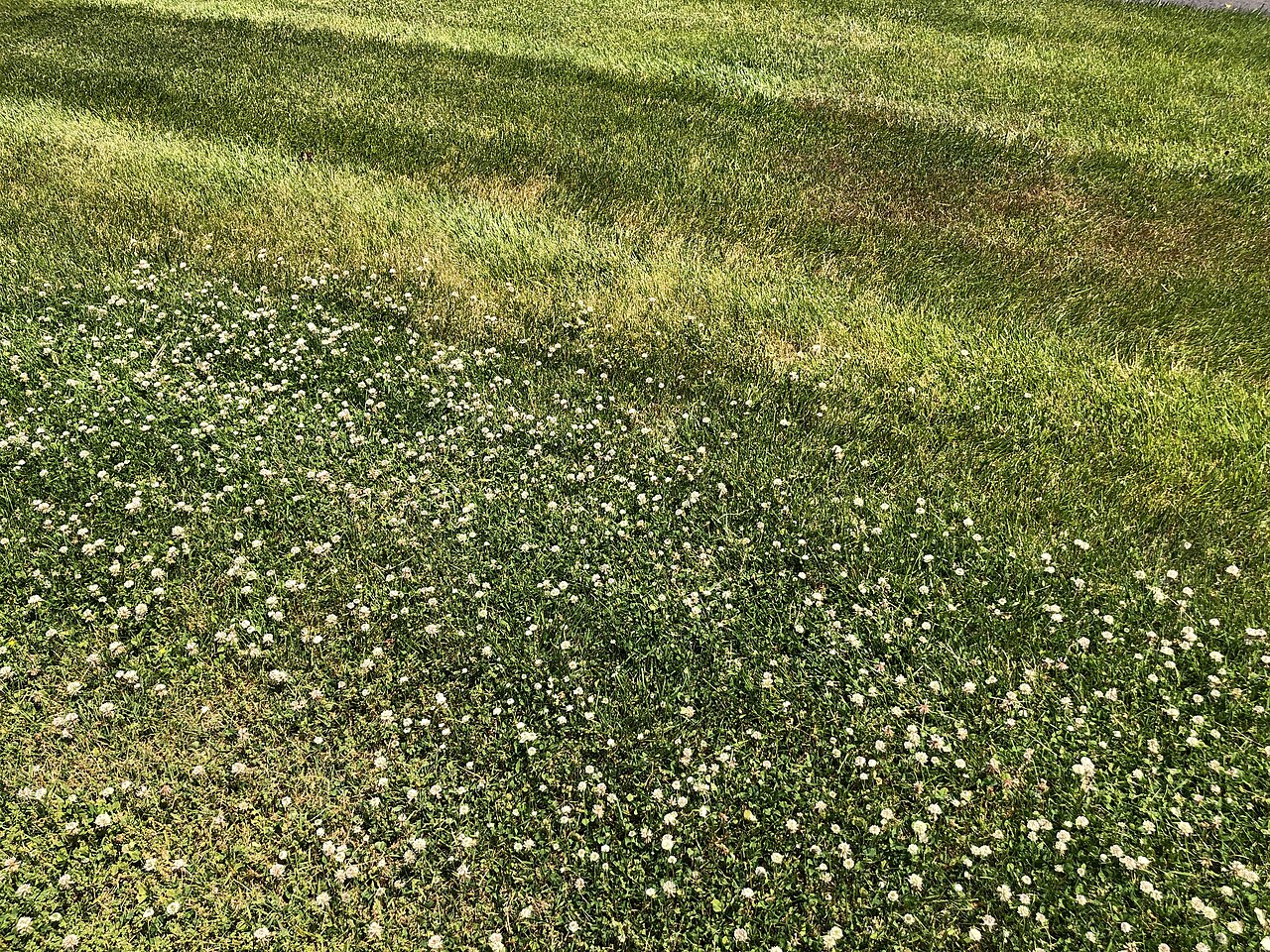
White clover is useful, but it does not create a perfectly even carpet. It commonly forms round or irregular patches that stand out from the surrounding grass.
The contrast becomes more noticeable during heat, drought, or winter dormancy. Clover and grass do not always decline or recover at the same speed, which can leave a mixed lawn looking temporarily uneven.
White clover also spreads beyond the place where you first notice it. Stolons can creep across loose soil and enter garden beds, especially where mulch is thin or ornamental plants are widely spaced.
It Does Not Thrive Everywhere
White clover performs best in cool to moderate conditions with reasonable moisture and at least partial sun. It may survive light shade, but flowering usually declines as shade becomes heavier.
Deep shade, waterlogged soil, constant heavy traffic, and prolonged extreme heat can all produce disappointing results.

Is White Clover Safe Around Dogs and Cats?
Ordinary contact with a clover lawn is not generally treated like contact with a highly poisonous landscape plant. However, pets should not be encouraged to graze heavily on any unfamiliar plant.
Eating plant material can cause vomiting, diarrhea, or stomach discomfort in dogs and cats. Some white clover plants can also produce cyanogenic compounds as a natural defense, although severe poisoning in small animals from casual yard exposure appears uncommon.
Call a veterinarian if a pet eats a large amount or develops drooling, vomiting, weakness, breathing changes, tremors, or unusual behavior. Bring a sample of the plant, but do not rely on a photograph alone for identification.
Lawn chemicals may present a more immediate risk than the clover itself. Keep pets off treated areas for the full period stated on the product label.
Do Not Confuse White Clover With Every Plant Called “Clover”
Alsike clover, red clover, sweet clover, and white sweet clover are different plants with different risks. Moldy sweet clover can cause severe bleeding problems in livestock, while alsike clover is associated with serious illness in horses.
Advice written for a backyard white clover lawn should never be applied to horse pasture, hay, silage, or livestock feed.
Can People Eat White Clover?
White clover has a history of limited food use, and you may see its flowers or leaves included in foraging recipes. That does not make every clover patch safe to eat.
Never consume a plant identified from one photograph. Avoid plants growing near roads, treated lawns, drainage areas, or places contaminated by pet waste. Anyone considering regular use should confirm the identification with a qualified local expert and discuss medical or medication concerns with a healthcare professional.
White Clover, Microclover, and Red Clover Are Not the Same Thing

Seed packages use several clover names, and the differences matter.
Dutch white clover is the familiar creeping plant found in many lawns. It spreads by stolons, produces plenty of flowers, and may form obvious patches.
Microclover Is Still White Clover
Microclover is not a separate species. The name is used for dwarf selections of Trifolium repens, including cultivars bred to have smaller leaves, a lower growth habit, and fewer flowers.
It usually blends into turf more evenly than ordinary Dutch white clover, making it appealing to homeowners who want a lawn-like appearance with some nitrogen-fixing benefits.
Microclover does not always remain miniature. Leaf size can increase when the plant is shaded, under-mowed, stressed, or growing in especially favorable soil. It may also flower more than advertising photos suggest.
The seed is generally more expensive, and many microclover lawns still need occasional reseeding after severe heat, drought, or winter damage.

Red Clover Is Taller and Less Lawn-Like
Red clover, or Trifolium pratense, is a different species. It grows taller, has elongated leaflets, and produces pink to purple flower heads.
It is widely used in pastures, cover-crop plantings, and pollinator areas, but it does not form the same low creeping mat as white clover. Frequent lawn mowing can weaken it and prevent it from showing its best growth.
Which One Should You Plant?
- Choose Dutch white clover for an informal, inexpensive, flowering lawn with visible clover patches.
- Choose microclover when you want smaller leaves and a more uniform grass-and-clover mixture.
- Choose red clover for a taller pollinator planting, pasture mixture, or seasonal cover crop—not a closely mowed front lawn.
How to Plant, Maintain, or Remove White Clover

Before buying seed, decide whether you want a few clover patches, a mixed grass-and-clover lawn, or a lawn dominated almost entirely by clover.
For most yards, a mixed lawn is the most forgiving choice. Grass helps hold the lawn together during periods when clover is dormant or stressed, while clover fills gaps and contributes nitrogen.
When to Sow Clover
White clover seed germinates best during cool, moist weather. Early spring and early fall are dependable planting windows in many cool-season lawn regions.
Gardeners in hot climates should use local extension guidance. Seedlings need enough time to establish before severe summer heat or winter cold arrives.
Prepare the Lawn for Tiny Seeds
- Mow the existing grass shorter than usual.
- Rake away loose thatch and dead material.
- Core-aerate compacted areas when appropriate.
- Spread seed over exposed soil rather than thick grass blades.
- Press or roll the seed gently into the surface.
- Do not bury white clover seed deeply.
Clover seed is extremely small. Mixing it with a dry carrier such as sand can make hand spreading easier, but a properly adjusted seed spreader is more reliable for large lawns.
Follow the rate printed on the seed package. Rates differ dramatically between pure clover lawns, microclover products, pasture plantings, and mixtures containing mostly grass.
As one example, University of Minnesota bee-lawn guidance uses about 1.1 ounces of Dutch white clover per 1,000 square feet when it is combined with a much larger amount of fine fescue. That rate should not be treated as a universal recipe for every lawn or seed product.

Keep the Surface Moist During Germination
Newly planted clover needs consistent moisture near the soil surface. Water lightly as needed so the seedbed stays damp without becoming muddy or washing the seeds into piles.
Once the plants are established and sending out new stolons, watering can become deeper and less frequent. Established plants may still need help during extended heat or drought.
Mow a Mixed Lawn Around 2½ to 3 Inches
A moderate mowing height lets grass and clover grow together without repeatedly scalping either plant. Avoid removing more than one-third of the total height at one mowing.
Frequent mowing reduces the number of flowers. Less frequent mowing produces more blooms and more bee activity.
Heavy nitrogen fertilizer encourages grass to grow aggressively and may eventually crowd out clover. Base fertilizer decisions on a soil test rather than applying nitrogen automatically.
How to Keep Clover Out of Garden Beds
- Maintain a clear physical edge between lawn and beds.
- Use an adequate layer of mulch over open soil.
- Pull wandering stolons before they root at several nodes.
- Fill empty bed space with desirable plants.
- Remove flower heads before seeds mature when spread is becoming a problem.
How to Remove Clover From a Grass Lawn
Small patches can be dug or hand-pulled, but remove the rooted runners as well as the center of the plant. Any rooted section left behind may continue growing.
For long-term control, improve the density of the grass. Correct mowing problems, relieve compaction when needed, overseed thin areas, and use a soil test to guide fertilization.
When herbicide is truly necessary, choose a product labeled for white clover and for your particular grass species. Spot treatment is usually preferable to spraying the entire lawn.
Do not spray blooming patches while bees are visiting. Read the complete label, observe temperature restrictions, protect nearby garden plants, and keep children and pets away for the required period.
Before removing every patch, take one more look at the yard. If the clover is green, flowering, and filling ground where the grass keeps failing, it may already be doing the job that area needs.
Image Attributions
Meet the Plant Hiding in Plain Sight
- “White Clover Flowers Trifolium Repens シロツメクサ” by Greg Peterson, licensed under CC BY-SA 3.0.
- “White clover (Trifolium repens) in a backyard lawn” by NY State IPM Program at Cornell University, licensed under CC BY 2.0.
.jpeg)
_in_a_backyard_lawn_(14442094141).jpg)
Why White Clover Can Be So Helpful to a Lawn
- “Root Nodules on White Clover” by Rosser1954, licensed under CC BY-SA 4.0.
- “White Clover patches on the ‘lawn’” by M J Richardson, licensed under CC BY-SA 2.0.


White Clover Turns an Ordinary Lawn Into a Pollinator Buffet
- “Honey Bee on White Clover” by James Mann, licensed under CC BY 2.0.
- “Bee Pollinating White Clover in Shimla district-1” by Sapna Sony, licensed under CC BY-SA 4.0.
.jpg)

The Downsides You Should Know Before Encouraging It
- “A lawn with white clover next to a herbicide-treated lawn” by Famartin, licensed under CC BY-SA 4.0.
- “Trifolium repens in lawn with sparrow” by Forest and Kim Starr, licensed under CC BY 3.0 US.

.jpg)
White Clover, Microclover, and Red Clover Are Not the Same Thing
- “Trifolium pratense and Trifolium repens, red and white clover within meadow” by Rowan Adams, licensed under CC BY-SA 4.0.
- “Red Clover (Trifolium pratense) – MacGregor Point Provincial Park” by Ryan Hodnett, licensed under CC BY-SA 4.0.

_-_MacGregor_Point_Provincial_Park.jpg)
How to Plant, Maintain, or Remove White Clover
- “White Clover (49194791437)” by Lawn Weeds, licensed under CC BY 2.0.
- “White clover flowers along Glen Taylor Lane” by Famartin, licensed under CC BY-SA 4.0.
.jpg)
