Most people think a useful herb garden requires raised beds, perfect soil, and a sunny backyard. It does not.
Several familiar herbs can grow beside a kitchen window, on an apartment shelf, or beneath an inexpensive grow light.
Some can be picked for tea, cooking, soothing aromas, or simple home preparations. The surprising part is how little room the easiest ones actually need.
You do not need to start with twelve pots, either. Two healthy herbs that you use every week are far more valuable than a crowded windowsill filled with struggling plants.
Before You Start: The Five Things That Matter

- Light: Most herbs need a bright window or a grow light to remain compact and productive.
- Drainage: Every container needs a drainage hole. Decorative pots can hide a smaller nursery pot inside.
- Soil: Use fresh container potting mix, not heavy soil dug from the yard.
- Water: Check the soil with your finger instead of watering every plant on the same schedule.
- Patience: Begin with young plants if waiting for slow seeds to germinate sounds frustrating.
A bright south- or west-facing window is usually the best starting point.
If the stems stretch toward the glass or the new leaves become small and pale, the plant is probably asking for more light.
An inexpensive grow light can turn a dim shelf into a productive growing area.
A Word of Caution: A fresh culinary herb is not the same thing as a concentrated extract, supplement, tincture, or essential oil. “Natural” does not automatically mean harmless. Check with a health professional before using herbal products if you take medication, are pregnant or nursing, have serious allergies, or are managing a medical condition. Never delay medical care because an herb is available on the windowsill.
1. Peppermint: The Herb That Practically Grows Itself

Peppermint is the plant that can make a first-time gardener feel unusually talented.
Give it a bright window, a container with drainage, and reasonably consistent water, and it will usually respond with armfuls of fragrant leaves.
It should have its own pot. Mint spreads through underground stems and can crowd slower herbs out of a shared planter. Indoors, that aggressive growth becomes an advantage because frequent harvesting rarely seems to bother it.

Fresh leaves can be added to water, chopped into fruit salad, or steeped in hot water for a simple mint tea.
Pinch the stem just above a pair of leaves. Two new shoots will often grow near the cut, creating a fuller plant instead of one long, floppy stem.
Keep the soil lightly moist but never swampy. Mint is more forgiving of damp soil than rosemary or thyme, but its roots still need air.
Peppermint tea and peppermint essential oil should not be treated as interchangeable products.
The oil is highly concentrated and can cause side effects or interact with certain medicines. Peppermint may also aggravate heartburn in some people, so more is not always better.
2. Lemon Balm: A Fresh Lemon Scent Without a Citrus Tree

Brush your fingers across lemon balm and the leaves release a fragrance that seems far too citrusy to come from a member of the mint family.
It smells fresh, clean, and slightly sweet without requiring the room needed for an indoor lemon tree.
Lemon balm handles container life well. Give it bright light and water when the top layer of soil begins to feel dry.
It can tolerate slightly less intense light than rosemary, although weak light may make its stems long and thin.

Regular pinching is the secret to an attractive plant. Snip the growing tips before the stems become tall and awkward.
The young leaves usually have the brightest aroma and can be used in tea, cold drinks, salads, and fruit dishes.
Lemon balm has a long history as a relaxing evening herb.
That does not mean a cup of tea should be presented as a treatment for anxiety or insomnia. Think of it as a pleasant bedtime ritual rather than a replacement for professional care.
The plant may eventually produce tiny white flowers. Removing the flower stalks encourages continued leaf growth, while leaving a few flowers gives the plant a softer, more natural appearance.
3. Basil: The Fast-Growing Beginner Favorite

Basil gives beginners something they can harvest quickly.
It grows fast, responds visibly to pruning, and can go from a small starter plant to a leafy kitchen centerpiece in surprisingly little time.
Place basil in the brightest warm window you have.
Cold drafts, chilly glass, and soggy soil can make it collapse quickly. Unlike rosemary, basil does not want to become completely dry between waterings.

When a stem has several sets of leaves, pinch it just above a leaf joint.
This encourages branching and gives you more tender tips to harvest later. If flower spikes appear, remove most of them unless you want to see the delicate white blossoms.
Grocery-store basil pots often contain a crowded clump of seedlings.
They look impressively full on the shelf but may begin competing with one another at home. Carefully separating the clump into two or three pots can keep the plants productive longer.
Basil is best treated as both food and a useful aromatic herb. Add fresh leaves to sauces, eggs, soups, sandwiches, and salads.
The leaves can also be steeped, but concentrated basil oil is a very different product and should not be swallowed simply because the fresh plant is edible.
4. Thyme: A Small Plant With an Intense Flavor

Thyme delivers an impressive amount of flavor from a plant that barely occupies any room.
A small pot can sit on a narrow windowsill and still provide enough sprigs for roasted vegetables, soups, chicken, sauces, and tea.
The biggest mistake is giving thyme the same treatment as mint.
Thyme prefers brighter light, sharper drainage, and slightly drier soil. Let the upper portion of the potting mix begin to dry before watering thoroughly.

Harvest flexible green tips rather than cutting deeply into old bare wood.
Small, regular harvests help the plant stay compact. Avoid removing more than roughly one-third of the healthy growth at one time.
Thyme has been used traditionally in teas and throat preparations, but a kitchen plant should not be advertised as a treatment for an infection.
A warm cup of thyme tea may be comforting, while an illness that is severe, worsening, or lingering still deserves medical attention.
If thyme looks wilted while the soil remains wet, do not automatically add more water.
Constantly damp roots are often the real problem. Improve drainage, increase airflow, and allow the soil to dry slightly.
5. Rosemary: The Herb People Usually Kill With Kindness

Rosemary does not normally fail because its owner forgot about it. It fails because someone watered it every time they walked past.
This Mediterranean herb wants strong light, moving air, and fast drainage. A plain clay pot can help excess moisture escape. Water deeply, empty the saucer, and then wait until the soil has begun drying before watering again.

Harvest soft stem tips and remove the leaves by sliding your fingers down the stem.
Rosemary is useful with potatoes, bread, beans, chicken, roasted vegetables, and infused cooking liquids. A single small plant can provide plenty because the flavor is strong.
Rotate the pot every week so all sides receive light.
Keep the foliage away from freezing window glass, especially during winter nights.
The scent of crushed rosemary can make a kitchen feel instantly fresher, but rosemary essential oil should not be treated like a stronger version of the leaves.
Do not casually swallow it or apply it undiluted to skin.
6. Sage: A Few Leaves Go a Long Way

Sage looks different from almost everything else on the windowsill.
Its thick, slightly fuzzy leaves have a silvery cast, and even one leaf can carry enough flavor for an entire dish.
Give sage a sunny position and a container that drains freely. Let the upper soil dry between waterings.
Wet leaves, stale air, and constantly damp soil can encourage disease, so avoid crowding it between larger plants.

Young leaves can be used with poultry, squash, beans, browned butter, stuffing, and roasted vegetables.
Extra leaves dry well, although the flavor becomes concentrated. Start with less than you think you need.
Sage has also appeared in traditional throat and digestive preparations, but research has not clearly proven it as a treatment for any health condition.
Common sage contains thujone, which can be harmful in large amounts. Food-level use is very different from high-dose, long-term use or swallowing sage essential oil. Sage supplements may also be inappropriate during pregnancy.
7. Oregano: More Than a Pizza Herb

Oregano is usually shaken from a jar after the pizza has already arrived.
Fresh oregano is sharper, greener, and far more interesting—and the living plant is remarkably undemanding.
Place it in strong light and use a potting mix that does not remain wet for days.
Oregano handles occasional dryness better than constant saturation. Regular trimming keeps the stems from becoming long, bare, and woody.

Snip leafy tips for pasta sauce, beans, eggs, marinades, roasted vegetables, and salad dressing.
Fresh oregano is powerful, so taste as you go instead of using the same volume you would use with a mild herb such as parsley.
The leaves have a history of use in traditional teas, but the most aggressive health claims usually involve concentrated oregano oil.
That oil is not the same as a few leaves in food, and it should not be promoted as a substitute for antibiotics or other prescribed treatment.
If you allow a few stems to bloom, oregano produces delicate flowers that make the plant far prettier than its reputation as a dried seasoning suggests.
8. Chamomile: Grow Your Own Tea Flowers

Chamomile changes the rhythm of an indoor herb garden.
Instead of harvesting leaves, you wait for cheerful daisy-like flowers with white petals and rounded yellow centers.
German chamomile is a good choice for tea and is commonly grown as an annual.
The seeds are extremely small. Press them gently against moist seed-starting mix rather than burying them deeply, then give the seedlings abundant light as soon as they emerge.

Pick the flower heads when the petals are fully open.
They can be used fresh or spread in a single layer to dry before storage. Frequent picking may encourage the plant to continue producing flowers.
Chamomile is closely associated with bedtime tea, but research has not established that it reliably treats insomnia.
People with allergies to ragweed, daisies, chrysanthemums, or related plants may be more likely to react to chamomile. It can also interact with some medications.
Chamomile may not live forever on a windowsill. That is not a failure.
Save or buy seed and start another small pot when the original plant begins declining.
9. Ginger: The Herb Growing Beneath the Soil
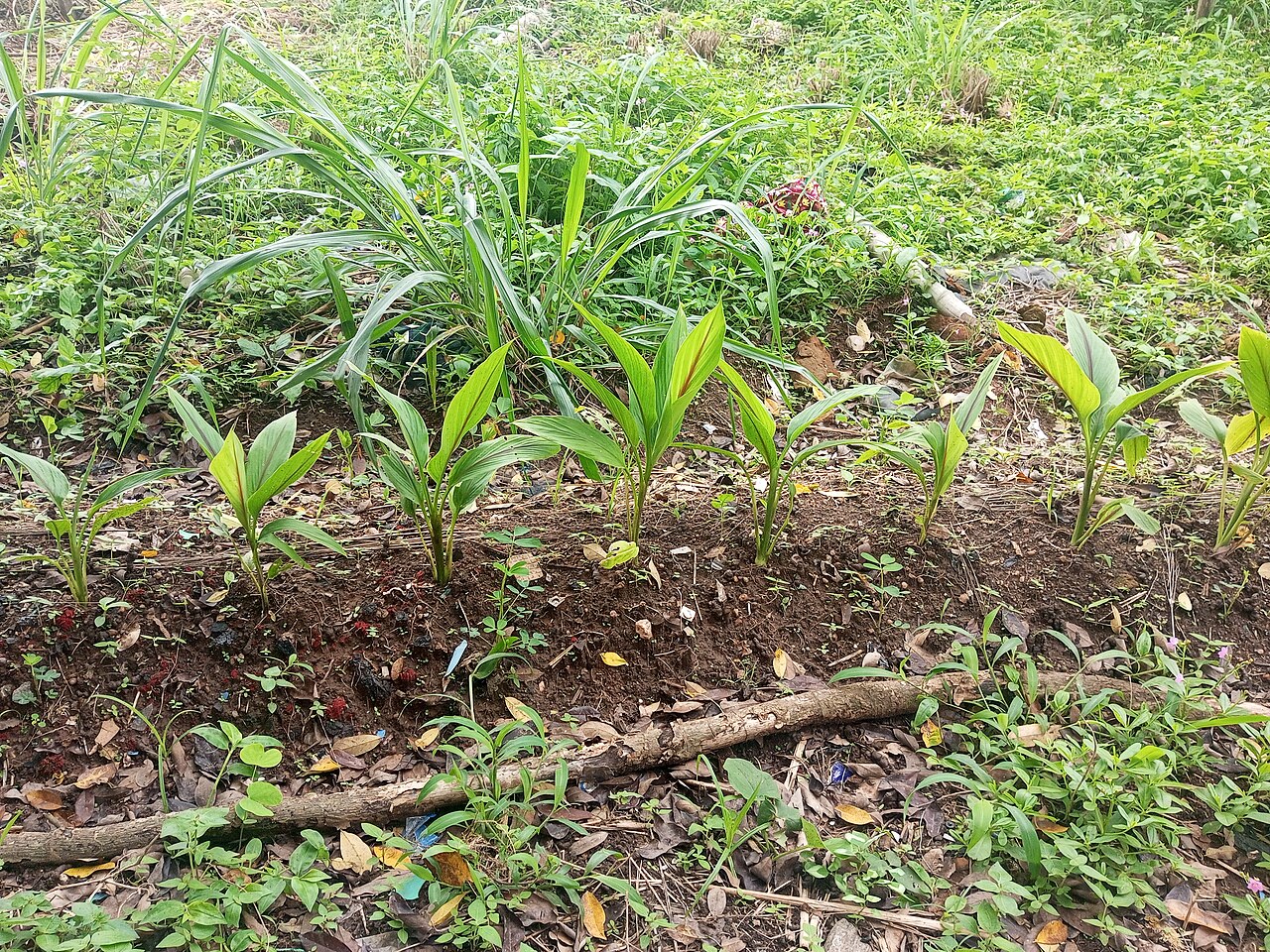
Ginger is the oddball of the windowsill garden.
The useful portion develops beneath the soil while narrow green shoots rise above it, making the pot look almost like a small tropical houseplant.
Start with a firm piece of ginger rhizome that has one or more visible buds.
Set it horizontally in a wide container and cover it lightly with potting mix. A wide pot is more useful than an extremely deep one because ginger expands sideways.

Keep the pot warm and give it bright, indirect light.
Water enough to keep the mix from becoming bone dry, but do not leave it waterlogged. Ginger is slower than basil or mint, so this is the plant for someone willing to wait.
Once the plant is established, carefully uncover an outer edge of the rhizome and remove a small piece while leaving the rest to continue growing.
Fresh ginger can be grated into tea, soup, stir-fries, sauces, and baked goods.
Research suggests ginger may help with certain kinds of nausea, but it is not a cure for every upset stomach.
It can cause heartburn, diarrhea, mouth irritation, or abdominal discomfort in some people and may interact with medications.
10. Parsley: The Useful Herb People Treat Like Decoration

Parsley has spent decades being pushed to the edge of dinner plates and ignored.
A living plant makes its usefulness harder to miss. Fresh parsley can brighten eggs, potatoes, soup, pasta, beans, sauces, salads, and almost any rich meal.
Flat-leaf parsley generally has a stronger flavor, while curly parsley creates a compact, decorative plant.
Both appreciate bright light, a reasonably deep pot, and soil that stays lightly moist without remaining soggy.

Harvest the outer stems near the base and leave the younger center growth in place.
This produces useful bunches and keeps the plant looking full.
Parsley seed can be slow and inconsistent, which makes a young nursery plant the less frustrating choice for beginners.
Gardeners who do start from seed should keep the mix consistently moist while waiting for germination. Parsley can be grown indoors when it receives sufficient light and drainage.
Parsley is nutritious, but it is not a magical “detox” plant.
Use it generously as food rather than expecting a handful of leaves to cleanse the body or replace medical treatment.
11. Chervil: The Underrated Choice for a Cooler Window

Chervil is what you grow after realizing the herb world is much larger than basil and mint.
Its delicate leaves resemble parsley, but the flavor is softer, with a faint note of anise.
It is especially useful for a home that lacks a blazing south-facing window.
Chervil prefers cooler conditions and can struggle in intense heat. An east-facing window with good morning light may suit it better than the hottest place in the house.

Use chervil fresh in eggs, salads, soft cheeses, potatoes, soups, and light sauces.
Add it near the end of cooking because long exposure to heat can erase its gentle flavor.
Chervil is not a long-lived houseplant.
Sow a small amount every few weeks instead of expecting one pot to remain perfect indefinitely. When it begins producing flower stems, the leaves may become less tender.
Because chervil resembles other members of the carrot family, do not use a photograph to identify wild plants for eating.
Grow seed or starts obtained from a trustworthy source and keep the label with the pot.
12. Calendula: A Bright Flower With a Long Herbal History

Calendula earns its space by doing something none of the leafy herbs can:
it fills the windowsill with brilliant orange and yellow flowers.
Look for seed labeled Calendula officinalis, sometimes called pot marigold.
The common name can be confusing because several unrelated flowers are also called marigolds. Do not assume every orange garden flower is the same plant.

Calendula grows best with strong light.
Remove fading flowers before they form seed if you want the plant to keep producing new buds. The petals can be harvested when the flowers are fully open and spread out to dry.
Correctly identified, pesticide-free calendula petals are sometimes used as a colorful garnish.
The plant also has a long history in skin preparations, although a homemade product should not be presented as a proven treatment.
Patch-test topical preparations on a small area first.
Do not place homemade salves on deep wounds, serious burns, infected skin, or unexplained rashes that need medical attention. People who react to plants in the daisy family should use additional caution.
The Easiest Three-Pot Starting Lineup
Trying to grow everything at once makes it harder to learn what each plant needs.
Start with three separate pots and expand after those plants begin producing reliably.
- For the easiest useful garden: Peppermint, basil, and thyme
- For homemade tea: Peppermint, lemon balm, and German chamomile
- For a very sunny window: Basil, rosemary, and oregano
- For a cooler window: Chervil, parsley, and lemon balm
Keep them in individual pots even when they look attractive grouped together.
Mint may want water while rosemary is still drying, and basil may need warmth that chervil dislikes.
The best indoor herb garden is not the one with the most varieties. It is the one close enough to the kitchen—and healthy enough—that you actually remember to use it.
Image Attributions
Peppermint
- “Peppermint Plant” by Joshua T Polito, dedicated to the public domain under CC0 1.0 Universal.
- “Flowers of Mentha × piperita” by Dinnye, licensed under CC BY-SA 3.0.


Lemon Balm
- “Melissa officinalis” by Garitzko, released into the public domain.
- “Melissa officinalis (36847904235)” by Donald Hobern, licensed under CC BY 2.0.

.jpg)
Basil
- “Lush basil (Ocimum basilicum)” by O, licensed under CC BY-SA 3.0.
- “Ocimum-basilicum-flowers” by Sten, licensed under CC BY-SA 3.0.
.jpg)

Thyme
- “Thymus vulgaris 2019-08-11 3887” by Salicyna, licensed under CC BY-SA 4.0.
- “Flowering Thymus vulgaris” by Pharmattila, licensed under CC BY-SA 4.0.


Rosemary
- “Rosemary Plant” by Jane6592, licensed under CC BY-SA 4.0.
- “Salvia rosmarinus (10-04-2020), vue rapprochée” by Remont, licensed under CC BY-SA 4.0.

,_vue_rapproch%C3%A9e.jpg)
Sage
- “Salvia officinalis 001” by H. Zell, licensed under CC BY-SA 3.0.
- “Salvia officinalis flowers” by Rillke, licensed under CC BY-SA 3.0.


Oregano
- “20200611Origanum vulgare” by AnRo0002, dedicated to the public domain under CC0 1.0 Universal.
- “Origanum vulgare 002” by H. Zell, licensed under CC BY-SA 3.0.


Chamomile
- “Matricaria chamomilla RF” by Robert Flogaus-Faust, licensed under CC BY 4.0.
- “Chamomile Flowers” by Erin Silversmith, licensed under the GNU Free Documentation License 1.2 or later.


Ginger
- “Ginger plant (Zingiber officinale)” by Starheroine, licensed under CC BY-SA 4.0.
- “Zingiber officinale fresh rhizome” by Olli Salmela (Dacnoh), licensed under CC BY-SA 3.0.
.jpg)

Parsley
- “Parsley plant” by Aisha.shipanga, licensed under CC BY-SA 4.0.
- “Petroselinum crispum leaves” by Andrikkos, released into the public domain.


Chervil
- “Chervil” by N8dawg, licensed under CC BY-SA 3.0.
- “Kerbel (Anthriscus cerefolium var cerefolium) blühend” by Schlaghecken Josef, licensed under CC BY-SA 4.0.

_bl%C3%BChend--Josef_Schlaghecken.jpg)
Calendula
- “Calendula officinalis, pot marigold” by Betty Cai, licensed under CC BY-SA 4.0.
- “Calendula officinalis marigold flower” by YubKooka, licensed under CC BY-SA 4.0.

