A hummingbird that weighs less than a nickel may soon face hundreds—or even thousands—of miles of travel. Some ruby-throated hummingbirds cross the Gulf of Mexico in one nonstop flight lasting at least 18 hours.
Your yard can become a safe, energy-rich refueling stop, but only if its feeders, flowers, and surroundings are managed correctly. These five simple fall adjustments help migrants fuel up without exposing them to spoiled nectar, dirty feeders, windows, cats, or avoidable competition.
1. Keep the Feeder Up—It Will Not Stop Migration
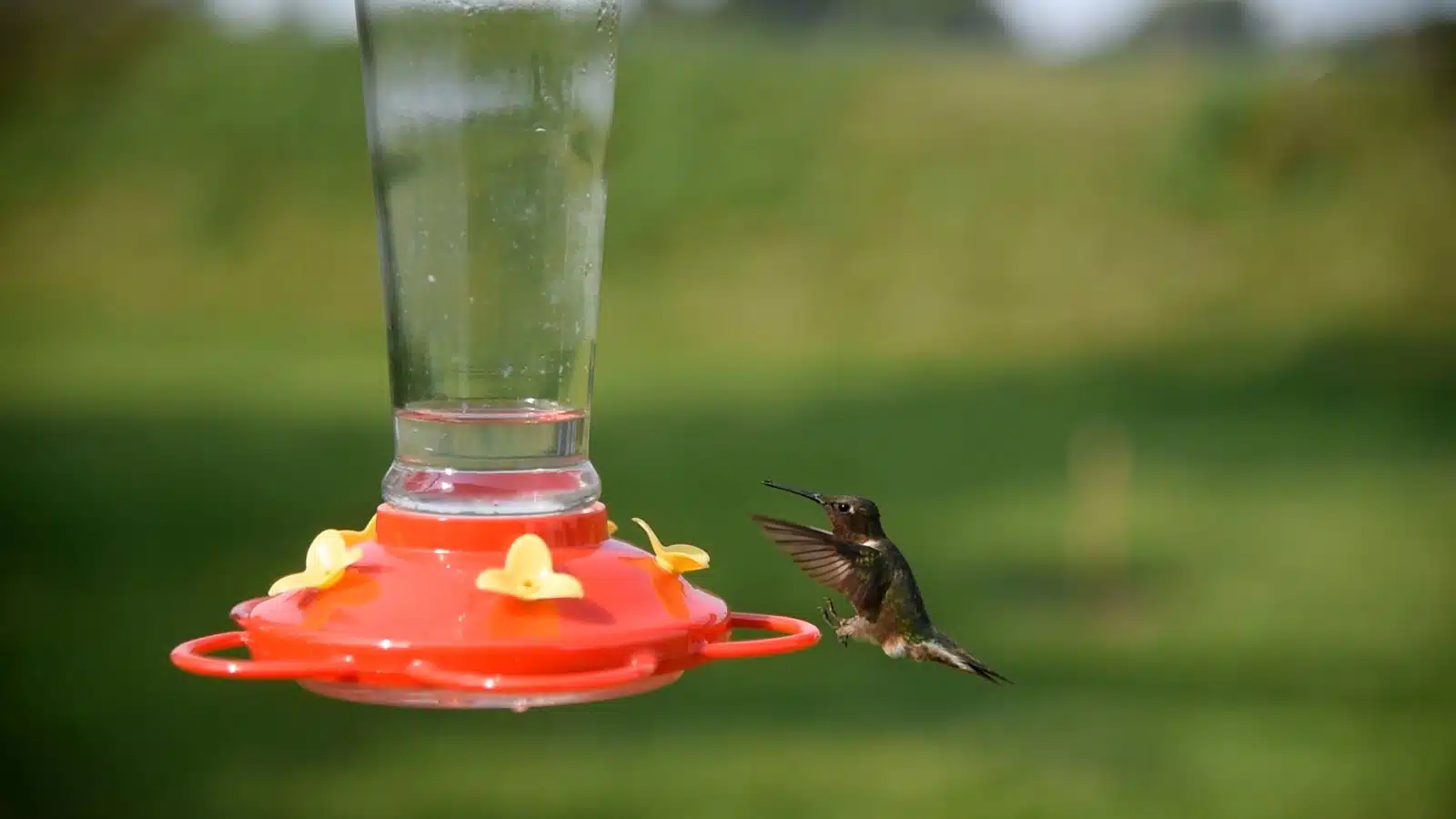
That familiar worry—“If I leave the feeder out, will the birds forget to migrate?”—can be put to rest. A full feeder does not persuade a hummingbird to ignore winter. Migration is driven largely by changing day length, along with instinct, weather, food availability, and the bird’s physical condition.
In fact, removing a feeder too early can take away a useful fuel station just when late travelers need it. The hummingbird you watched all summer may leave before the biggest migration wave even reaches your yard.
Ruby-throated hummingbirds can make a nonstop Gulf of Mexico crossing of roughly 600 miles, a flight that may last at least 18 hours. Western species follow different routes, and Rufous hummingbirds can travel between Alaska and Mexico. These tiny birds need to gain substantial fat before the hardest legs of the journey.
Keep a clean feeder available for at least two weeks after your last sighting. If a late migrant or an unusual overwintering visitor appears, continue maintaining it. A neglected feeder is not helpful, so only leave it up as long as you can keep the nectar fresh.
The Cornell Lab of Ornithology likewise advises that feeders do not prevent migration and can remain available for stragglers.
2. Mix Nectar at the Exact 4-to-1 Ratio

The safest homemade nectar is wonderfully boring: four parts water to one part plain white granulated sugar. For a typical batch, mix 1 cup of sugar with 4 cups of water, stir until the crystals dissolve, and let it cool completely before filling the feeder.
You may use hot water to help the sugar dissolve. Refrigerate extra nectar in a clean, covered container and use it within about a week.
Do not add red dye, honey, artificial sweetener, brown sugar, raw sugar, or molasses. A red feeder is visible enough, while added coloring provides no benefit. Honey can promote dangerous microbial growth, and less-refined sugars contain compounds that do not belong in a hummingbird feeder.
It is tempting to make “extra-strength” nectar for an exhausting trip, but resist. Hummingbirds evolved to feed from flower nectar within a useful concentration range, and the standard recipe supplies accessible energy while still providing water. More sugar is not automatically more helpful.
Need only a little? The ratio scales easily: 1/4 cup sugar to 1 cup water, or 2 tablespoons sugar to 1/2 cup water. Mixing smaller batches makes it easier to serve fresh nectar instead of filling a large feeder that spoils before it is emptied. The National Audubon Society recommends the same 4-to-1 recipe.
3. Clean and Refill More Often Than You Think

A feeder can look full and still be unsafe. Sugar water ferments, and warm conditions encourage mold and bacteria. Cloudy nectar, floating debris, strings, bubbles, or a sour smell mean the solution should be discarded immediately.
As a practical fall schedule, empty and clean the feeder every two to three days in mild weather. On hot days—especially around 90°F—do it daily. A feeder hanging in afternoon shade usually stays cooler than one baking against a sunny wall, but shade does not replace cleaning.
Take the feeder apart and rinse every surface with very hot water. Scrub the reservoir, base, ports, bee guards, and seams with a dedicated bottle brush or small port brush. For stubborn residue, use a weak white-vinegar solution and rinse thoroughly. Avoid leaving soap or detergent residue where a bird will drink.
Do not merely top off old nectar. Empty the feeder, clean it, and start with a fresh batch. Ant moats should contain plain water, never oil or sticky substances that could coat feathers.
A smaller, easy-to-disassemble feeder often serves birds better than an ornate oversized model. You will waste less nectar, notice contamination sooner, and be far more willing to clean it on schedule. If black mold remains in a seam you cannot reach, replace the feeder.
4. Offer Late-Blooming Native Flowers and Tiny Insects

Feeders are useful, but a migration stopover should be more than a sugar-water station. Flowers let birds feed naturally across the yard, while foliage shelters them from wind and predators. Late-blooming native plants can keep producing nectar after many summer flowers have faded.
Choose plants native to your region and suited to your soil and light. Depending on where you live, good late-season candidates may include cardinal flower, jewelweed, native salvias, trumpet honeysuckle, scarlet gilia, fireweed, golden currant, or California fuchsia. Your state native-plant society or local extension office can narrow that list to plants that genuinely belong in your area.
Red and orange tubular blooms are famous hummingbird magnets, but color is only part of the story. A flower’s shape, nectar supply, and bloom timing matter, and hummingbirds also visit blooms in pink, purple, and other colors.
Here is the detail even experienced feeder watchers sometimes miss: hummingbirds do not live on nectar alone. They catch gnats, mosquitoes, aphids, spiders, and other small arthropods for protein, fat, and nutrients. Heavy insecticide use can erase that essential part of a stopover buffet.
Skip broad-spectrum pesticides, leave some sheltered vegetation, and allow healthy seed heads and stems to stand into fall. A garden with flowers at several heights, nearby cover, and a few bare twigs for perching gives migrants places to feed, rest, preen, and scan for danger.
5. Turn the Yard Into a Safer Stopover
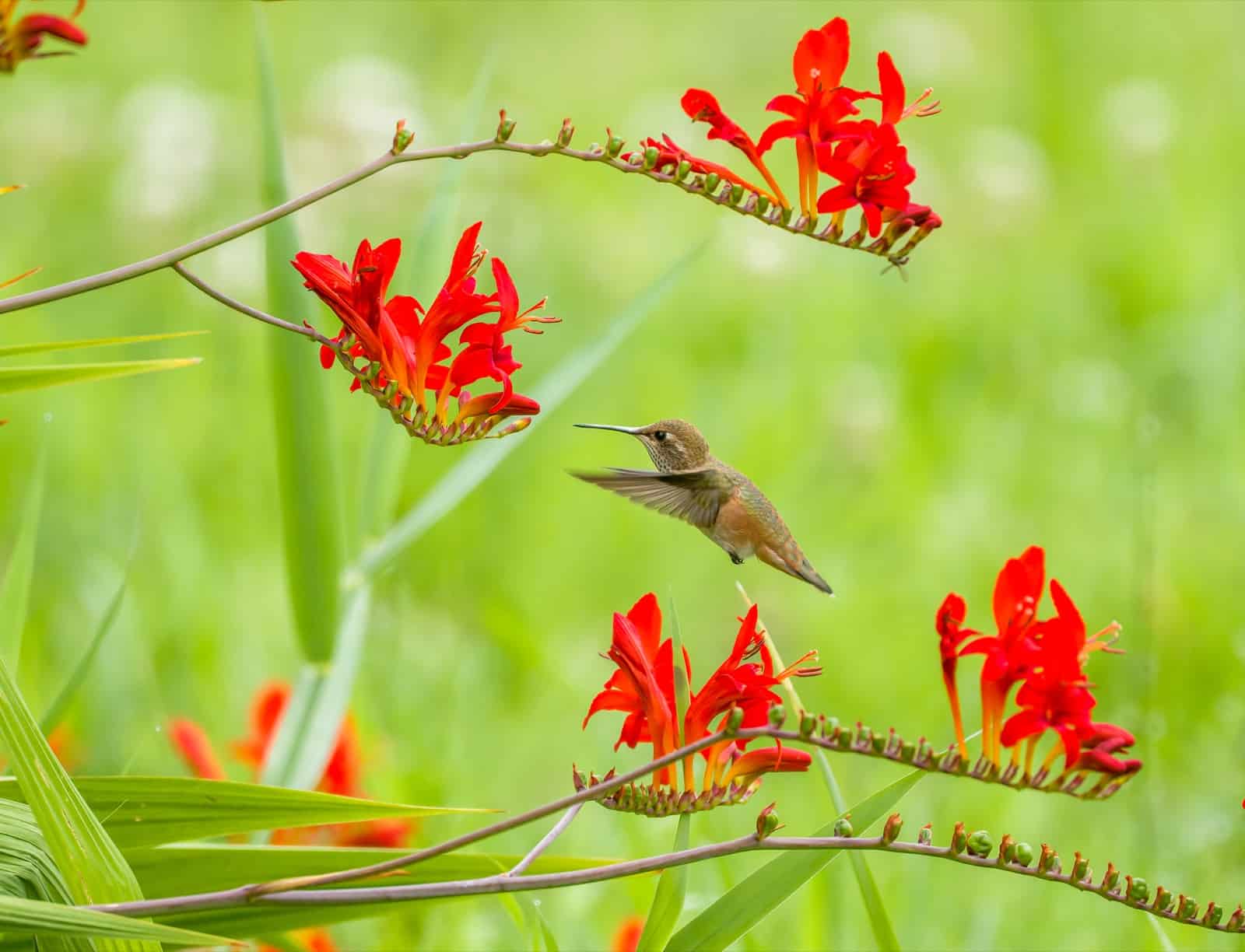
A nectar-rich yard can still be hazardous. Windows reflect sky and vegetation, outdoor cats hunt resting birds, and a dominant hummingbird may guard a single feeder so aggressively that weary newcomers struggle to drink.
Break up the traffic by hanging two or more small feeders where one territorial bird cannot see and defend them all. Placing feeders on different sides of the house or behind a shrub is often more effective than clustering them together. Keep each feeder just as clean as the first.
Make dangerous glass visible from the outside with closely spaced decals, tape, screens, cords, or other collision treatments that cover the reflective area—not just one hawk silhouette in the middle. Closing blinds may help indoors, but an exterior pattern is what interrupts the outdoor reflection a flying bird sees.
Keep cats indoors or in a secure catio, especially during peak migration. Hummingbirds frequently perch between feeding bouts, and a tired bird near flowers or a low feeder can be easier prey than it appears.
A fine mister, dripper, or very shallow moving-water feature offers bathing water without creating a deep basin. Nearby shrubs and small trees provide escape cover, while exposed twigs give birds a place to rest and defend their energy budget.
Finally, dim unnecessary outdoor lights at night and turn off indoor lights near large windows when you can. The U.S. Fish and Wildlife Service identifies windows and outdoor cats among the threats hummingbirds face. Fresh food matters most when the route to it is safe.
Fall migration is a relay race run on tiny reserves. You cannot shorten the journey, but a clean feeder, blooming yard, insect-friendly garden, and safer glass can give a traveler exactly what it needs before the next leg.
Photo credits
- “Ruby-throated hummingbird (50274767441)” — Courtney Celley/U.S. Fish and Wildlife Service Midwest Region, public domain, via Wikimedia Commons. Resized.
- “Hummingbird Feeder (27721019784)” — Dorian Wallender, CC BY-SA 2.0, via Wikimedia Commons. Resized.
- “Ruby-throated hummingbird (50037694183)” — Courtney Celley/U.S. Fish and Wildlife Service Midwest Region, public domain, via Wikimedia Commons. Resized.
- “Ruby-throated hummingbird on cardinal flower (5871175853)” — Bill Buchanan/U.S. Fish and Wildlife Service Headquarters, CC BY 2.0, via Wikimedia Commons. Resized.
- “Rufous hummingbird (53092035193)” — Jake Bonello/U.S. Fish and Wildlife Service Pacific Region, public domain, via Wikimedia Commons. Resized.