That sprawling shrub beside a ditch or fence may look like background greenery, but a mature American elderberry can turn one easy harvest into syrup, jelly, pie filling, wine, and freezer bags of fruit.
The trick is knowing exactly what you have. Elderberry is generous, wildlife-friendly, and surprisingly simple to gather—but it has poisonous lookalikes, and its own raw fruit and green parts require respect. Here’s how to spot, pick, cook, and even grow it safely.
Why This Scruffy Shrub Is a Forager’s Goldmine
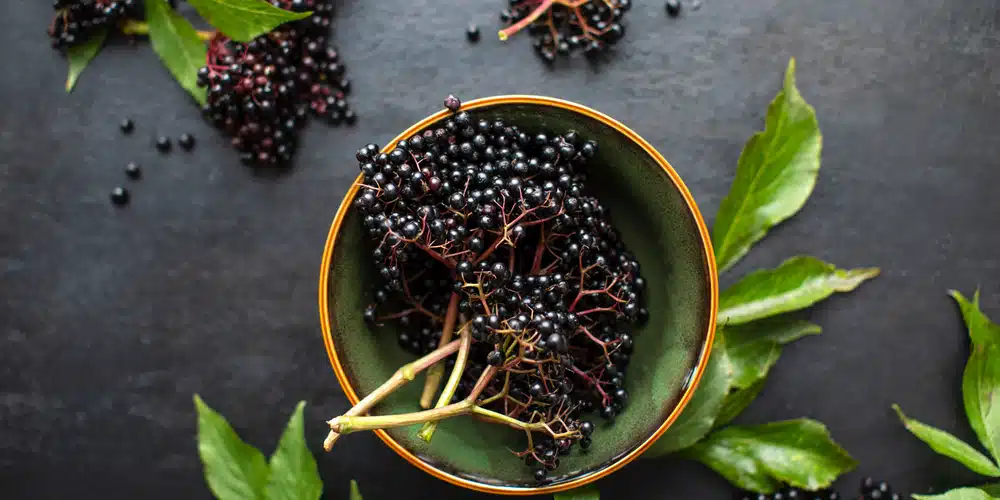
American elderberry (Sambucus canadensis, also listed as Sambucus nigra subsp. canadensis) thrives in the places people tend to ignore: moist field edges, stream banks, ditches, fence lines, and sunny woodland margins.
It is not a tidy little berry bush. A mature plant is usually a broad, arching, many-stemmed shrub, often 5 to 12 feet tall and wider than it is high. It spreads by suckers and may build a thicket, which is exactly why one overlooked patch can produce such a satisfying haul.
The fruit has a deep, winey flavor that becomes much friendlier with sugar and heat. Cooked elderberries work in syrup, jelly, sauce, pie filling, cordial, and shrub-style drinking vinegar. You can also freeze the berries now and decide what to make on a cold day.
There is a second payoff. The creamy flowers feed pollinators, the berries feed scores of bird species, and the arching growth offers cover. Harvesting thoughtfully lets the same patch feed you and the local wildlife.
How to Identify American Elderberry With Confidence

Never identify an edible wild plant from the berries alone. With elderberry, you want the growth habit, leaves, stems, flowers or fruit, and season to agree.
Start with the leaves. Each leaf is compound, meaning it is divided into smaller leaflets along a central stalk. American elderberry usually has 5 to 11 pointed leaflets—often seven—with sharply toothed edges. The leaves attach in opposite pairs along the twig rather than alternating from side to side.
Look at the plant’s frame next. It should be a woody, multi-stemmed shrub. Older bark is gray to brown and dotted with small raised pores called lenticels, giving it a slightly warty look. Cut or broken mature twigs reveal a soft, white pith, but do not damage a wild plant just to check if the other traits are already clear.
Flower season provides one of the best clues. From late spring into summer, the plant carries broad clusters of many tiny, five-petaled, creamy-white flowers. Those clusters later become heavy heads of small fruit that ripen from green through reddish shades to deep purple-black and droop under their own weight.
A useful field rule is simple: opposite compound leaves + sharply toothed leaflets + woody warty stems + broad flower or fruit clusters. If one part of that combination is missing, leave the plant alone and confirm it with a local extension office, herbarium, or experienced forager.
The Lookalikes You Cannot Afford to Guess About

Pokeweed is the lookalike most likely to fool a hurried beginner. It can have vivid magenta stems and dark berries, but it is a tall herbaceous plant rather than a branching woody shrub. Its large leaves are simple and alternate, and its berries sit directly along elongated, fingerlike racemes instead of forming elderberry’s broad, branching clusters.
Devil’s walkingstick can also carry purple-black fruit in branching clusters. The giveaway is right in the name: its stems and trunk are armed with prickles, and its enormous leaves are twice or three times compound. Elderberry has no prickly club of a trunk.
Water hemlock deserves mention because its white summer flowers can look tempting from a distance. It is a dangerously poisonous, nonwoody wetland plant with umbrella-like flower clusters—not the broad elderberry cymes that become black-purple berry heads. Do not gather white flowers from a wet area unless the entire plant is positively identified.
Red elderberry (Sambucus racemosa) is a true elder, but it is not interchangeable with American black elderberry. Its fruit ripens bright red in compact, cone-shaped clusters. For this guide, harvest only correctly identified American elderberry with fully ripe purple-black fruit.
Harvest Only the Clusters That Are Truly Ready

Across much of eastern North America, American elderberries ripen from August into September, but weather and latitude shift the calendar. Let the plant—not the date—tell you when to pick.
A ready cluster is heavy and drooping, with nearly every berry deep purple-black. Skip heads that are mostly green or red, and pluck out any few unripe fruits that remain after harvest. Shriveled, fermented-smelling, moldy, or bird-fouled clusters belong in the compost, not the kitchen.
Use clean pruners to clip the whole branching cluster into a shallow basket or bucket. Pulling at the berries on the shrub crushes fruit, strips foliage, and wastes juice. Before gathering, make sure foraging is permitted, avoid sprayed land and high-traffic roadsides, and leave plenty for birds and for the patch to reproduce.
Elderberries spoil quickly. Refrigerate them and process them promptly, or freeze them the day you pick. A favorite low-mess trick is to freeze whole clusters on a tray, then roll the frozen berries from the stems with gloved fingers or a fork. Discard every leaf and as much stem material as possible.
Cook Elderberries Before You Eat Them

This is the rule to remember after all the identification details: do not snack on elderberries raw, and never eat the leaves, roots, stems, or unripe fruit. Those parts contain cyanogenic glycosides that can cause nausea, vomiting, diarrhea, and more serious illness.
Remove the stems and debris, rinse the ripe fruit, and cook it thoroughly according to a reliable recipe. Freezing is useful storage, but it does not replace cooking; bring thawed fruit or juice to a boil before eating it.
The easiest first batch is a refrigerated compote. Simmer the cleaned berries with a little water, sugar or honey, and lemon until the fruit collapses, then spoon it over pancakes, yogurt, or ice cream. Strain the cooked mixture for syrup, or thicken it for a pie filling. Elderberries also play beautifully with apple, peach, plum, and blackberry.
One safety wrinkle surprises experienced home canners: elderberries can test above the usual high-acid cutoff. Do not improvise a shelf-stable water-bath recipe. Use a current, research-tested extension recipe for room-temperature storage; otherwise keep the finished food refrigerated or frozen. Penn State Extension’s elderberry food-safety guidance is a sensible reference.
Turn One Patch Into a Backyard Supply

If wild picking feels too uncertain, grow a named American elderberry cultivar at home. It likes fertile soil that stays consistently moist without becoming stagnant. Full sun produces the strongest flowering and heaviest berry crop, though the shrub tolerates partial shade.
Give each plant room. A spacing of roughly 5 to 7 feet suits most backyard plantings, and mulch helps its shallow roots hold moisture. During establishment and summer fruit development, do not let the soil dry hard; Missouri production guidance suggests roughly 1 to 2 inches of water per week for best growth and fruit.
Although elderberries may set some fruit alone, two different American elderberry cultivars planted within about 60 feet generally improve pollination and the harvest. They often begin producing in their second or third season. Our guide to growing elderberries in Georgia offers more warm-climate pointers.
Prune in late winter or early spring, removing dead, damaged, weak, and older unproductive canes. If you prefer a wild-looking rain-garden edge, let the plant sucker into a small colony. If you want a neat foundation shrub, choose something else—elderberry has an enthusiastic personality.
Here is a lovely bit of trivia for native-plant gardeners: small native bees can nest inside old hollow elder stems. NC State Extension recommends leaving some dead stems standing 12 to 24 inches high until they naturally break down.
The bottom line: elderberry really can be a forager’s goldmine, but the treasure belongs to the careful observer. Learn the whole plant, harvest only fully ripe purple-black fruit, remove green material, cook the crop, and leave enough behind for the wild neighbors that found the patch first.
Photo credits
- “Sambucus canadensis flower UMFS” by Fredlyfish4, Wikimedia Commons, CC BY-SA 4.0.
- “Pokeberries” by Huw Williams, Wikimedia Commons, public domain.
- “American elderberry (Sambucus canadensis)” by Rison Thumboor, Wikimedia Commons, CC BY 2.0.
- “Blackberry and Elderberry Jam” by Jim Champion, Wikimedia Commons, CC BY-SA 2.0.
- “Sambucus canadensis 2zz” by David J. Stang, Wikimedia Commons, CC BY-SA 4.0.