A robin tugging at the soil. A goldfinch balancing on an old seed head. A catbird disappearing into a berry-covered shrub.
These are more than pretty garden moments. Each bird is responding to something your yard provides—insects, seeds, nectar, fruit, shelter, nesting space, or water.
One bird cannot give your garden a passing grade. Weather, migration, nearby habitat, and simple luck all affect what appears. But when several of these visitors begin returning regularly, it is a good clue that your garden is becoming a working little ecosystem.
1. American Robins Reveal Life Beneath the Soil

Robins rarely patrol a lawn or garden bed without a reason. They are watching for earthworms, beetles, caterpillars, snails, and other small creatures hiding near the surface.
Repeated visits can suggest that your soil is moist enough to support invertebrates and that the ground has not been stripped of every living thing.
Compost, mulch, fallen leaves, and fewer lawn chemicals can help preserve the underground activity that keeps robins hunting.
Robins also eat berries and fruit, so they may shift from the lawn to dogwoods, serviceberries, crabapples, and other fruiting plants later in the season.
2. Black-Capped Chickadees Mean Tiny Insects Are Available

Chickadees may visit feeders for seeds, but much of their natural searching happens among leaves, twigs, buds, and bark.
They inspect plants for caterpillars, insect eggs, beetles, spiders, and other tiny bites. That protein becomes especially important when adult birds are feeding growing nestlings.
A garden filled with native trees and shrubs gives chickadees far more places to hunt. Instead of treating every nibbled leaf as a disaster, remember that some of those caterpillars may become baby-bird food.
Black-capped chickadees occur across much of the northern United States. Carolina, mountain, and other chickadees fill a similar role in different regions.
3. Eastern Bluebirds Signal Open Hunting Space

Bluebirds often hunt by sitting on a low branch, fence post, wire, or garden stake and dropping to the ground after an insect.
That strategy requires a useful mixture of open ground and nearby lookout points. A small lawn, meadow edge, scattered trees, and exposed perches can give them exactly what they need.
Eastern bluebirds primarily eat insects during the warmer months, while berries become more important when insects are scarce.
They may also use a correctly designed nest box. Entrance size, ventilation, drainage, predator protection, and placement all matter, so a decorative birdhouse is not automatically a safe bluebird house.
4. Northern House Wrens Show That Your Garden Has Cover

House wrens are restless little hunters. They slip through shrubs, low branches, vines, brush piles, and tangled garden edges in search of insects and spiders.
A completely bare yard gives them few places to hide. A garden with plants at several heights creates protected travel lanes and more surfaces to search for food.
Dense does not have to mean neglected. One thick shrub, a vine-covered trellis, or a small pile of branches in a quiet corner can add valuable structure.
House wrens are cavity nesters and may investigate suitable nest boxes. They are also known for choosing unusual sheltered spaces around sheds, porches, and garages.
5. American Goldfinches Mean Your Flowers Are Producing Seeds

When a goldfinch lands on a faded flower, it is showing you exactly why fall cleanup can wait.
Goldfinches depend heavily on seeds. Coneflowers, sunflowers, asters, native thistles, milkweed, evening primrose, and other seed-producing plants can become natural feeding stations.
Leave at least some flower heads standing after the petals fade. Those brown stems may continue feeding birds long after the colorful part of the show has ended.
The remaining seeds may also produce volunteer plants, giving you more flowers without another trip to the garden center.
6. Ruby-Throated Hummingbirds Point to a Long Flowering Season
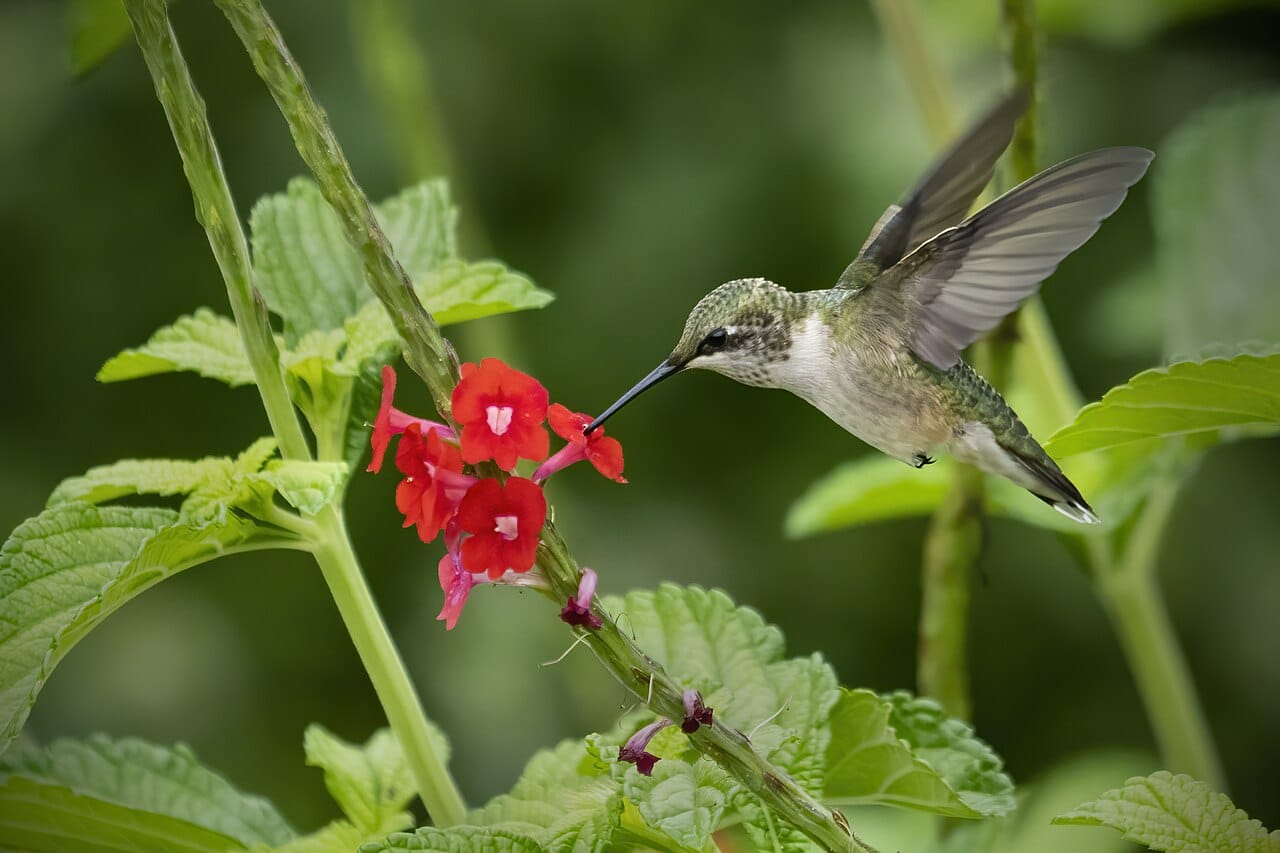
Hummingbirds need to refuel frequently. A bird that returns throughout the season may be finding more than one isolated patch of flowers.
The strongest hummingbird gardens contain overlapping waves of nectar-rich blooms from spring through late summer or fall.
Bee balm, cardinal flower, native honeysuckle, columbine, salvia, and other tubular flowers are common favorites, although the best choices depend on your region.
Hummingbirds also eat tiny insects and spiders. A yard sprayed constantly for every visible bug may offer nectar while quietly removing another important food source.
Ruby-throated hummingbirds are the familiar species across much of the eastern United States. Western gardens may receive Anna’s, rufous, black-chinned, or other hummingbirds.
7. Downy Woodpeckers Reveal the Value of Older Trees

Downy woodpeckers inspect trunks, branches, and tall stems for insects hiding beneath bark or inside soft wood.
An older tree can provide rough bark, small cavities, insect larvae, protected resting spots, and branches for searching. Even a dead limb may support far more life than it appears to from the ground.
Woodpeckers can also create cavities that are later used by birds unable to excavate their own nesting holes.
Deadwood should only remain where it is safe. Have unstable trunks and dangerous limbs near homes, play areas, driveways, or walkways evaluated by a qualified arborist.
8. White-Breasted Nuthatches Indicate Established Trees

Nuthatches are famous for moving headfirst down tree trunks while inspecting bark crevices for insects, larvae, and hidden food.
White-breasted nuthatches eat many kinds of insects, including beetles, ants, caterpillars, and wood-boring larvae. They also eat seeds and nuts.
Their presence often points to an established tree layer with textured bark, sturdy branches, natural cavities, and dependable places to forage.
They may visit feeders for sunflower seeds, peanuts, or suet, but a feeder cannot replace the trees they use for climbing, shelter, nesting, and natural hunting.
9. Yellow Warblers Show That Your Leaves Support Insect Life

A tiny warbler moving through the garden may stay for only a few hours. That brief visit can still be meaningful.
Warblers search leaves, stems, and branches for caterpillars and other small insects. During migration, a leafy garden can become a useful place to rest and refuel.
Native shrubs and trees are especially valuable because they help support the insects that local birds recognize as food.
A helpful migration stop does not need to be enormous. Even a modest patch of dense foliage can offer shade, protection, and a meal.
10. Song Sparrows Appreciate Messy Garden Corners

Song sparrows frequently forage close to the ground, searching for seeds and insects beneath grasses, shrubs, and fallen vegetation.
Leaf litter, old flower stems, ornamental grasses, low shrubs, and fallen seeds create feeding areas that heavily cleaned yards often lack.
You do not need to abandon the entire garden. Try leaving leaves beneath shrubs, keeping a small brush pile behind a shed, or allowing one patch of grasses and seed heads to remain through winter.
A little controlled mess can function like a pantry and hiding place.
11. Northern Cardinals Signal Dense, Protective Shrubs

Cardinals visit feeders, but feeders are only part of what keeps them in a garden.
They favor thick shrubs, tangled edges, low branches, and evergreen cover. These protected spaces give them somewhere to retreat when a hawk, cat, or other threat appears.
Cardinals eat seeds and fruit while also taking insects. Their nestlings are fed mostly insects, making a naturally busy garden especially valuable during nesting season.
If cardinals repeatedly move between your plants and open feeding areas, the garden may be providing the ideal combination of food within a quick flight of shelter.
12. Gray Catbirds Mean Your Berry Plants Are Working

Catbirds often stay partially hidden, announcing themselves with whistles, squeaks, and the nasal call that inspired their name.
They are drawn to dense shrubs, vine tangles, and fruiting plants. Serviceberries, dogwoods, elderberries, blackberries, winterberries, and native cherries can all create inviting habitat.
Catbirds also eat insects, so they are not merely arriving to steal your fruit. They are using the garden as a mixed buffet.
You may lose a few ripe berries, but a shrub busy with catbirds is clearly producing food that has entered the local food web.
13. Baltimore Orioles Point to Flowering Trees and Fruit

Baltimore orioles use several food sources. They eat insects, nectar, and fruit, with their preferences changing throughout the season.
A yard containing flowering trees, fruiting shrubs, mature branches, and plenty of insect activity may offer several things they need in one compact space.
Orioles build hanging nests high in deciduous trees. You may hear them singing or see flashes of orange overhead without ever noticing the carefully woven nest.
In some regions they remain through summer. Elsewhere, an oriole may appear briefly during migration, refuel, and continue its journey.
14. Tree Swallows Reveal an Abundance of Flying Insects

Tree swallows feed in flight, sweeping over lawns, fields, wetlands, ponds, and open gardens to catch insects in midair.
Repeated swallow activity can suggest that your property and the surrounding area are producing a dependable supply of flying insects.
Tree swallows also need open hunting room. A garden bordering a lawn, meadow, pond, or field may be especially appealing.
Do not assume every flying insect requires immediate spraying. Many become food for swallows, bats, dragonflies, and other natural predators.
Tree swallows nest in cavities and may use properly built nest boxes where the surrounding habitat is suitable.
15. Eastern Screech-Owls Show That the Food Chain Reaches the Top

An eastern screech-owl is one of the strongest clues that a yard sits within a larger, functioning food web.
These compact nighttime hunters eat insects, mice, and other small animals. They also need sheltered daytime resting places and cavities where they can roost or nest.
Screech-owls do not excavate their own nesting holes. They depend on natural cavities, decayed openings, old woodpecker holes, or suitable nest boxes.
You are more likely to hear one than see one. Listen after dark for trills or descending, horse-like whinnies coming from mature trees.
An owl visiting the yard does not necessarily mean you have a rodent problem. It may simply mean the surrounding habitat contains enough prey, trees, and protected resting places to support a small predator.
A Thriving Garden Still Needs to Be Safe
Bringing birds close to your home is only helpful when the space does not lead them into avoidable danger.
- Keep pet cats indoors or give them outdoor access through a secure catio.
- Make reflective windows visible with closely spaced exterior markers, screens, film, or another proven collision-prevention method.
- Clean feeders and birdbaths regularly.
- Replace dirty or stagnant water before it becomes a health risk.
- Avoid broad pesticide treatments that remove the insects birds depend on.
- Use nest boxes designed for the intended species and add appropriate predator protection.
- Have hazardous dead trees or unstable branches professionally inspected.
The best sign is not simply seeing more birds. It is watching different species return because your garden consistently offers natural food, clean water, protective cover, and safe places to rest.
Image Attributions
American Robin
- “American robin (71307).jpg” by Rhododendrites, licensed under CC BY-SA 4.0.
.jpg)
Black-Capped Chickadee
- “Black capped chickadee (50838676081).jpg” by GlacierNPS, marked as public domain as a work of the U.S. National Park Service.
.jpg)
Eastern Bluebird
- “Eastern Bluebird, crop.jpg” by Dehaan, licensed under CC BY-SA 3.0.

Northern House Wren
- “House wren singing in PP (13873).jpg” by Rhododendrites, licensed under CC BY-SA 4.0.
.jpg)
American Goldfinch
- “Echinacea purpurea Spinus tristis JRVdH 03.jpg” by Cephas, licensed under CC BY-SA 4.0.

Ruby-Throated Hummingbird
- “Ruby-Throated hummingbird on red flower.jpg” by Jack Nevitt, licensed under CC BY-SA 4.0.

Downy Woodpecker
- “Downy woodpecker in GWC (33941).jpg” by Rhododendrites, licensed under CC BY-SA 4.0.
.jpg)
White-Breasted Nuthatch
- “White-breasted nuthatch 3145.jpg” by Dori, licensed under CC BY-SA 3.0.

Yellow Warbler
- “Yellow warbler (82905).jpg” by Rhododendrites, licensed under CC BY-SA 4.0.
.jpg)
Song Sparrow
- “Song sparrow in Prospect Park (93031).jpg” by Rhododendrites, licensed under CC BY-SA 4.0.
.jpg)
Northern Cardinal
- “Male northern cardinal in Central Park (52612).jpg” by Rhododendrites, licensed under CC BY-SA 4.0.
.jpg)
Gray Catbird
- “Gray catbird with a berry (16665).jpg” by Rhododendrites, licensed under CC BY-SA 4.0.
.jpg)
Baltimore Oriole
- “Baltimore Oriole 12.jpg” by Rodney Campbell, licensed under CC BY 2.0.

Tree Swallow
- “Tree-Swallow-Portrait-Wiki.jpg” by Chcuk Homler d/b/a FocusOnWildlife, licensed under CC BY-SA 4.0.

Eastern Screech-Owl
- “Eastern Screech Owl.jpg” by Wolfgang Wander, licensed under CC BY-SA 3.0.
