🌿 Facebook tease: Your hoya is not being stubborn—it may be waiting for one small care change. 🌸 Before you toss the fertilizer at it, check these five bloom triggers. One of them surprises almost every plant parent! Full guide in the comments 👇
Few houseplant moments feel as unfair as watching a hoya grow glossy leaf after glossy leaf without producing a single flower. The good news? A leafy hoya is usually not a lost cause. It is often healthy enough to grow, but not yet getting the exact conditions that tell it to bloom.
The classic wax plant, Hoya carnosa, makes round clusters of star-shaped, often fragrant flowers. If yours has never bloomed—or has suddenly stopped—work through these five checks before making any drastic changes.
1. Give It Brighter Light Than “Low-Light Tolerant” Suggests

Insufficient light is the most common reason a hoya grows but does not flower. That “tolerates low light” label only means the plant may survive there. Blooming requires more energy than maintaining leaves.
Move the plant close to a bright east- or west-facing window, or a few feet back from a bright south-facing window. A sheer curtain is useful when midday summer sun is intense. The goal is bright, filtered light for much of the day, not a dark corner and not a sudden blast of scorching sun.
Watch the plant instead of obeying a rigid distance rule. Long gaps between leaves, thin new growth, and vines reaching toward the window suggest it wants more light. Bleached patches or crisp tan spots suggest the increase was too fast.
If natural light is limited, a full-spectrum grow light can help. Increase exposure gradually over a week or two so the leaves have time to adjust.
Quick test: If the plant is healthy but has never flowered, improve its light first and then give it a full growing season to respond. The University of Florida calls unsuitable light the usual reason hoyas fail to bloom.
2. Let the Plant Mature—and Stop Resetting It

A freshly rooted cutting may need years of steady growth before it is ready to flower. Species, cultivar, growing conditions, and the age of the cutting all matter, so there is no honest universal countdown to the first bloom.
What slows the process? Constant disruption. Repeated repotting, pruning back every long vine, or moving the plant from window to window can keep it focused on recovery and vegetative growth.
Hoyas generally do well in a snug container, but “severely root-bound” is not a bloom hack. Do not jump to a much larger pot just because flowers are missing. Repot when the mix has broken down, water races straight through, roots are tightly circling, or the plant genuinely needs more room. Choose a pot only slightly larger and use an airy, fast-draining mix.
Those odd leafless runners are normal on many hoyas. They may look unfinished, but they often produce leaves—or future flowering sites—later. Unless a vine is dead or truly in the way, let it explore.
Best move: Give a healthy plant one bright, stable location and consistent care. Hoyas reward patience far more reliably than constant “fixing.”
3. Water Deeply, Then Let the Mix Partly Dry

Hoya leaves store some water, but that does not make the plant a cactus. The useful middle ground is simple: water thoroughly, allow excess water to drain, and wait until the upper portion of the mix has dried before watering again.
Do not water by the calendar. A hoya beside a warm summer window may dry much faster than the same plant during a dim winter. Check the mix with a finger or wooden skewer, feel the pot’s weight, and learn how quickly your plant uses moisture.
When it is time, soak the entire root ball until water exits the drainage hole. Then empty the saucer or cachepot. Tiny sips leave dry pockets around the roots, while a pot left standing in water can suffocate them.
During active growth and bud development, avoid letting the root ball become bone-dry for long stretches. At the other extreme, permanently wet mix invites root trouble. The Royal Horticultural Society recommends careful, consistent watering and less water during the plant’s quieter winter period.
Check the roots if: leaves become soft or yellow while the mix stays wet, the pot smells sour, or the plant declines despite moist soil. More water will not repair damaged roots.
4. Feed Lightly and Respect the Season

Fertilizer can support flowers, but it cannot compensate for dim light or unhealthy roots. In fact, a heavy hand can burn roots and push soft leafy growth at the expense of a balanced plant.
During spring and summer, use a balanced houseplant or orchid fertilizer at a light dilution while the plant is actively growing. Follow the product label rather than assuming more is better. Flush the pot with plain water occasionally so fertilizer salts do not accumulate.
Reduce or stop feeding when growth slows in fall and winter. Hoyas respond to seasonal changes, and Hoya carnosa can tolerate a cooler, drier winter rest than many tropical houseplants. The RHS lists 61–75°F (16–24°C) as a comfortable spring-and-summer range and advises keeping the plant cooler and drier in winter, without exposing it to frost or cold drafts.
Once buds appear, consistency matters more than tricks. Do not rotate the pot, relocate the plant, or change its light abruptly. Developing buds can drop when light or moisture changes suddenly.
Skip the miracle-bloom chase: Correct the light and watering first, then add modest nutrition. A healthy seasonal rhythm beats a bottle of high-powered fertilizer.
5. Never Cut Off the Old Flower Spurs
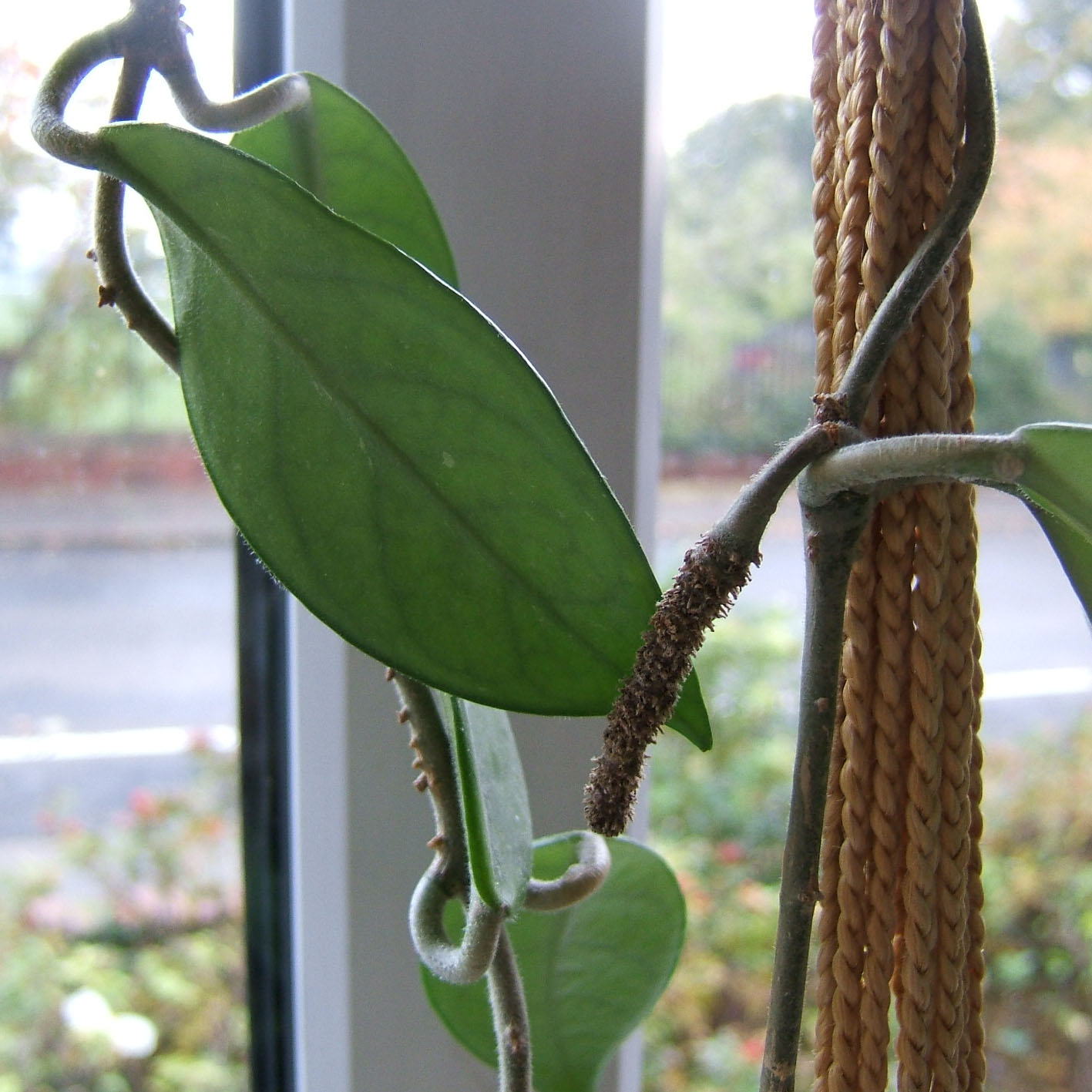
This is the small detail that can erase months—or years—of progress. After a hoya’s flowers fade, the short stalk that held the cluster remains. It may look like a dry nub, but many hoyas rebloom from that same peduncle again and again.
Remove the spent individual flowers if they fall easily, but do not snip off the knobby spur beneath them. Also inspect vines carefully before pruning; an old peduncle can be easy to mistake for a dead twig.
If you have removed one before, do not panic. The plant can grow new flowering sites. It simply needs time, good light, and healthy new growth.
The same “hands off” rule applies once buds form. Avoid moving the plant, turning it for symmetry, or letting it swing wildly between wet and dry. The buds in the photo above are the payoff you are trying to protect.
Your bloom checklist: bright filtered light, an established plant, a breathable mix with sensible watering, light feeding during active growth, and every old flower spur left intact.
Then comes the hardest part: waiting. A hoya blooms on its own schedule, but once the first waxy stars open—and the evening fragrance drifts across the room—you will be glad you did not give up on it.
Photo credits (all via Wikimedia Commons):
- “Hoya carnosa leaves in Tropical Dream Center, Okinawa” by M108t, CC BY 4.0.
- “Fior di cera” by Sang83, CC BY-SA 4.0.
- “Hoya carnosa buds 1” by Acroterion, CC BY-SA 4.0.
- “2012-06-06 Hoya carnosa” by Wo st 01/Wikipedia, CC BY-SA 3.0 DE.
- “Hoya carnosa1” by MPF, CC BY 2.5.


Horticultural references: Royal Horticultural Society: How to grow hoya; University of Florida IFAS: Hoya; Iowa State University Extension: All About Hoyas; NC State Extension: Wax Plant.