A forgotten watering shouldn’t sentence your flower bed to a week of drooping drama. The right perennials can stay handsome through ordinary dry spells and forgive a gardener who occasionally leaves the hose coiled up.
There is one important bit of fine print: “drought tolerant” does not mean “never water.” Give new plants regular, deep drinks during their first growing season so they can build the roots that make them tough later. Even established plants appreciate help during prolonged or extreme drought.
The mistake that ruins this whole plan is poor drainage. Most of these plants tolerate dry soil far better than soggy roots. Match each plant to your climate and hardiness zone, then put it where rainwater doesn’t linger.
1. Catmint: A Lavender-Blue Cloud That Bounces Back
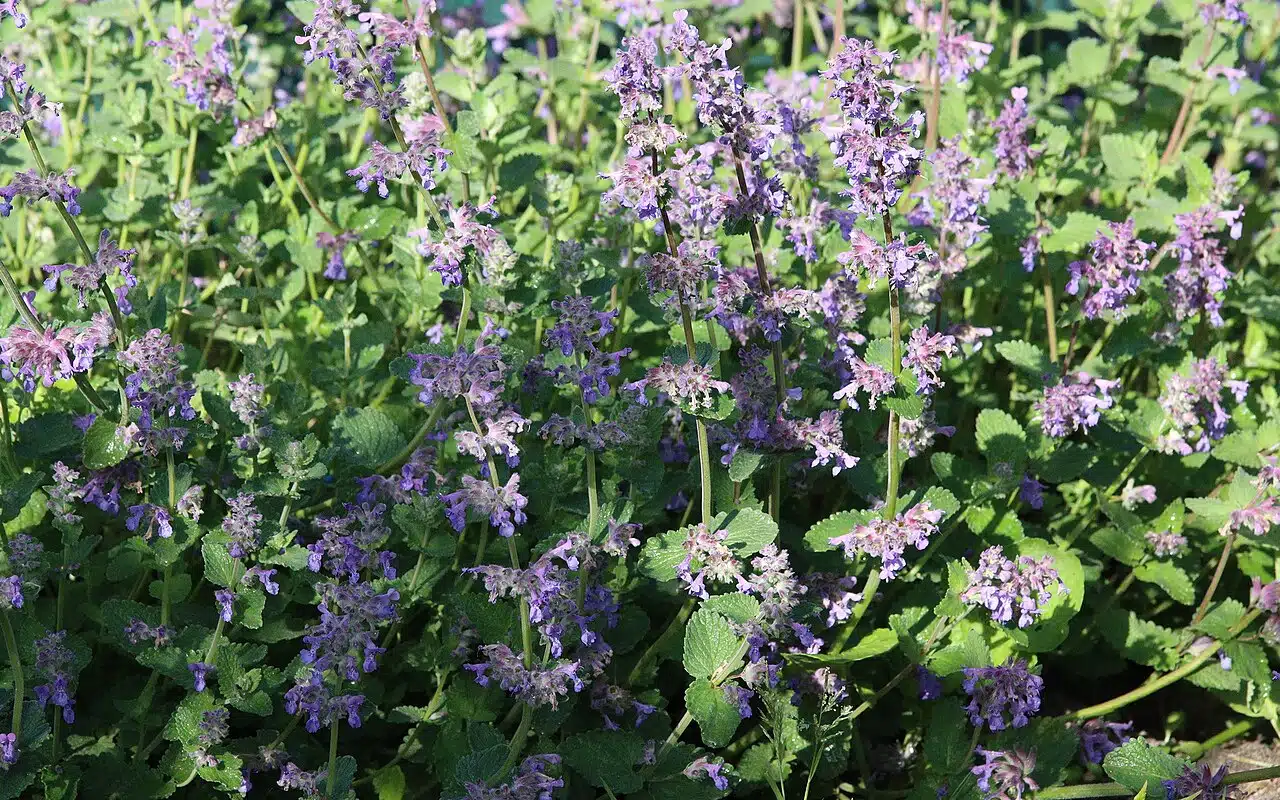
Catmint is the plant to reach for when you want the dreamy look of lavender without quite so much fuss. It makes a loose mound of aromatic gray-green leaves topped with lavender-blue flowers, usually standing about 1 to 3 feet tall, depending on the variety.
Give catmint full sun and lean, well-drained soil. Once its roots are established, it handles heat and missed waterings remarkably well. Bees visit the flowers, while the scented foliage often discourages deer and rabbits.
If the first flush starts looking tired, shear the plant back by roughly one-third to one-half. Fresh foliage and a lighter round of flowers often follow. The catch? Rich soil, heavy fertilizer, and too much water can make catmint flop like it stayed out past bedtime.
2. Black-Eyed Susan: Sunshine With a Sturdy Backbone

Black-eyed Susan brings the sort of color that wakes up an entire border: golden petals around a dark chocolate-brown cone. For a dependable perennial clump, look for Rudbeckia fulgida selections such as ‘Goldsturm’ rather than assuming every plant sold under the common name behaves the same way.
Plant it in full sun for the strongest stems and heaviest flowering. Established plants tolerate heat and dry spells, and the blooms can carry the show from midsummer into fall. Pollinators work the flowers, and birds may pick at the seed heads later.
Allow good airflow and water at soil level. Black-eyed Susans can develop leaf-spot diseases, especially when crowded or repeatedly splashed. They’ll live through it, but the foliage looks far better when leaves dry quickly.
3. Russian Sage: The Big, Airy Backdrop

Russian sage looks like lavender turned up to extra-large. Its silvery stems and tiny blue-violet flowers form a hazy veil that can reach 2 to 4 feet tall, making it useful behind lower mounds of sedum, catmint, or lamb’s ear.
Full sun and sharp drainage are nonnegotiable. Heat, reflected sun, gravelly soil, and ordinary drought rarely bother an established plant. Shade and wet soil are what make it weak, floppy, or short-lived.
Leave the stems standing through winter if you like their pale structure, then cut them back in late winter or early spring as growth begins. Don’t bury the woody crown under a mountain of mulch; dry air around the base is its friend.
4. ‘Autumn Joy’ Stonecrop: Succulent Leaves and Fall Color

Those thick, fleshy leaves aren’t just decorative. They store water, helping ‘Autumn Joy’ stay composed when thirstier plants start complaining. Broad flower clusters open pale pink and deepen toward rosy bronze as fall moves along.
Plant it in full sun and dry-to-average, well-drained soil. A mature clump usually lands around 18 to 24 inches tall and gives late-season bees and butterflies a useful place to feed.
The funny part is that kindness can spoil it. Too much fertilizer, shade, or irrigation produces soft growth that splits open in the middle. Lean conditions keep the mound tighter. Leave dry flower heads for winter structure, then cut the stems down before new spring growth rises.
5. Lamb’s Ear: Soft Silver Foliage for the Front Edge

Lamb’s ear is exactly as touchable as the name suggests. Its broad, velvety leaves make a low silver mat that cools down hot flower colors and keeps the front of a bed interesting even when nothing nearby is blooming.
Dry soil is safer than wet soil for this plant. Give it full sun in cooler regions, a little afternoon shade in very hot climates, and excellent drainage everywhere. Established clumps are moderately drought tolerant and typically need far less fuss than thirsty groundcovers.
Whatever you do, don’t keep the fuzzy leaves constantly wet. They trap moisture and can rot in humid weather or soggy soil. Remove shabby leaves as needed, divide crowded clumps every few years, and choose a foliage cultivar such as ‘Helen von Stein’ if you prefer fewer flower stalks.
6. Daylily: Tough Roots and a Long Parade of Flowers

A daylily flower lasts only a day, but a healthy clump carries so many buds that the show rolls on. The arching, strap-shaped foliage fills space quickly, and the fleshy roots help established plants ride out heat and dry weather.
Full sun produces the most flowers, though light shade is workable. Daylilies adapt to a wide range of soils as long as water can drain. Most garden selections stand roughly 1½ to 3 feet tall, with colors ranging from creamy yellow to deep red.
Water new divisions deeply until established, then step back. One caution: the orange “ditch lily,” Hemerocallis fulva, spreads aggressively and is considered invasive in some places. Choose a well-behaved clumping cultivar and check your local invasive-plant guidance before planting the species shown here.
7. Woodland Sage: Upright Spikes Without Constant Water

Woodland sage gives a border tidy vertical punctuation: dense purple, violet, or blue flower spikes above aromatic foliage. It generally stays around 18 to 30 inches tall, so it slips neatly between mounded plants without hiding everything behind it.
For the best performance, give perennial sage full sun and well-drained soil. Once established, it handles routine dry spells and keeps drawing bees and other pollinators. It’s particularly good where you want the color of catmint in a more upright shape.
Shear off faded spikes after the main bloom and you may get a smaller encore. Make sure the tag says a hardy perennial type such as Salvia nemorosa; the big genus also contains tender and annual salvias with very different needs.
8. Globe Thistle: Steel-Blue Spheres That Love the Heat

Globe thistle looks as if someone dotted the border with tiny blue planets. Each round flower head is made of many small starry blooms, held above gray-green, thistle-like foliage on plants roughly 2 to 4 feet tall.
Put it in full sun with very well-drained soil. Once established, it tolerates drought, summer heat, and relatively poor ground. The globes are striking in fresh bouquets and keep their shape in dried arrangements.
Globe thistle can reseed where it is happy. Deadhead before seed matures if you want a tighter rein, or leave a few heads standing for texture and visiting birds. Gloves make cleanup more comfortable—the foliage is not merely pretending to look prickly.
9. Yarrow: Flat-Topped Flowers for Pollinators and Bouquets

Yarrow combines ferny foliage with broad, flat-topped flower clusters that make excellent landing pads for small pollinators. The straight species blooms white, while garden cultivars come in yellow, apricot, pink, red, and plenty of sunset shades.
Sun and lean, well-drained soil keep yarrow compact. Established plants have low water needs and often bloom better when they aren’t overfed. Depending on the selection, expect about 1 to 3 feet of height.
After the first flush, cut spent stems back to fresh basal growth for a cleaner clump and possible rebloom. Yarrow can wander by rhizomes or seed, so divide it when it gets pushy. In a rich, frequently watered bed it may flop and spread faster—which is the plant’s way of charging you for pampering it.
10. Blue Fescue: A Neat Little Blue Porcupine

Blue fescue is a small ornamental grass with fine blue-gray blades arranged in a rounded tuft. At roughly 8 to 12 inches tall before flower stems rise, it makes a crisp edge, a gravel-garden accent, or a cool-colored contrast beside pink and yellow flowers.
Give it full sun and dry, sharply drained soil. It tolerates poor soil and drought once established, but wet winter ground can rot the crown. Comb out dead blades in spring rather than hacking the clump down to bare stubble.
The catch is climate. Blue fescue is a cool-season grass and may struggle in hot, humid summers. Clumps also tend to thin or die in the center, so divide or replace them every two to three years. It’s tougher in the right region than it is universally indestructible.
11. Purple Coneflower: Summer Color, Then Seeds for Birds

Purple coneflower earns its space twice. Summer brings pink-purple rays around a raised orange-brown cone; fall and winter leave sturdy seed heads that finches and other birds can investigate.
Plant it in full sun to light shade and well-drained soil. Mature plants commonly reach 2 to 4 feet and tolerate heat and ordinary drought once established. They’ll still flower longer and look fresher with a deep drink during an extended dry spell.
Deadhead some blooms if you want to encourage more flowers, but leave several seed heads standing. And don’t rush to cut every stem to the ground in fall: hollow dead stems can shelter native bees. A slightly untidy winter garden is often a much livelier one.
The easiest border starts with honest site matching. Use Russian sage and globe thistle at the back, weave daylilies and coneflowers through the middle, then edge with catmint, lamb’s ear, stonecrop, and blue fescue. Repeating plants in groups of three or five makes the whole bed look intentional instead of like the clearance rack followed you home.
Water deeply rather than sprinkling daily, and spread 2 to 3 inches of mulch over open soil while keeping it away from crowns and stems. Once the roots are established, these plants can handle an imperfect watering schedule—and your border can stay beautiful without holding the hose hostage.
Horticultural references: Penn State Extension’s heat- and drought-tolerant plant list; UNH Extension’s establishment guidance; Illinois Extension’s globe thistle profile; Clemson Extension’s daylily guide; and NC State Extension’s lamb’s ear profile.
Image Credits
- Faassen’s catmint (Nepeta × faassenii). Photo by Dennis Lamczak via Wikimedia Commons, CC BY-SA 2.0.
- ‘Goldsturm’ black-eyed Susan (Rudbeckia fulgida var. sullivantii). Photo by David J. Stang via Wikimedia Commons, CC BY-SA 4.0.
- Russian sage (Salvia yangii, formerly Perovskia atriplicifolia). Photo by Almapayokels via Wikimedia Commons, CC0.
- ‘Autumn Joy’ stonecrop (Hylotelephium ‘Herbstfreude’). Photo by Magnus Manske via Wikimedia Commons, CC BY-SA 3.0.
- ‘Helen von Stein’ lamb’s ear (Stachys byzantina). Photo by David J. Stang via Wikimedia Commons, CC BY-SA 4.0.
- Orange daylily (Hemerocallis fulva), shown as a clear species reference. Photo by James St. John via Wikimedia Commons, CC BY 2.0.
- Woodland sage (Salvia nemorosa). Photo by AnRo0002 via Wikimedia Commons, CC0.
- Globe thistle (Echinops ritro). Photo by Patrick Ch. Apfeld via Wikimedia Commons, CC BY 3.0.
- Common yarrow (Achillea millefolium). Photo by AnemoneProjectors via Wikimedia Commons, CC BY-SA 2.0.
- Blue fescue (Festuca glauca). Photo by W.carter via Wikimedia Commons, CC BY-SA 4.0.
- Purple coneflower (Echinacea purpurea). NPS photo via Wikimedia Commons, public domain.