Most of us pull tomato plants after the first hard frost and start again from seed the following year. That is sensible—but it is not the whole story.
Tomatoes are tender perennials. In warm, frost-free conditions, a healthy tomato vine can keep growing beyond a single season. In colder climates, winter weather ends the party unless you move the plant—or a piece of it—indoors.
The good news? You do not need a tropical backyard or a heated greenhouse. Here is how to overwinter a tomato without turning your living room into a jungle.
Wait—Are Tomato Plants Really Perennials?
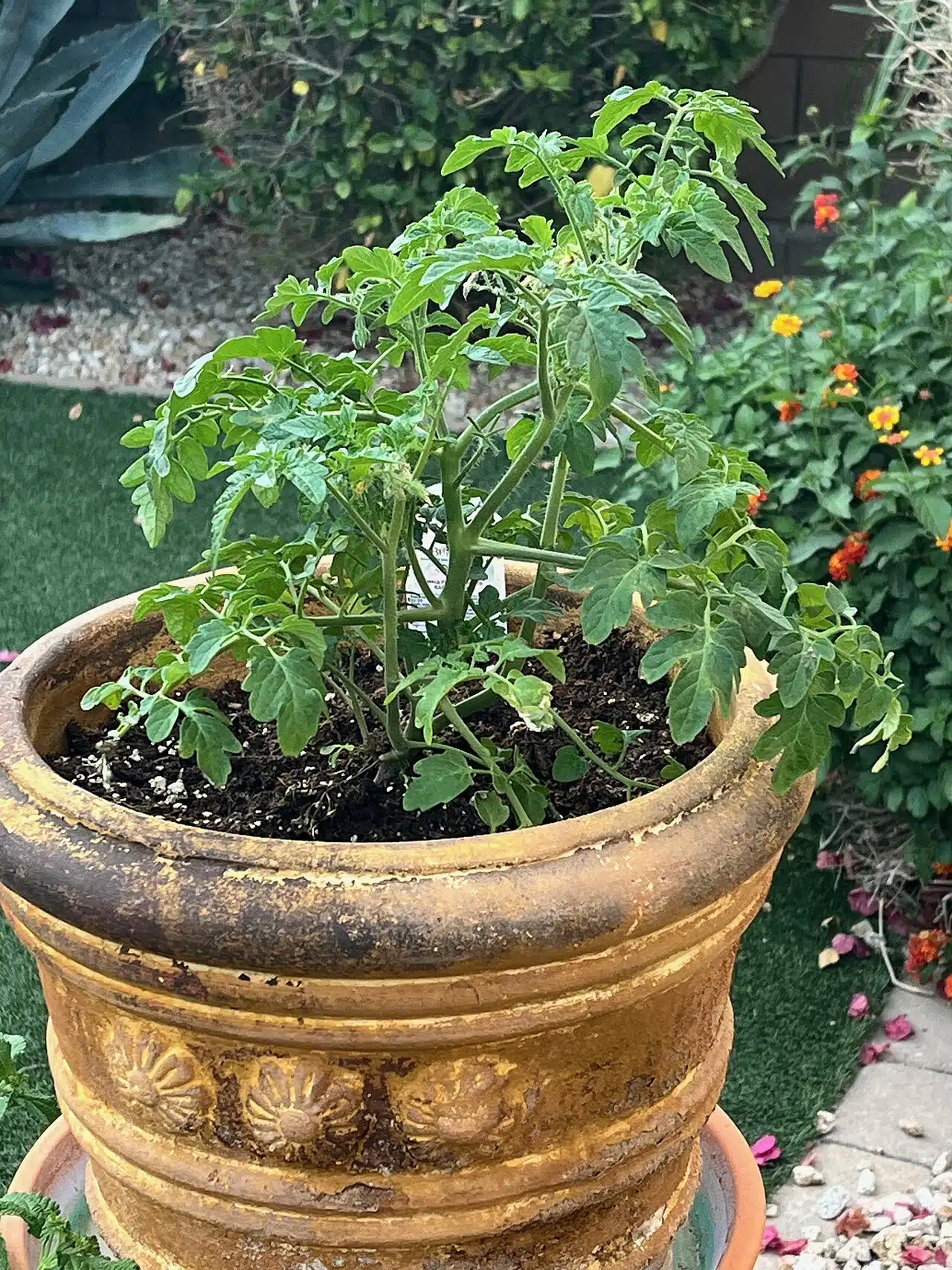
Yes. A tomato (Solanum lycopersicum) is biologically capable of living for more than one year. It is grown as an annual because it cannot tolerate frost, not because it is programmed to die after fruiting.
The University of Illinois Extension describes tomato as a “tender, warm-season perennial.” North Carolina State Extension likewise notes that tomatoes are perennial in frost-free climates.
That distinction matters. An outdoor tomato will not behave like an apple tree, disappearing into safe dormancy and returning after a freezing winter. Its watery stems and leaves are damaged by cold, and a hard freeze usually kills the plant.
In USDA zones with true frost, overwintering means providing protection indoors. In tropical and subtropical gardens, tomatoes may live longer outdoors, although heat, pests, and disease can still shorten their lives.
There is another reality check: “perennial” does not mean “immortal.” An old tomato may become woody, awkward, or less productive. The practical goal is usually to carry prized genetics through winter, then grow a vigorous plant—or fresh clones from it—the next season.
Choose a Tomato Worth Saving

Overwintering takes space under a window or grow light, so be selective. Save your healthiest, tastiest, most productive plant—not every vine in the garden.
A hybrid is an especially good candidate. Seeds saved from a hybrid tomato may not grow true to the parent, but a cutting is a clone. It preserves the exact plant that gave you that wonderful flavor, color, or disease resistance.
Indeterminate varieties are usually the easiest to keep going because their stems continue to grow and flower. Determinate tomatoes have a more limited growth pattern. You can overwinter one, but it may be less rewarding than starting a fresh plant.
Look for:
- Clean, green new growth
- Sturdy stems with no soft or black areas
- No webbing, sticky residue, whiteflies, aphids, or clusters of insect eggs
- No suspicious leaf spots, mottling, wilting, or spreading yellow foliage
Do not bring a badly diseased or heavily infested tomato indoors. It is not worth giving pests a warm winter vacation among your houseplants. Take only clean cuttings from a healthy section—or let that plant go and begin with fresh seed.
The Easiest Method: Overwinter Tomato Cuttings

For most gardeners, this is the winner. A small rooted cutting preserves the parent plant while taking up a fraction of the room. It also leaves most of the outdoor soil—and the creatures living in it—outside.
- Cut a healthy 4- to 6-inch shoot with at least two leaf nodes. A vigorous side shoot, often called a sucker, works well. Use clean, sharp snips.
- Remove the leaves from the lower half. Pinch off flowers and tiny fruits so the cutting can spend its energy making roots.
- Place the bare nodes in a clean glass of water, or insert them into moist, sterile seed-starting mix or perlite.
- Keep the cutting warm in bright, indirect light. If using water, refresh it every few days.
- When several roots are roughly 1 to 2 inches long, pot the cutting in a container with drainage and fresh potting mix.
Tomato stems make adventitious roots readily, which is why this trick works so well. If you root directly in mix, keep it evenly moist, never swampy, until gentle resistance tells you roots have formed.
Take two or three cuttings from a treasured plant as insurance. Once they are established, keep the best one and share the extras. Suddenly, “pruning” feels rather generous.
How to Bring a Whole Tomato Plant Indoors

A compact patio tomato that is already in a pot can come inside intact. A ten-foot vine growing in the ground is another matter. For a large in-ground plant, cuttings are normally easier and less stressful than digging up the root ball.
Move the plant before frost, ideally before chilly nights become routine. Harvest ripe fruit and any mature green tomatoes you want to ripen indoors.
Then make the plant fit its winter home:
- Prune it back by about one-half, removing sprawling, damaged, and crowded growth.
- Remove flowers and developing fruit.
- Check every stem and the undersides of leaves for insects.
- Rinse foliage with a firm, gentle stream of water and wipe the pot clean.
- If the mix is old, compacted, or pest-filled, repot into fresh indoor potting mix. Never use heavy garden soil in an indoor container.
Quarantine the newcomer away from houseplants for at least two weeks. Inspect it every few days. Spider mites, aphids, and whiteflies multiply quickly in warm, dry indoor air, and early action is much easier than a winter-long battle.
Expect some leaf drop after the move. Outdoor sun is vastly stronger than window light, and pruning plus relocation is a shock. A little sulking is normal; collapsing stems, spreading spots, or clouds of insects are not.
Winter Care: Keep It Alive, Not Productive

Your winter tomato does not need to fill a salad bowl in January. The mission is survival. Modest, compact growth is a success.
Give it your brightest south-facing window. If the stems stretch and the new leaves grow small and pale, add a full-spectrum grow light. Position it according to the manufacturer’s instructions and run it on a timer for about 14 to 16 hours per day.
Keep the plant away from freezing glass and blasts from heating vents. Normal household temperatures are usually comfortable, but tomatoes grow poorly in cold drafts.
Water when the top inch of potting mix feels dry. Soak the mix thoroughly, let excess water drain, and empty the saucer. Overwatering is the most common winter mistake because a cool, slow-growing plant uses much less water than it did in July.
Feed lightly only if the plant is making active new growth. A half-strength balanced liquid fertilizer every four to six weeks is plenty. Skip fertilizer when growth has nearly stopped.
Pinch off winter flowers and trim lanky shoots as needed. Rotate the pot a quarter turn weekly for even growth. A small fan on low nearby—not blasting directly at the leaves—can improve air movement.
Finally, do a weekly pest check. Look under the leaves first. Fine stippling and webbing suggest spider mites; sticky leaves may point to aphids or whiteflies. Isolate and treat problems immediately with a product labeled for the pest and for use on edible plants indoors.
Wake Your Tomato Up for Spring

About a month before your usual planting time, give the survivor a gentle tune-up. Remove weak growth, refresh the top layer of potting mix, and begin normal feeding as stronger light triggers new leaves.
If the plant has become woody or unwieldy, there is no need to wrestle it into the garden. Take vigorous spring cuttings and root them as clean, compact clones. You still saved the original plant—and you get easier transplants.
Do not rush outside on the first warm afternoon. Wait until frost danger has passed and nights stay reliably warm. Tomatoes can be stunted by cold even when temperatures remain above freezing.
Harden the plant off over 7 to 10 days:
- Start with an hour or two in bright shade in a protected spot.
- Add time and a little morning sun each day.
- Protect it from strong wind and bring it inside on cold nights.
- Gradually work up to a full day in its intended location.
When planting, bury a portion of a leggy tomato stem to encourage more roots, but keep plenty of leafy top growth above the soil. Add support early so you are not spearing roots with a stake later.
Will an overwintered tomato always out-yield a fresh seedling? No. Light, variety, pests, and the plant’s overall vigor still matter. But overwintering can preserve an irreplaceable favorite and give you a satisfying head start.
And that is the real surprise: the first frost does not have to be the ending. With one small pot, a bright light, and a little restraint with the watering can, your best tomato can become next year’s opening act.
Horticultural references: University of Illinois Extension: Tomato; NC State Extension: Solanum lycopersicum; University of Minnesota Extension: indoor seedling light; Penn State Extension: propagating plants from cuttings.
Photo Credits
- Featured image: “Organic home-grown tomatoes—unripe to ripe” by Michal Klajban, CC BY-SA 4.0, via Wikimedia Commons.
- “Tomato Plant June ’24” by Weeone61, CC0, via Wikimedia Commons.
- “Flowers and cherry tomatoes growing in planter box” by Tomwsulcer, CC0, via Wikimedia Commons.
- “Tomato 27 days from planting seeds” by Dennis Brown, CC BY-SA 3.0, via Wikimedia Commons.
- “Ring culture of tomato plants” by Jolly Janner, public domain, via Wikimedia Commons.
- “Solanum lycopersicum—Tomato flower” by André Karwath, CC BY-SA 2.5, via Wikimedia Commons.
- “-365 Tomato plants” by terri_bateman, CC0, via Wikimedia Commons.