Ohio is home to some amazing wildlife and plants… but it’s also got a sneaky bunch of troublemakers who’ve taken over.
These invasive (and non-native) species don’t just show up for a visit. They crash the party, hog resources, mess with native critters, and sometimes cause big headaches for farmers, gardeners, and city folks alike.
And here’s the part most people don’t realize: some of the “worst” invaders are the ones you see every day—at your feeder, on your porch, or along the nearest creek.
From birds that bully nest boxes to bugs that erase shade trees, here’s a look at 25 invaders shaking things up across Ohio… including a few you might be accidentally helping spread.
Feisty Invaders in the Bird World
European Starling – The Shakespearean Stowaway
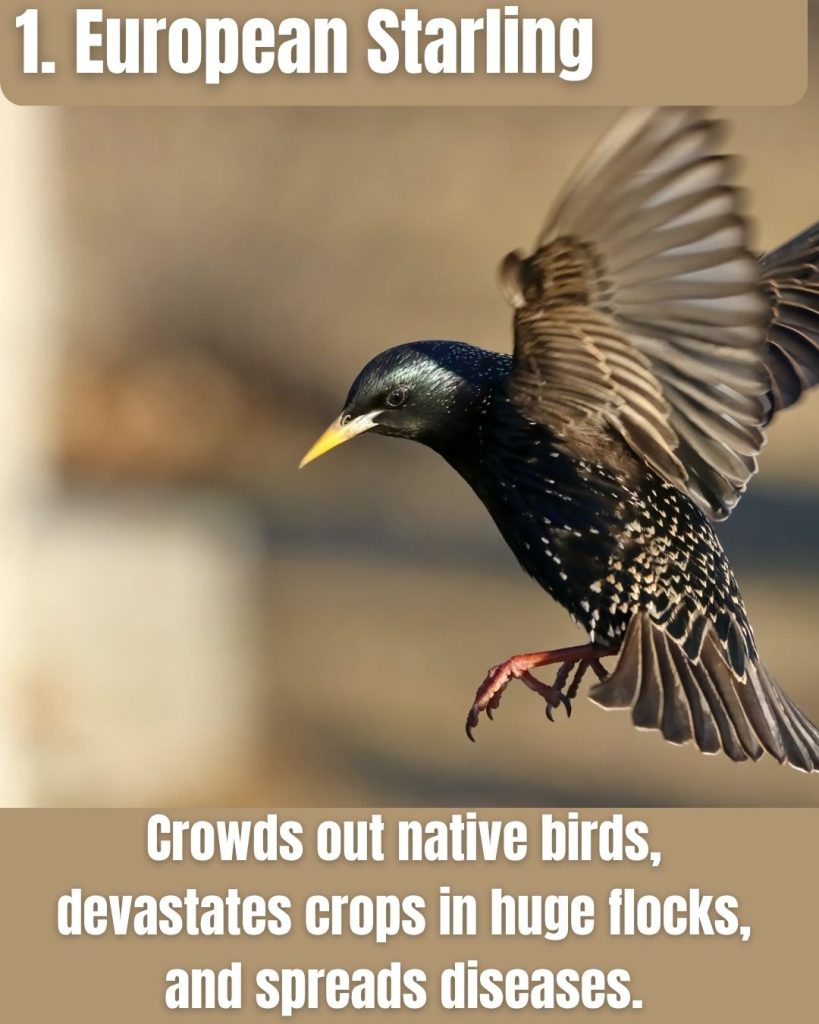
- Where you’ll notice it: feedlots, orchards, parking lots, big-box rooftops.
- What it hits: crops, livestock areas, buildings, and native cavity nesters.
- Why it wins: huge flocks + fearless behavior around people.
Imagine someone released birds just because Shakespeare mentioned them. That’s how the European starling got its start in the U.S. in the 1890s.
In Ohio, they form giant flocks called murmurations—an amazing sight… until they settle down to eat and make a mess.
They raid grain, bully native birds like bluebirds, and leave droppings that turn barns, bridges, and rooftops into a cleanup bill.
Quick spot-it test: If you’ve seen a “blackbird cloud” swirl over a field at dusk, there’s a good chance starlings are part of that show.
House Sparrow – The Brown Bully
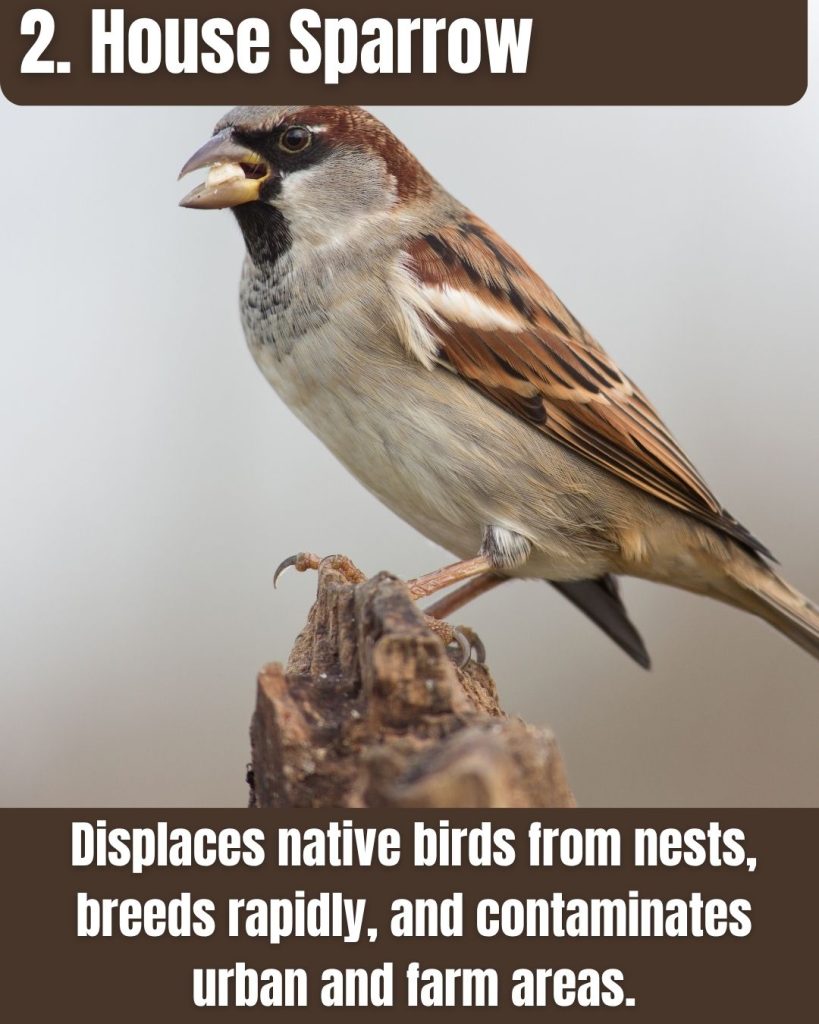
- Where you’ll notice it: nest boxes, porch corners, storefront signs.
- What it hits: bluebirds, wrens, and other native cavity nesters.
- Why it wins: multiple broods + it thrives right next to humans.
This small brown bird arrived in the 1800s and became a hard-nosed neighborhood regular that rarely leaves.
House sparrows take over nest boxes and the best little building nooks. They live off crumbs, birdseed, and anything we accidentally serve up.
In Ohio, once they claim a spot, they don’t give it up politely.
Rock Pigeon – The “City Rat” with Wings
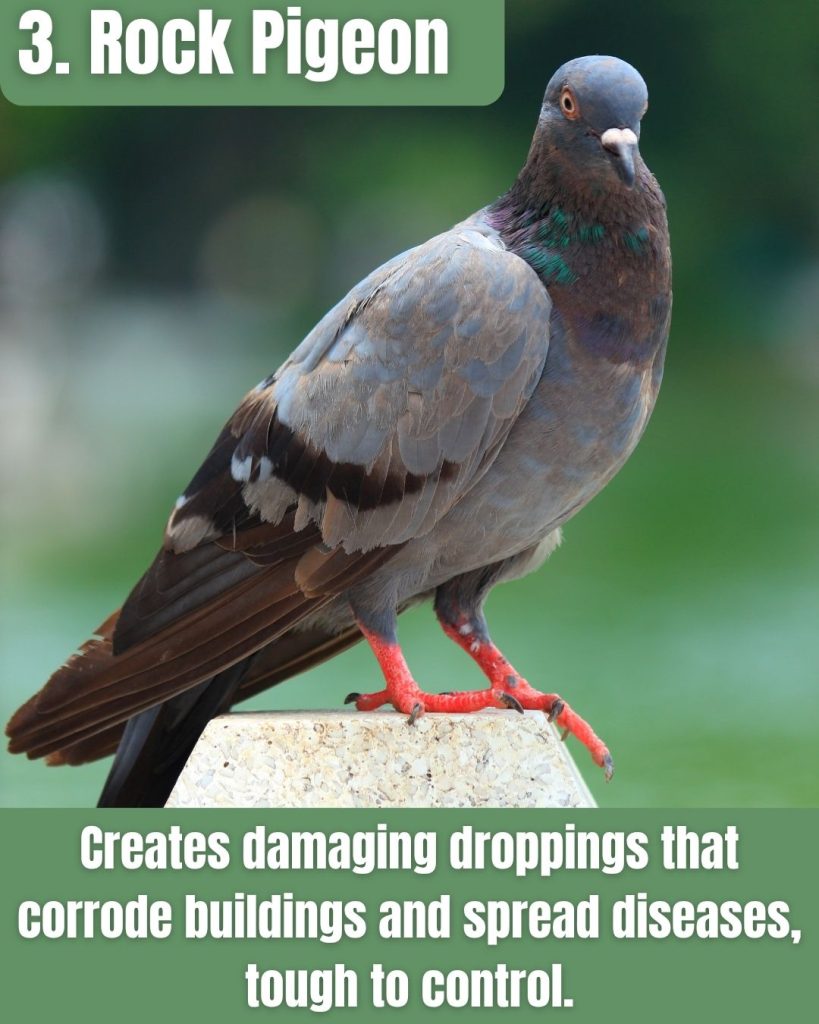
- Where you’ll notice it: bridges, downtown ledges, warehouses, stadiums.
- What it causes: corrosion, stains, clogged gutters, and nasty roost zones.
- Why it’s hard: they’re loyal to roosts and adapt fast to pressure.
You know these gray pigeons hanging around courthouses, parking garages, and city squares. They’re non-native, and Ohio cities are basically built like pigeon paradise.
Their droppings corrode buildings and monuments, and nests can clog gutters and create real maintenance problems.
They’re tough, they learn patterns, and “shooing them away” usually just moves the problem ten feet down the ledge.
Myth buster: “They’ll leave if you stop feeding them.” Sometimes. But most city roosts survive on dumpsters, spilled grain, and sheer stubbornness.
Mute Swan – The Elegant Bully of the Waters
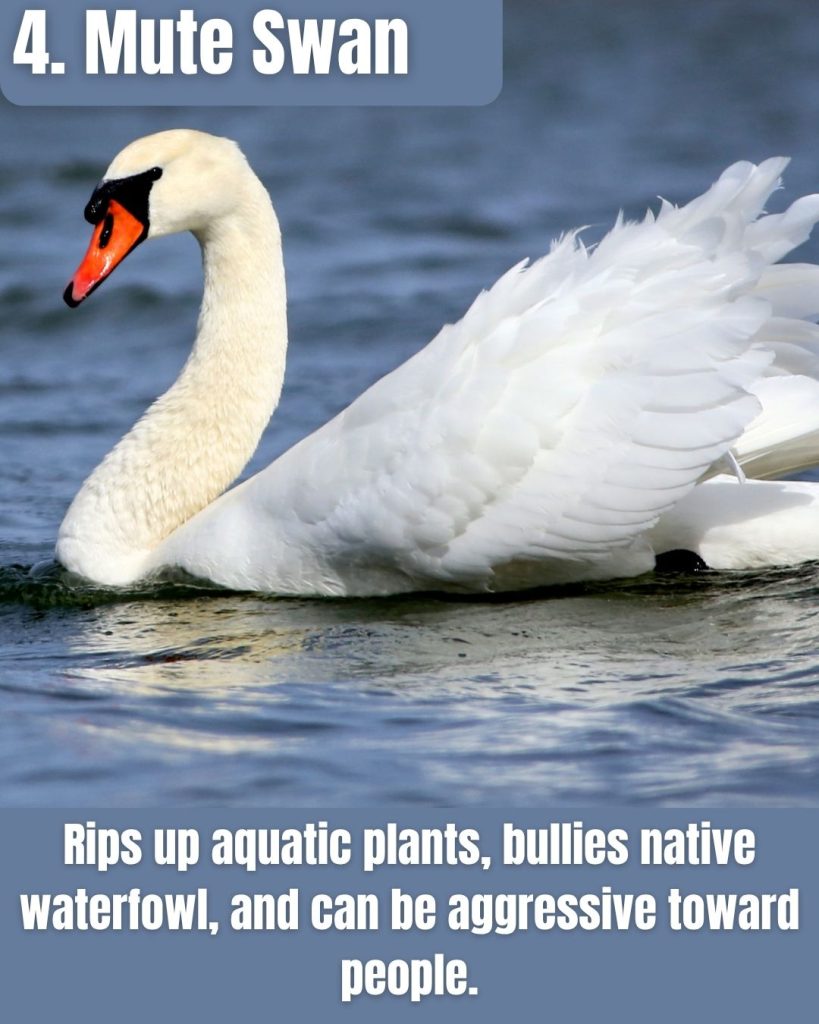
- Where you’ll notice it: Lake Erie marshes, lakes, ponds, park waterways.
- What it hits: aquatic plants, native waterfowl, and shoreline habitat.
- Why it gets ugly: territorial behavior + huge appetite for vegetation.
At first glance, mute swans look like graceful pond ornaments. But in the wrong place, they can act like a wrecking ball.
These huge white birds eat and uproot massive amounts of aquatic plants, which can wreck habitat fish and native waterfowl rely on.
They’re also territorial. In Ohio parks and popular lakes, that can mean chasing off native birds—and sometimes getting aggressive when people drift too close to nests.
Eurasian Collared-Dove – The Suburban Settler
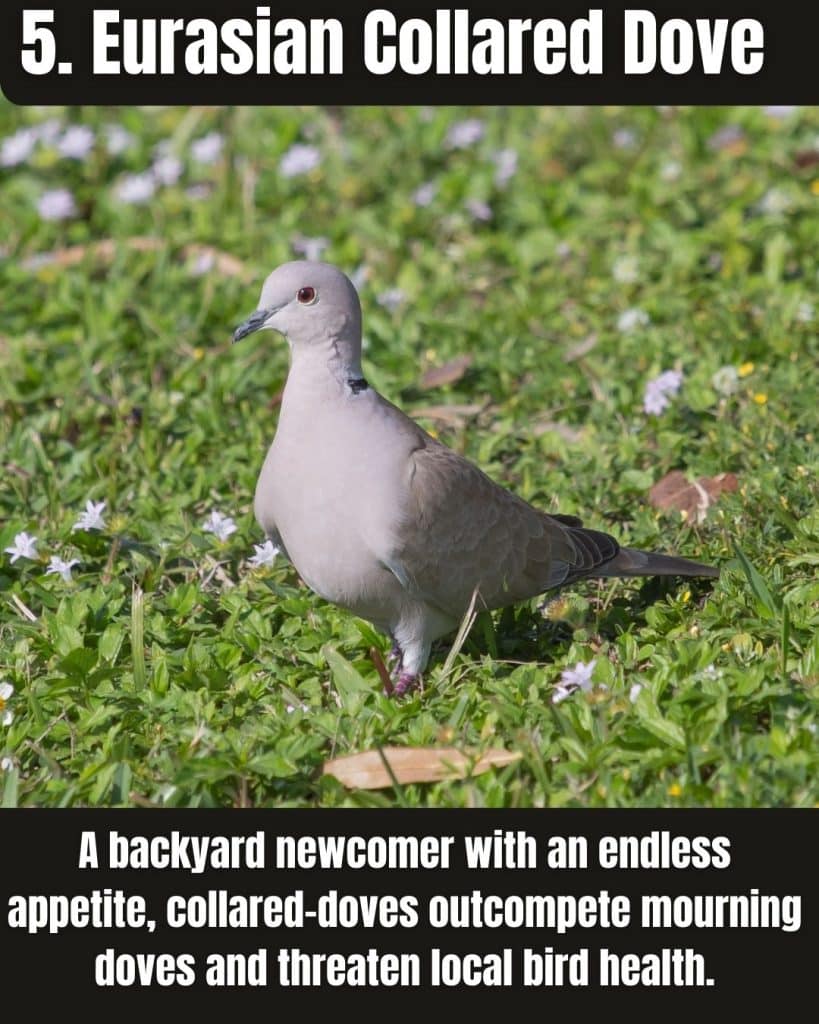
- Where you’ll notice it: parking lots, barns, subdivisions, feeder-heavy yards.
- What it changes: slowly shifts the local “bird mix” around people.
- Why it spreads: it’s calm around humans and nests almost anywhere.
If you’ve heard a steady “coo-COO-coo” in a parking lot or subdivision and thought, “That doesn’t sound like a mourning dove,” you might be right.
Eurasian collared-doves do well around people, and that’s exactly why they expand. They’re comfortable on the same edges we build—lots, barns, poles, and backyard feeder zones.
They’re not loud trouble like geese or starlings. They’re more of a quiet invader that slowly becomes “normal” in neighborhoods.
Mini-quiz: Mourning doves sound soft and sad. Collared-doves sound sharper and more mechanical—like a steady “announcement” from a light pole.
If you’re already doing little upgrades to make your backyard feel nicer (without spending a fortune), this one is a fun read:
Bugs That Bite Back
Emerald Ash Borer – The Tiny Tree Killer
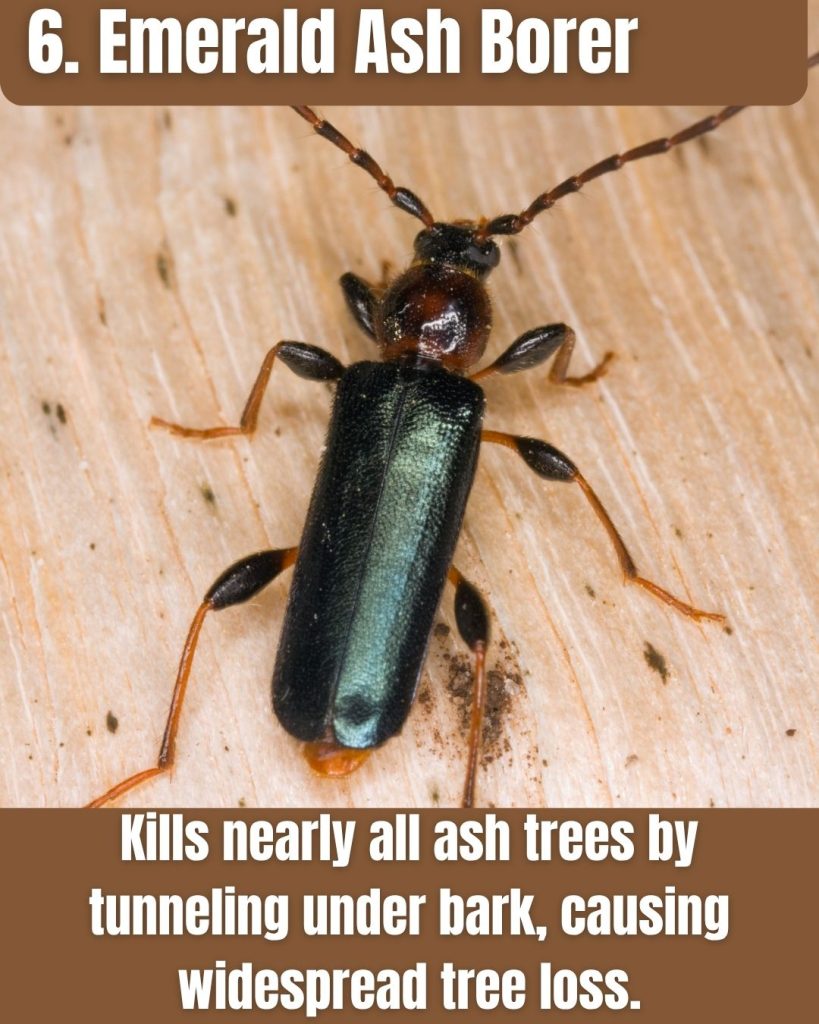
- Where you’ll notice it: dead ash limbs, thinning canopies, bark splits.
- What it changes: whole streets and woodlots can lose shade fast.
- Why it’s brutal: damage builds quietly before people spot it.
This shimmering green beetle might be small, but it has reshaped neighborhoods and forests across Ohio by killing ash trees.
Its larvae tunnel under bark and cut off the tree’s nutrient flow. By the time you see thinning leaves and dieback, the infestation is often far along.
It’s one of the biggest “before and after” tree invasions Ohio has seen in decades.
Quick spot-it test: If you see a woodpecker going to town on ash bark all winter, it can be a clue something’s feeding underneath.
Asian Longhorned Beetle – The Hardwood Threat
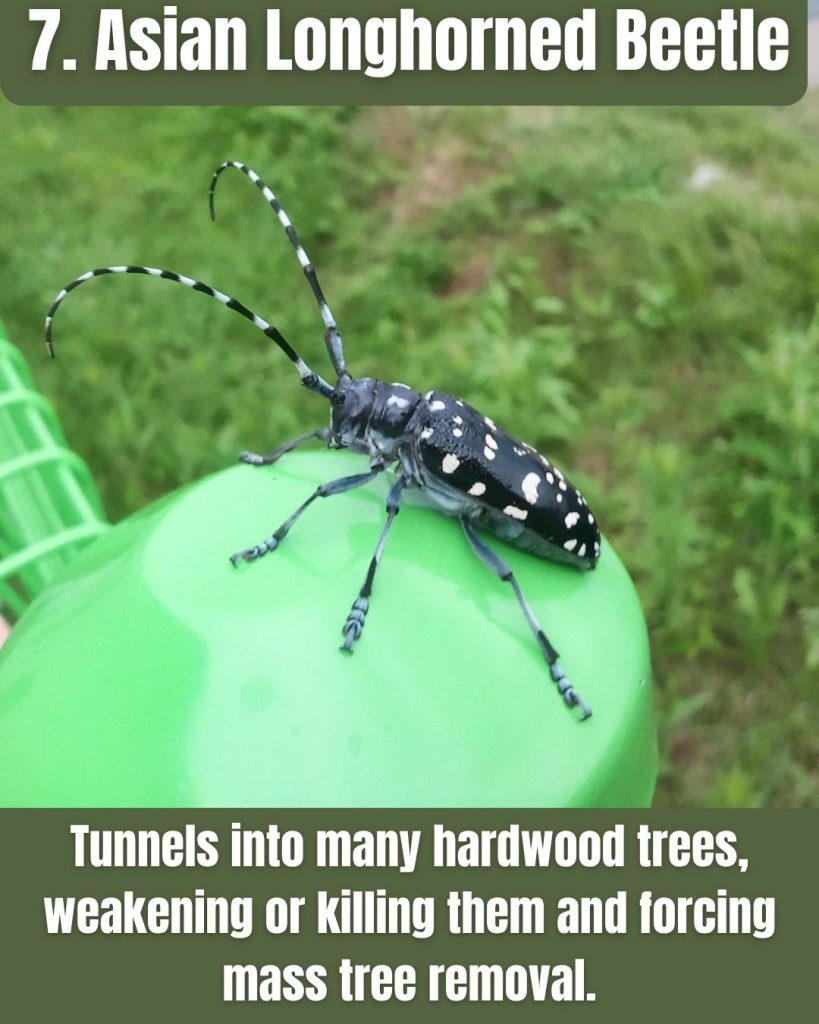
- Where you’ll notice it: maples and hardwoods in yards, parks, streets.
- What to look for: round exit holes + sawdust-like frass.
- Why it’s a big deal: it can hollow trees from the inside.
This black-and-white spotted beetle looks exotic but spells disaster for maples, elms, and other hardwoods.
Once it gets established, it weakens trees from the inside out. That’s why it’s treated like a “drop everything” pest when found.
Myth buster: “If the tree looks healthy, it’s fine.” With borers, the worst damage can be hidden until it’s advanced.
Japanese Beetle – The Garden Nightmare
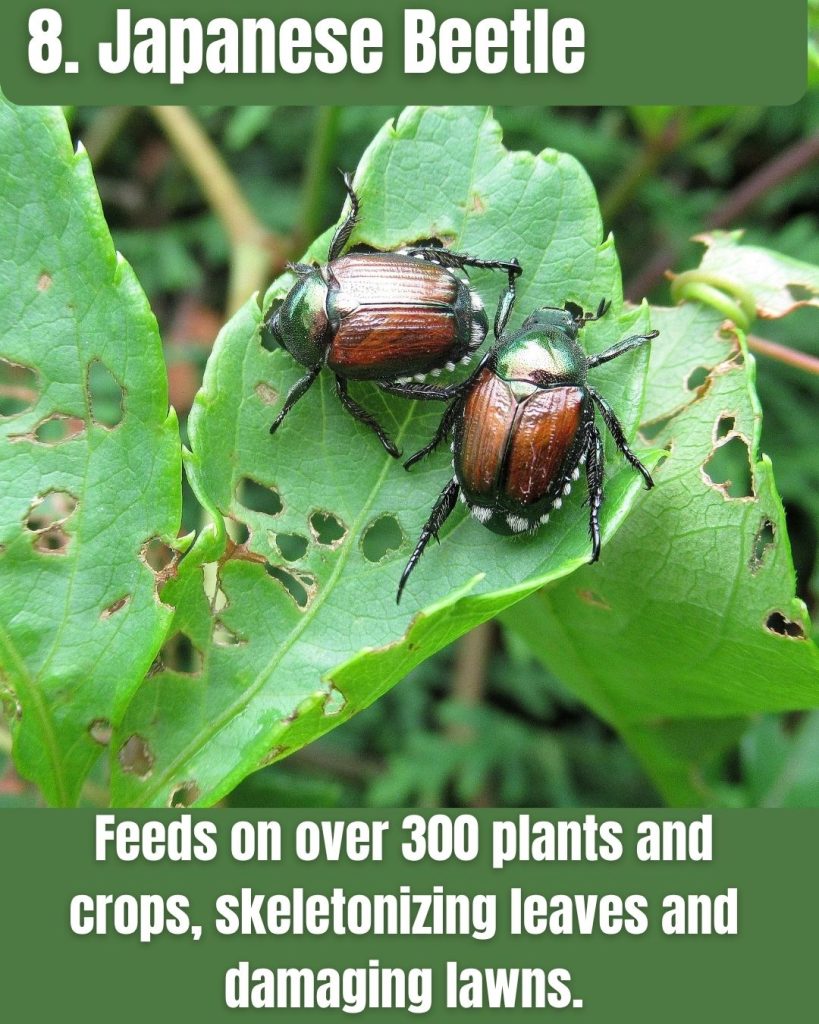
- Where you’ll notice it: roses, grapes, beans, raspberries, corn.
- What it does: “skeletonizes” leaves into lacy messes.
- Why it’s maddening: adults fly in from nearby yards even if you treat yours.
With shiny green heads and copper wings, Japanese beetles show up in summer like they own the place.
They chew leaves down to veins. Meanwhile, the larvae (grubs) chew turf roots underground—sometimes turning the lawn into a buffet for skunks.
Quick spot-it test: If you see a plant that looks “lace-punched” overnight, Japanese beetles are a top suspect.
Spongy Moth – The Forest Caterpillar Army
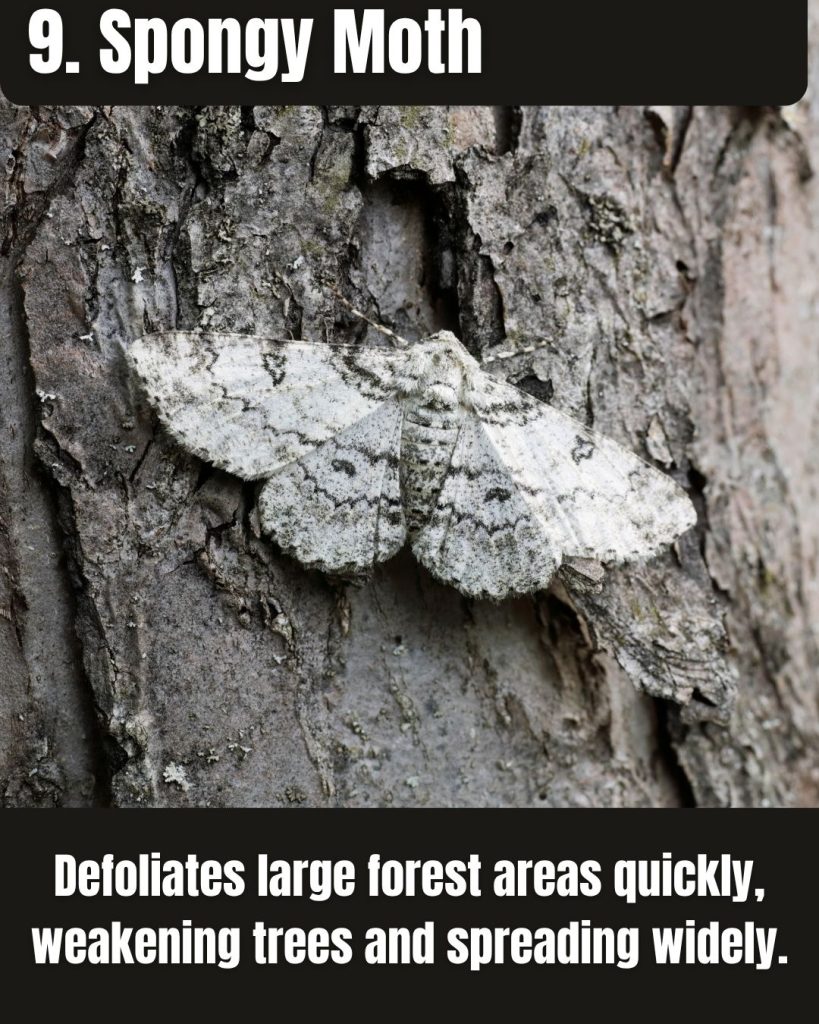
- Where you’ll notice it: oaks, wooded edges, outdoor furniture, campers.
- What it does: heavy defoliation that weakens trees over time.
- How it spreads: egg masses hitchhike on outdoor items and firewood.
Formerly known as the “gypsy moth,” spongy moth caterpillars can strip leaves across big areas, especially where oaks are common.
One bad year is rough. Multiple bad years can push trees into decline.
And if you’ve ever heard the “caterpillar crunch” in a heavy year… you don’t forget it.
Mini-quiz: Ever seen tan, fuzzy egg masses on a grill, trailer, or patio furniture? That’s one way infestations hop neighborhoods.
Brown Marmorated Stink Bug – The Smelly Pest
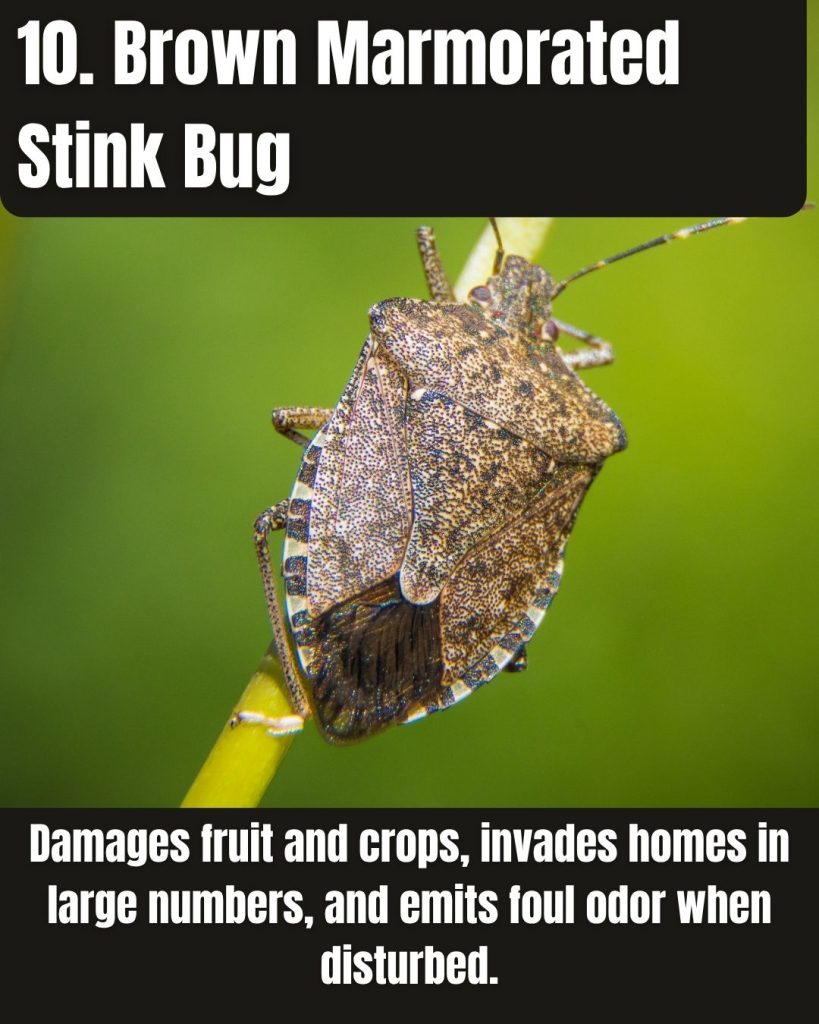
- Where you’ll notice it: windows, attics, garages—especially in fall.
- What it hits: fruit, veggies, and peace of mind.
- Why it sticks: once they find a warm overwintering spot, they pile in.
This bug doesn’t just stink—it damages fruit and garden plants, and when the weather cools, it sneaks into homes by the dozens looking for warmth.
They don’t bite. But squish one and you’ll regret it. That odor is basically their whole personality.
If you like planting for wildlife (and want your yard to feel alive), this one pairs well with the topic:
Mammal Mayhem (and Other Uninvited Houseguests)
Multicolored Asian Lady Beetle – The “Ladybug” That Moves In
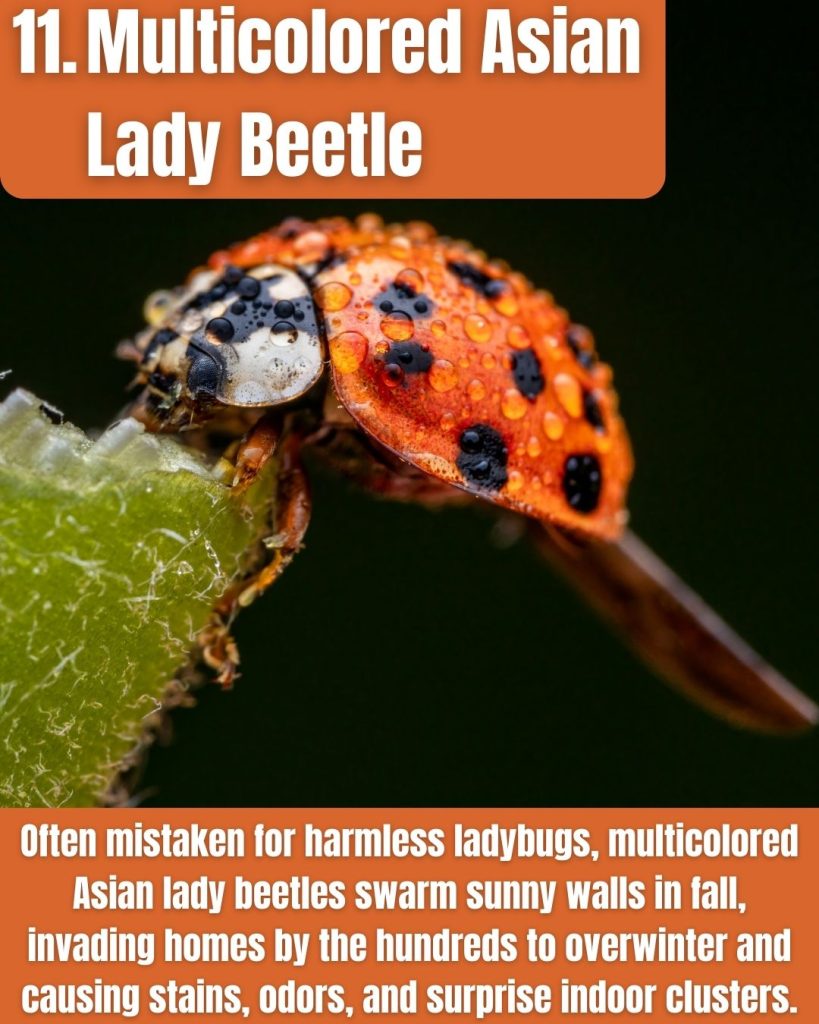
- Where you’ll notice it: sunny walls, window frames, attics in fall.
- What it causes: stains, smells, and surprise swarms indoors.
- Why people hate it: it looks harmless… until it’s everywhere.
They look like cute ladybugs—until you realize you’ve got dozens on the siding and a few crawling across the ceiling.
These beetles gather on warm, sunny walls and then slip indoors to overwinter. In Ohio, that “random fall invasion” is a yearly tradition in a lot of homes.
Quick spot-it test: If it’s orange and not perfectly round-spotted like the storybook ladybug, there’s a good chance it’s the house-invading kind.
Norway Rat – The Urban Survivor
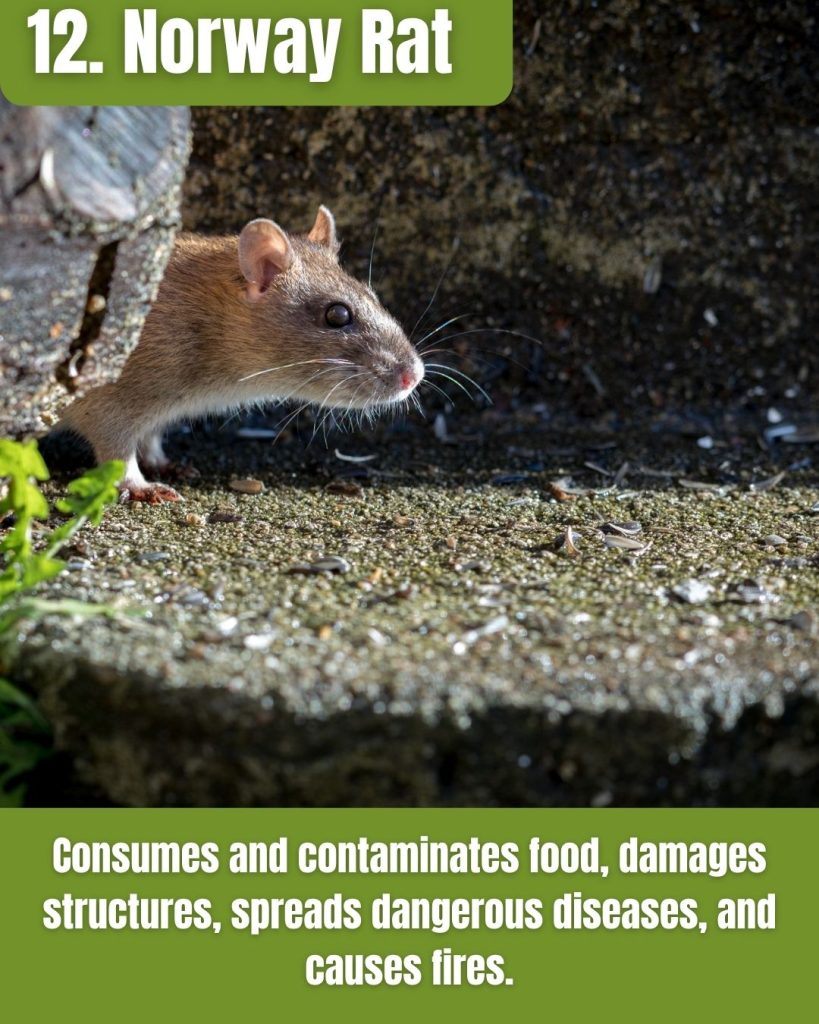
- Where you’ll notice it: alleys, sheds, basements, compost areas.
- What it does: chews wiring, wood, and infrastructure.
- Why it explodes: fast breeding when food and shelter are easy.
The Norway rat is the ultimate city slicker, living anywhere humans provide food and hiding spots.
They don’t need a “dirty” place. They just need one easy food source and one hidden route in.
In Ohio—big cities and small towns alike—rats show up because the rats live where we live.
Myth buster: “I don’t have rats because my house is clean.” Rats love clean garages with birdseed and a tiny gap under the door.
House Mouse – The Quiet Indoor Invader

- Where you’ll notice it: pantries, basements, insulation, drop ceilings.
- What it causes: contamination, gnaw damage, that “mouse smell.”
- Why it’s sneaky: often found after the damage is already done.
The house mouse is a small animal with a huge footprint. It’s non-native, adaptable, and one of the most common “I didn’t know they were here” invaders in Ohio homes, barns, and sheds.
They slip through tiny gaps, build nests in storage and insulation, and turn a pantry into a nightly snack bar.
Not flashy. Just relentless.
Jumping Worms – The Soil Shakers
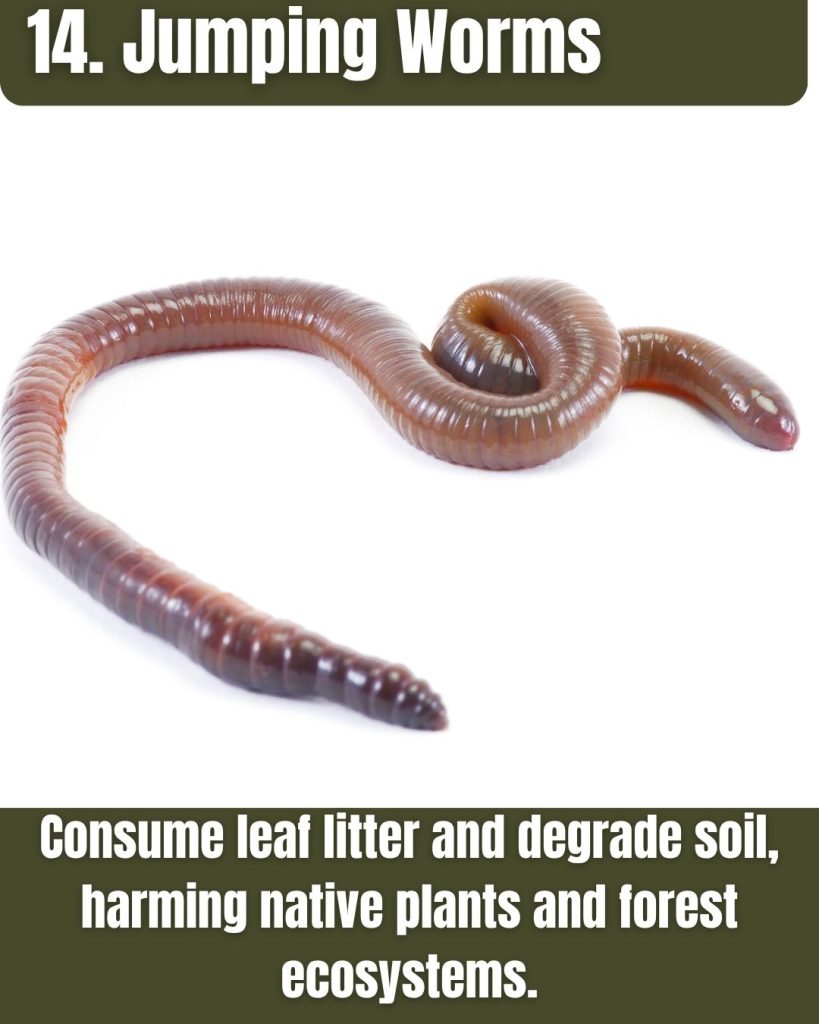
- Where you’ll notice it: gardens, mulch beds, wooded edges.
- What it changes: soil turns dry, loose, and “coffee grounds” textured.
- How it spreads: hitchhikes on potted plants, mulch, and soil.
These worms don’t just wiggle—they jump. And once they’re in, they can change the feel of soil fast.
Unlike typical earthworms that mix soil gently, jumping worms chew through leaf litter quickly and can leave soil looking like coffee grounds.
Mini-quiz: Ever pulled mulch back and found a whole layer of crumbly “grounds” soil under it? That’s a common clue.
Feral Cats – The Controversial Hunters
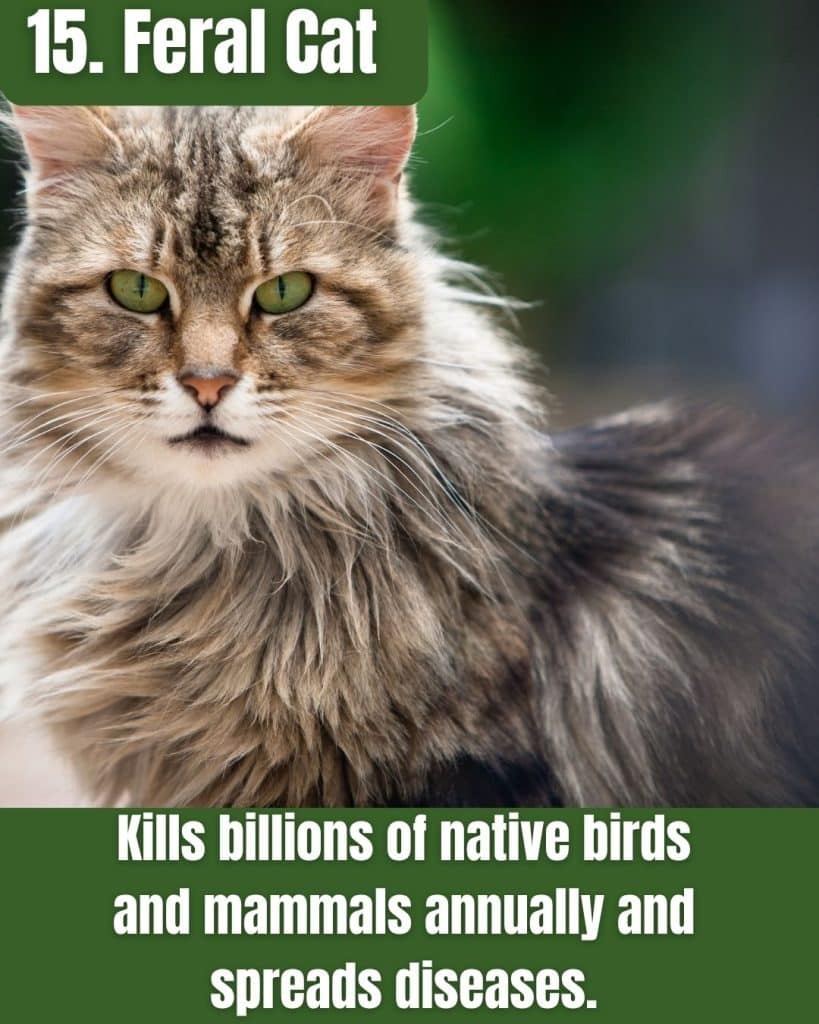
- Where you’ll notice it: parks, greenways, neighborhoods near woods/water.
- What it hits: songbirds, small mammals, reptiles.
- Why it’s hard: welfare and conservation collide fast.
Feral cats may look like “just cats,” but ecologically they behave like a non-native, free-roaming predator.
In Ohio, colonies can hit songbirds hard—especially along suburban edges where wildlife already has limited safe space.
One practical takeaway stays true: keeping pet cats indoors protects wildlife and protects the cats.
If you’re dealing with a home that isn’t getting much light (and still want plants that survive), this one’s helpful:
Trouble in the Trees and Fields: Invasive Plants Taking Over
Amur Honeysuckle – The Understory Thief
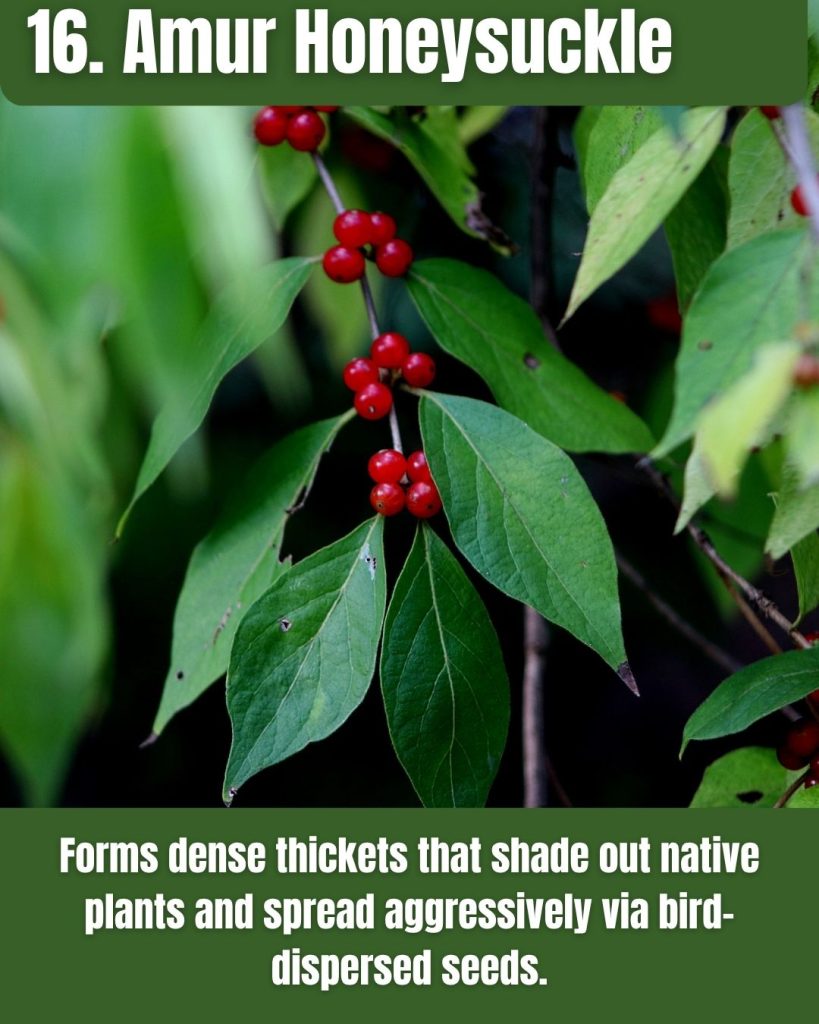
- Where you’ll notice it: woods edges, creek lines, parks, fence rows.
- What it does: forms thickets that shade out wildflowers and seedlings.
- Why it spreads: birds eat the berries and move seeds everywhere.
This shrub was introduced and widely planted, but now it can choke Ohio woodlands with thick growth that blocks light from natives.
Birds spread the berries, which means it doesn’t stay in yards. It shows up along trails, creek edges, and forest margins where it doesn’t belong.
Quick spot-it test: If it leafs out early and stays green late while everything else is bare, pay attention.
Common Buckthorn – The Hedgerow Hog
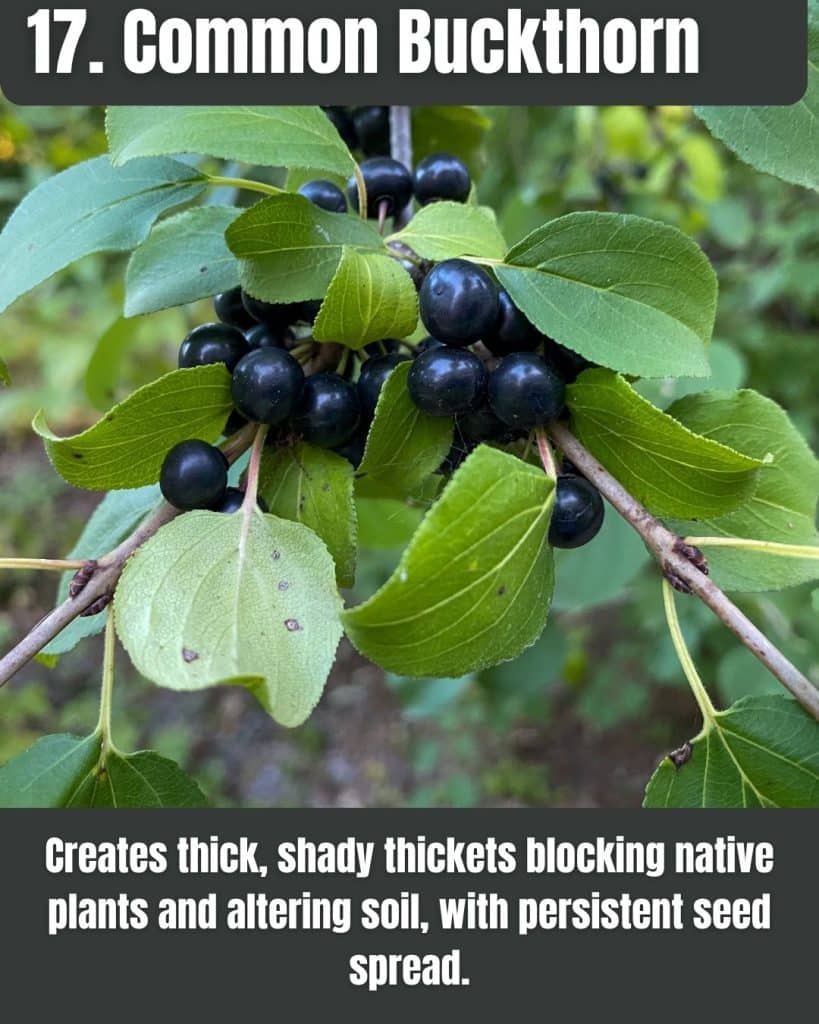
- Where you’ll notice it: hedgerows, woods edges, old fields.
- What it does: creates dense shade that reduces plant diversity.
- Why it wins: early leaf-out + late leaf-drop steals the season.
Once popular as a tough hedge plant, buckthorn can take over woodlands with dense, dark growth.
It gets a big seasonal advantage by leafing out early and staying green late—right when native seedlings need light the most.
Myth buster: “It’s just a hedge.” In the wild, it acts more like a wall.
Garlic Mustard – The Forest Floor Invader
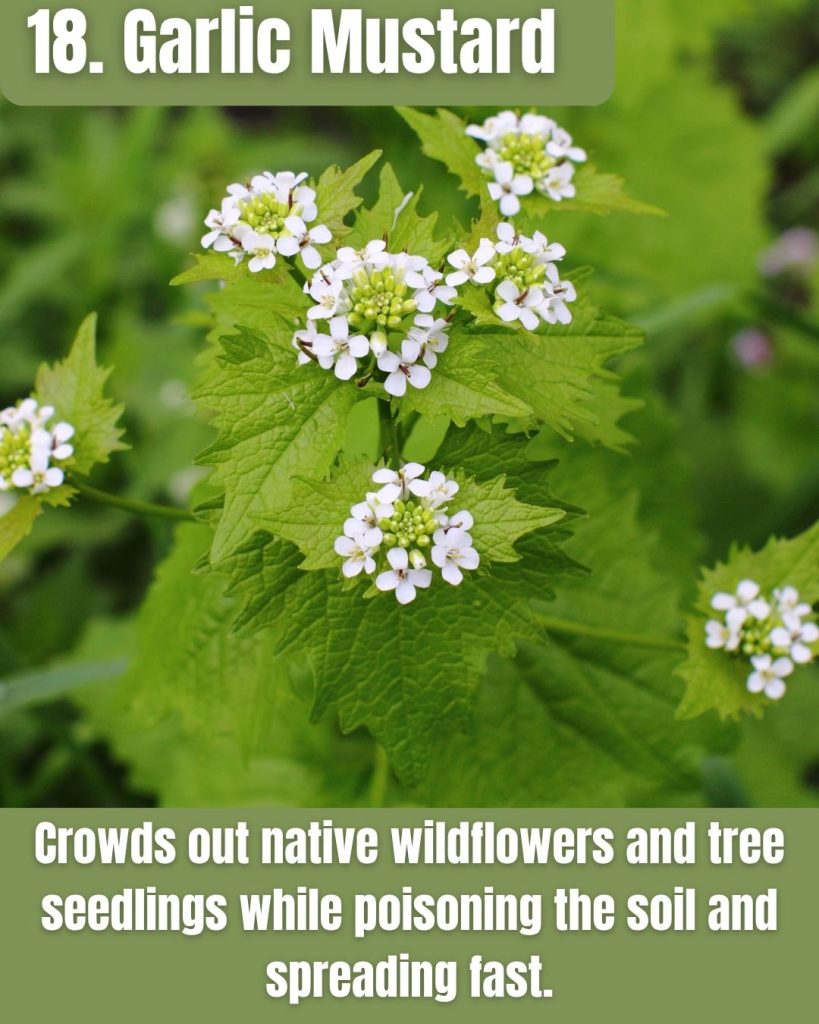
- Where you’ll notice it: shady trails, woods edges, creek corridors.
- What it does: crowds out spring wildflowers and seedlings.
- Why it sticks: seeds can stay viable for years.
This plant sneaks into forests and shaded edges, often popping up before native plants are fully awake in spring.
Once it gets established, it can push out the wildflowers that make Ohio woods so beautiful in April and May.
Quick spot-it test: Crush a leaf—if it smells garlicky, you’re probably looking at the right culprit.
Callery (Bradford) Pear – The Pretty Problem
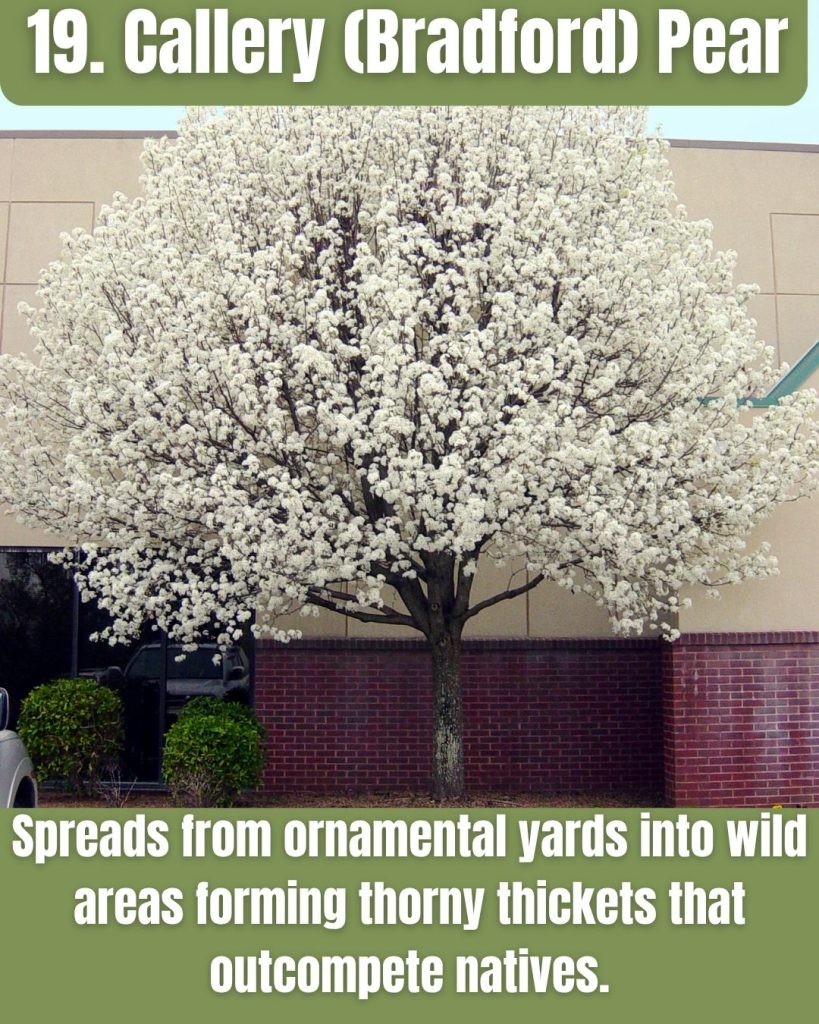
- Where you’ll notice it: roadsides, fields, subdivisions, new developments.
- What it becomes: thorny thickets that crowd out natives.
- Why it spreads: birds carry seeds far beyond landscaping.
These trees were sold as “the perfect ornamental”… until they started spreading into fields, roadsides, and open woods across Ohio.
Wild Callery pear often grows thorns and forms dense patches that crowd out native plants.
It’s one of those invasives that looks harmless—right up until it isn’t.
Japanese Knotweed – The Riverbank Wrecker
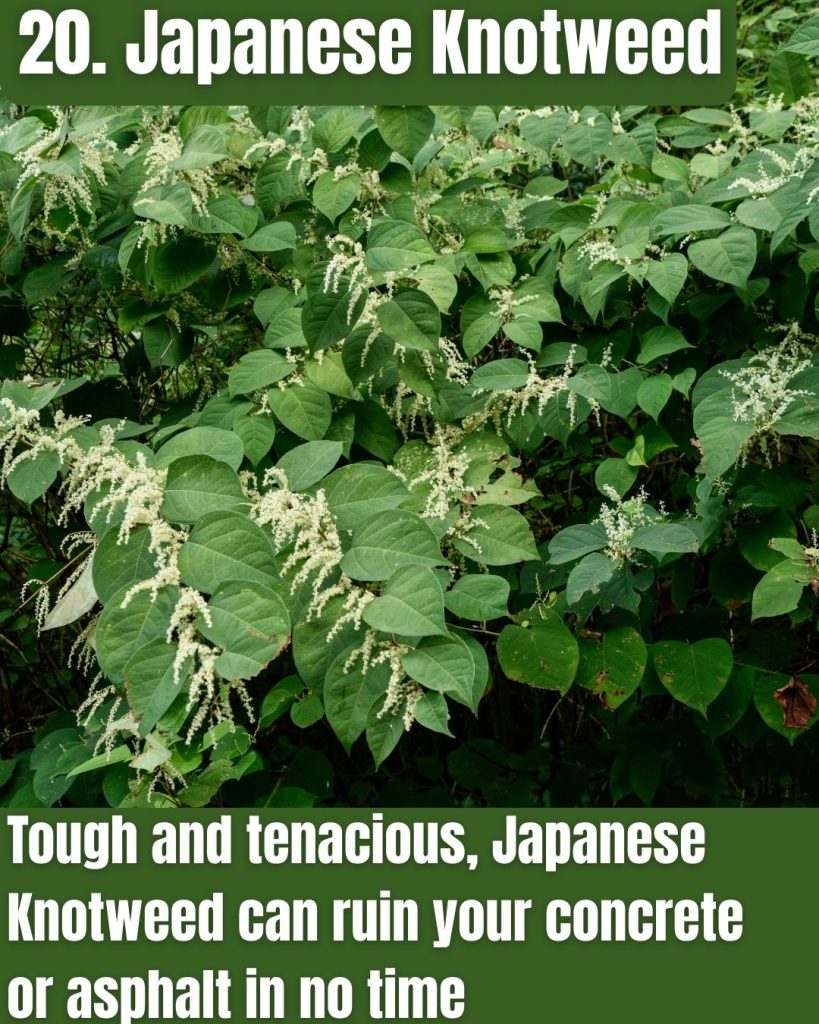
- Where you’ll notice it: creeks, riverbanks, roadsides, rail lines.
- What it does: forms dense walls that choke out everything else.
- Why it spreads: tiny fragments can start a whole new patch.
If you’ve walked an Ohio creek, railroad edge, or roadside and seen tall “bamboo-looking” stalks taking over, you’ve probably met Japanese knotweed.
It forms thick stands that crowd out native plants, and it spreads by fragments—meaning a small piece can start a whole new infestation.
Mini-quiz: Ever seen it pop up in the same disturbed spot year after year—after mowing, flooding, or construction? That’s knotweed doing what it does best.
If you like effortless “fills itself in” yard plants (the good kind), this one is a fun contrast to invasives that take over:
Invaders of Ohio’s Waters: Fish, Mussels & Plants
Hydrilla – The Underwater Choker
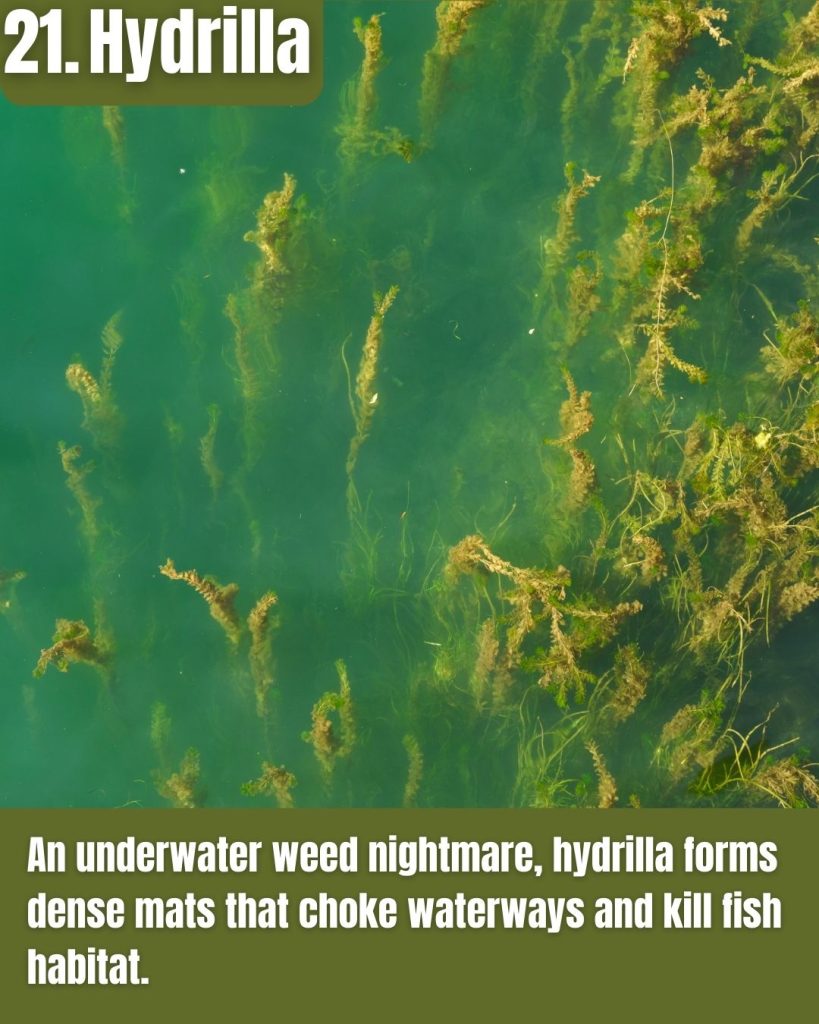
- Where you’ll notice it: weedy coves, boat ramps, shallow zones.
- What it does: thick mats that choke native plants and snag boats.
- Why it spreads: tiny fragments hitchhike on gear and trailers.
Hydrilla doesn’t move in quietly. It grows fast, forms dense mats, and can turn a great day on the water into a green, tangled mess.
It spreads by fragments. A small piece stuck to a trailer, prop, or paddle can help it jump from one Ohio waterbody to another.
Quick spot-it test: If your fishing line keeps coming up with the same stringy plant over and over, it’s worth paying attention.
Zebra Mussel – The Tiny Water Invader
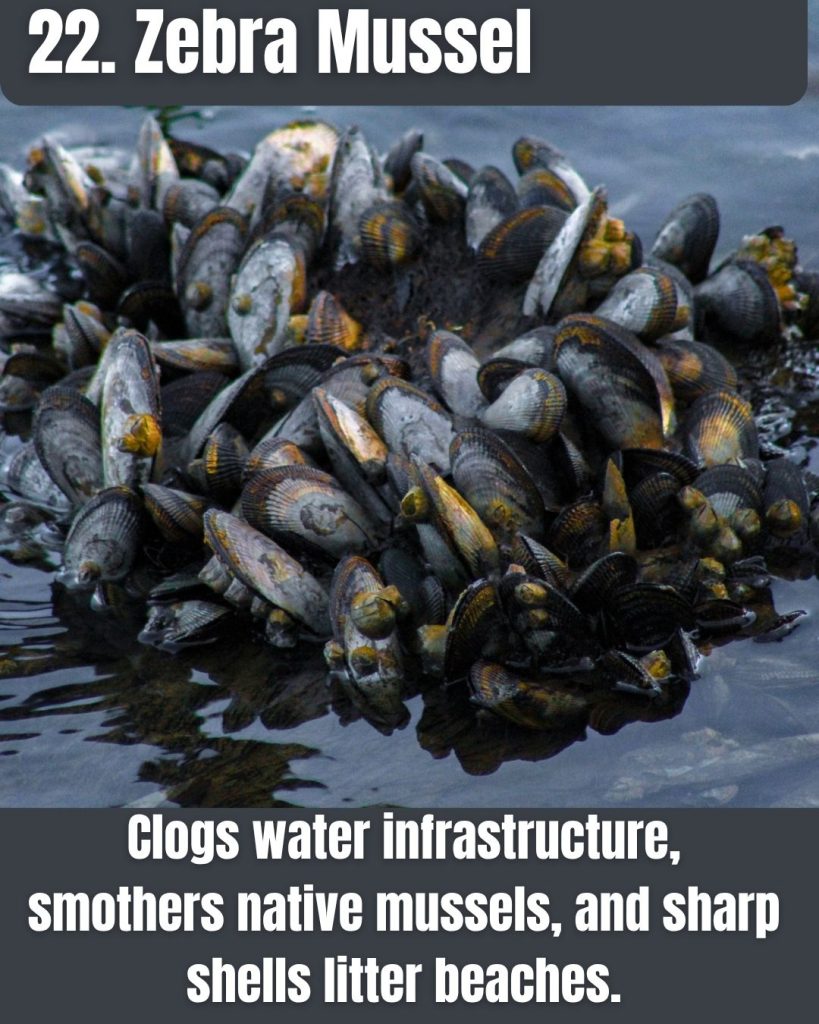
- Where you’ll notice it: hard surfaces—docks, rocks, intakes, shorelines.
- What it does: clogs infrastructure and pressures native mussels.
- Why it hurts people: sharp shells + maintenance headaches.
These fingernail-sized mussels hitch rides on boats and equipment, then multiply fast once they’re established.
They alter ecosystems by filtering huge amounts of water and shifting the food web—plus they create real-world problems for marinas and water systems.
Eurasian Watermilfoil – The Weed That Won’t Quit
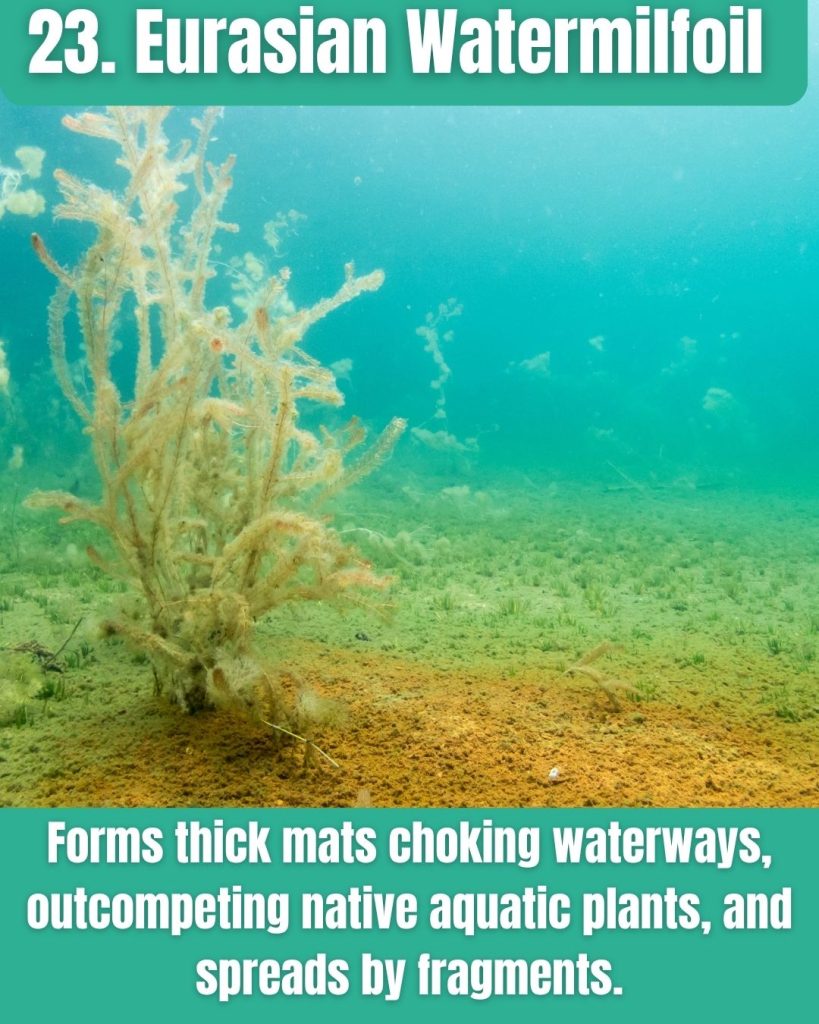
- Where you’ll notice it: coves, calm bays, near boat ramps.
- What it does: thick growth that blocks sunlight and tangles props.
- How it spreads: fragments break off and start new patches.
This underwater plant builds thick mats that snag boats and block sunlight from native aquatic plants.
It spreads by breaking into pieces, so one messy prop can accidentally “plant” it somewhere new.
Mini-quiz: Ever pulled a long, feathery plant off a trolling motor and thought, “This stuff never ends”? That’s the vibe.
Purple Loosestrife – The Pretty But Deadly Wetland Invader
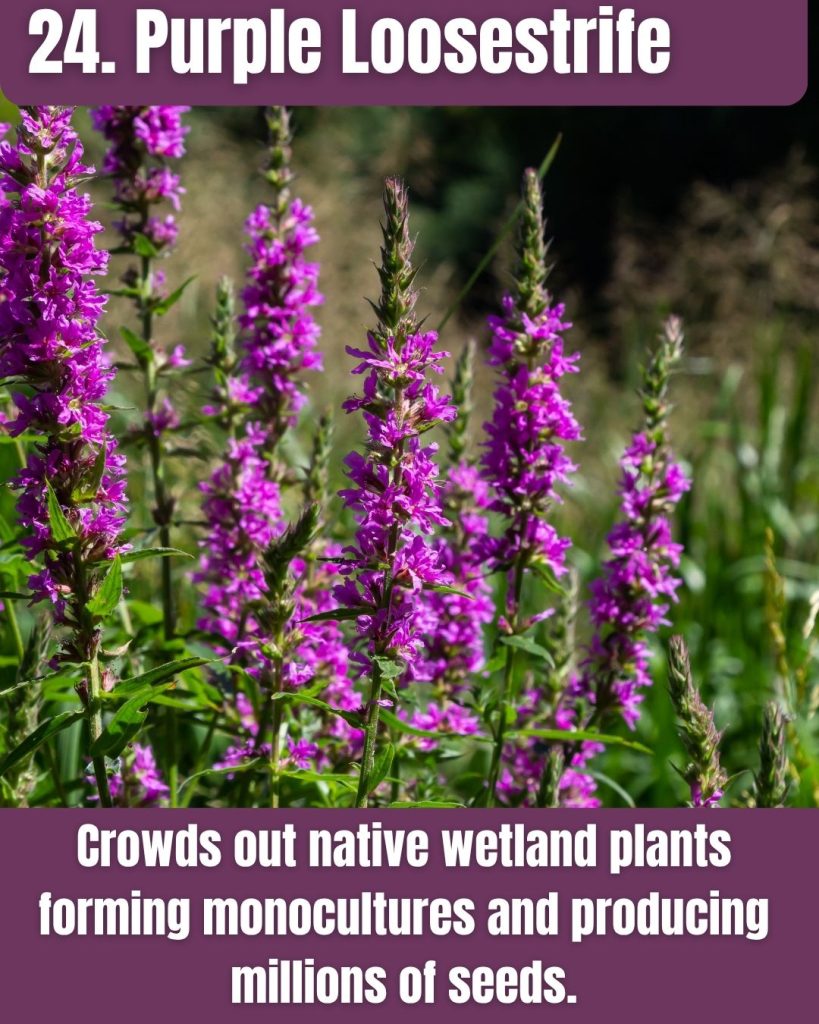
- Where you’ll notice it: ditches, marsh edges, wet meadows.
- What it replaces: cattails and other habitat-forming natives.
- Why it spreads: produces a mountain of seeds over time.
Those tall purple flower spikes look nice… until you realize loosestrife can crowd out native wetland plants and reduce habitat quality.
It’s one of the clearest examples of “pretty doesn’t mean harmless” in Ohio wetlands.
Round Goby – The Lake Erie Bottom Raider
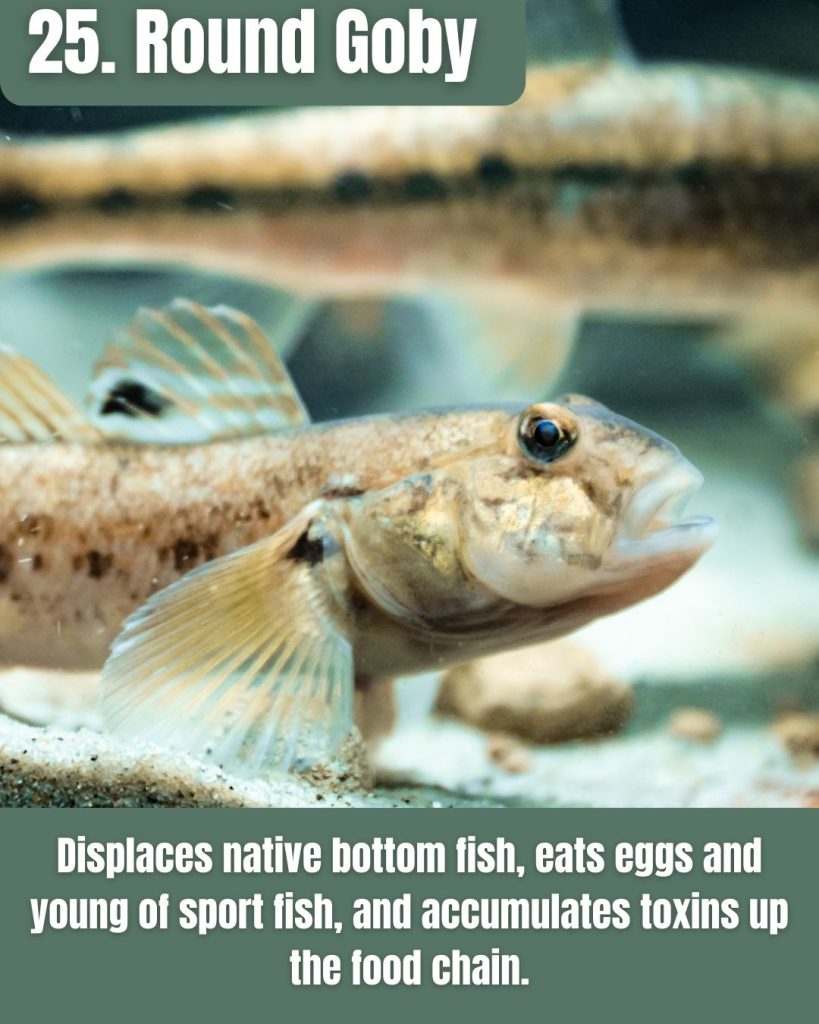
- Where you’ll notice it: Great Lakes shorelines, rocky bottoms, harbors.
- What it does: competes with native bottom fish and disrupts food webs.
- How it spreads: ballast water history + movement via connected waterways.
This is one of those Ohio invaders that matters a lot more than it looks like it should.
Round gobies are aggressive, bottom-hugging fish that compete with natives and can change what predators eat—especially in Great Lakes systems like Lake Erie.
Myth buster: “It’s just a small fish.” Small fish can still reshape an entire food chain when they show up in huge numbers.
Ohio’s invasive species story is full of surprises—some are loud and obvious, and some work quietly in the background until the damage is already done.
Which one do you see the most in your area—stink bugs, starlings, honeysuckle, or knotweed? If you tell me your part of Ohio, I’ll tell you which invaders tend to show up there first.
If you like wildlife-friendly yards, this one’s a good follow-up read: