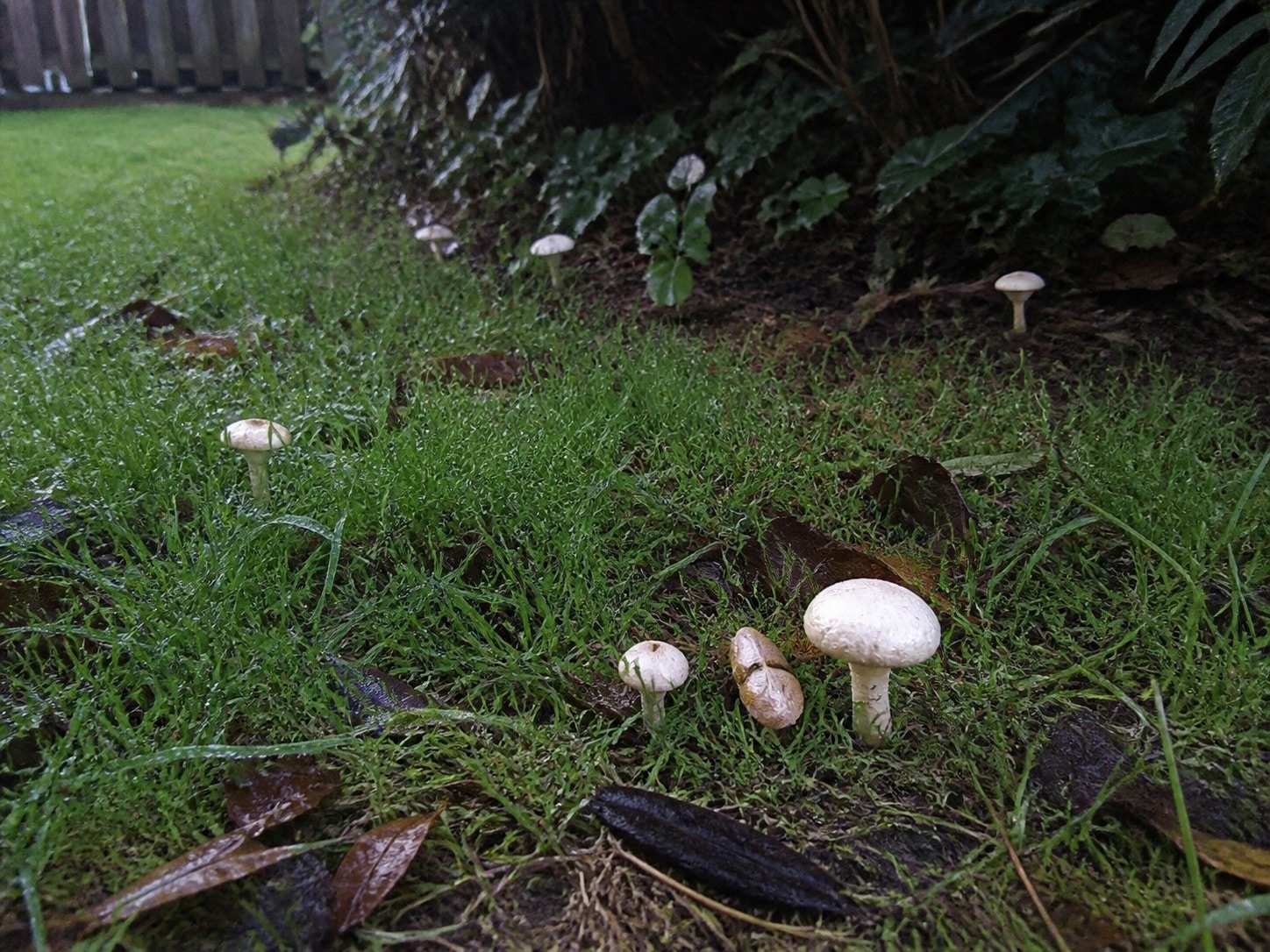
White mushrooms can seem alarming when they suddenly appear in your lawn, garden beds, or mulch. They may look harmless, but some wild mushrooms can be poisonous.
The good news is that white mushrooms in your yard are usually a sign of moisture and decaying organic matter—not a serious lawn disease. Still, they should be handled carefully, especially if children or pets spend time outdoors.
Why Are White Mushrooms Appearing?
Mushrooms are the visible fruiting bodies of fungi living below the soil surface. The main body of the fungus, called mycelium, may be spread through soil, mulch, thatch, or rotting wood.
After rain or heavy watering, the fungus may produce mushrooms to release spores. They often appear in cool, damp weather when the soil contains plenty of organic material.
That material may include buried tree roots, old stumps, decaying logs, wood mulch, grass clippings, thick thatch, fallen leaves, compost, or other plant debris.
Extension specialists note that many lawn mushrooms feed on decaying material in the soil and often appear after heavy rain. Illinois Extension explains the process here.
Their presence does not automatically mean your grass is unhealthy. In many cases, the mushrooms are simply helping break down old organic material and return nutrients to the soil.
What Do Fairy Rings Mean?
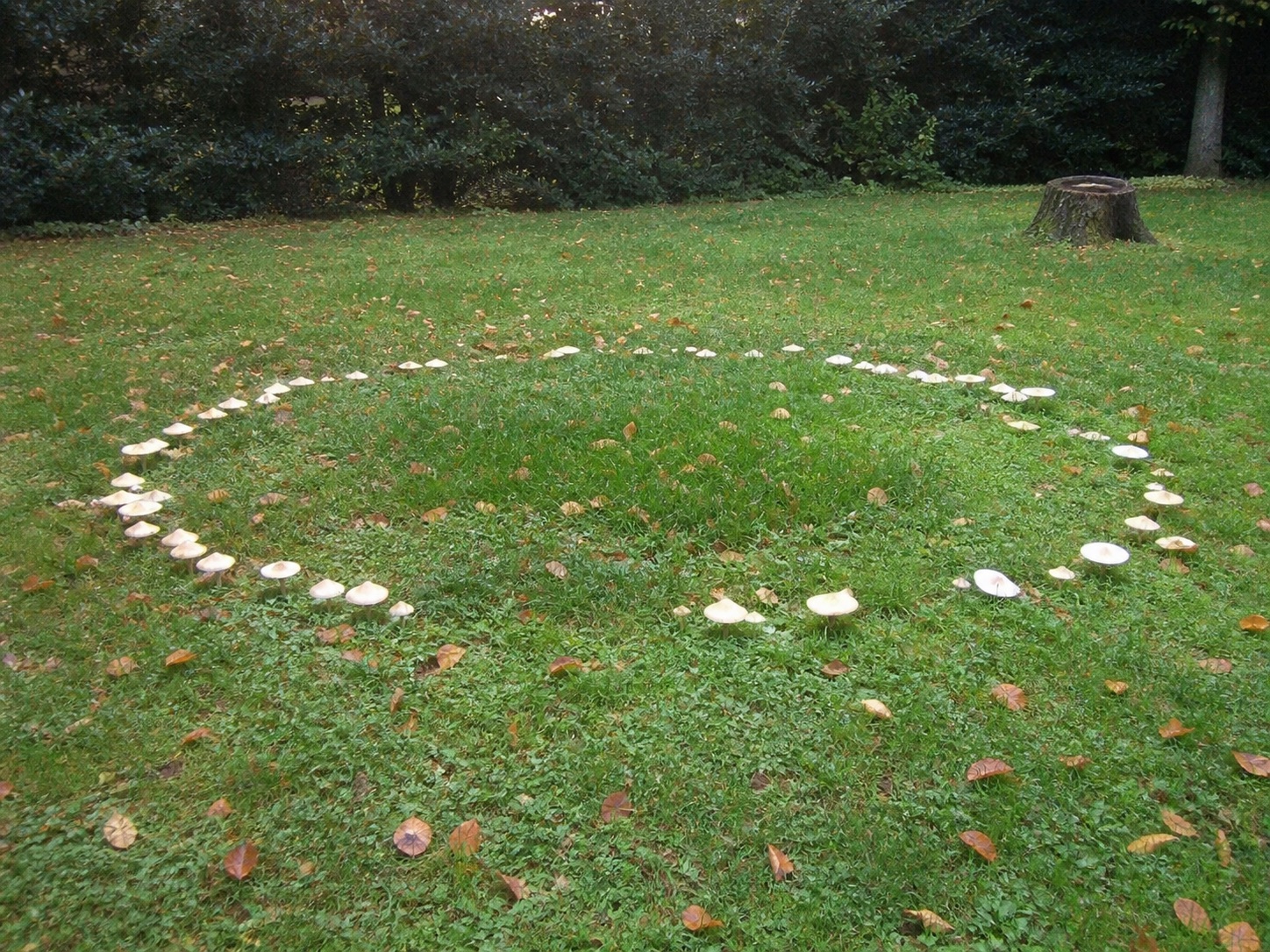
If the mushrooms appear in a circle or arc, you may be seeing a fairy ring.
Fairy rings form as underground fungi grow outward from a central point. Mushrooms may appear along the edge of the ring, sometimes accompanied by darker green grass, thin grass, or brown patches.
A green ring often develops because the fungus releases nutrients as it breaks down organic matter. In other cases, dense fungal growth can make the soil repel water, leaving the grass inside the ring dry or stressed.
A fairy ring is usually a soil and organic-matter issue, not a sign that the fungus is attacking the grass roots. Severe rings can still affect how water and nutrients move through the soil.
Are White Mushrooms Dangerous?
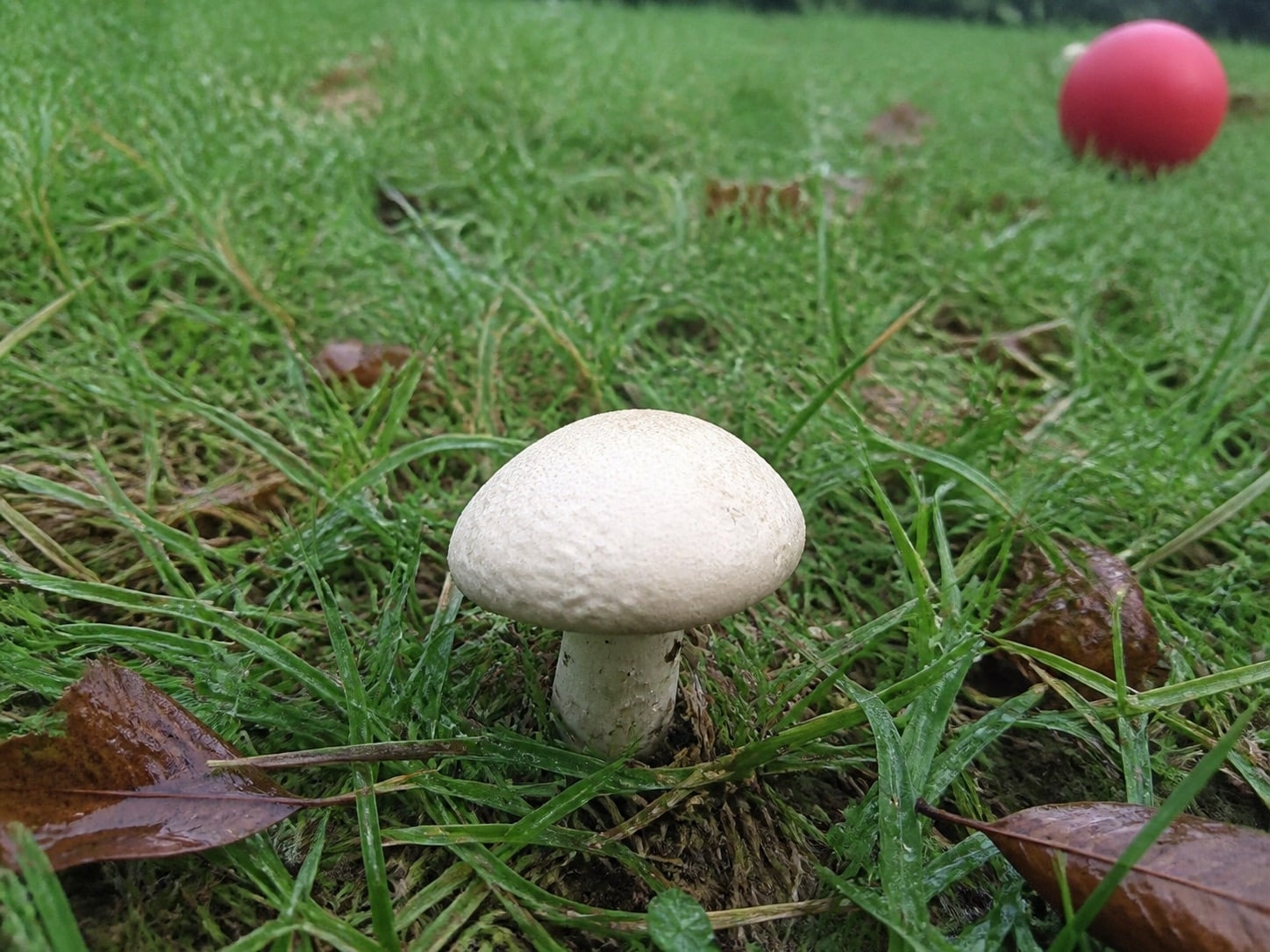
You should never assume a mushroom is safe because it is white, small, or growing in ordinary lawn grass.
Some poisonous mushrooms closely resemble harmless species. Color, shape, and size alone are not enough for reliable identification.
Never eat a wild mushroom from your yard unless it has been positively identified by a qualified mushroom expert. Cooking does not reliably make poisonous mushrooms safe, and some mushroom toxins can cause delayed symptoms.
Keep children and pets away from unknown mushrooms. If someone eats one, contact Poison Control in the United States at 1-800-222-1222 or contact your local poison center. Poison Control offers additional mushroom-safety guidance.
How to Deal With White Mushrooms
1. Remove the Mushrooms Safely
If mushrooms are growing where children or pets play, remove them as soon as you notice them.
Wear gloves and gently pull, rake, or mow them down. Avoid touching your face while handling them, and wash your hands afterward.
Removing visible mushrooms will not eliminate the underground fungus, but it can reduce the chance of accidental contact or ingestion.
2. Do Not Eat or Compost Unknown Mushrooms
Do not toss unidentified mushrooms into a kitchen compost bin. Place removed mushrooms in a sealed yard-waste bag or household trash, depending on your local disposal rules.
3. Look for Buried Organic Matter
If mushrooms keep returning from the same spot, inspect the area for a buried stump, large root, old board, or rotting piece of wood.
When practical, remove the decaying material. This may reduce future mushroom growth by removing the fungus’s food source. Do not dig near utility lines or large tree roots without knowing what is underground.
4. Improve Drainage
Mushrooms thrive in damp conditions. If water remains on the surface after rain, look for ways to improve drainage by redirecting downspouts, reducing soil compaction, aerating the lawn, or thinning dense vegetation that keeps the area shaded.
5. Adjust Your Watering Routine
Overwatering can encourage mushroom growth and other lawn problems. Water deeply when needed rather than giving the grass frequent, shallow watering. Avoid running sprinklers late in the evening if the lawn stays wet overnight.
6. Manage Thatch and Leaf Debris
A thick thatch layer or heavy accumulation of leaves can hold moisture and provide additional organic material for fungi. Rake excessive leaves from the lawn and remove large piles of grass clippings.
7. Avoid Unnecessary Fungicides
Most mushrooms appearing in lawns are not caused by a disease that needs chemical treatment. Fungicides may not reach the underground fungus effectively, and using them unnecessarily can affect beneficial soil organisms. Illinois Extension does not recommend fungicides for many common lawn mushrooms and puffballs.
Removing the mushrooms and correcting moisture or drainage problems is usually the better approach.
When Should You Call an Expert?
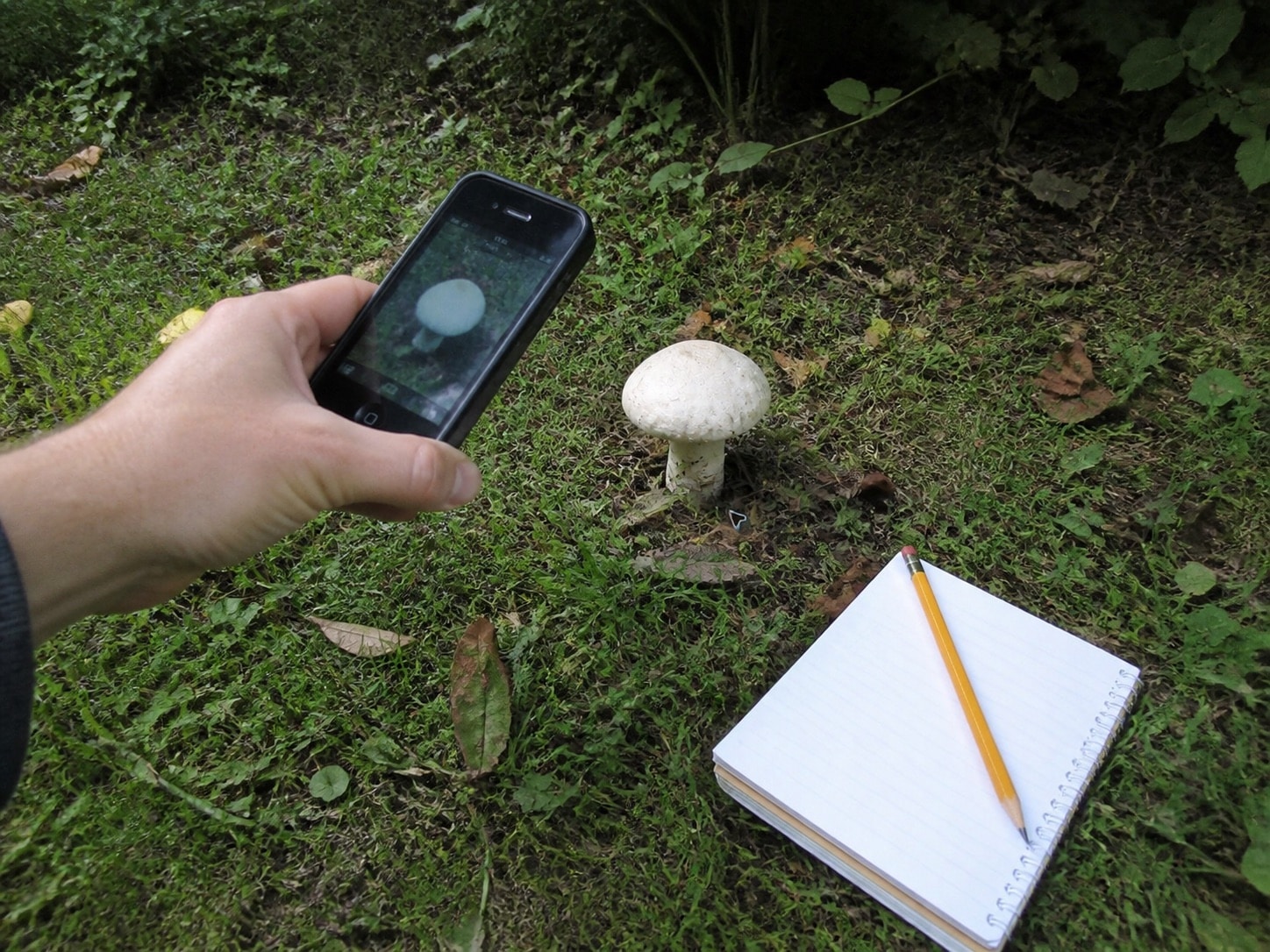
Consider contacting your local county extension office, lawn professional, or mushroom identification expert if mushrooms appear in large numbers, grass is turning brown inside a ring, a child or pet may have eaten one, or the problem continues despite improving drainage.
Take clear photographs from several angles, including the cap, underside, stem, and growing location. Do not rely on a casual online guess for safety-related identification.
Final Thoughts
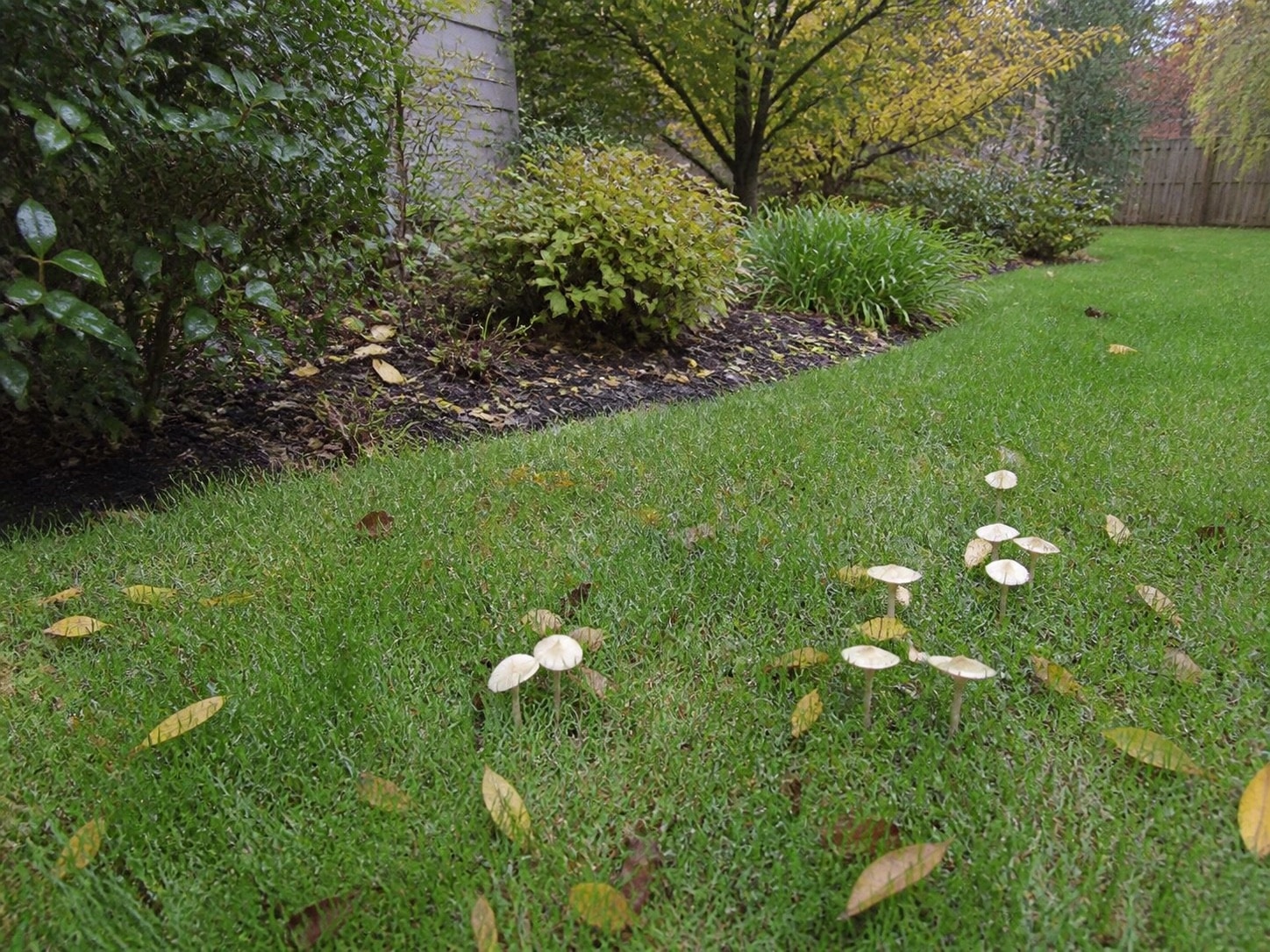
White mushrooms in your yard are often part of a natural decomposition process. They commonly appear when wet weather combines with buried wood, old roots, mulch, thatch, or other organic matter.
The mushrooms may be temporary, but the underground fungus can remain until its food source is gone.
Remove visible mushrooms where safety is a concern, improve drainage, manage excess debris, and avoid unnecessary chemicals. Most importantly, never eat an unidentified wild mushroom—and keep unknown mushrooms away from children and pets.