Pepper plants look like annuals in a cold-climate garden. They grow, load themselves with fruit, and collapse as soon as frost arrives. But the plant is not naturally programmed to die after one season. Peppers are tender perennials, and a healthy plant can live for years if it never freezes.
That is why I do not automatically throw my best pepper plants on the compost pile. I move a few indoors for winter. Before they come inside, I cut them back hard.
The finished plant may look alarming—more like a collection of green sticks than the lush pepper bush it was in August. The point is not to make it prettier. Hard pruning makes the plant easier to inspect, easier to store, and better matched to the weak light and slow growth of winter.
Pepper Plants Are Perennials Until Frost Wins
Garden peppers are warm-season plants that cannot tolerate frost. In much of the United States, we grow them as annuals because winter kills the top growth and roots. Move the same plant into a protected space, however, and it may survive until spring.
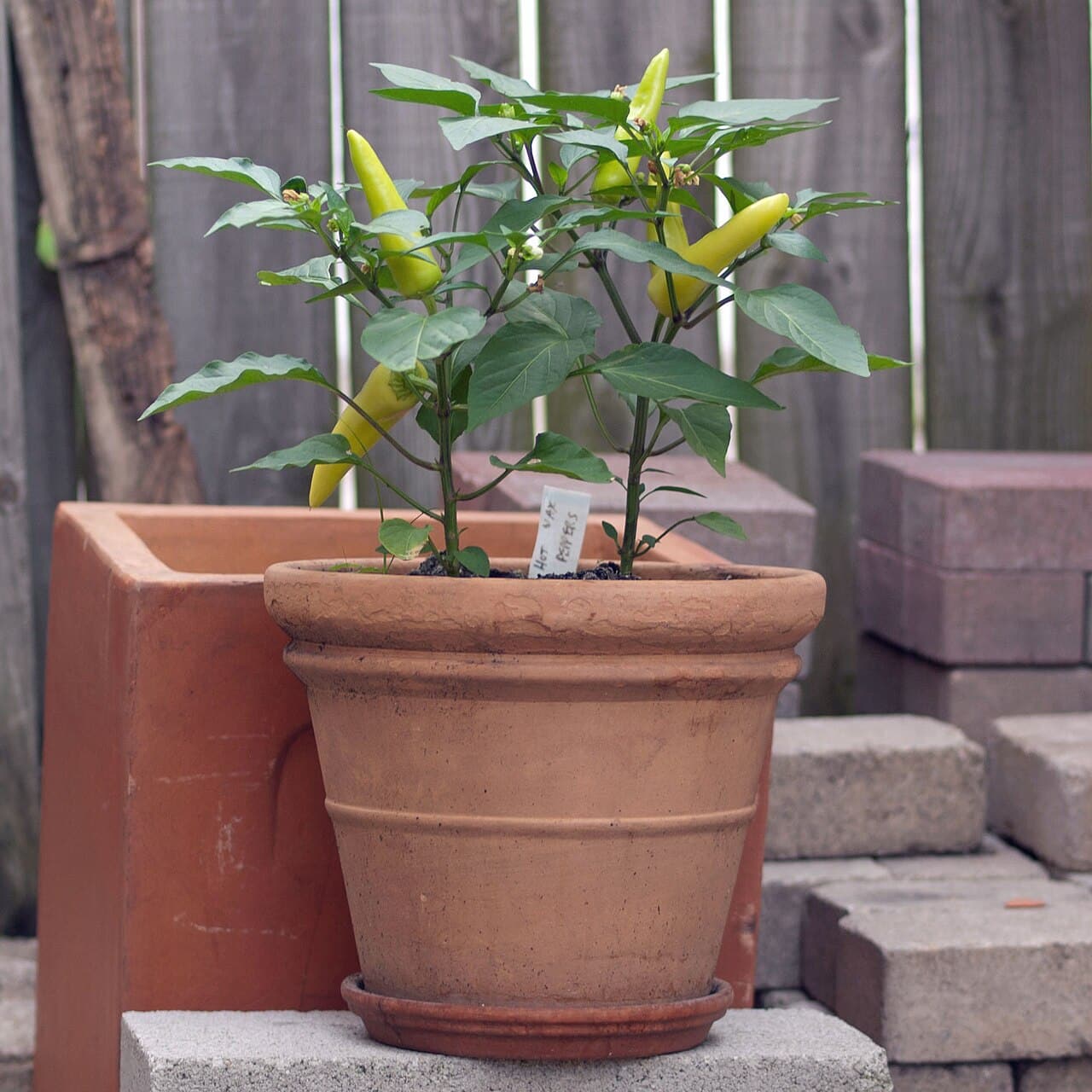
That does not mean an overwintered pepper will keep producing bowls of fruit on a dark windowsill. Its behavior depends on temperature and light. A warm plant under strong grow lights may remain leafy and active. A plant kept cooler with limited light usually slows down, drops leaves, and rests.
I aim for survival, not a winter harvest. The reward comes next season, when the established root system and woody framework can resume growth without starting from a seed.

Why I Cut the Plants Back So Hard
A full-size pepper plant that was comfortable in the garden is badly oversized for most indoor spaces. Its leaves lose water, crowd nearby plants, shade one another, and give aphids and other pests hundreds of hiding places. Keeping all that foliage alive also requires more light than a winter window usually provides.

Cutting the canopy down solves several problems at once. The pot takes up less room. I can examine every remaining stem. Water loss slows, and the reduced plant is less likely to respond to low light with thin, floppy growth.
Pruning does not make a pepper cold-hardy, and it does not guarantee survival. It simply turns a large summer plant into a compact framework that is easier to manage until spring. That is the entire reason I do it.

Only the Best Pepper Plants Earn a Winter Spot
Overwintering takes space, and indoor pest problems can spread quickly. I save only plants that give me a good reason to bother.
The best candidates are vigorous, productive plants with healthy stems and roots. I give preference to slow-growing hot peppers, unusual varieties, sentimental plants, and anything that was difficult to start from seed. A favorite pepper that produced exceptionally well is worth more effort than a weak plant I can replace for a few dollars.

I skip plants with severe aphid or mite infestations, obvious viral symptoms, stem cankers, badly damaged roots, or a season-long history of poor growth. Pruning does not cure a systemic disease. Bringing a questionable plant indoors may risk every houseplant in the room.
Before committing, I also check whether I actually have a suitable winter location. A healthy pepper still needs temperatures above freezing, some light, and occasional attention.

When and How I Make the Cut
I start before frost, not after it. Once nighttime temperatures begin falling toward 50 degrees Fahrenheit, pepper growth slows and cold injury becomes a concern. I harvest the usable fruit, choose the plants I want to save, and do the work while I can still inspect them outdoors.
I use clean, sharp bypass pruners and wipe the blades between plants. Then I remove all fruit, flowers, damaged growth, and small twiggy branches. I shorten the main stems to roughly 6 to 10 inches tall, usually leaving three to five sturdy branches. Each final cut goes just above a healthy node or branch junction.

The exact height is not sacred. A small pepper may end up near 6 inches; an older plant with a thick framework may need to remain taller. I keep the solid lower structure and remove most of the soft canopy. I never cut through the crown at soil level.
If hard pruning makes you nervous, leave a few extra inches. You can always shorten a living branch later. You cannot put it back after cutting too low.
Wear gloves when handling hot-pepper plants, and keep your hands away from your eyes. Capsaicin can remain on fruit, stems, tools, and gloves even when you cannot see it.

The Pest Check Matters More Than the Pruning
The fastest way to regret overwintering peppers is to bring outdoor pests into a warm house. Aphids, whiteflies, spider mites, and their eggs can hide under leaves, along branch joints, and around the pot rim. Natural predators disappear indoors, so a minor outdoor population can become a winter outbreak.

After pruning, I hose the stems and inspect every junction. Container-grown plants get a clean pot if the old one is dirty or crowded. Plants lifted from the garden go into fresh, bagged potting mix rather than heavy garden soil. I make sure the container has an open drainage hole.
If I find a manageable pest problem, I treat it outdoors with a product labeled for the plant and pest, following the label exactly. Insecticidal soap can help with soft-bodied pests when it contacts them, but one spray is not a substitute for repeated inspection.
Every incoming pepper stays separated from my regular houseplants for at least two weeks. I check it several times during quarantine. A heavily infested plant goes outside rather than into the collection.

How I Keep a Pruned Pepper Alive All Winter
A newly pruned pepper does not need summer treatment. With fewer leaves and slower growth, it uses much less water. I water thoroughly once, let the excess drain, and then wait until the upper portion of the potting mix dries before watering again. Constantly wet soil is a bigger threat than brief dryness.

The plant goes in the brightest practical location, away from cold drafts and heating vents. A bright window may be enough for a resting plant. If I want steady leafy growth, I use a grow light because winter window light is rarely comparable to outdoor sun.
Temperatures around 60 to 70 degrees Fahrenheit work well for peppers held indoors. Some leaf yellowing and drop is normal after digging, pruning, and moving the plant. Soft black stems, a sour-smelling mix, or a trunk that shrivels all the way to the base are more serious warnings.
I do not push a resting plant with fertilizer. Feeding begins only after light increases and new growth becomes active. During winter, the routine is simple: check moisture, inspect for pests, and leave the plant alone.

Spring Is When the Work Pays Off
As the days lengthen, small green shoots should appear at the nodes. That is my signal to increase light, water a little more often, and begin light feeding. I remove any branch that remains dry and brittle, but I give questionable wood time to show whether it is alive.

I do not move the plant straight from the house into full sun. Indoor leaves scorch easily. Once frost danger has passed and nights are reliably warm, I harden the pepper off over a week or two—first shade, then gentle morning sun, then progressively longer outdoor exposure.
An overwintered plant is not always prettier than a new seedling, and occasionally it never wakes up. That is part of the experiment. But when it works, the plant begins spring with an established root system and mature stems. Slow varieties can flower and fruit earlier than plants started from seed.
Hard pruning looks severe because it is severe. I use it for a specific job: getting a healthy, valuable pepper through months when it cannot live outdoors. I keep the strong framework, remove the summer-sized canopy, prevent hitchhiking pests, and let the plant wait for better light.

Image Credits
- Hungarian wax pepper plant. Photo: Jeff Kwapil via Wikimedia Commons (CC BY-SA 4.0). Resized.
- Potted pepper plants at West Dean Gardens. Photo: HARTLEPOOLMARINA2014 via Wikimedia Commons (CC BY-SA 4.0). Resized.
- Red peppers growing on a plant. Photo: Jennifer C. via Wikimedia Commons (CC BY 2.0). Resized.
- Black Pearl ornamental pepper. Photo: daryl_mitchell via Wikimedia Commons (CC BY-SA 2.0). Resized.
- Healthy pepper plants. Photo: Jennifer C. via Wikimedia Commons (CC BY 2.0). Resized.
- Cubanelle pepper plant with flowers and emerging fruit. Photo: Downtowngal via Wikimedia Commons (CC BY-SA 3.0). Resized.
- Pruning shears among cut branches. Photo: Joe Wise via Wikimedia Commons (CC BY-SA 3.0). Resized.
- Open pruning shears. Photo: KoS via Wikimedia Commons (public domain).
- Aphids on a pepper. Photo: Schlaghecken Josef via Wikimedia Commons (CC BY 4.0). Resized.
- Aphid close-up. Photo: Europa76 via Wikimedia Commons (CC BY-SA 3.0). Resized.
- Greenhouse housing pepper plants. Photo: Michael Garlick via Wikimedia Commons (CC BY-SA 2.0). Resized.
- Cayenne pepper plant. Photo: Kolforn via Wikimedia Commons (CC BY-SA 4.0). Resized.
- Sweet pepper seedlings. Photo: Pascal Kings via Wikimedia Commons (CC BY 4.0). Resized.
- Pepper flower. Photo: Bst9jkj via Wikimedia Commons (CC0). Resized.