The marshmallows floating in your cocoa have a garden connection hiding in plain sight. The original sweet took its name from marsh mallow, a flowering perennial whose roots supplied a gummy ingredient used in early confections. Today’s familiar bags usually leave the plant out, but you can still grow the real thing. With soft leaves, pale flowers, and a surprisingly practical past, it earns a place in the garden even without a candy thermometer.
Meet the Real Marsh Mallow

The plant behind the name is Althaea officinalis, often written as two words: marsh mallow. It belongs to the mallow family, Malvaceae, and grows as an upright herbaceous perennial.
Its appeal is quieter than the candy aisle. Fine hairs give the leaves and stems a soft, silvery look, while small, open flowers range from nearly white to pale pink. In suitable conditions, flowers appear from midsummer into early autumn.

This is a plant to give some room. Established specimens can rise well above waist height, with flowering stems tall enough to stand behind shorter perennials. The foliage helps it look interesting before the first flowers open.
There is a nice bit of American garden history here, too: Thomas Jefferson included “marshmellow” on his 1794 garden wish list. He meant this plant, long cultivated for food and herbal preparations.
When shopping, use the botanical name. “Mallow” appears in the common names of many plants, so a familiar-looking flower alone does not establish that you have the species connected with marshmallow sweets.
The Root Held the Secret Ingredient

The important part of this story was underground. Marsh mallow roots contain mucilage, a gummy plant material that forms a slippery, thick mixture with water. The leaves contain mucilage as well.
That texture made the plant useful in early preparations. Roots were processed into liquids or pastes, and sweetened versions helped connect the herb garden with the confectioner’s kitchen. The plant supplied an ingredient; the finished sweet still required a recipe.
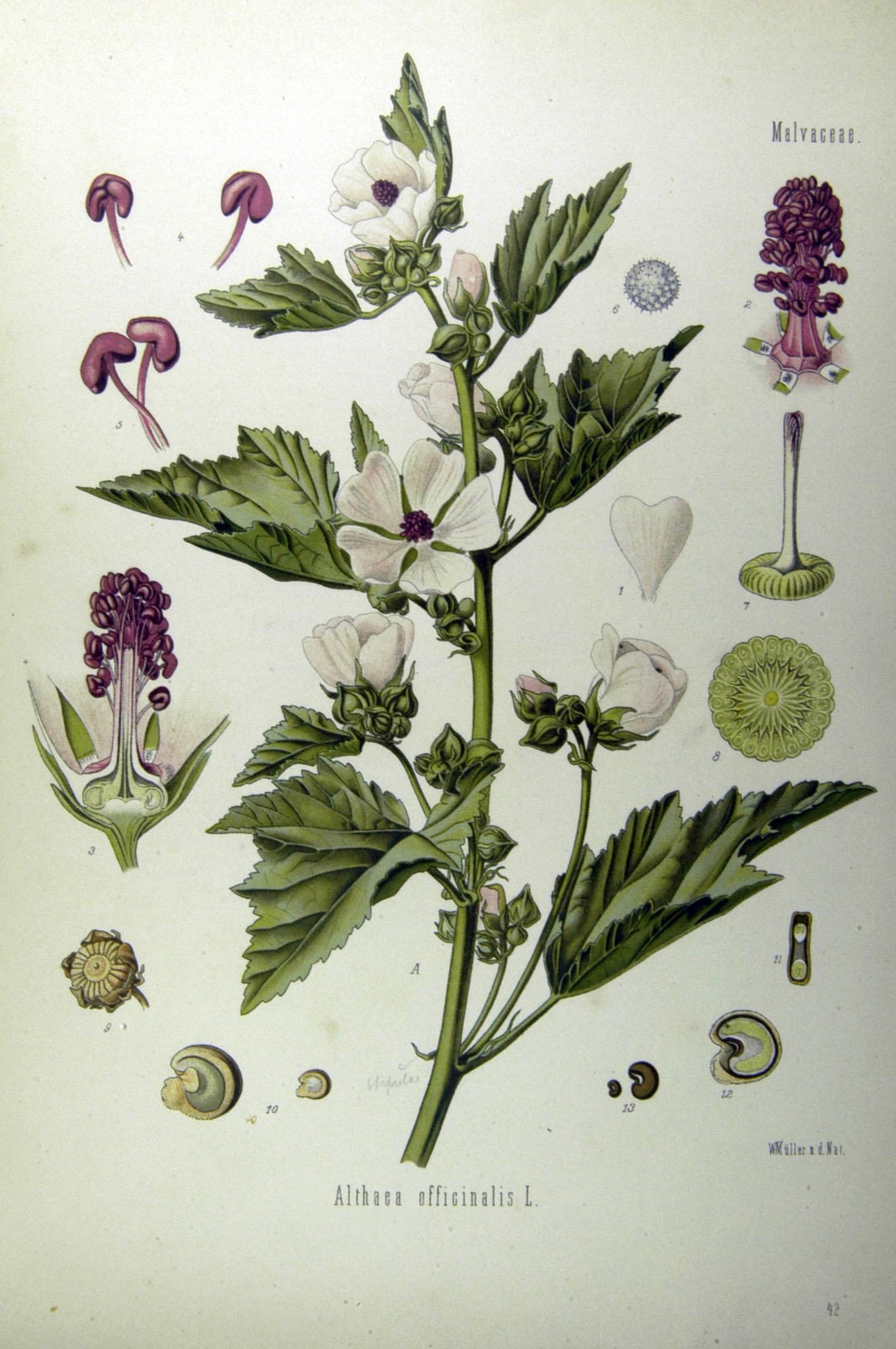
Its long association with herbal medicine also survives in its scientific name. Officinalis was used for plants associated with apothecaries. Old botanical illustrations can look like portraits from a pharmacy because that was part of the plant’s working life.
We would keep the history separate from health promises. A traditional use is not proof that a homemade preparation treats an illness, and a modern marshmallow is not a substitute for a medicinal product.
For gardeners, the best part is that you can appreciate the whole story without digging anything up. The living plant offers flowers, distinctive foliage, and a connection to a food most visitors already know.
How the Candy Left the Plant Behind

During the 1800s, French confectioners helped turn marsh mallow preparations into sweets by combining plant extracts with ingredients such as sugar and egg whites. Making that confection involved considerably more work than opening a bag.
As production methods changed, gelatin replaced the plant extract in the familiar commercial version. The name stayed, even as the ingredient that inspired it largely disappeared.

That is why growing marsh mallow will not give you a garden full of vanilla-flavored candy. The plant’s historical role was tied to the root preparation, while sweetness and the finished texture depended on the other ingredients and the method.
You can check the modern connection yourself: turn over a bag and read its ingredient list. Most ordinary marshmallows contain no marsh mallow root. Specialty recipes may include it, so the label tells you more than the name on the front.
Curious about making a version with the plant? Start with a reliable recipe and a clearly identified ingredient sold for food use. Do not harvest an unfamiliar roadside mallow on the strength of a photograph, including the pictures here.
Grow the Plant Behind the Sweet

For a first plant, we recommend a nursery specimen labeled Althaea officinalis. Before buying, confirm that it suits your local climate and check any local planting guidance. It is not native to North America.
Choose a sunny spot with fertile soil that stays reasonably moist. Partial shade can work, and the plant tolerates a range of soil conditions, but a permanently parched corner is a poor match for its preferences.
Despite its name, you do not need a marsh. Ordinary garden soil that holds moisture while allowing excess water to drain can work well. Water a new planting as needed while it establishes; judge the soil rather than following a rigid weekly schedule.

Plan for a tall, broad perennial, not a tiny kitchen herb. In favorable conditions, mature plants may reach roughly 5–8 feet tall and 3–5 feet across. Put it toward the back of a border where it will not shade out small sun-loving neighbors.
Seed is another option, but read the supplier’s sowing instructions before opening the packet. Some spring-sowing methods call for several weeks of chilling, so starting from seed can require more planning than setting out a young plant.
For a simple garden introduction, plant one labeled specimen where its pale flowers can be seen against darker foliage. Keep the roots in the ground and put its name on a marker: “Marsh mallow—the plant behind the candy.” That gives visitors something to remember long after the flowers finish.
References
- Cambridge University Botanic Garden — Althaea officinalis
- Monticello — Marshmallow
- Lewis Ginter Botanical Garden — The Original Marshmallow
- Delaware Division of Historical and Cultural Affairs — A Brief History of Marshmallows
- Royal Horticultural Society — Althaea officinalis
- University of Illinois Chicago Heritage Garden — Marshmallow
Image Attributions
Meet the Real Marsh Mallow
- “Althaea officinalis 003.JPG” by H. Zell. Licensed under CC BY-SA 3.0.
- “Althaea officinalis, Marshmallow leaf.jpg” by Nadiatalent. Licensed under CC BY-SA 4.0.


The Root Held the Secret Ingredient
- “Arrels malvi12.JPG” by Victor M. Vicente Selvas. Made available under CC0 1.0.
- “Althaea officinalis (Köhler).jpg” by Hermann Adolf Köhler (1834–1879). Rights: Public domain.

.jpg)
How the Candy Left the Plant Behind
- “Marshmallows.JPG” by Smith609. Licensed under CC BY-SA 3.0.
- “Marshmallows (4864682934).jpg” by Mark S. Licensed under CC BY 2.0.

.jpg)
Grow the Plant Behind the Sweet
- “Althaea officinalis 001.JPG” by H. Zell. Licensed under CC BY-SA 3.0.
- “Althaea officinalis Prague 2011 1.jpg” by Karelj. Licensed under CC BY-SA 3.0.


Featured graphic: Gardening Wins artwork supplied by the publisher.