A giant patio planter looks impressive—until you price the potting mix and try to lift it. Clean, dry pinecones can fill the unused bottom of a deep container, cutting both soil use and finished weight.
The trick is best for one-season displays of shallow-rooted flowers, not every plant or pot. Pinecones eventually break down, shift, and can leave the soil above them wetter than expected, so the setup matters more than the viral shortcut suggests.
What the pinecone trick actually does

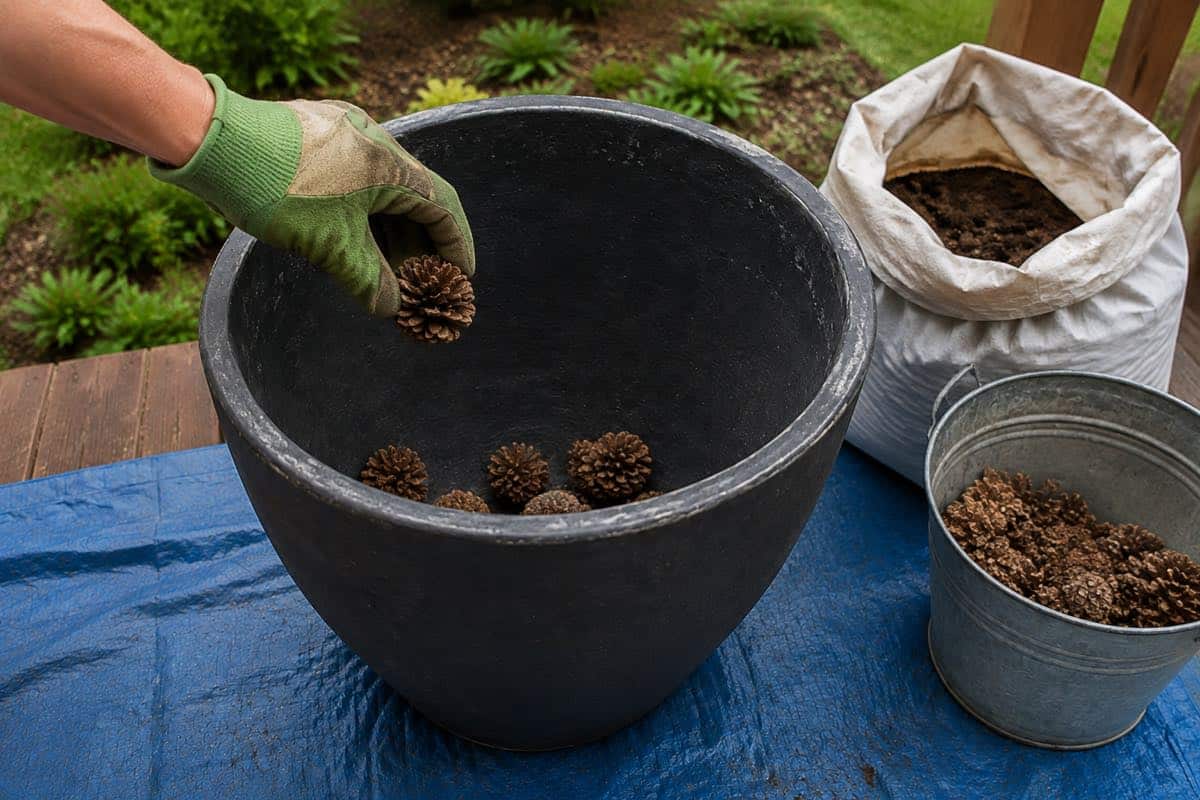
The idea is simple: fill part of an unnecessarily deep pot with pinecones, cover them, then plant in potting mix above. The cones occupy space that many annual flowers would never use. Because they weigh far less than wet mix, they make a bulky container easier to reposition.

This is a soil-saving and weight-saving trick—not a drainage trick. Your plants still need an uninterrupted root zone of quality potting mix, and the container still needs a working drainage hole.
Pinecones are most useful in a tall urn or oversized decorative planter whose depth greatly exceeds the needs of a one-season planting. If the pot is only moderately deep, filling it normally is usually simpler and gives roots more room.
Use cones that are dry, open, clean, and free of mold, insects, sticky sap, paint, or preservatives. Shake out loose debris, rinse them if necessary, and let them dry completely. This is an outdoor-planter trick; there is little reason to invite woodland hitchhikers into a houseplant pot.
The catch: pinecones do not improve drainage

It is tempting to picture water racing through all those airy gaps between the cones. Container physics is less cooperative.
When fine potting mix sits above a much coarser layer, water can remain in the finer material until it becomes wet enough to cross the boundary. Gardeners often call this a perched water table. The University of Illinois Extension explains the same effect when debunking gravel at the bottom of pots.
Pinecones are not identical to gravel, but the practical lesson is the same: a coarse bottom layer does not pull excess water out of the root zone. In fact, reducing the height of the potting-mix column can leave a larger share of the remaining root zone saturated after watering.
There is a second catch. Pinecones are woody organic material. Repeated wetting causes them to soften, decompose, and lose volume. Mix may settle into the new gaps, and the soil surface can sink. Expect this filler to last for a season, not forever.
Cones can also hold some moisture against the bottom of the mix. That may be harmless in a hot, fast-drying summer planter, but it is a poor match for a plant that dislikes wet roots or a pot exposed to long rainy spells.
How to use pinecones in a large planter

Start with a pot that has at least one unobstructed drainage hole. If the planter has no drainage, do not expect pinecones, gravel, or any other filler to rescue it. Drill an appropriate hole if the material allows, or use a removable nursery pot inside the decorative container.
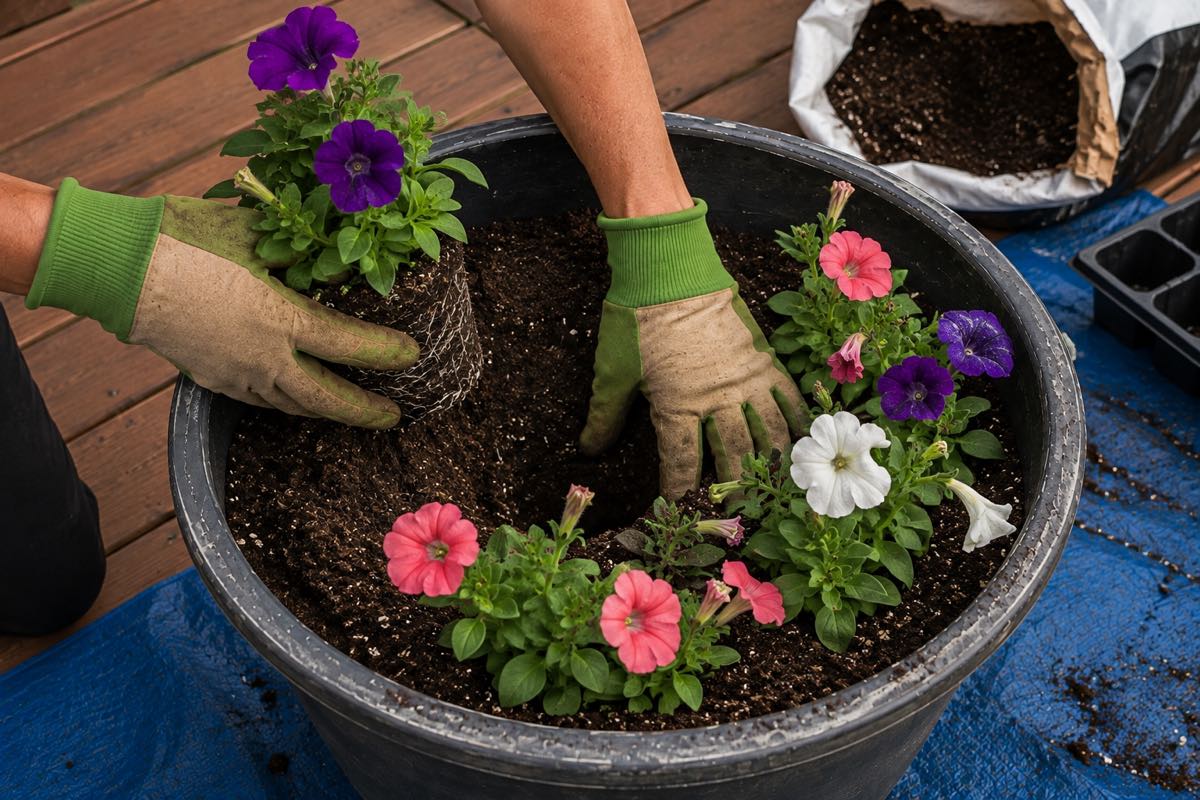
Next, compare the planter with the mature root needs of the plants you intend to grow. For common annual flowers, reserve roughly 8 to 12 inches of continuous potting mix above the filler; use more if the plant tag or grower recommends it. The pinecone layer belongs only in the genuinely excess depth.
Place the dry cones loosely in the bottom. Do not cram them into a solid mat, and do not block the drainage opening. In most large urns, filling no more than the bottom third to half leaves a useful safety margin.
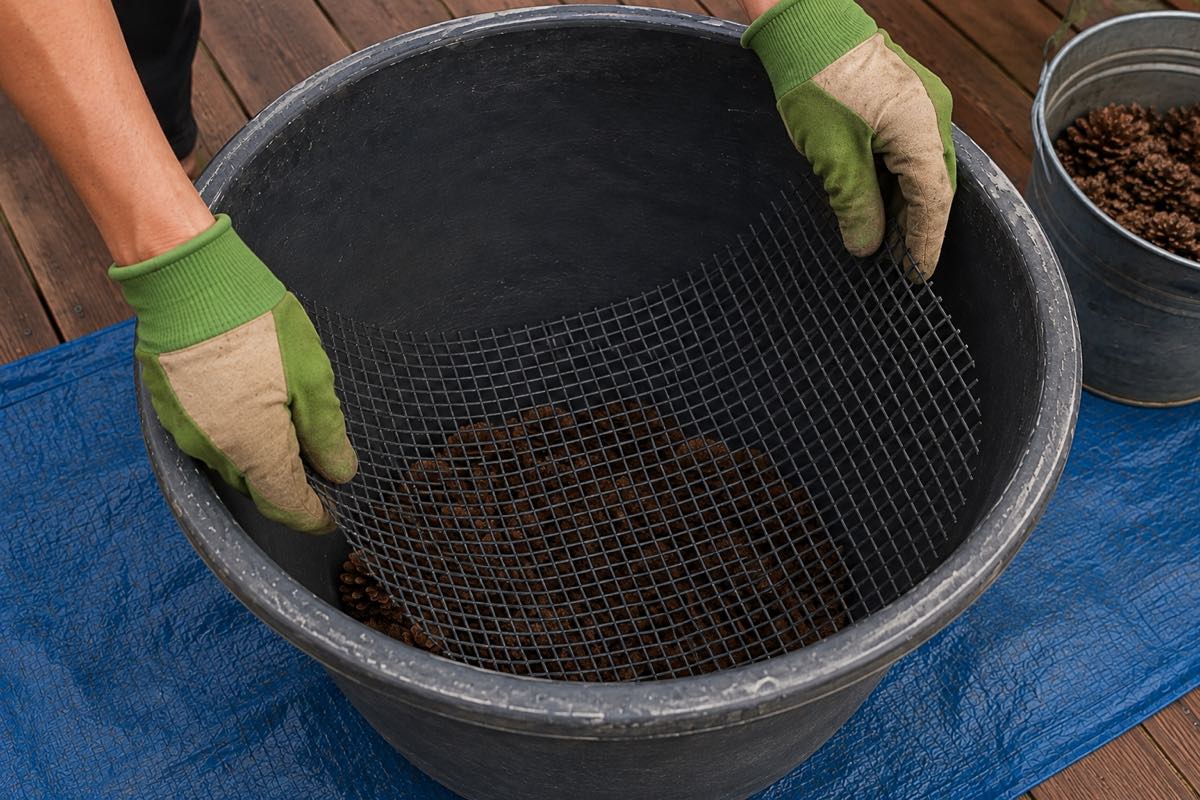
Lay a permeable piece of sturdy plastic mesh or landscape fabric over the cones. Bring it slightly up the sides so the potting mix does not immediately tumble between them. The separator should hold soil back while still allowing water to pass.
Add a fresh, soilless container mix. Do not substitute ordinary garden soil; in a pot it tends to become dense, heavy, and poorly aerated. The Penn State Extension recommends mixes built from materials such as peat or coir, composted bark, perlite, or vermiculite.
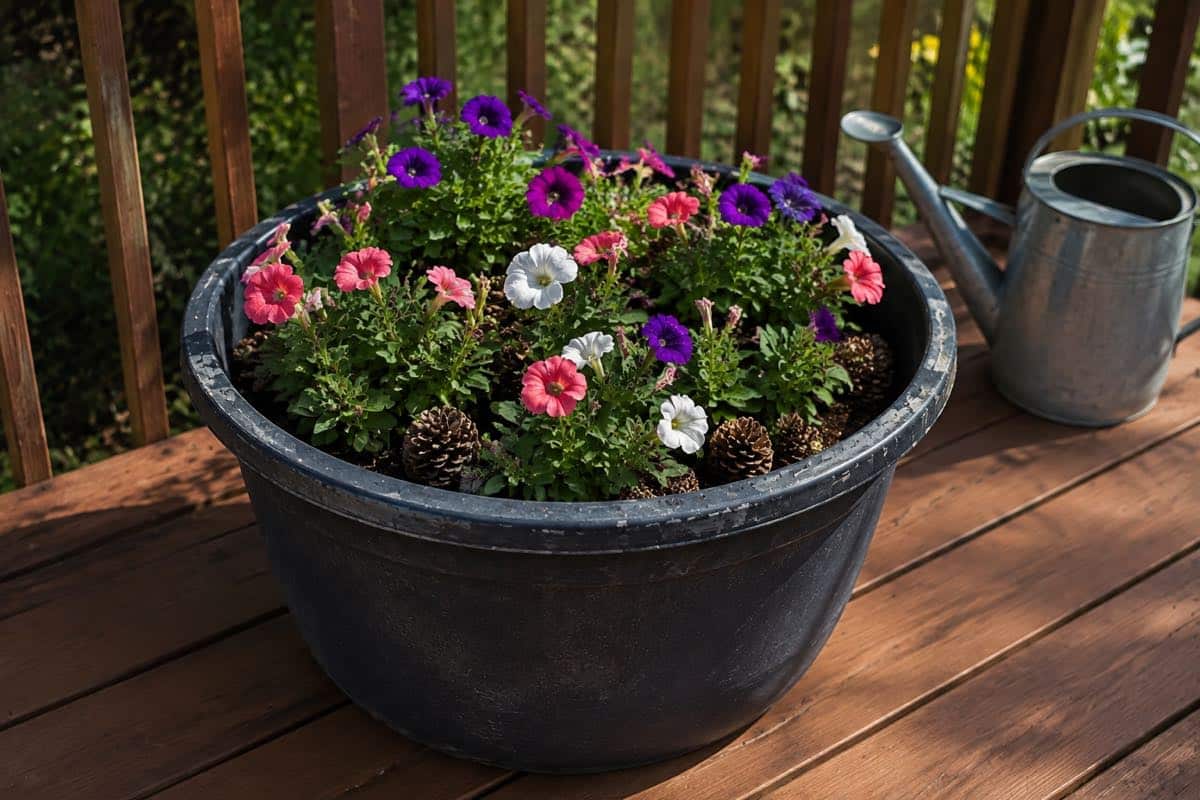
Plant at the same depth the flowers were growing in their nursery pots. Leave about an inch of headspace below the rim, water thoroughly until excess runs from the drainage hole, and top up the mix if settling exposes any roots.
The plants that suit this shortcut best

One-season ornamental displays are the sweet spot. Petunias, calibrachoa, sweet alyssum, lobelia, annual geraniums, coleus, and trailing sweet potato vine can all work when the planter supplies their required sun, moisture, and soil depth.
For a full-looking combination, use the familiar “thriller, filler, spiller” formula. A modest upright focal plant adds height, rounded plants fill the middle, and trailing flowers soften the rim. The goal is to create visual mass above the pot without demanding a tree-sized root system below it.
Match plants by care needs rather than color alone. Sun-loving petunias and calibrachoa will not thrive just because they look good beside a shade-loving foliage plant. Everything sharing the pot must tolerate the same light, watering schedule, and drainage.
A useful bit of container-garden trivia: the plant at the center is not automatically the thirstiest. A dense ring of trailing annuals along the rim may intercept rain and dry rapidly in wind, so check moisture with a finger in the mix instead of judging by the tallest plant.
When to skip pinecones—and what to use instead

Skip the trick for shrubs, dwarf trees, perennials you plan to overwinter, and vigorous edibles. Their roots need stable long-term volume, and the planting should not slump as the filler decomposes.
Tomatoes are a particularly bad candidate. They are hungry, thirsty plants with far more substantial container requirements than a shallow-rooted seasonal display. Penn State recommends a pot about 20 inches wide for a single tomato plant; sacrificing a large portion of that container to cones works against the crop.
Avoid pinecone filler in a self-watering planter, where the reservoir and wicking system are engineered to work together. It is also a poor choice for a top-heavy planting on a windy deck. In that situation, the weight you save may be the ballast the plant needs.
For a tidier reusable option, put upside-down empty nursery pots in the unused lower space. Penn State’s container-gardening guidance specifically suggests empty plastic pots or bottles in overly deep containers. A commercial false-bottom insert is even more predictable.
Double-potting is often the cleanest solution. Grow the plants in a properly sized plastic nursery pot and set it inside the oversized decorative planter on a stable riser. Make sure drainage water can escape and never leave the inner pot standing in accumulated water.
The bottom line: Pinecones are a clever, free filler for a large seasonal flowerpot when you want less weight and use less mix. Keep the drainage hole open, preserve a generous root zone, and plan to empty and rebuild the pot next season. If the planting is permanent, edible, top-heavy, or moisture-sensitive, choose a stable insert—or simply give the roots the soil volume they deserve.
Photo credits
- “Pine Cones” by Dynamite16, via Wikimedia Commons, licensed under CC BY 3.0.
- “Bonsai pots with mesh over drainage holes” by Ragesoss, via Wikimedia Commons, licensed under CC BY-SA 3.0.
- “Potting soil” by Chris Radcliff; color-corrected and cropped by Daniel Case, via Wikimedia Commons, licensed under CC BY-SA 2.0.
- “Petunias en maceta” by Mayecucba, via Wikimedia Commons, licensed under CC BY-SA 4.0.
- “Pot bound roots of a sampling” by Suresh Khole, via Wikimedia Commons, licensed under CC BY-SA 4.0.