If your Christmas cactus suddenly looks limp, check the potting mix before you reach for the watering can. Bone-dry mix points to thirst, while wet mix points to roots that may be struggling for air.
The same droop can come from opposite problems, so watering by reflex can make matters worse. A one-minute check of the soil, drainage, and stem texture will usually tell you which direction to go.
First, make sure the “droop” is actually a problem

A mature holiday cactus naturally arches over the edge of its pot. That relaxed, cascading habit is normal. Healthy hanging segments feel firm and plump; stressed segments feel thin, soft, or wrinkled.
There is also a small naming trap. Many plants sold as Christmas cactus are actually Thanksgiving cactus, Schlumbergera truncata. It has pointed, claw-like teeth along each flat stem segment. A true Christmas cactus, usually Schlumbergera × buckleyi, has rounder, scalloped edges.
The diagnosis below works for both. Neither plant has ordinary leaves—the green, linked pieces are flattened stems called cladodes.
The first thing to check: is the soil dry or wet?
Push a finger about an inch into the mix, then lift the pot. Dry soil plus a surprisingly light pot usually means the plant is thirsty. Damp soil plus a heavy pot suggests that water is present but the roots are not using it well.
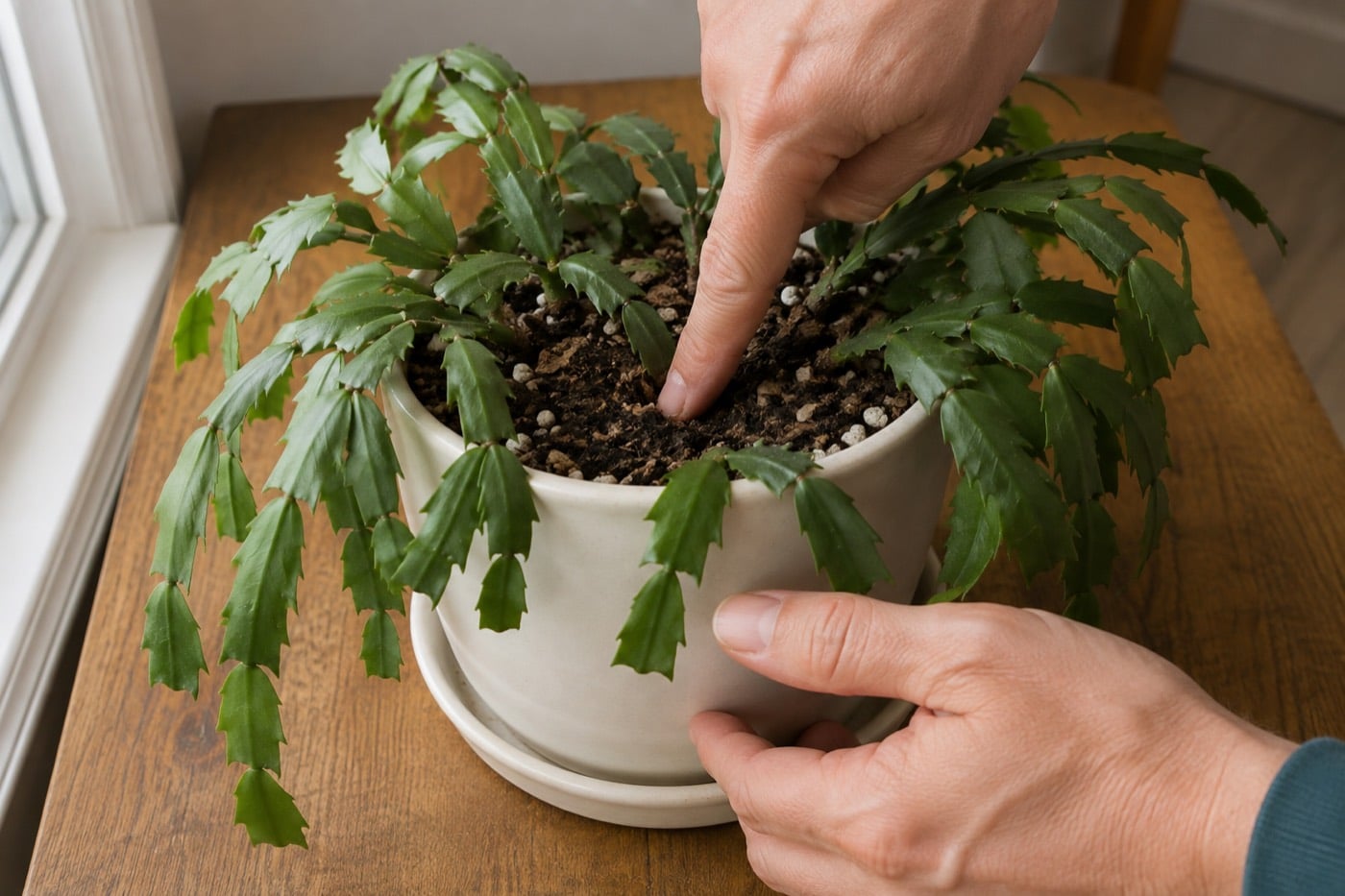
Also peek underneath. The pot needs an open drainage hole, and the saucer or decorative outer pot should not be holding runoff. Holiday cacti are rainforest epiphytes, not desert cacti, but their fine roots still need plenty of air.
If the mix is dry, water slowly and completely
Take the plant to a sink and water until excess runs freely from the drainage hole. Let it finish dripping, then empty the saucer. One thorough drink is better than a week of nervous little sips.
Old peat-based mix sometimes shrinks away from the pot and repels water. If water races straight down the sides, wait a few minutes and water again so the center of the root ball actually gets moist.
Do not expect every segment to snap upright immediately. A merely thirsty plant should begin feeling firmer over the next several days. Leave it in steady, bright indirect light while it recovers.
If the mix is wet, suspect drainage or damaged roots
Wilted stems in wet soil are the more urgent clue. Soggy mix pushes air out of the root zone. Damaged roots then absorb less water, so the top wilts even though the pot is full of moisture.
Remove foil, cachepots, or standing water and let the pot drain. If the mix stays wet for days, smells sour, or the lowest segments are turning translucent or mushy, slide the plant out for a closer look.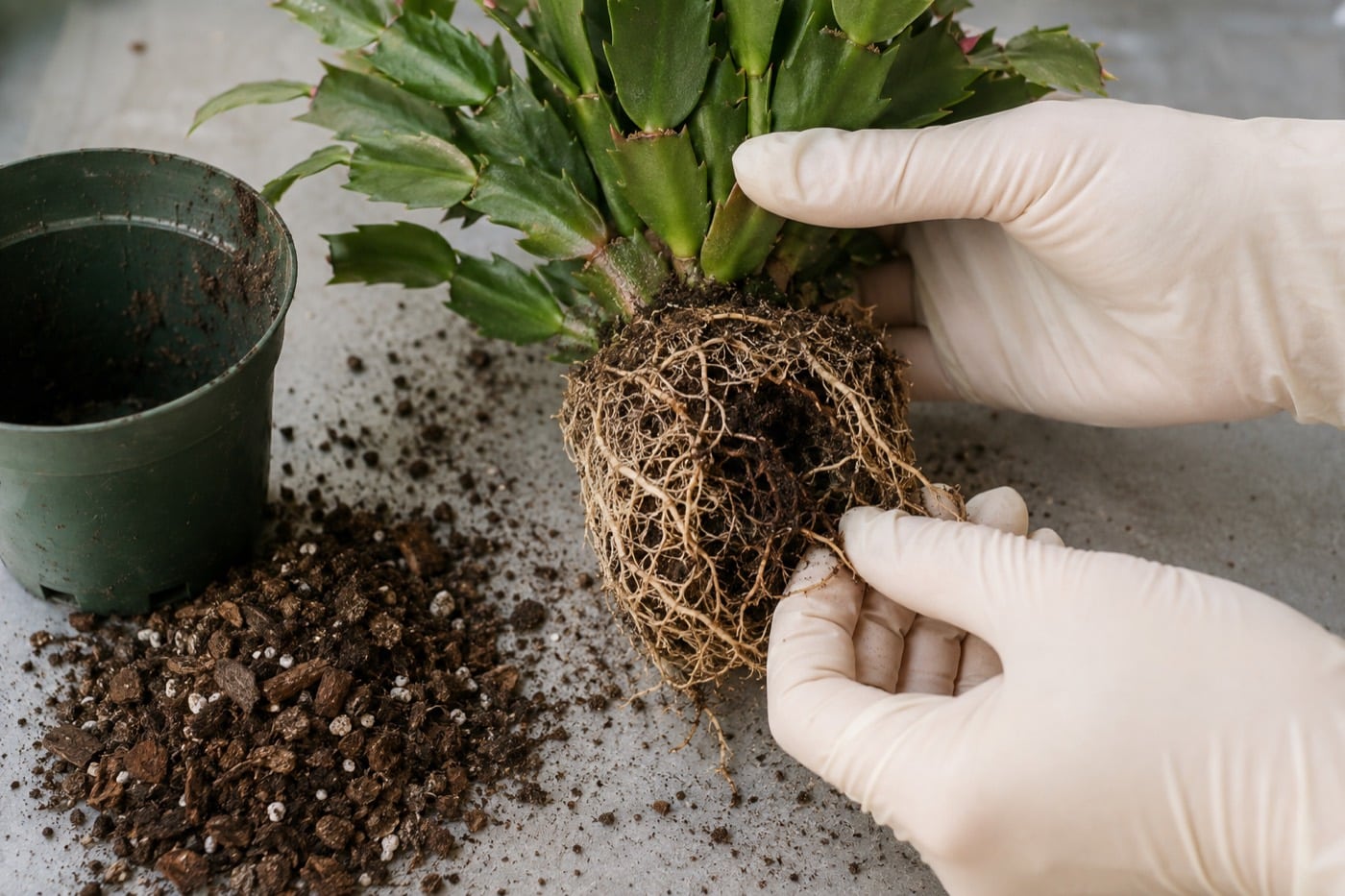
Trim away genuinely soft, blackened roots with clean scissors. Repot in a container with drainage, using fresh, loose houseplant mix improved with coarse perlite or fine orchid bark. Choose the same-size pot, not an oversized one that will stay wet longer.
Skip fertilizer until you see healthy new growth. A stressed root system needs air and stability, not a strong meal.
Check the room, not just the pot
A plant can go limp after a sudden environmental change. Cold glass, a drafty door, a heating vent, or a blast of hot afternoon sun can pull moisture from the stems faster than the roots can replace it.
Move the pot to bright, indirect light with gentle morning sun if available. Keep it away from direct heater airflow and cold drafts. Steady conditions beat constant relocation.
Harsh sun often adds pale, yellowed, bronze, or reddish patches to the droop. Very low light is less likely to cause a sudden collapse, but it slows water use and can keep a large pot damp for too long.
Rule out old soil, crowded roots, and pests
Being slightly snug in its pot does not bother a holiday cactus. However, badly compacted mix can create a frustrating combination: dry pockets in the middle and soggy pockets around them.
If water no longer penetrates evenly, roots circle the pot densely, or the mix has collapsed into a heavy mass, repot after the plant stabilizes. Go up only one pot size.
Next, inspect the joints and undersides of the stems. Cottony white clumps suggest mealybugs; hard brown bumps can be scale; fine stippling and webbing point to spider mites. Isolate the plant and use a houseplant treatment labeled for the pest, following the product directions.
A quick limp-stem checklist
- Dry mix, light pot, wrinkled segments: Water thoroughly and drain.
- Wet mix, heavy pot, sour smell: Stop watering and inspect the roots.
- Firm stems that simply hang: Probably normal mature growth.
- Pale or bronzed patches: Move the plant out of harsh direct sun.
- Sudden droop after a move: Check for heat, cold, and drafts.
- Cotton, bumps, stippling, or webs: Treat the specific pest.
What not to do to a limp Christmas cactus
Do not water on a calendar, mist in place of watering, or pour in fertilizer to “perk it up.” And resist the rescue reflex of moving it into a huge pot. The cure has to match the cause.
If the base is badly rotted, save a few firm, healthy stem sections as backup cuttings before treating the parent plant. That is less a surrender than a sensible insurance policy.

The bottom line
Start with the soil. Dry mix calls for a complete drink; wet mix calls for drainage and a root check. Once that fork in the road is settled, light, temperature, potting mix, and pests are much easier to evaluate.
A holiday cactus can look impressively dramatic when it is unhappy, but it is also tough. Give it the right fix, then give it a little time—the plant does not need ten remedies before lunch.