Zinnias look unstoppable in early summer, then appear tired when August heat, dry soil, heavy rain, and disease arrive together.
That does not mean the show is over. These annuals still have flowering power, and a short maintenance session can turn a ragged patch into a colorful fall garden.
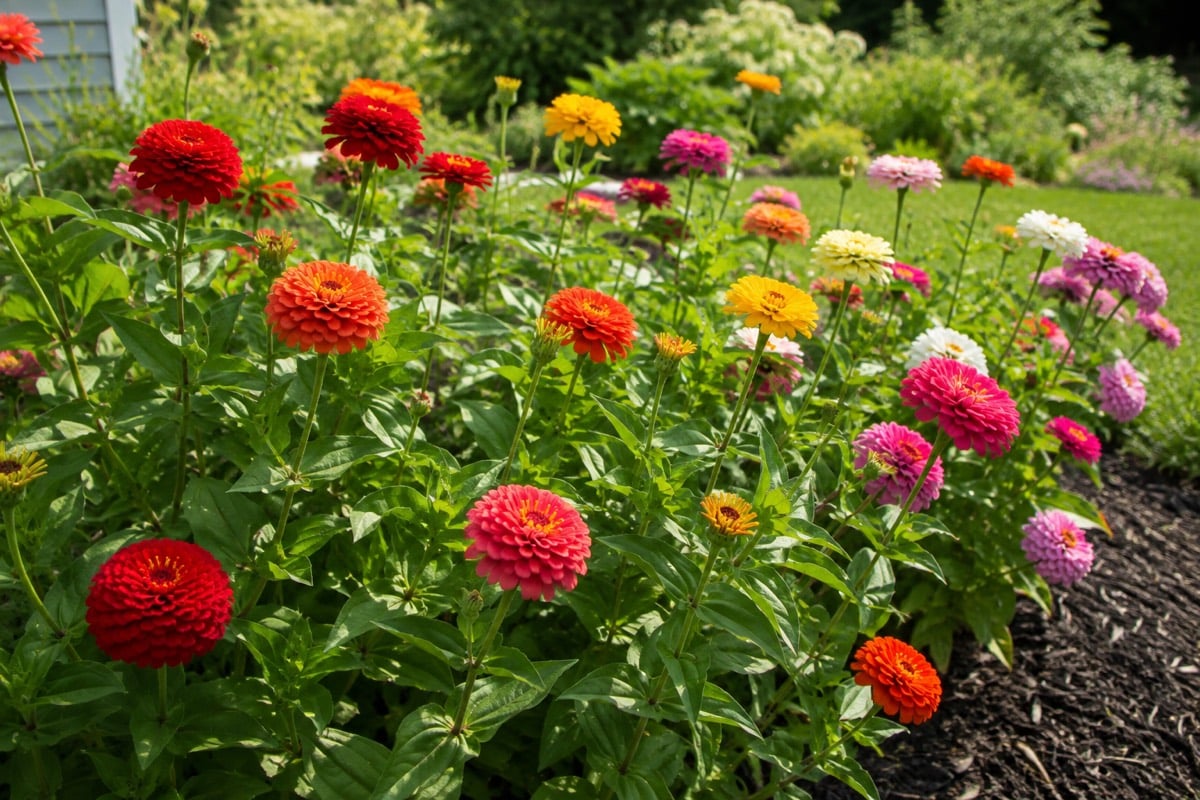
1. Deadhead Before Plants Spend Energy on Seed
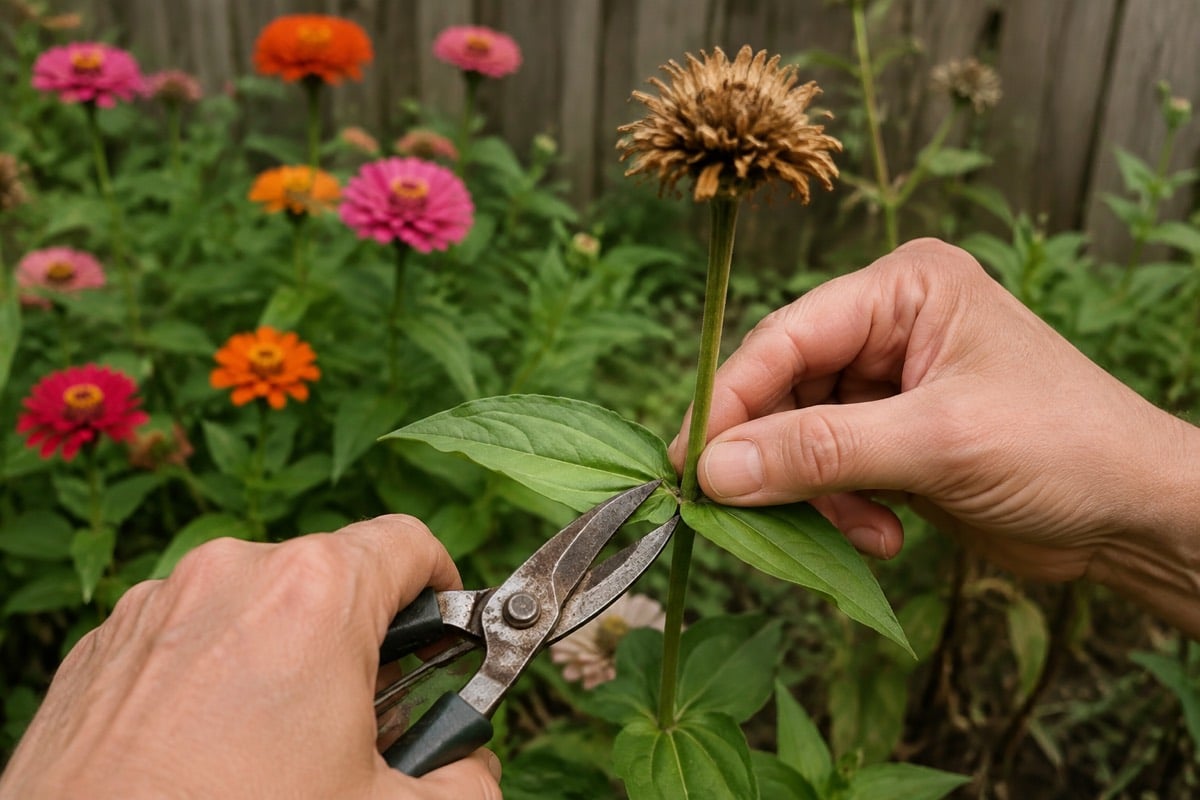
Once a bloom turns brown, papery, or faded, cut its stem back to a strong pair of leaves. New side shoots usually develop from that junction and produce more buds. Avoid snipping off only the flower head; the remaining bare stem looks awkward and may not branch as well.
Walk the bed every few days and remove declining blooms before they form seed. If a plant has become lanky, cut a few long stems farther back, but leave healthy foliage. Staggering the cuts prevents the whole bed from looking bare at once.
2. Water Deeply, Then Let the Surface Begin to Dry
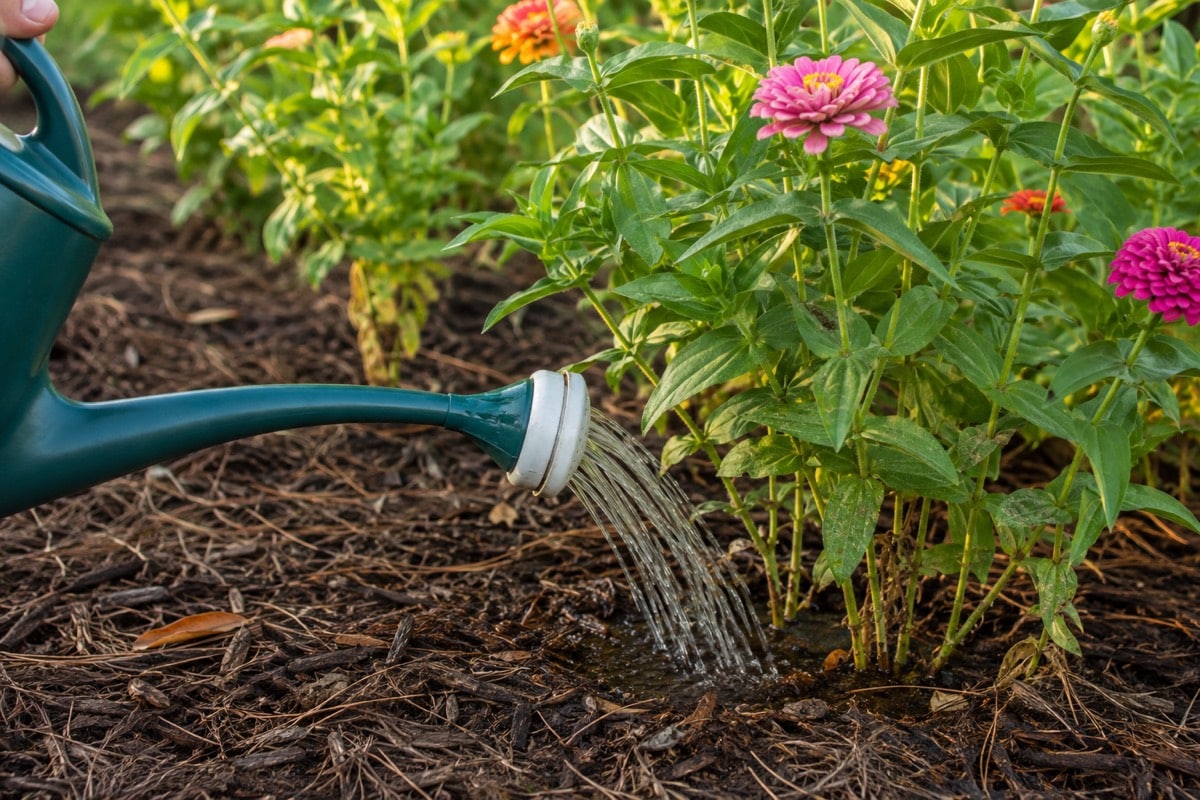
Zinnias tolerate short dry spells, but repeated wilting reduces flower size and encourages crisp lower leaves. Check the soil two inches down. If it feels dry, water slowly at the base until the root zone is moist. Established beds do better with one deep soaking than several light sprinkles.
Water in the morning when possible. Keeping the foliage dry and allowing any splashes to evaporate quickly helps limit leaf diseases. Containers dry faster than garden beds, so check potted zinnias daily during hot, windy weather. Always empty standing water from saucers.
3. Thin Crowded Growth for Better Airflow
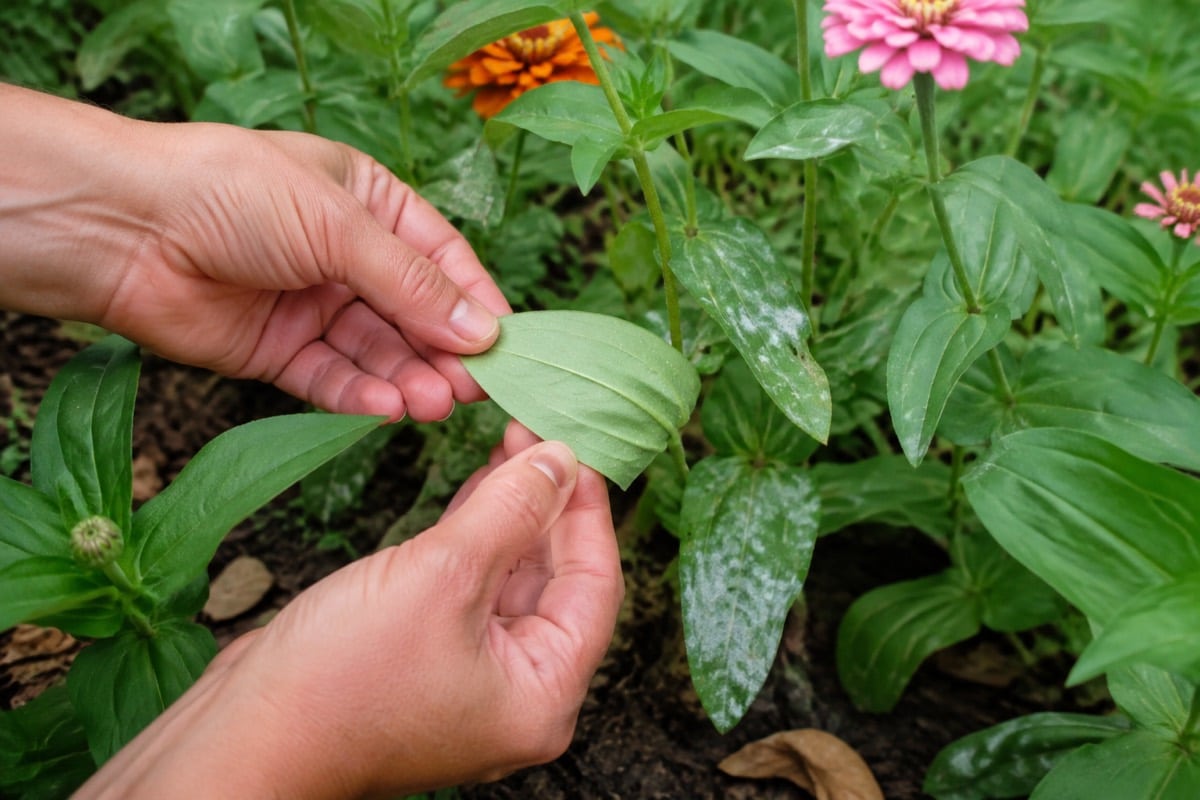
Late summer often brings powdery mildew, especially where stems are packed together. Remove yellow lower leaves, broken branches, and shoots growing through the center of the plant. If several plants touch heavily, sacrifice the weakest stem or plant to open a channel for air.
Do not strip away more than one-third of the foliage at once. Zinnias need leaves to power flowers, and heavy pruning can add stress during extreme heat. Put diseased material in the trash rather than leaving it beneath the plants.
4. Stay Ahead of Mildew and Pests
Inspect both sides of the leaves each week. Powdery mildew starts as pale, dusty patches; spider mites cause fine stippling and sometimes delicate webbing; Japanese beetles chew petals and leaves. Remove badly affected leaves and improve spacing first. A firm stream of water can dislodge mites, while beetles can be knocked into soapy water in the cool morning.
If a problem continues, choose a product labeled for that pest or disease and safe for zinnias, then follow the label exactly. Avoid spraying open blooms when bees and butterflies are visiting, and never treat heat-stressed plants in strong midday sun.
5. Feed Lightly—More Is Not Better
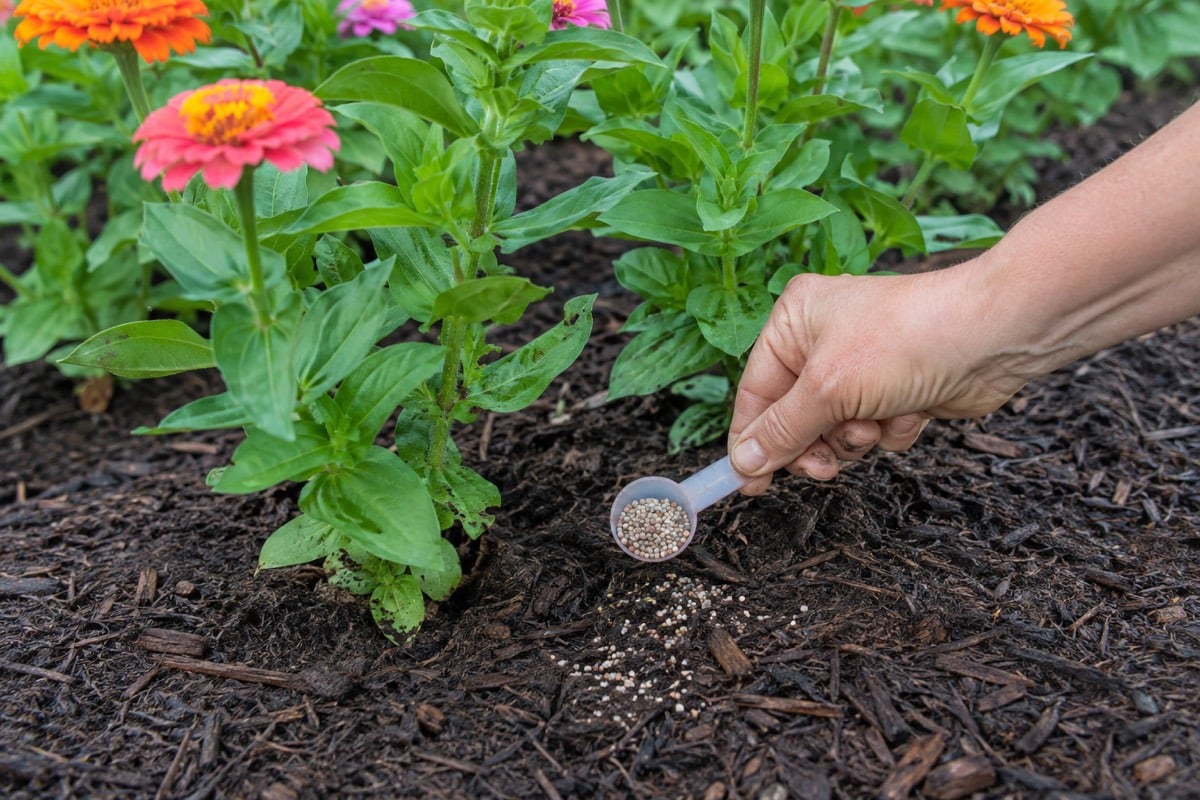
Healthy zinnias growing in decent garden soil may not need fertilizer at all. Too much nitrogen creates tall, leafy plants with fewer flowers and stems that fall over. If growth is pale or has stalled, apply a balanced, slow-release fertilizer or a diluted liquid feed at the package rate after watering.
Container zinnias need nutrients more often because watering washes them from the potting mix. Feed lightly on the product schedule and stop if growth becomes soft and overly lush. Never apply fertilizer to bone-dry soil, which can damage roots.
6. Keep the Sun on the Flowers and Support Tall Stems
Zinnias flower best with at least six hours of direct sun. By late summer, neighboring plants may have grown tall enough to shade them, so tie back encroaching foliage or move containers to a brighter spot. Do not transplant established garden zinnias during hot weather unless necessary.
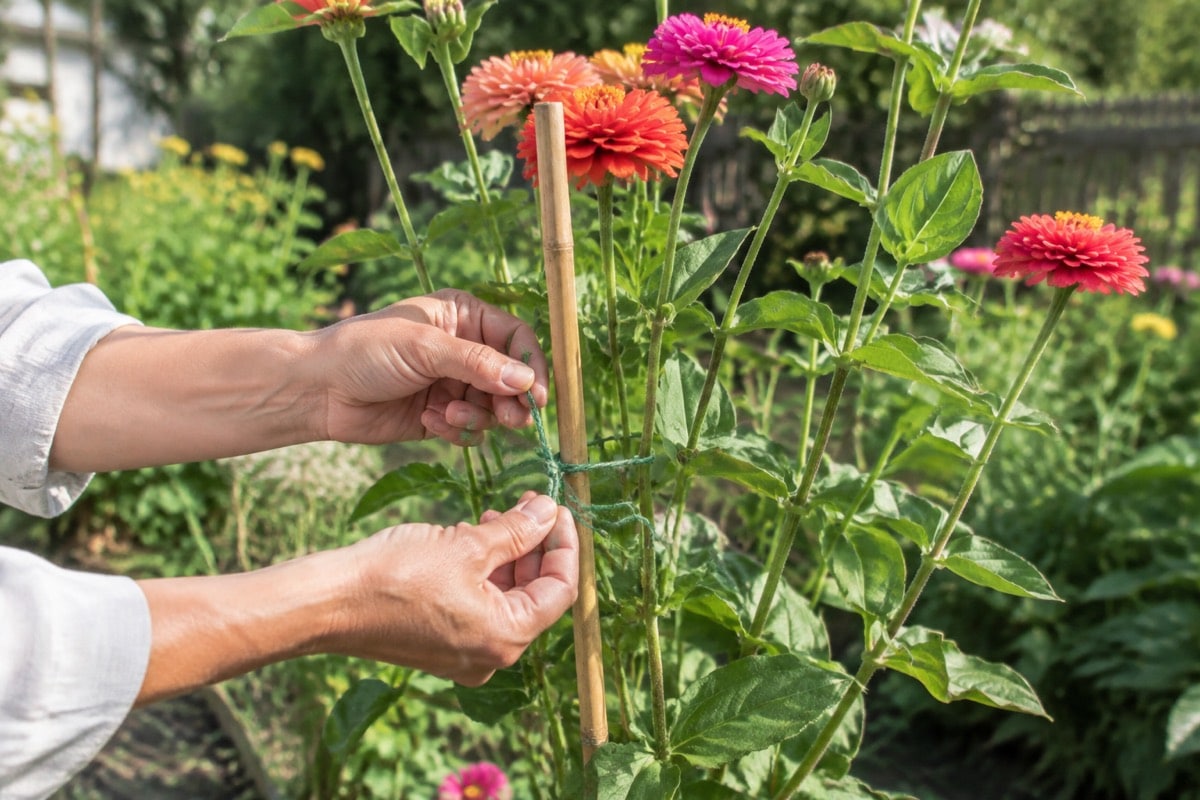
Use a small stake, flower ring, or discreet twine around tall varieties before thunderstorms arrive. Tie stems loosely so they can move without rubbing. After a storm, cut snapped stems cleanly above a leaf pair instead of leaving ragged breaks that can invite rot.
7. Cut Bouquets and Plan for the First Frost
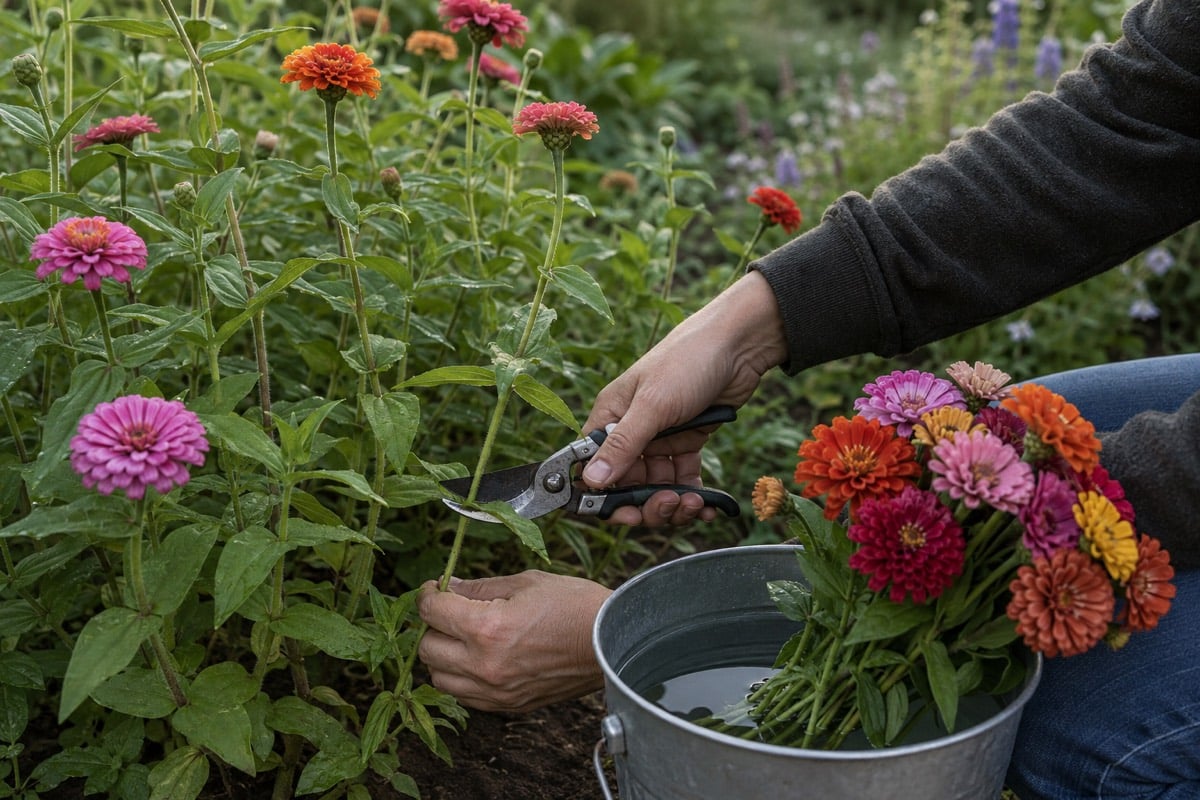
Regular cutting is productive pruning. Harvest when stems are firm and flowers are nearly open, preferably early in the morning. Cut just above a leaf pair and place stems directly in clean water. The plant responds by branching and setting more buds.
If you want seed, stop deadheading a few healthy, open-pollinated blooms and let the heads dry completely on the plant. Then follow this guide to harvest zinnia seeds. Hybrids may not grow true to the parent. Remember that zinnias are frost-tender; learn what frost means for zinnias before a cold night arrives.
A Simple Late-Summer Zinnia Routine
- Deadhead and cut bouquets every few days.
- Check soil moisture two inches deep before watering.
- Water at the base and keep foliage dry.
- Remove yellow or diseased leaves promptly.
- Inspect leaf undersides for mites and beetles.
- Support tall stems ahead of wind and rain.
- Leave a few flowers only if you want seed.
The goal is steady care, not a dramatic rescue. Keep roots evenly supplied with water, preserve healthy leaves, and redirect the plant’s energy away from old flowers. With those basics in place, zinnias can produce bright new buds through late summer and continue until the first killing frost.