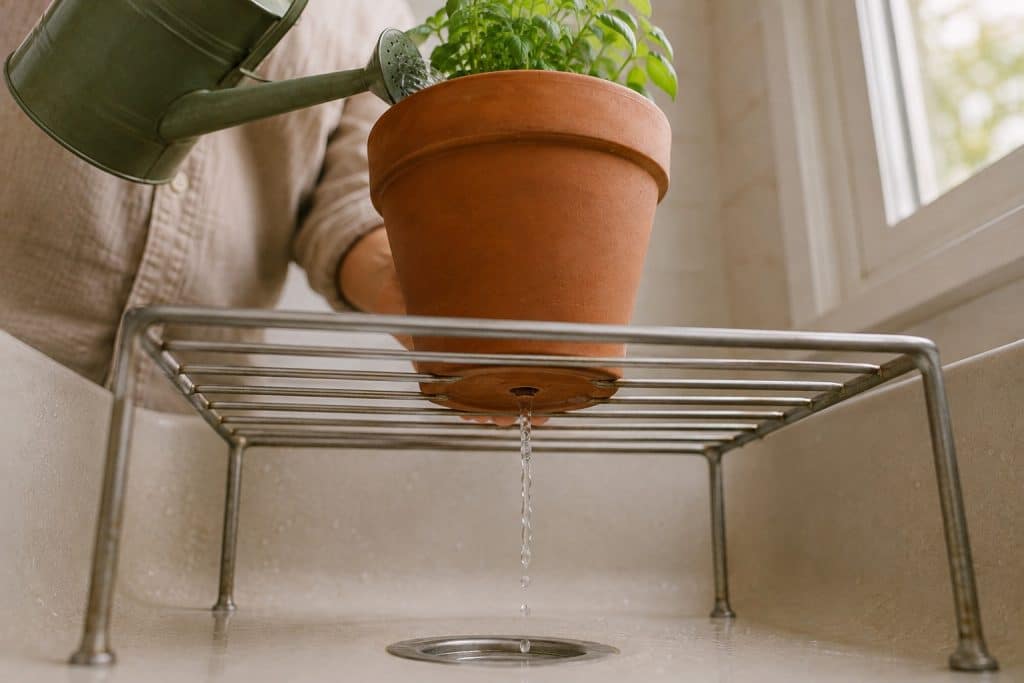
Water a freshly planted pot and you may see more than water land in the saucer. Loose potting mix can wash through a large drainage hole, leaving a muddy ring on a shelf, windowsill, deck, or patio. The mess is especially common just after repotting, before roots have grown through the mix and helped hold it together.

A plain paper coffee filter offers an easy fix. Set one over the drainage hole before adding potting mix. The paper catches loose particles while still allowing excess water to escape. It costs pennies, takes seconds, and is particularly useful in terracotta pots with one generous hole in the center.
That is the real promise of this trick: a cleaner planter, not magically healthier roots. Used correctly, a coffee filter is a temporary soil keeper that leaves the pot’s essential drainage route open.
What the coffee filter actually does
Good potting mix contains fine ingredients such as peat, coir, compost, or aged bark, often blended with perlite or vermiculite. When the mix is dry and loose, some of those particles can tumble out of a drainage hole. A hard stream of water can carry out even more.
The filter acts like a thin screen. Its tiny pores let water pass while holding most of the potting mix in place. You waste less mix, the saucer stays cleaner, and the drainage hole is less likely to leave a gritty streak across an indoor surface.
The benefit is often temporary, and that is fine. Paper softens and eventually decomposes in a damp container. By then, the mix has usually settled and the plant’s roots may be holding it together. You do not need to dig up the plant to replace the filter.
How to use a coffee filter in a planter
1. Start with a pot that has drainage holes
A filter cannot compensate for a sealed container. If excess water has nowhere to go, roots can sit in waterlogged mix and lose access to oxygen.
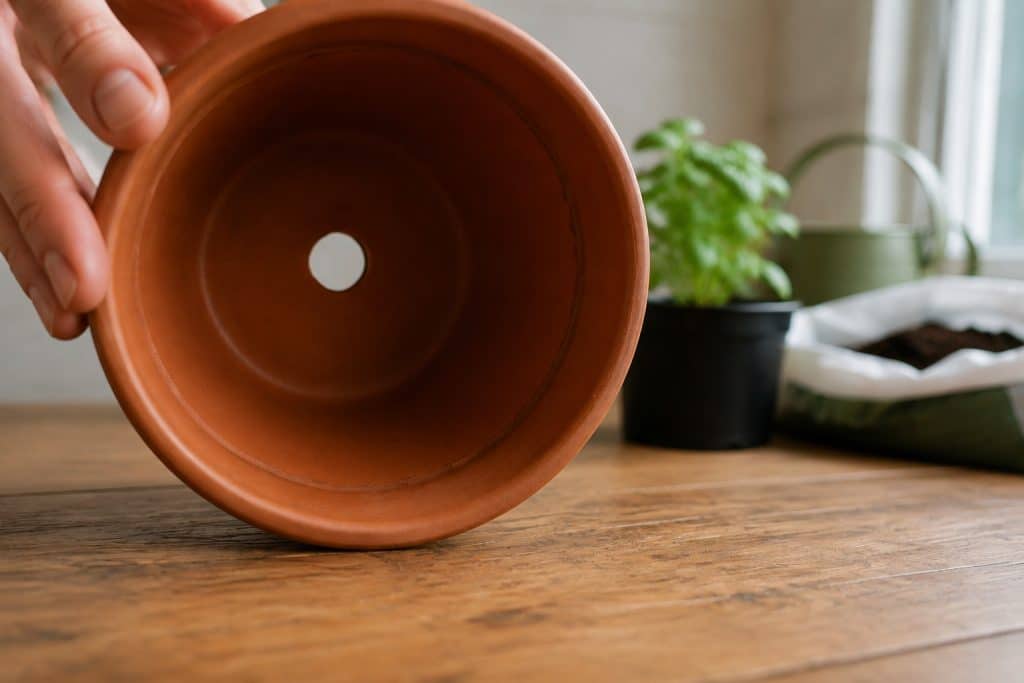
2. Choose a plain paper filter
A basket-style filter is convenient for a broad pot, while a cone filter can be opened or trimmed. Use enough paper to cover the hole with a little overlap, but do not stuff several layers into it.
3. Lay the filter flat
Place it inside the empty pot so it covers the hole. There is no need to tape or glue it. The weight of the potting mix will keep it in position.
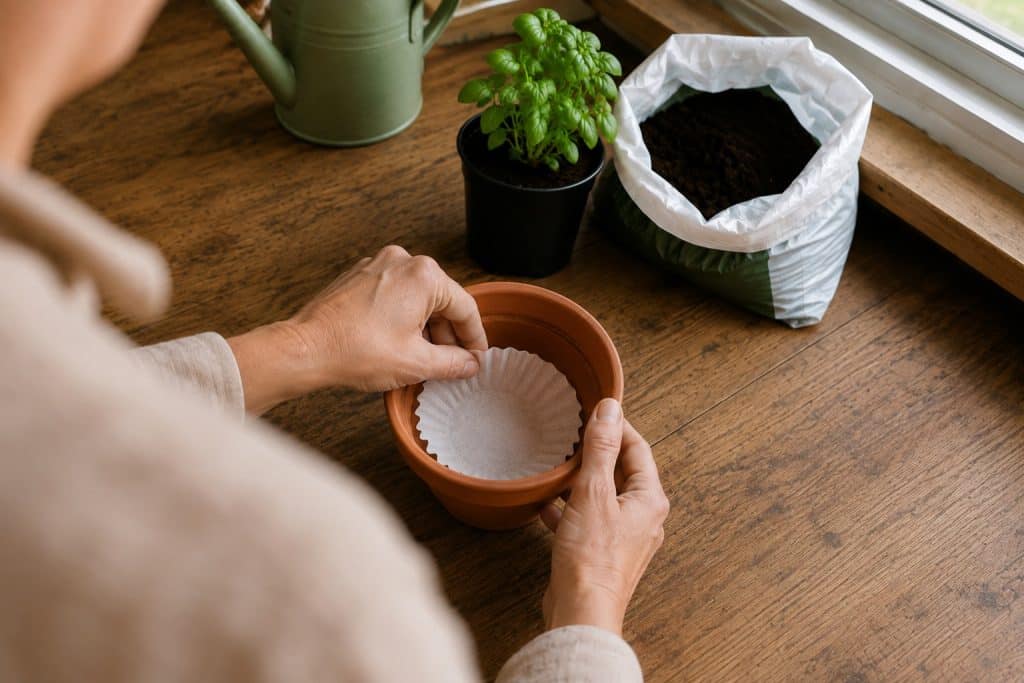
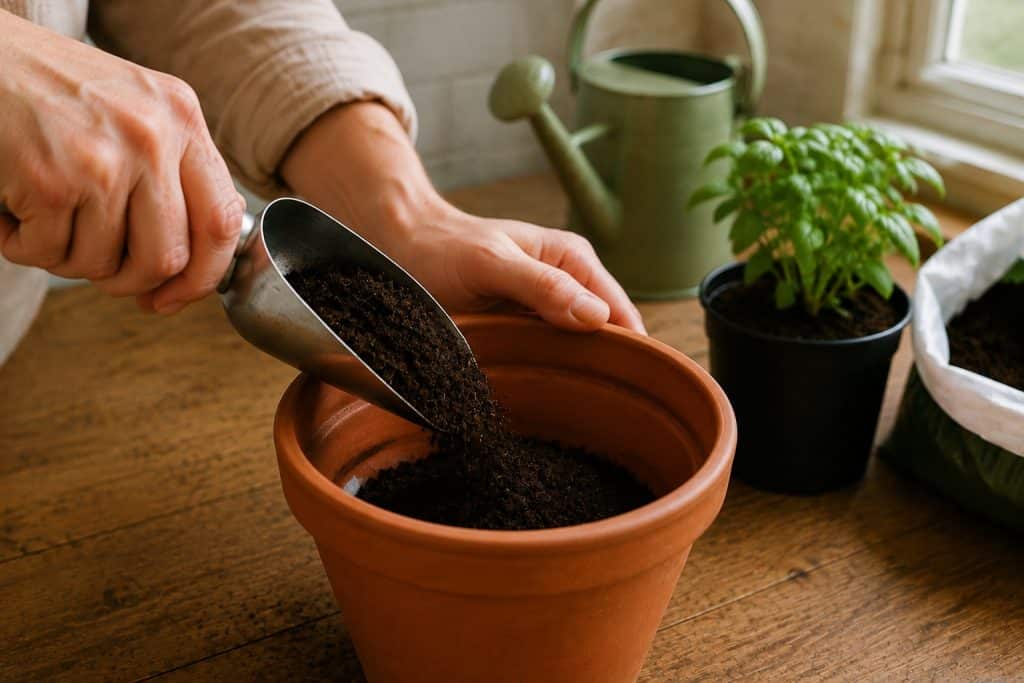
4. Add a base layer of fresh potting mix
Use a mix intended for containers rather than dense soil dug from the yard. Add enough to support the root ball at the right height without packing the mix hard.
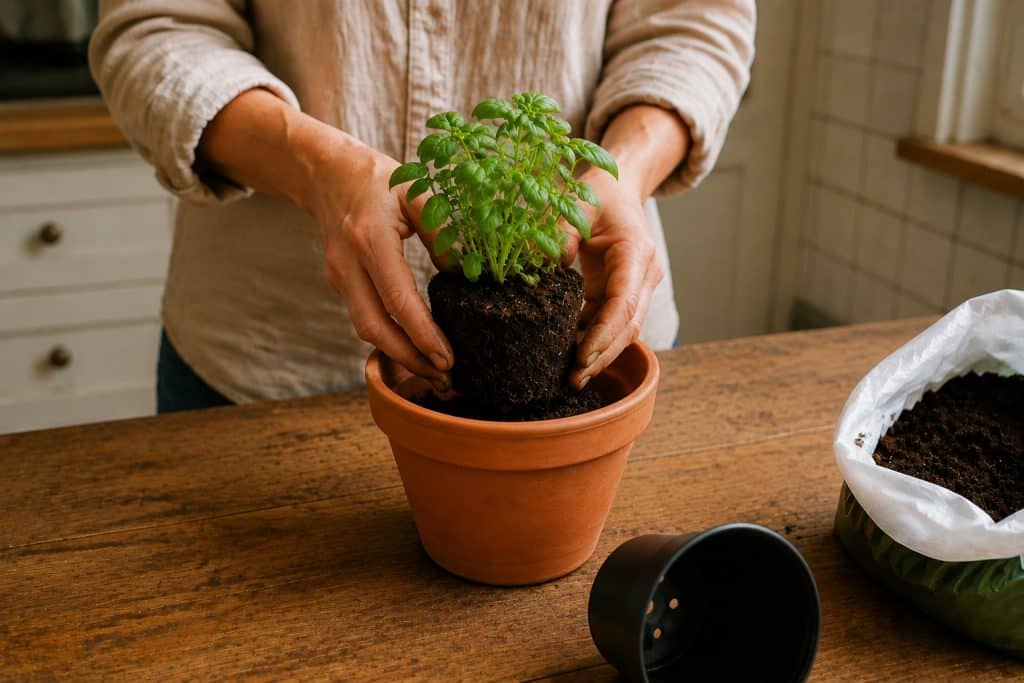
5. Set the plant in place
Remove the plant from its nursery container and center the root ball on the base layer. Keep the plant at the same depth it was growing before, then fill around the sides with more potting mix.
6. Water thoroughly
Add water until some runs from the bottom. This settles the mix and confirms that the drainage hole is working. Empty an indoor plant’s saucer after the pot has finished draining.
What this trick does not do
A coffee filter does not create drainage in a pot without a hole, and it does not turn heavy, compacted soil into a free-draining mix. It also is not a reason to leave a container standing in a full saucer. Drainage depends on an open exit, suitable potting mix, and sensible watering.
Most importantly, the filter should not be confused with a layer of gravel. Gardeners once commonly added stones, broken pottery, or pebbles beneath the soil in hopes of improving drainage. That layer can actually leave less room for roots and keep the saturated part of the potting mix higher in the container. The University of Illinois Extension recommends a drainage hole and notes that a coffee filter can be used over a large opening to keep soil from falling through. Skip the gravel and fill the pot with an appropriate mix instead.
When a coffee filter helps most
This trick earns its keep with newly potted houseplants, tabletop planters, hanging pots, and containers positioned over pale paving or finished wood. It is also handy when a pot has one oversized hole that loses mix every time you water.
You may not need it in a plastic nursery pot with several small holes. A little material may escape during the first watering, but the loss often stops once the mix settles. Large outdoor planters can also outlast a paper filter, especially in wet climates. A small piece of rigid window screen, landscape mesh, or a clean plastic produce bag with an open weave may be a more durable choice. Whatever you use, it should cover the opening without sealing it.
Common mistakes to avoid
More paper is not better. A thick wad of filters can slow the exit of water or press tightly into the hole. One layer is generally enough. Avoid reusable metal or tightly woven synthetic coffee filters unless you are sure water moves through them freely; they are designed for brewing, not for living in wet soil.
Do not use the trick to justify overwatering. Check the potting mix before reaching for the watering can, and adjust for the plant, pot size, season, temperature, and light. When you do water, wet the mix evenly and let the excess drain completely.
Finally, do not confuse a coffee filter with used coffee grounds. Grounds are not a substitute for potting mix, and a thick layer can stay soggy or become compacted. For this job, it is the clean paper filter that matters.
A small fix for a surprisingly annoying mess
The best garden tricks are often modest. A coffee filter will not rescue a plant from poor light, the wrong soil, or chronic overwatering. What it can do is stop loose potting mix from spilling through a large drainage hole while allowing water to leave the pot.
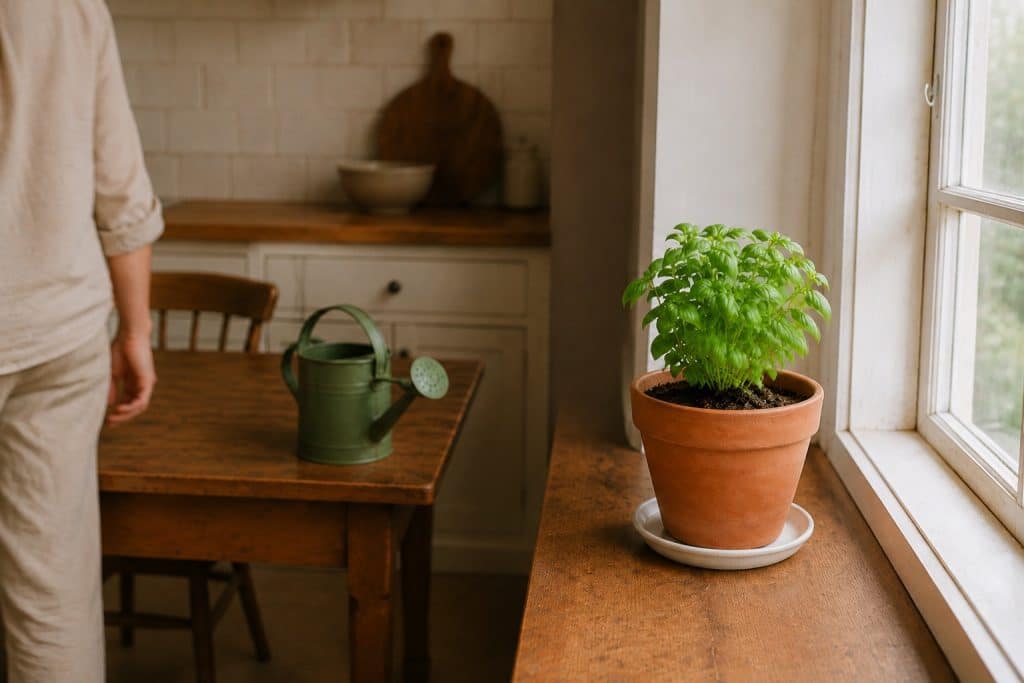
Lay down one filter, add a quality container mix, and water as usual. You will spend less time wiping muddy grit from the saucer and more time enjoying the plant above it. For a problem that appears every time the watering can comes out, that simple improvement can feel remarkably useful.