Quick answer: Thin, tired petunias can usually be revived. Check the soil first, correct any watering problem, cut long bare stems back by one-third to one-half, remove dead growth and seedpods, and then give the plant a measured dose of fertilizer. With warm weather and healthy roots, fresh shoots often appear within a week and flowers return in about two to three weeks.
A hanging basket can look lush in May and almost empty by midsummer. Heat, repeated drying, heavy rain, crowded roots, and weeks of flowering all take a toll. The good news is that a petunia with green, flexible stems is not necessarily dying. It may simply need a reset.
Start With a Five-Minute Check
Do not reach for fertilizer or the hose until you know what the roots are experiencing. Push a finger about an inch into the potting mix.
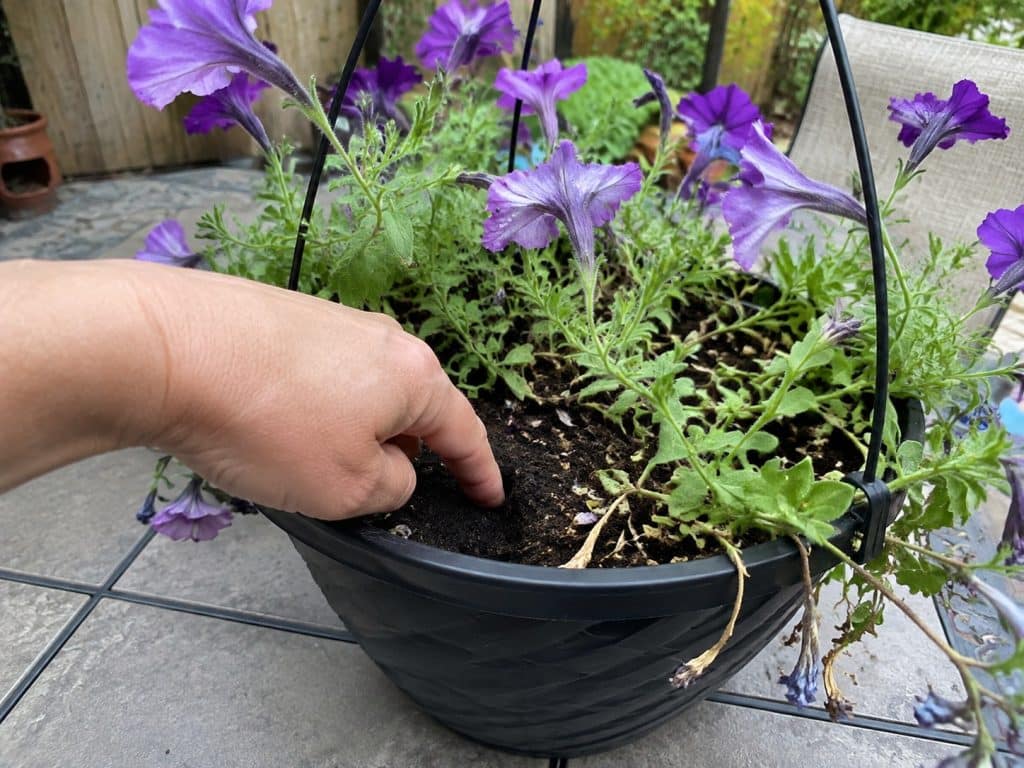
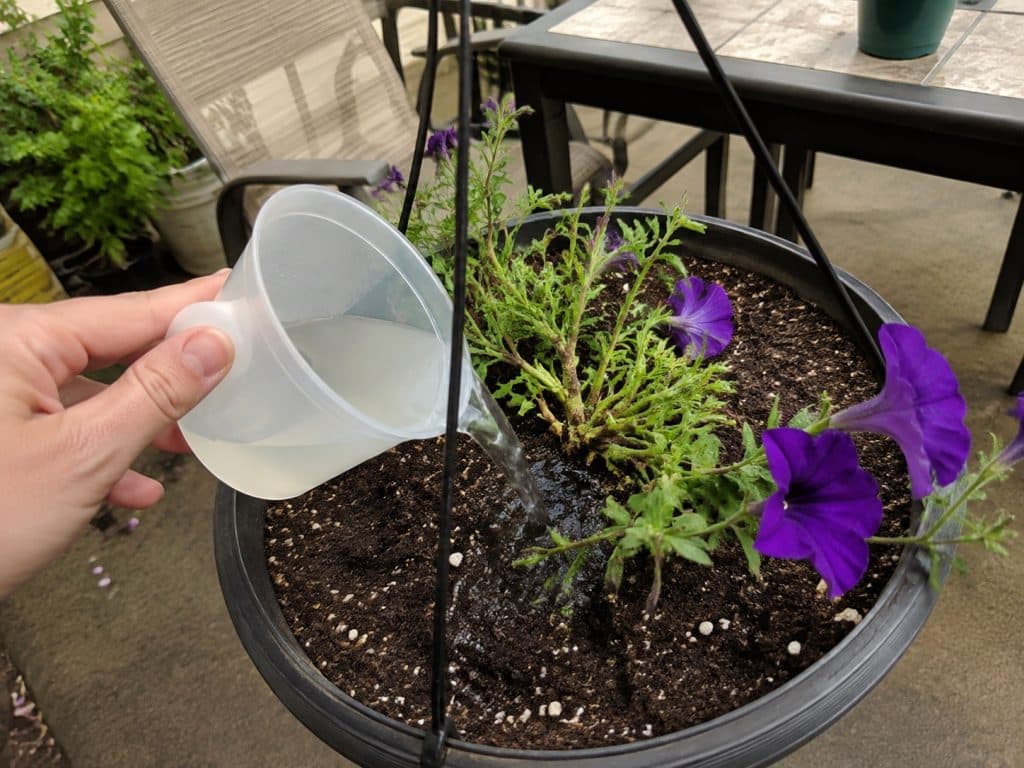
- Dry soil: Water slowly until moisture runs from the drainage holes. If water races down the sides, wait 10 minutes and water again so a shrunken root ball can absorb it.
- Soggy soil: Stop watering, empty any saucer, and make sure every drainage hole is open. Constantly wet roots cannot take up oxygen.
- Evenly moist soil: Look next at pruning, nutrition, light, and pests.
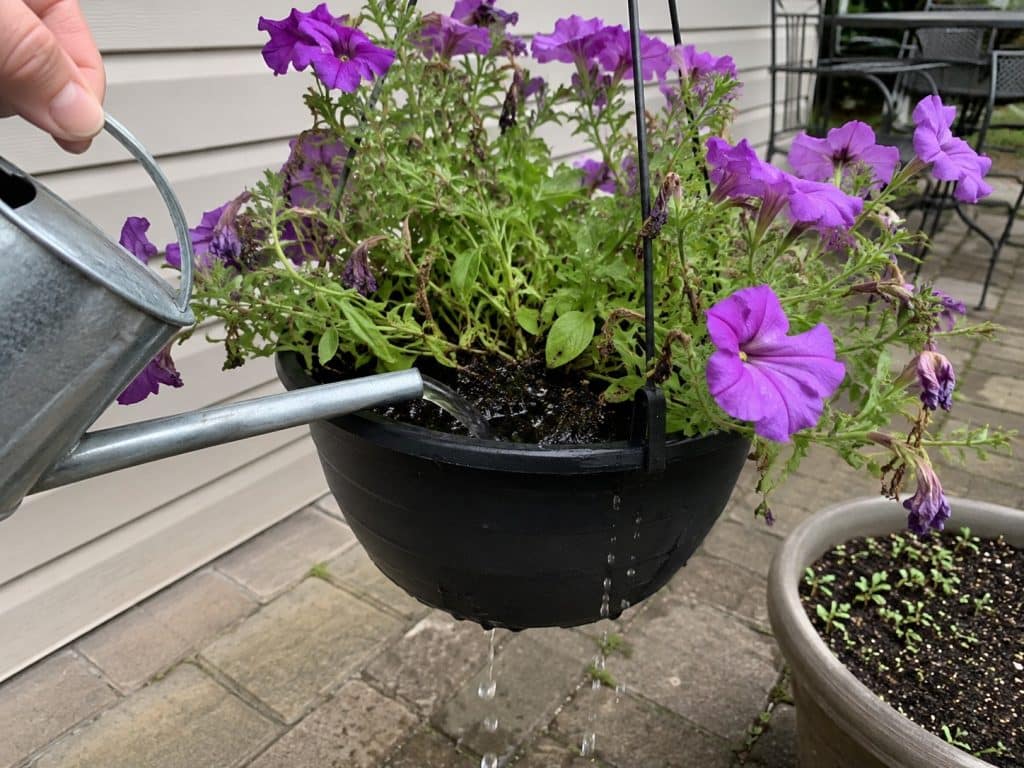
A wilted petunia is not always thirsty. Overwatered plants can droop too, so adding more water without checking may make the problem worse. If the foliage is yellow as well as sparse, compare the symptoms with these common causes of yellow petunia leaves.
Give Leggy Petunias a Real Haircut
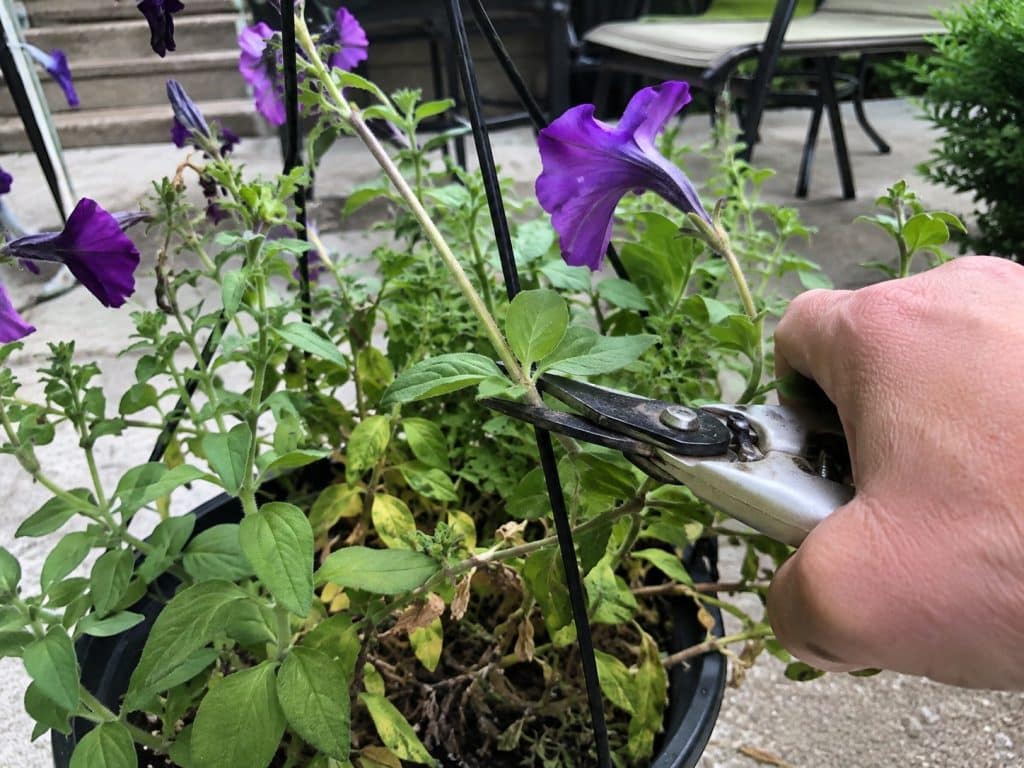
When the flowers sit at the ends of long, mostly bare stems, deadheading alone will not rebuild the plant. Use clean scissors or bypass pruners to shorten the longest stems by one-third to one-half. Make each cut just above a healthy leaf or leaf node, the small point where new side growth can develop.
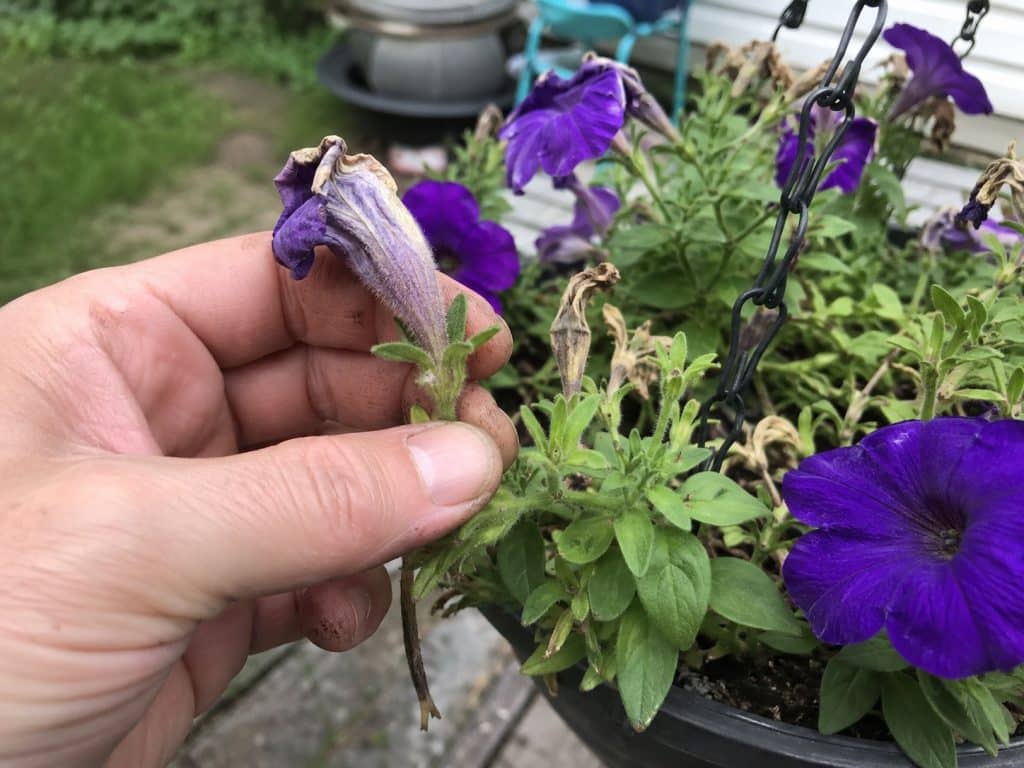
Remove crisp brown foliage and broken stems while you work. Also pinch off faded flowers along with the swollen green seed capsule directly behind each bloom. Many modern petunias are self-cleaning, but an occasional cleanup still improves airflow and appearance.
Water First, Then Feed
Petunias flower heavily and container plants gradually use up the nutrients in their limited potting mix. After pruning, apply a balanced or flowering-plant fertilizer according to the package directions. Water dry soil before using liquid fertilizer to reduce the chance of root burn, and never double the dose in hopes of getting faster blooms.
Make Sure the Roots and Light Are Working
Petunias bloom best in generous sun, generally at least six hours of direct light. A basket that was sunny in spring may become shaded as nearby trees leaf out. Move it to a brighter position if possible. During extreme heat, a little late-afternoon protection can reduce stress, but deep shade usually leads to fewer flowers and stretched stems.
Next, check whether the container is packed with roots. If water runs straight through, the mix dries again within hours, or roots circle densely inside the pot, move the plant to a container one size larger with drainage holes and fresh potting mix. Do not use heavy garden soil in a hanging basket.
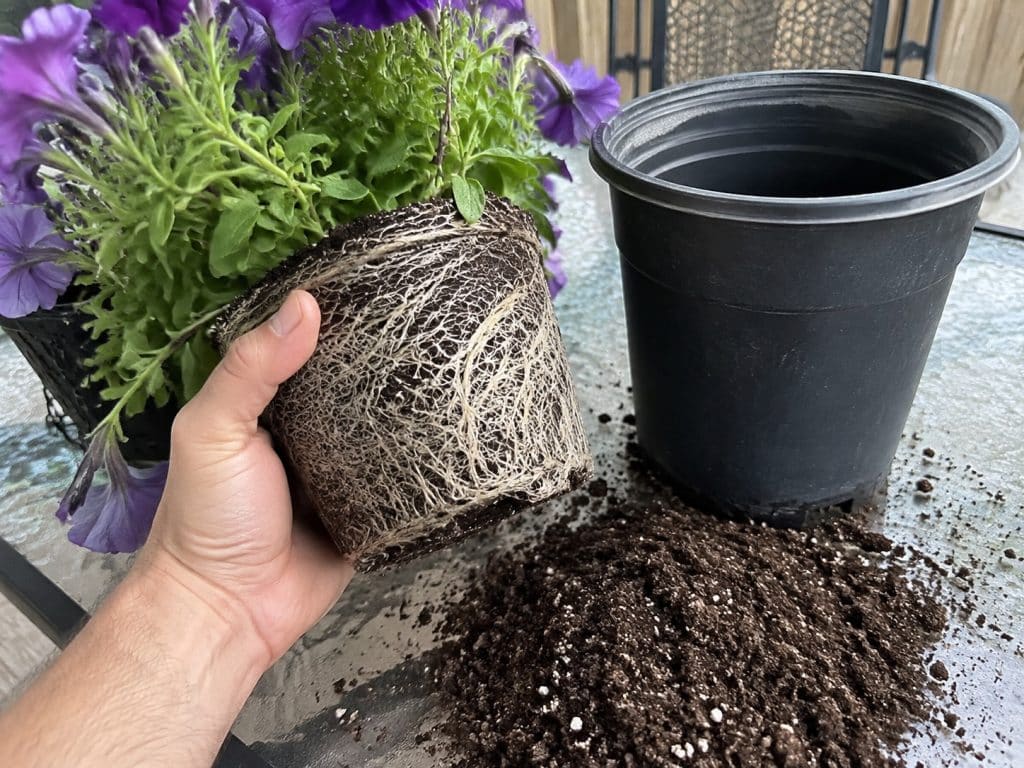
If the pot stays wet for days, smells sour, or stems are black and mushy at the soil line, root rot may be advanced. Remove the plant, trim away rotten roots, and repot only if firm pale roots remain. Our guide to reviving overwatered petunias covers that recovery in more detail.
Check for Pests Before You Wait
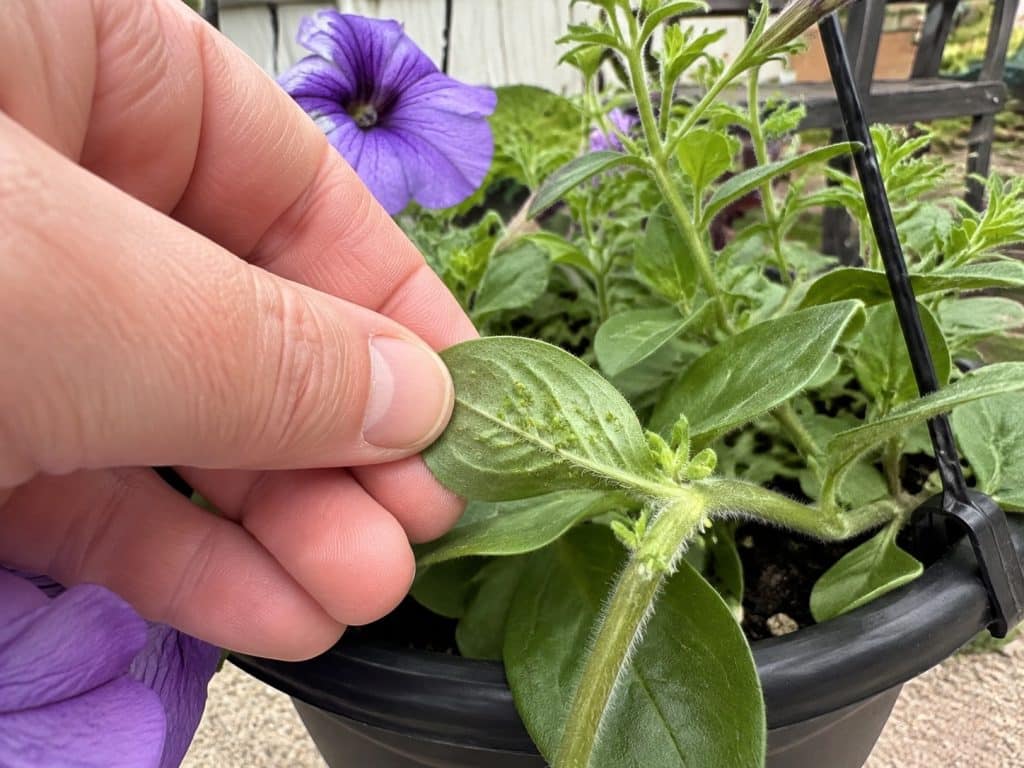
Look under leaves and along tender tips for clusters of aphids, tiny whiteflies, fine spider-mite webbing, or black specks of waste. A strong stream of water can dislodge light infestations. If pests return, use insecticidal soap or another product labeled for the pest and for petunias, following all directions. Spray during the cooler part of the day rather than on heat-stressed foliage.
Spotted, collapsing, or heavily mildewed growth may point to disease instead of simple neglect. Remove affected material, avoid wetting leaves late in the day, and give crowded plants more airflow. Clean pruners before moving to another plant.
What Recovery Should Look Like
Keep the soil consistently moist but not waterlogged after the haircut. In hot weather, check baskets daily; small containers may need water more than once on the hottest, windiest days. Water based on the soil, not the clock.
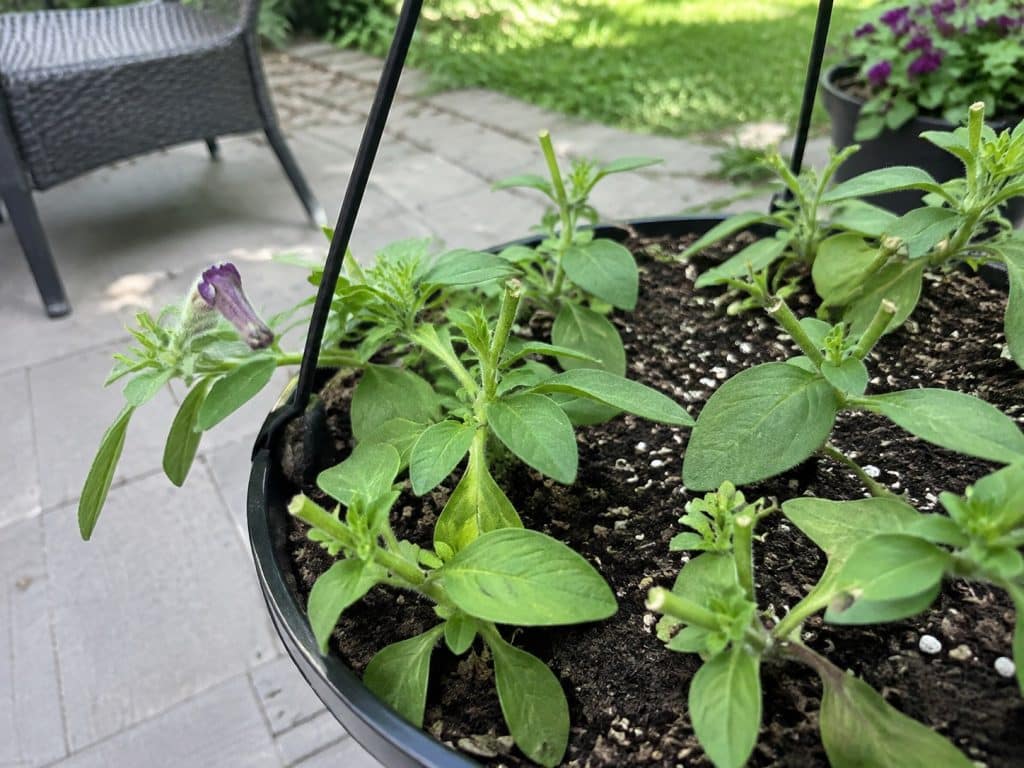
Healthy stems should begin pushing small side shoots within several days. New buds commonly follow, with a fuller display in roughly two to three weeks. Continue removing damaged growth and rotate a basket every few days if one side receives more light.
Replace the plant if all stems are brittle and brown, the crown is rotten, or healthy roots are gone. Replacement can also make more sense late in the season when frost is close. If summer heat repeatedly overwhelms the same location, consider one of these heat-loving alternatives to petunias next time.
A Simple Routine to Keep Petunias Full
- Check container moisture daily during hot or windy weather.
- Water thoroughly, then allow excess water to drain.
- Remove faded blooms and seedpods when the variety needs deadheading.
- Trim wandering stems before the center becomes bare.
- Feed container petunias regularly at the label rate.
- Keep the plant in strong light and inspect leaves for pests each week.
The important move is to fix the cause before treating the symptoms. Once moisture, roots, light, and pests are under control, a decisive trim gives a tired petunia the chance to branch again. It may look sparse for a few days, but that short pause is often the quickest route back to a rounded basket covered in flowers.
