That “dead” patch in your garden may be the busiest bird feeder you have. Once frost strips the color from the yard, seed heads, dry stalks, pods, and berry clusters become food, lookout posts, and tiny shelters for birds trying to make it through the hardest months.
Instead of cutting everything down in fall, leave healthy native plants standing until late winter or early spring. The exact timing depends on your climate, but the basic idea is simple: let birds use the food first.
1. Purple Coneflowers

Purple coneflowers (Echinacea purpurea) are among the easiest plants to recognize in a winter garden. Their faded petals disappear, but the stiff, spiky cones remain packed with small seeds that finches and other seed-eating birds can work loose.

Leave the stems upright so birds can land on them instead of picking seeds from the ground. If you grow several plants together, they create a small, dependable patch that keeps offering food after the first snow.
Cut the stalks back once winter is winding down, not during the first fall cleanup. If a plant is diseased, remove that material promptly rather than leaving it in the bed.
2. Black-Eyed Susans

Black-eyed Susans (Rudbeckia hirta) look cheerful in summer and surprisingly useful in winter. Their dark, button-like centers dry into seed heads that give birds a firm place to perch and forage.

Goldfinches, sparrows, and juncos may visit at different times, especially when snow covers low-growing food. The seed heads also add height and texture, so the garden looks intentional rather than abandoned.
Let the heads stand through the coldest stretch. In spring, shake a few seeds onto bare soil if you want more plants, then trim the old stalks as new growth begins.
3. Sunflowers

Sunflower heads are basically natural bird feeders on a stalk. As the petals collapse, the seed-filled center becomes easier for goldfinches, chickadees, nuthatches, and other visitors to investigate.

Leaving the head attached gives birds a better feeding platform and keeps seed husks from piling up in one damp spot. Tall stems can also act as visible perches above a snowy garden.
Choose untreated seed if you are planting sunflowers for wildlife, and skip any plant that has been sprayed with an insecticide or fungicide that could remain on the seed head.
4. Asters

Native asters (Symphyotrichum species) do more than provide late-season flowers. After bloom, their small seed heads remain on branching stems, creating a loose network of food and perches when many other plants have vanished.

Asters are especially useful in a mixed planting because their stems fill gaps between taller grasses and sturdier seed heads. Small birds can move through the branching structure while searching for seeds and overwintering insects.
Leave several clumps untouched even if you tidy the edges of the bed. A late-winter cutback lets you keep the habitat without sacrificing a neat path or patio border.
5. Goldenrod

Goldenrod (Solidago species) keeps helping wildlife after its yellow flowers fade. Its dried flower clusters hold small seeds, and the stems may shelter insects that birds pick out during mild winter weather.

Do not confuse a wildlife patch with a permission slip for every aggressive plant. Keep goldenrod contained where appropriate, and favor native species recommended for your region.
Once the stems are dry, leave them standing through winter. The pale seed tufts catch snow and make the plant easier for birds to find.
6. Switchgrass and Other Native Grasses

Native grasses such as switchgrass (Panicum virgatum) provide something flowers cannot: cover from wind and predators. Their seed panicles also give sparrows and finches small seeds to hunt through the cold season.

Leave the clumps tall enough to form a sheltered pocket at the base. A mix of heights is more useful than a row of identical plants because birds can feed, hide, and move between cover.
Wait until late winter or early spring to cut them back, and leave some short stubble rather than scalping the bed. Avoid planting ornamental grasses known to spread aggressively in your area.
7. Joe-Pye Weed

Joe-Pye weed (Eutrochium species) is a tall, late-blooming native that earns its space twice. It feeds pollinators in summer, then leaves behind broad, branching seed heads that persist into winter.

Its height makes it a useful lookout and landing place for small birds. The old stems can also hold tiny insects, giving birds another reason to inspect the plant after the flowers are gone.
Leave the stems through winter, especially in a damp or sunny corner where the plant thrives. Cut them near the ground only after the worst weather has passed and new shoots are starting.
8. Common Milkweed
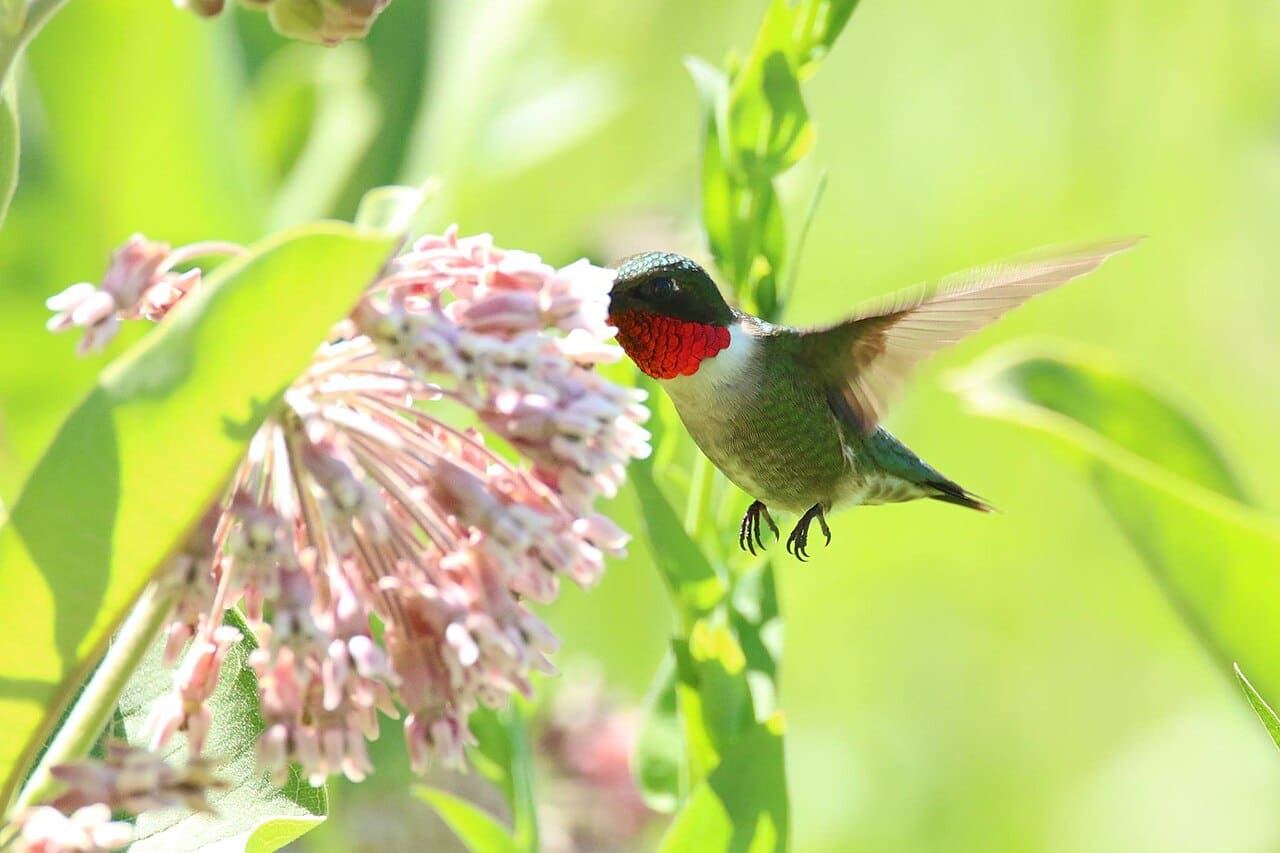
Common milkweed (Asclepias syriaca) is best known as a monarch host plant, but its winter value does not stop there. When the pods open, silky seed floss and attached stems create food, texture, and cover in an otherwise bare patch.

Finches may investigate milkweed seeds, while other birds use the standing stalks as part of a larger insect-hunting route. Leave the pods and stems in place instead of treating the whole patch as garden waste.
Give milkweed room to spread, and plant the species native to your region. If you need to control it, thin it after the seed has matured rather than removing every stalk before winter.
9. Staghorn Sumac
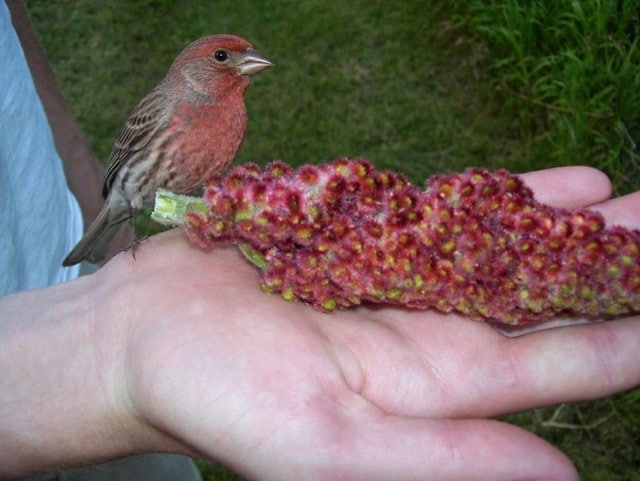
Staghorn sumac (Rhus typhina) brings woody structure and bright fruit clusters to winter landscapes. The fuzzy red cones can persist after the leaves drop, offering birds a visible food source when the ground is covered.

Even when a particular cluster has been picked clean, the branching canopy still gives birds a perch above snow and leaf litter. Leave female plants with fruit-bearing cones standing, and make sure the sumac you keep is a noninvasive species for your location.
Prune only for safety, access, or genuine crowding. A little winter “mess” around the base can protect insects and make the whole shrub more valuable to birds.
Image Attributions
Purple Coneflowers
- “Echinacea purpurea Spinus tristis JRVdH 01.jpg” by Cephas, licensed under CC BY-SA 4.0.
- “Zaaddoos Echinacea purpurea (zonnehoed) 02.JPG” by Dominicus Johannes Bergsma, licensed under CC BY-SA 4.0.


Black-Eyed Susans
- “Rudbeckia hirta Black-eyed Susan Gibberd Garden Essex England (cropped).JPG” by Acabashi, licensed under CC BY-SA 4.0.
- “Black eyed susan 20040717 110754 2.1474.jpg” by G. Edward Johnson, licensed under CC BY-SA 3.0.


Sunflowers
- “Helianthus annuus Spinus tristis JRVdH 04.jpg” by Cephas, licensed under CC BY-SA 4.0.
- “Sonnenblume Helianthus 1.JPG” by böhringer friedrich, licensed under CC BY-SA 2.5.


Asters
- “Aster novae-angliae – Raublattaster.jpg” by Haeferl, licensed under CC BY-SA 3.0.
- “Blue wood aster (Symphyotrichum cordifolium) 7864.jpg” by Chris Light, licensed under CC BY-SA 4.0.


Goldenrod
- “Solidago canadensis 2014 G01.jpg” by George Chernilevsky, public domain (Public Domain Mark).
- “Solidago canadensis RF.jpg” by Robert Flogaus-Faust, licensed under CC BY 4.0.


Switchgrass and Other Native Grasses
- “Panicum virgatum.jpg” by Warren Gretz, DOE/NREL, public domain (Public Domain Mark).
- “Panicum virgatum fruit.jpg” by Peter Chen 2.0, licensed under CC BY 4.0.


Joe-Pye Weed
- “259. Eupatorium purpureum, var. maculatum, Joe-Pye-weed, trumpet-weed, purple boneset” by Edwin Hale Lincoln, public domain (Public Domain Mark).
- “Eutrochium purpureum, Joe-Pye weed (4834444141).jpg” by Charles de Mille-Isles from Mille-Isles, Canada, licensed under CC BY 2.0.


Common Milkweed
- “Ruby-throated Hummingbird on Common Milkweed (28746446605).jpg” by USFWS Midwest Region, licensed under CC BY 2.0.
- “Common Milkweed Asclepias syriaca Plant 2000px.jpg” by Photo by and (c)2007 Derek Ramsey (Ram-Man), licensed under GFDL 1.2.


Staghorn Sumac
- “Staghorn sumac.jpg” by Heather Whyte (Jeremiad), licensed under CC BY-SA 3.0.
- “Rhus typhina (Staghorn Sumac) (39169241851).jpg” by Plant Image Library from Boston, USA, licensed under CC BY-SA 2.0.


“`