If you’ve ever stared at a spent peony and wondered whether to grab the pruners or simply walk away, you’re not alone. Those big, beautiful blooms disappear almost overnight, leaving behind a mound of green leaves and a whole lot of questions.
Should you cut everything back? Should you remove only the faded flowers? And is it really okay to leave that foliage standing when the plant no longer looks spectacular?
As tempting as it is to tidy everything immediately, peonies need a little more patience than that. Let’s sort out what should be cut, what should stay, and when the bigger cleanup can finally happen.
First, Deadheading Is Not the Same as Pruning
These two gardening jobs often get lumped together, but they are doing completely different things.
- Deadheading means removing the spent flower heads after they fade. It keeps the plant looking cleaner and prevents it from putting unnecessary energy into seed production.
- Pruning means cutting back stems, foliage, or larger sections of the plant. With herbaceous peonies, this is mainly a fall cleanup task.
So yes, you can reach for your pruners after flowering—but that does not mean the entire plant is ready to be cut down.
Should You Cut Back Peonies After They Bloom?
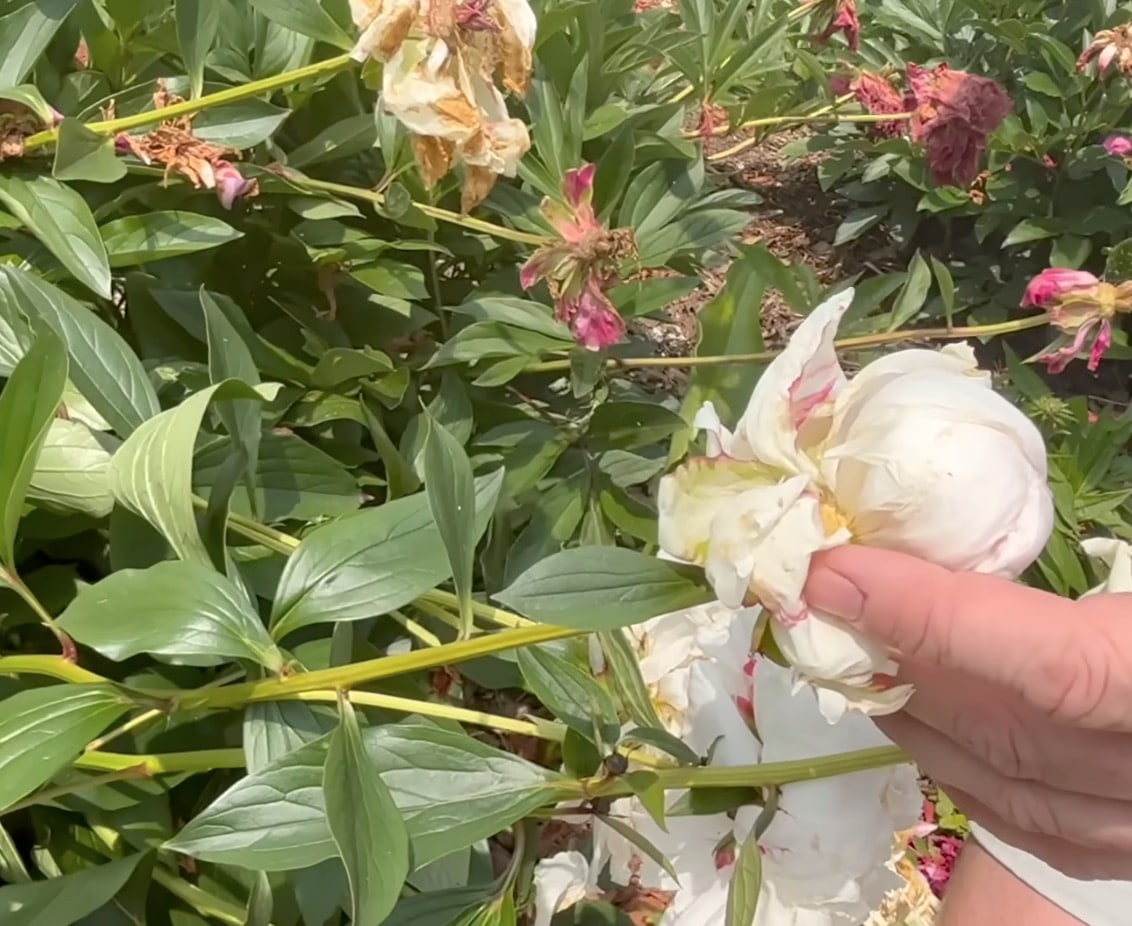
The short answer is: some parts, yes. The rest, absolutely not yet.
Spent Flowers: Cut Them Off
Once the flowers begin to fade, snip off the spent blooms. Make your cut just above a healthy set of leaves, removing the flower head and its short stem.
Peonies will not rebloom simply because you deadhead them, but removing the fading flowers keeps the plant from spending extra energy on seed development. It also prevents those heavy, soggy flower heads from collapsing onto the foliage.

If you notice small seed pods forming, remove those as well. They are not harmful, but they are another place where the plant can direct energy instead of storing it in the roots.
Quick tip: Deadhead peonies as soon as the petals begin to drop, especially after rainy weather.
Healthy Foliage: Leave It Alone
This is the part many gardeners struggle with. After the flowers are gone, the leaves may look ordinary, but they are still working hard.

Peony foliage uses sunlight to replenish the roots and prepare the plant for next year’s flower buds. Cutting the leaves back in summer can weaken the plant and lead to fewer blooms in the future.
Resist the urge to give the whole plant a haircut just because the flowers are finished. As long as the foliage is green and healthy, leave it in place.
Quick tip: If the leaves are flopping over, use a discreet support ring rather than cutting them down early.
Entire Stems: Wait Until Fall
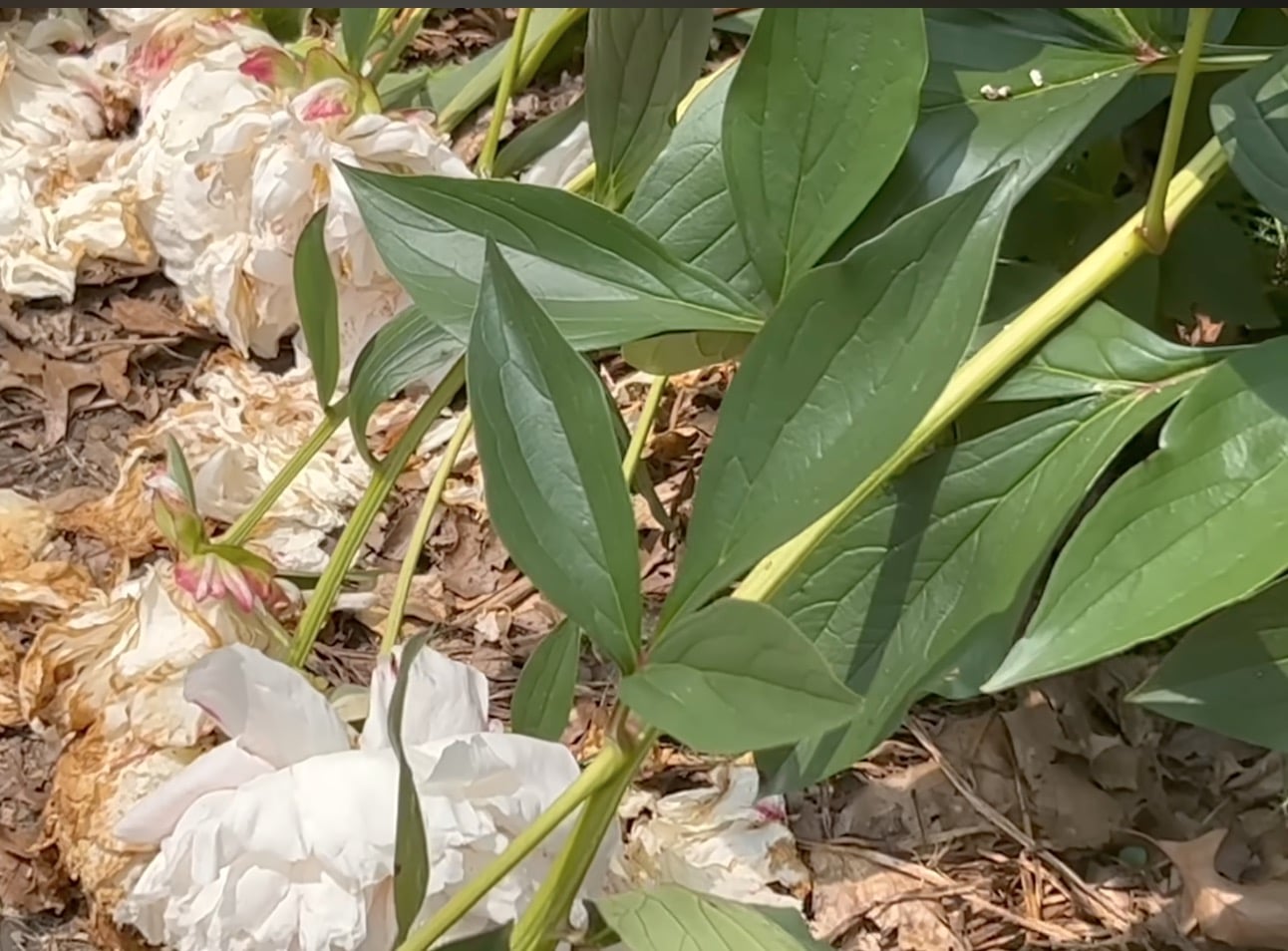
The larger cutback should happen only after the foliage has naturally yellowed, browned, or been killed by a hard freeze. In many gardens, that means sometime in late fall rather than immediately after flowering.
When the plant is fully dormant, cut the stems close to ground level. Use sharp, clean pruners and remove the old foliage from the garden bed.
Waiting matters. Peonies cut back in August or early September may produce fewer flowers than plants allowed to keep their foliage until fall.
What If Your Peony Leaves Have Brown Spots?
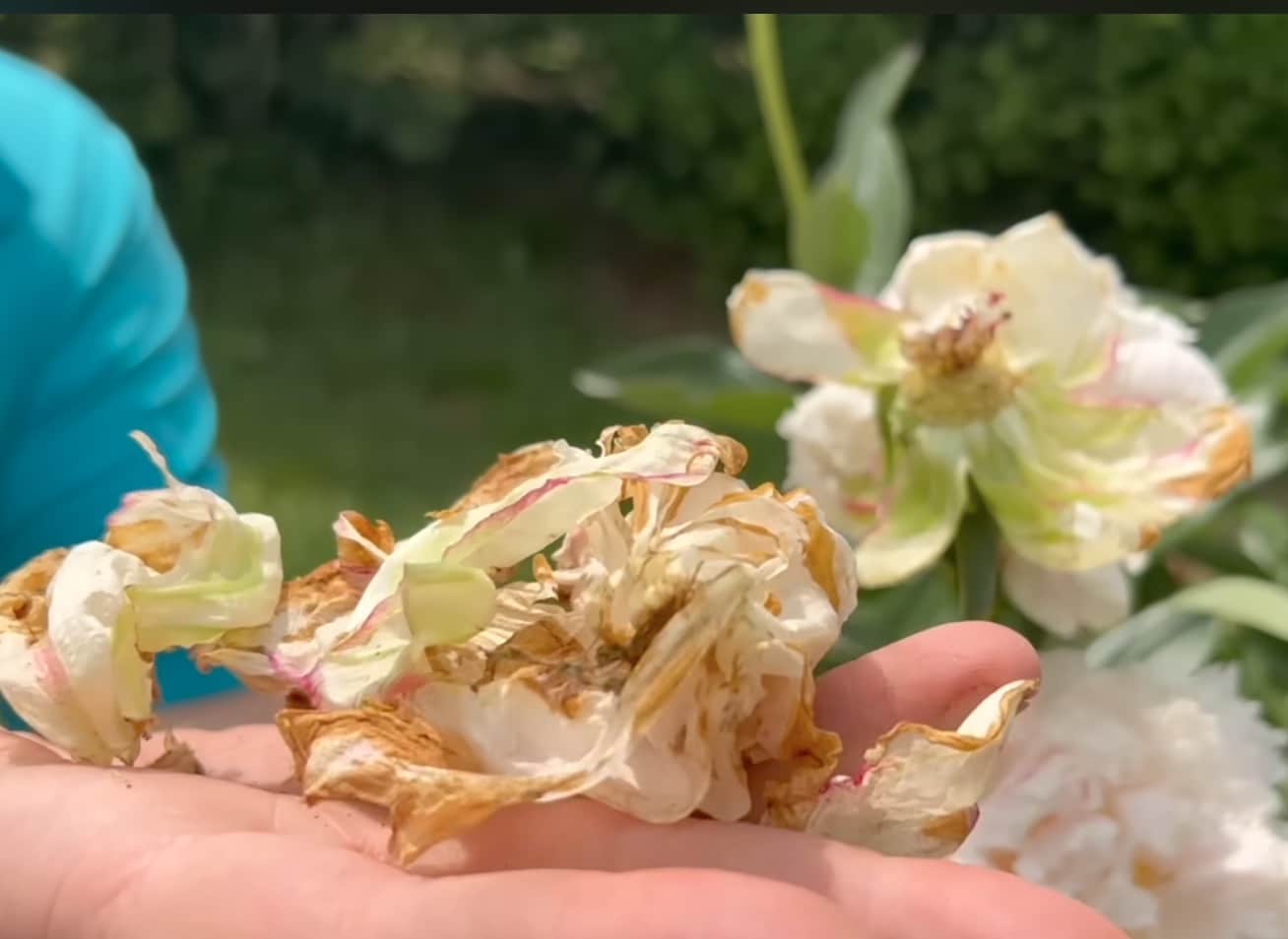
Peony leaves can develop spots or mildew as summer progresses, particularly during humid or rainy weather. A few damaged leaves do not always mean the entire plant needs to be cut down immediately.
Start by removing leaves that are badly diseased, collapsed, or touching the soil. Keep healthy foliage in place for as long as possible. At the end of the season, remove all remaining foliage and dispose of it rather than leaving it around the crown.
Do not add heavily diseased leaves to your compost pile. Clean your pruners between plants, especially if you are moving from a sick peony to a healthy one.
Important: Good spacing, plenty of sunlight, and avoiding overhead watering can all help reduce recurring foliage problems.
What About Tree Peonies?
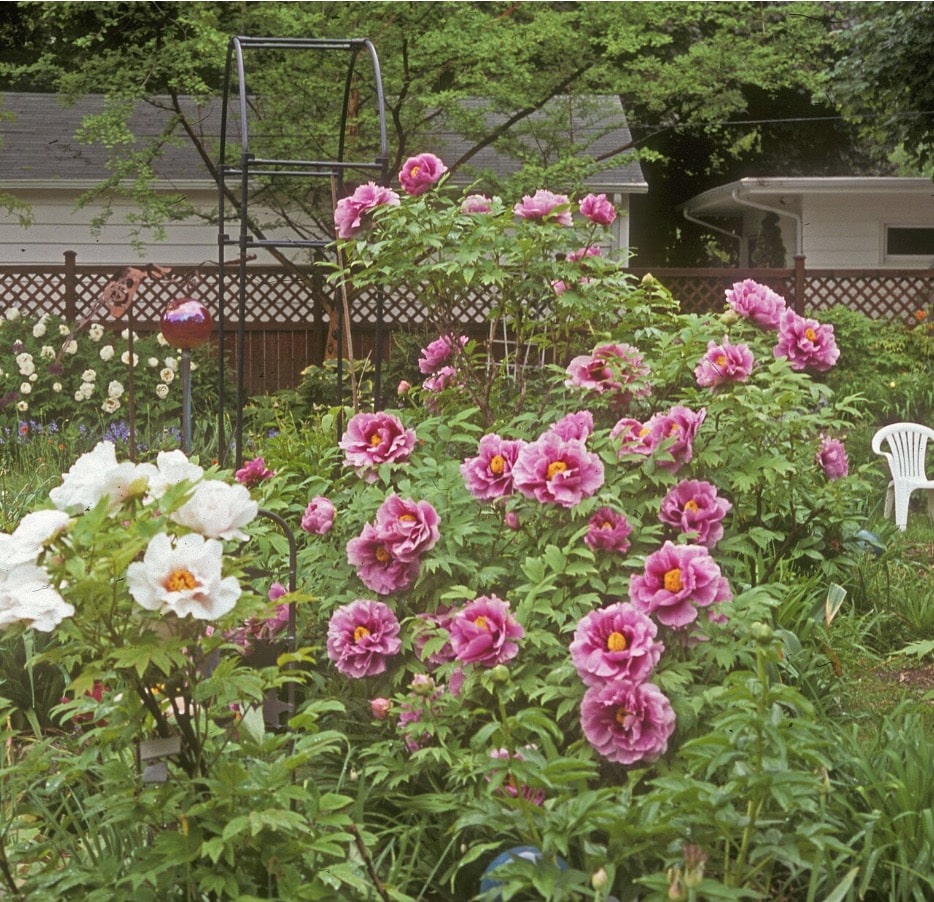
This advice mainly applies to herbaceous garden peonies—the familiar plants that die back to the ground every winter.
Tree peonies are different. They have woody stems that remain above ground, so do not cut them down in fall. Remove spent flowers and any dead or damaged wood, but leave healthy woody growth in place.
If you are unsure which type you have, look at the stems. Herbaceous peonies have soft green stems that disappear in winter. Tree peonies develop woody, shrub-like branches.
Common Peony Cutback Mistakes
- Cutting the foliage immediately after flowering: This removes the leaves before they finish feeding the roots.
- Removing only the flower petals: Cut off the entire spent flower head, including the developing seed pod.
- Cutting tree peonies to the ground: Their woody stems are permanent and should remain.
- Leaving diseased debris in the bed: Old leaves can harbor problems that return the following season.
- Using dull or dirty pruners: Clean, sharp tools make cleaner cuts and reduce the chance of spreading disease.
- Cutting healthy stems before dormancy: Wait until the foliage has naturally died back or been damaged by a hard freeze.
Just To Recap

- Deadhead spent peony flowers after they fade.
- Leave healthy green foliage standing through summer and early fall.
- Cut herbaceous peonies back near ground level only after the foliage dies naturally or is killed by frost.
- Remove diseased leaves and plant debris from the garden.
- Do not cut tree peonies down to the ground.
Let’s Conclude
Peonies are wonderfully low-maintenance once you understand their post-bloom routine. Remove the flowers when they look finished, then let the foliage do its quiet work for the rest of the season.
When fall finally arrives and the plant has gone completely dormant, you can cut it back and clear away the old debris. Until then, leave those green leaves alone. They may not be putting on a flower show anymore, but they are already preparing next year’s.
So the next time your peonies finish blooming, you do not have to choose between ignoring them and cutting everything down. Deadhead the flowers, keep the healthy foliage, and save the serious cleanup for later.