New York is home to some amazing wildlife and plants, but it’s also got a sneaky bunch of troublemakers who’ve taken over.
These invasive species don’t just show up for a visit. They crash the party, hog all the food, mess with native critters, and sometimes cause big headaches for farmers, gardeners, and city folks alike.
From birds that bully nest boxes to bugs that erase whole tree lines, here’s a look at 25 invaders shaking things up across New York… in ways that’ll surprise you.
Feisty Invaders in the Bird World
European Starling – The Original Urban Invader
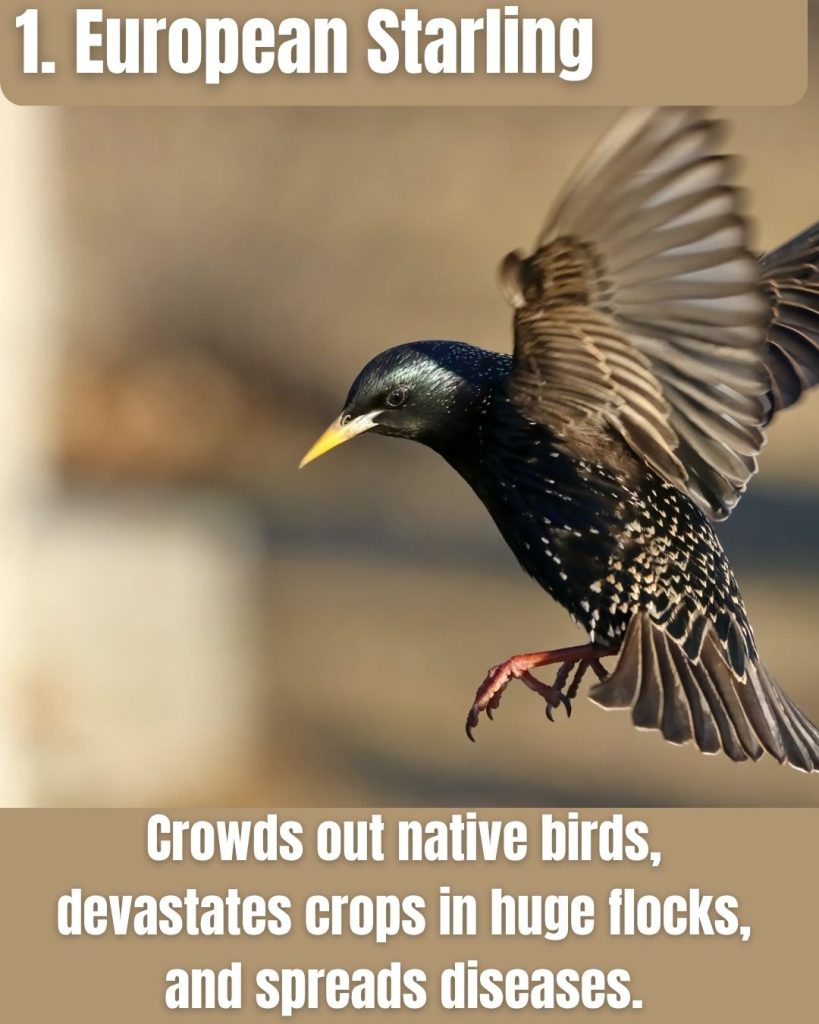
- Big flocks = big problems: Huge roosts can hammer crops and create major mess around buildings.
- Disease and cleanup issues: Droppings around barns, sidewalks, and roofs aren’t just gross—they’re costly.
- Nest bullies: They compete aggressively with native cavity nesters like bluebirds and woodpeckers.
The European starling is one of those birds that looks harmless… until you watch a flock land and realize it’s basically a flying carpet.
In New York, they’re common in cities, suburbs, and farm country. They crowd out native nesters, raid food sources, and leave droppings that can turn ledges, barns, and rooftops into a constant cleanup job.
They’re tough, adaptable, and once they’re established, they’re not the type to move out quietly.
House Sparrow – The Brown Bully
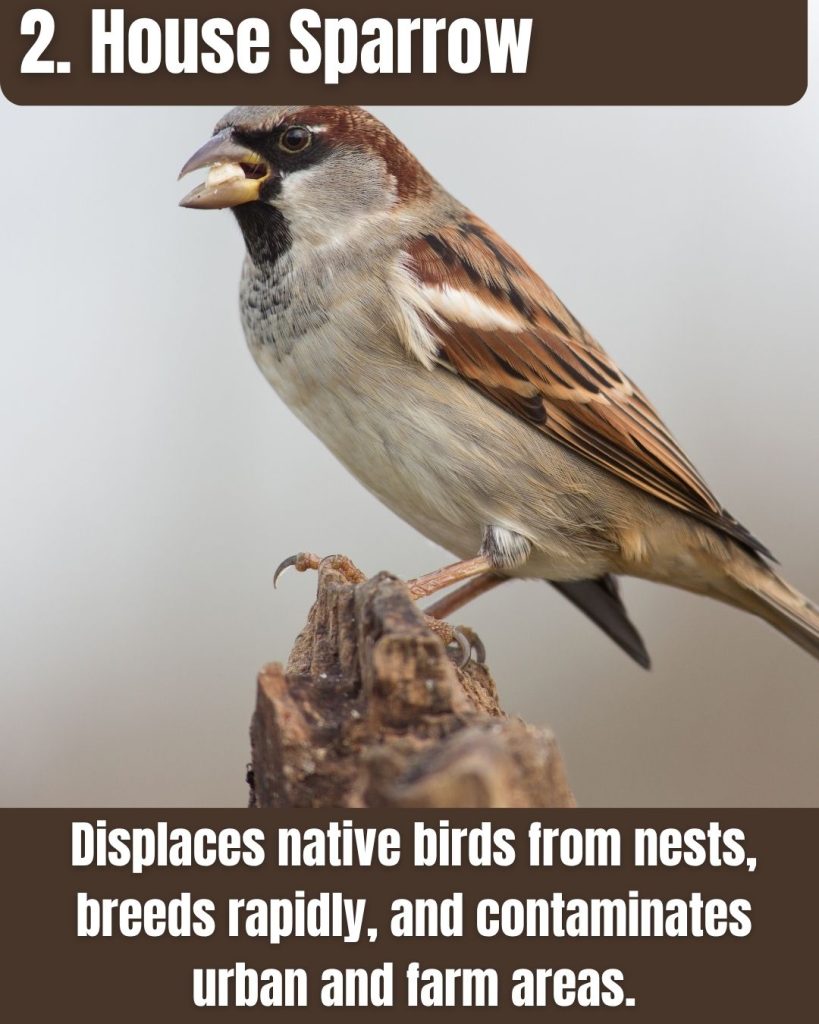
- Nest hoggers: They push out native bluebirds, swallows, and wrens.
- Fast population growth: Multiple broods can turn “a few birds” into a whole block’s worth.
- Built for people places: They thrive around sidewalks, store lots, barns, and bird feeders.
House sparrows don’t look dramatic, but they act like they own the place.
Across New York, (especially in towns, suburbs, and farm areas) they take over nest boxes and prime spots under eaves, living off crumbs, birdseed, and whatever humans accidentally provide.
Once they claim a nesting site, they’re stubborn about keeping it.
Rock Pigeon – The “City Rat” with Wings
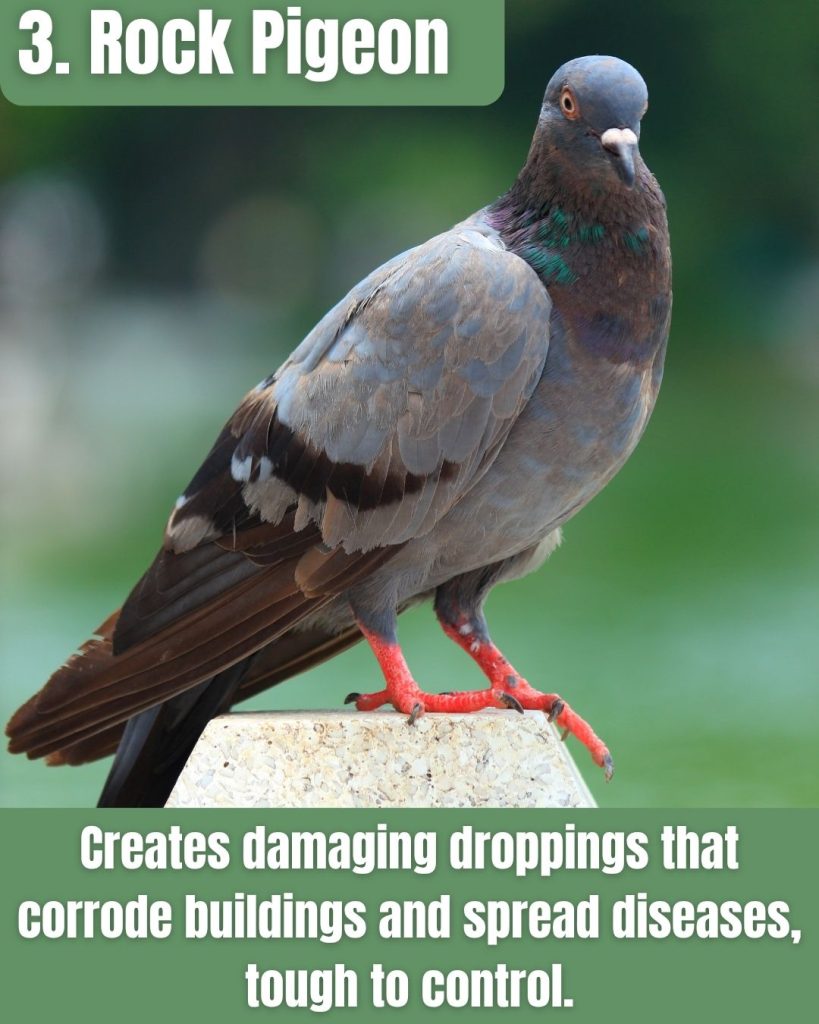
- Messy roosts: Droppings stain, smell, and are expensive to clean.
- Health concerns: Dried droppings can irritate lungs in enclosed areas.
- Built for buildings: Bridges, rooftops, ledges, and parking garages are basically pigeon condos.
If you’ve spent five minutes in New York City, you’ve met the rock pigeon. If you’ve spent five minutes in any New York town, you probably have too.
They’re tough, loyal to their roosts, and their droppings can corrode surfaces and create nonstop maintenance issues on buildings, signs, and bridges.
Pigeons don’t really “leave.” They settle in and dare you to out-stubborn them.
Mute Swan – The Elegant Bully of the Waters
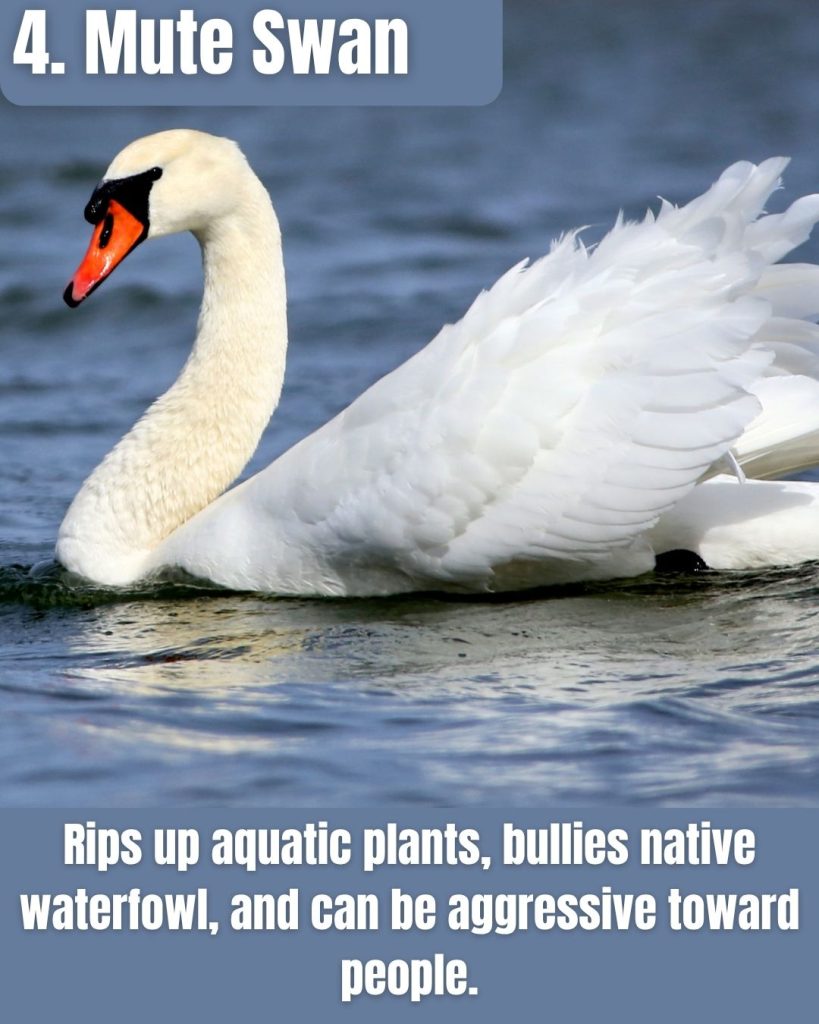
- Plant demolishers: They consume and uproot large amounts of aquatic vegetation.
- Territorial brawlers: They chase off native waterfowl and can injure other birds.
- Human conflicts: They can get aggressive around nests and chicks.
Mute swans look like graceful pond ornaments. Ecologically, they can be a wrecking ball.
In New York’s bays, lakes, and waterways, they can uproot aquatic plants that fish and native waterfowl depend on. They’re also famously territorial, which means they don’t just “share” habitat—they take it over.
Pretty isn’t always harmless.
Eurasian Collared-Dove – The Fast Spreader
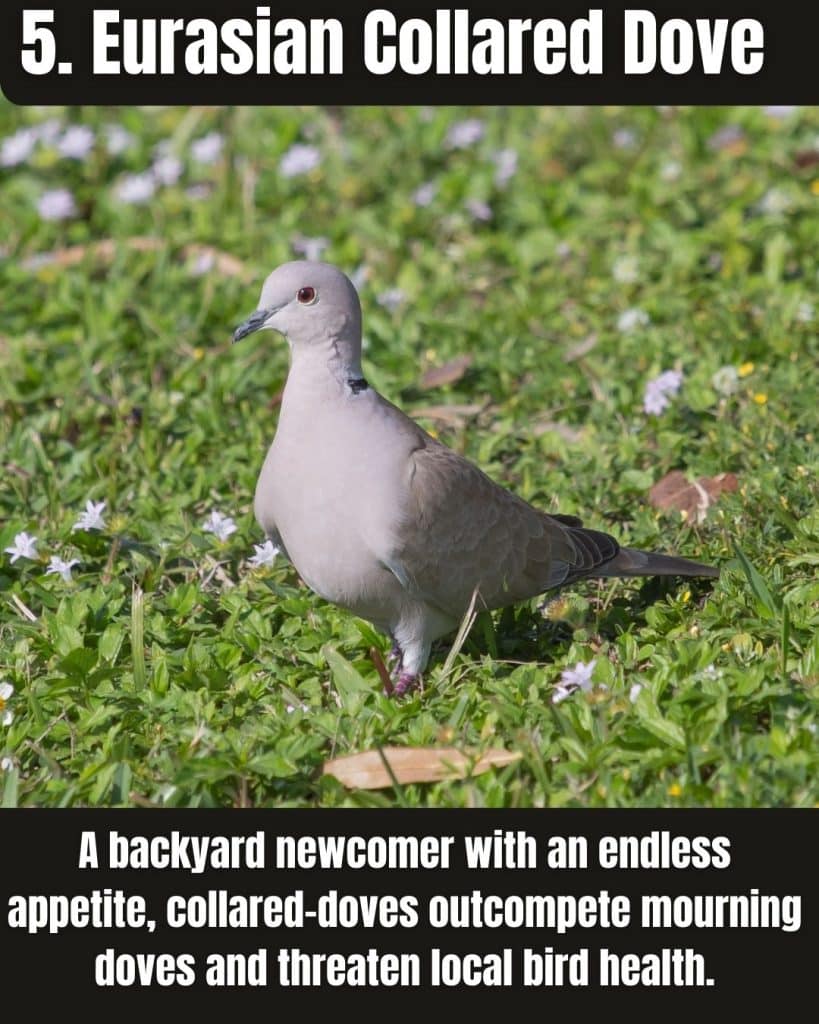
- Non-native newcomer: Expanding its range quickly across the U.S., including New York.
- Human-friendly: Thrives around neighborhoods, farms, and bird feeders.
- Space taker: Can compete with native birds for food and nesting spots.
If you’ve heard a steady “coo-COO-coo” in a parking lot or subdivision and thought, “That doesn’t sound like a mourning dove,” you might be right.
Eurasian collared-doves do well around people, which is exactly why they spread. They’re comfortable in the same places we build—edges, lots, barns, and feeder-heavy backyards.
They’re the definition of a quiet invader: not dramatic, but steadily increasing.
Bugs That Bite Back
Emerald Ash Borer – The Ash Tree Eraser
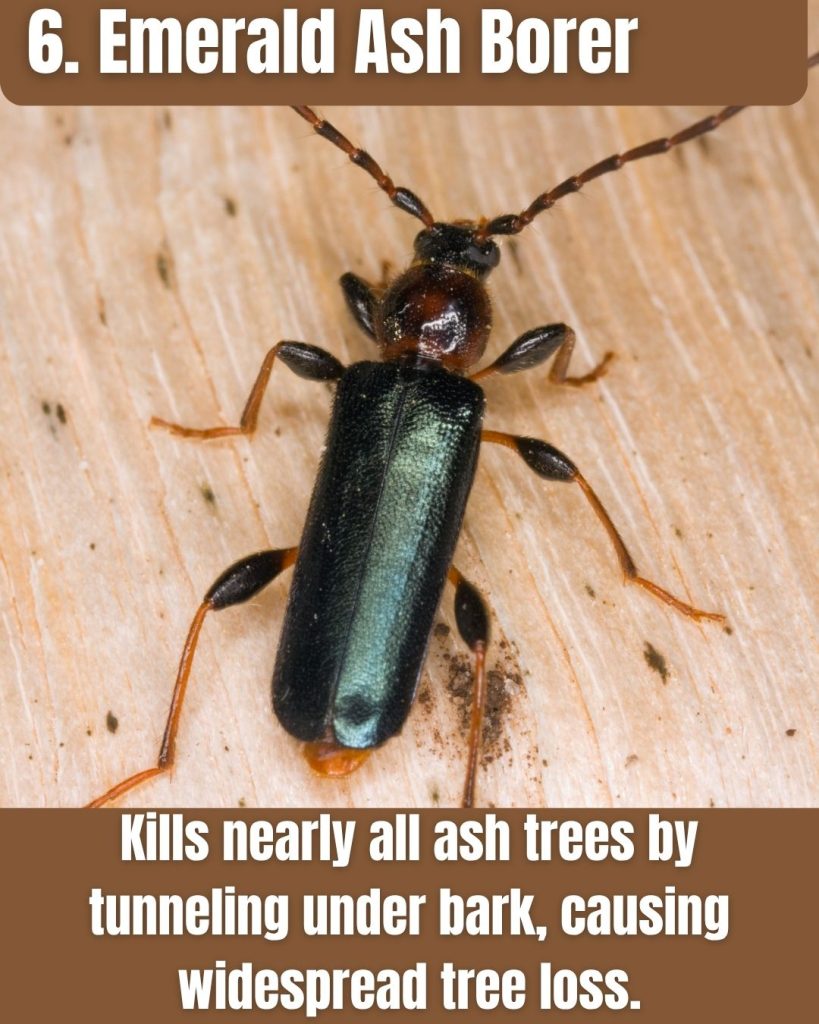
- Tree assassin: Infestations can kill ash trees in just a few years.
- Neighborhood changer: Streets lose shade canopy fast—then the summer heat hits harder.
- Big bills: Removal and replacement can be expensive for towns and homeowners.
This shimmering green beetle might be small, but it has caused massive destruction by killing ash trees across New York.
Its larvae burrow under bark, cutting off the tree’s nutrient flow. By the time you notice thinning leaves and dying branches, the damage is often already well underway.
It’s one of the biggest “before and after” invasions New York neighborhoods have seen in a long time.
Asian Longhorned Beetle – The Brooklyn Tree Killer
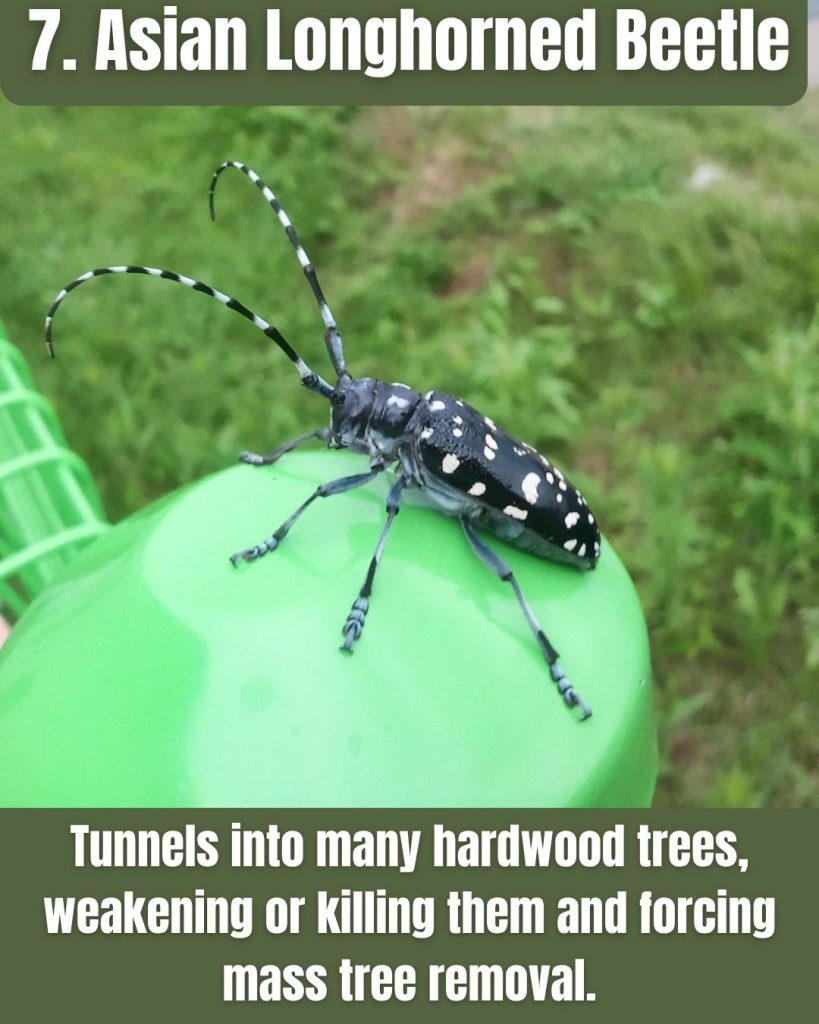
- Hardwood menace: Attacks maples and other valuable trees.
- Big exit holes: Round holes and sawdust-like frass can be warning signs.
- Tree removals happen: Stopping it often requires cutting and destroying infested trees.
This black-and-white spotted beetle looks exotic, but it spells disaster for maples and other hardwoods that define so many New York streets and forests.
Once it’s inside a tree, it tunnels and weakens the structure from the inside out. That’s why it’s treated like a “drop everything” pest when found.
When it shows up, it’s not a “wait and see” situation.
Spongy Moth – The Forest Defoliator
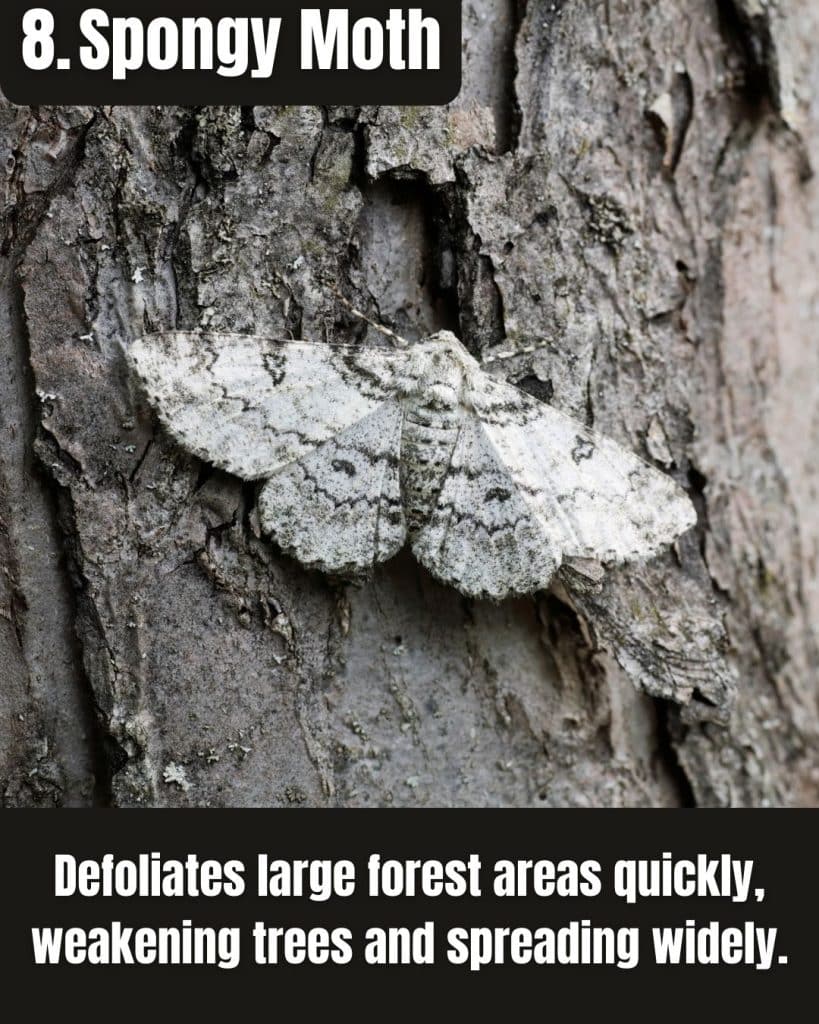
- Caterpillar rain: Heavy infestations can feel like leaves and droppings falling nonstop.
- Tree buffet: Defoliates many tree species, especially oaks.
- Hitchhiker eggs: Egg masses spread on outdoor items, vehicles, and firewood.
Formerly known as the “gypsy moth,” spongy moth caterpillars can swarm and devour leaves across huge areas, especially where oaks are common.
One bad year is rough. Multiple bad years can weaken trees enough to make them vulnerable to disease and other pests.
Add in itchy hairs and the nonstop “caterpillar mess,” and it’s a New York summer memory nobody asks for.
Brown Marmorated Stink Bug – The Home Invader
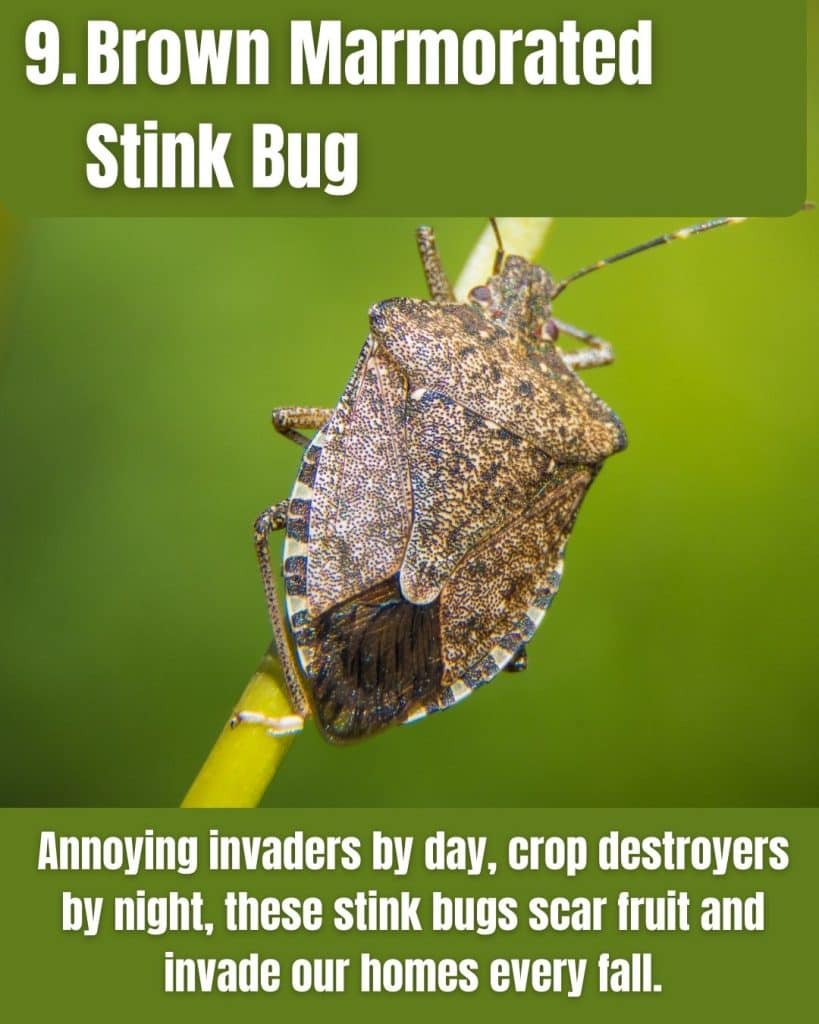
- Crop damage: Can scar and ruin fruit and vegetables.
- Unwelcome houseguest: Moves into buildings in fall to overwinter.
- Stink defense: That odor is real, and it lingers.
This bug doesn’t bite, but it’s a menace in two places New Yorkers care about: orchards and houses.
It can damage fruit crops and garden plants, and when the weather cools, it slips into homes and garages by the dozens looking for warmth. Squish one and you’ll regret it.
The safest move is gentle removal, because the smell is basically their whole personality.
Hemlock Woolly Adelgid – The Silent Tree Assassin
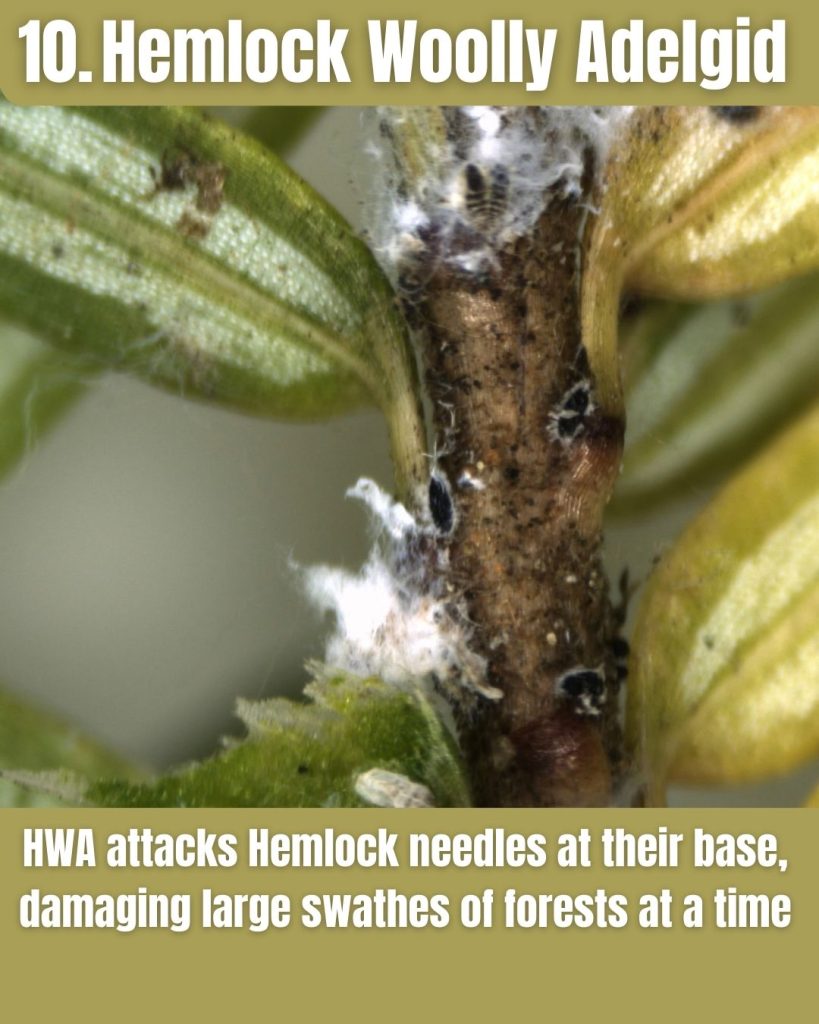
- Hemlock killer: It weakens trees slowly but relentlessly.
- Forest impact: Losing hemlocks changes shade, stream temps, and habitat.
- Easy to overlook: The “cottony” look on branches can be missed until damage is serious.
Hemlocks are one of those trees that quietly hold ecosystems together—cool shade, stream protection, winter cover for wildlife.
The hemlock woolly adelgid is a tiny sap-sucker that can slowly drain the life out of these trees, and once it’s established, the decline can feel inevitable unless people intervene.
It’s not flashy, but the damage adds up in a big way.
Mammal, Worm & Reptile Mayhem
Norway Rat – The Subway Survivor
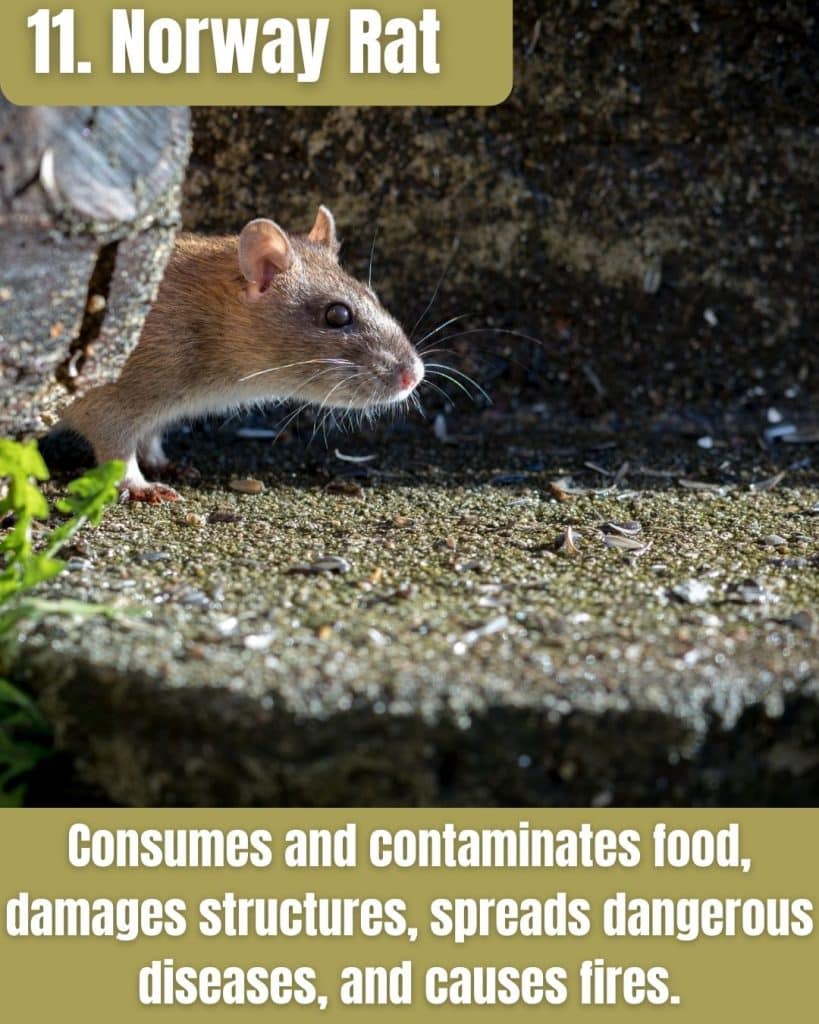
- Super breeders: Fast cycles make them hard to suppress.
- Damage dealers: Chew wiring, wood, and infrastructure.
- Lives where we live: Restaurants, alleys, basements, barns—if there’s food, there are rats.
The Norway rat is the ultimate “human shadow.” It thrives anywhere we provide food, water, and hiding spots.
In New York, that can mean city blocks, subway edges, ports, farms, and small-town dumpsters. They chew, contaminate, and multiply fast—and they don’t need a “dirty” place to move in, just one easy meal source and one hidden route.
They’re not picky. They’re persistent.
House Mouse – The Indoor Squatter

- Contamination risk: Droppings and urine create health and cleanup problems.
- Hard to spot: Often discovered after damage, noise, or that “mouse smell” shows up.
- Small gaps, big access: They squeeze through openings that barely look possible.
The house mouse is one of the most common “I didn’t know they were here” invasives in New York homes, barns, and sheds.
They slip through tiny gaps, build nests in insulation and storage, and can turn a pantry into a nightly snack bar. They’re not flashy, but they’re relentless.
If you hear the faint scratch-scratch at night, you already know the vibe.
Feral Cats – The Native Bird Killer
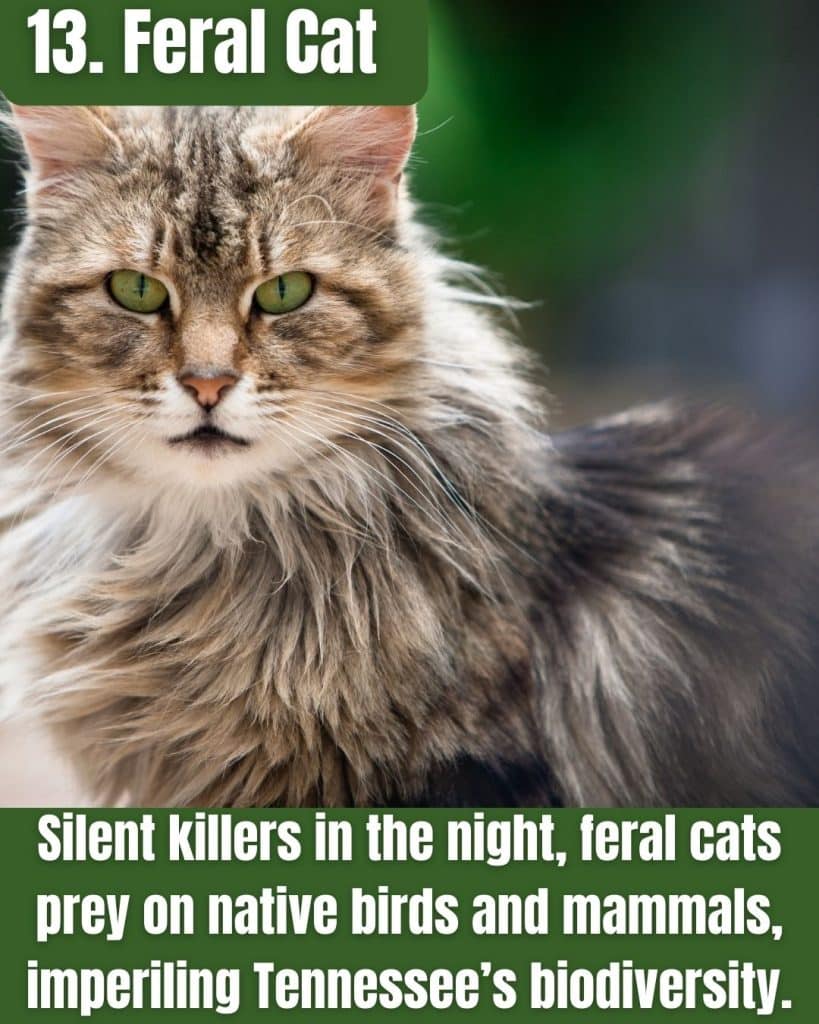
- High-impact predator: Outdoor cats kill birds, small mammals, and reptiles.
- Colonies can grow: Food sources can support large groups in neighborhoods and parks.
- Simple prevention: Keeping pet cats indoors protects wildlife and protects the cats.
Feral cats may look like “just cats,” but ecologically they behave like a non-native, free-roaming predator… because that’s exactly what they are.
In New York, colonies near parks, waterfronts, and suburban green space can hit songbirds and other small wildlife hard. It’s one of the most emotional invasive species topics… and also one of the most impactful.
The most practical message is simple: keeping pet cats indoors protects wildlife and protects the cats.
Jumping Worms – The Soil Destroyers
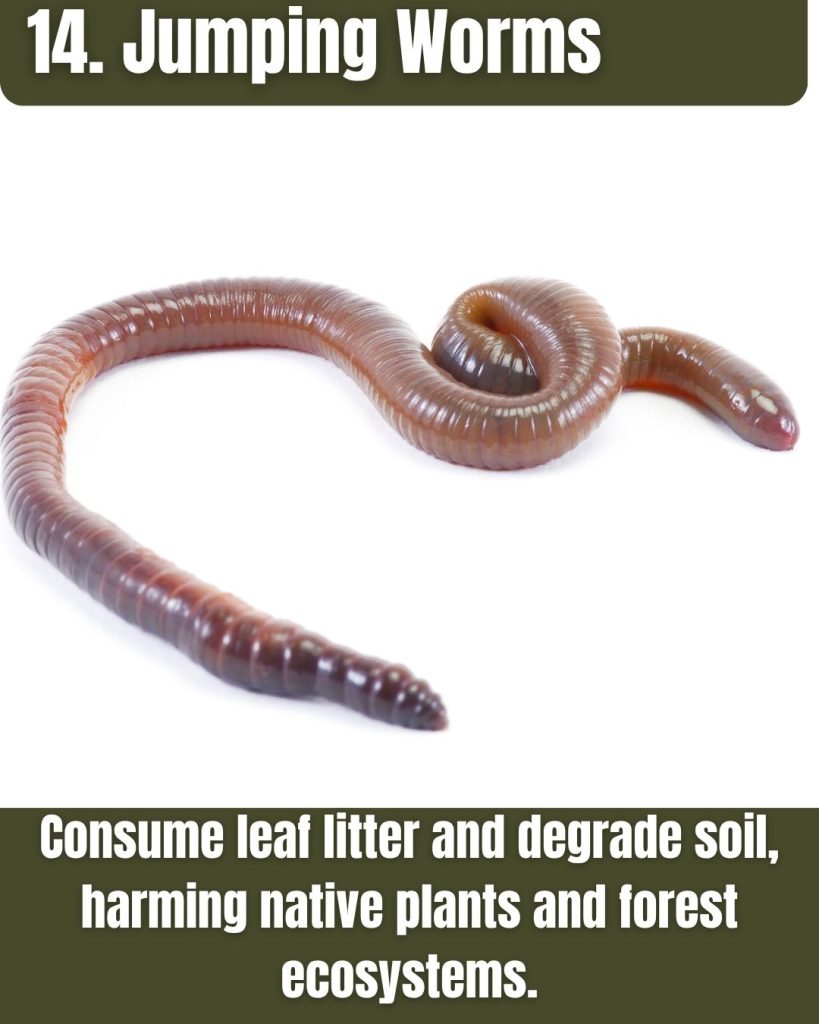
- Leaf litter vacuum cleaners: They strip the forest floor’s natural mulch layer.
- Soil goes “coffee grounds”: Dry, loose texture makes it harder for many plants to establish.
- Hard to reverse: Once established, they’re very difficult to eliminate.
These worms don’t just wiggle—they thrash. If you disturb the soil and it looks like spaghetti having a panic attack, you might have jumping worms.
They chew through leaf litter fast, leaving soil that looks like coffee grounds. That changes moisture, erosion risk, and the ability for native seedlings to get going.
They hitchhike on potted plants, mulch, and soil, so prevention is the real best weapon here.
Red-Eared Slider – The Released Pet Menace
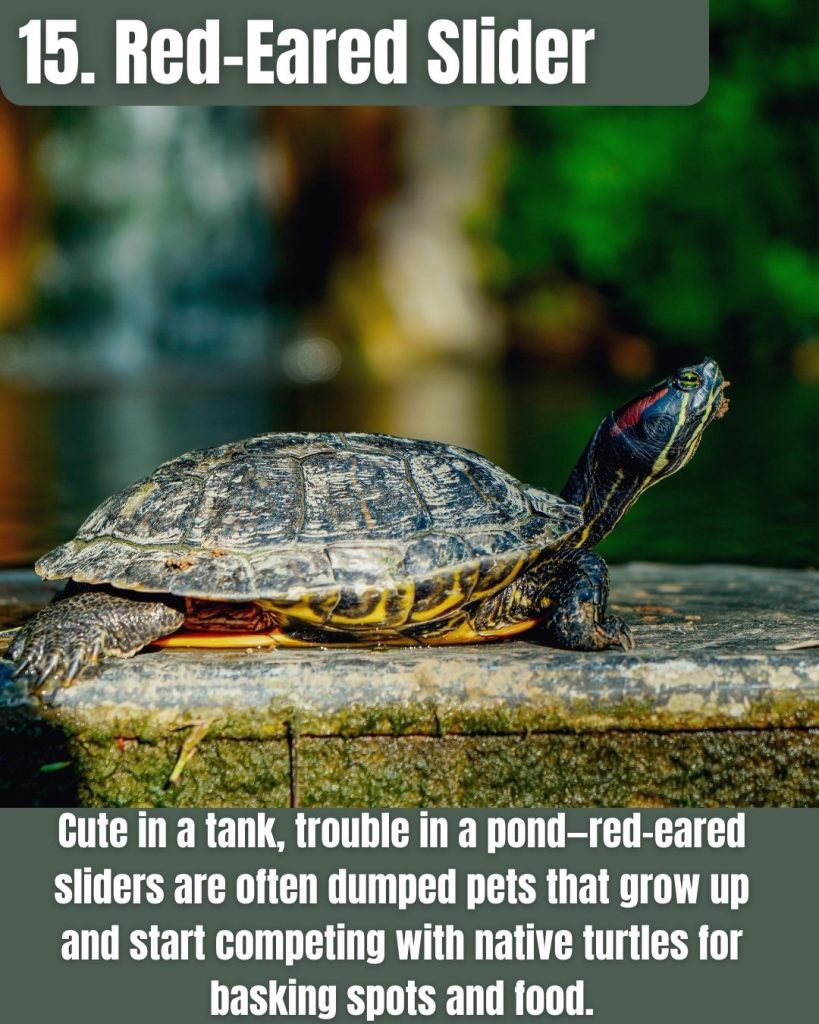
- Dumped pets: Many populations start when people “set them free.”
- Outcompetes natives: Can pressure native turtles for basking sites and food.
- Hard to undo: Once they establish in ponds, they can stick around for decades.
Red-eared sliders are a classic “pet store problem.” People buy a tiny turtle, it grows, it gets hard to care for… and then it gets dumped in a local pond.
In New York, that can mean sliders showing up in parks and urban ponds where they compete with native turtles for basking space and resources.
The rule is simple: never release pets. Rehoming is always the better move.
Trouble in the Trees and Fields: Invasive Plants Taking Over
Japanese Knotweed – The Property Wrecker
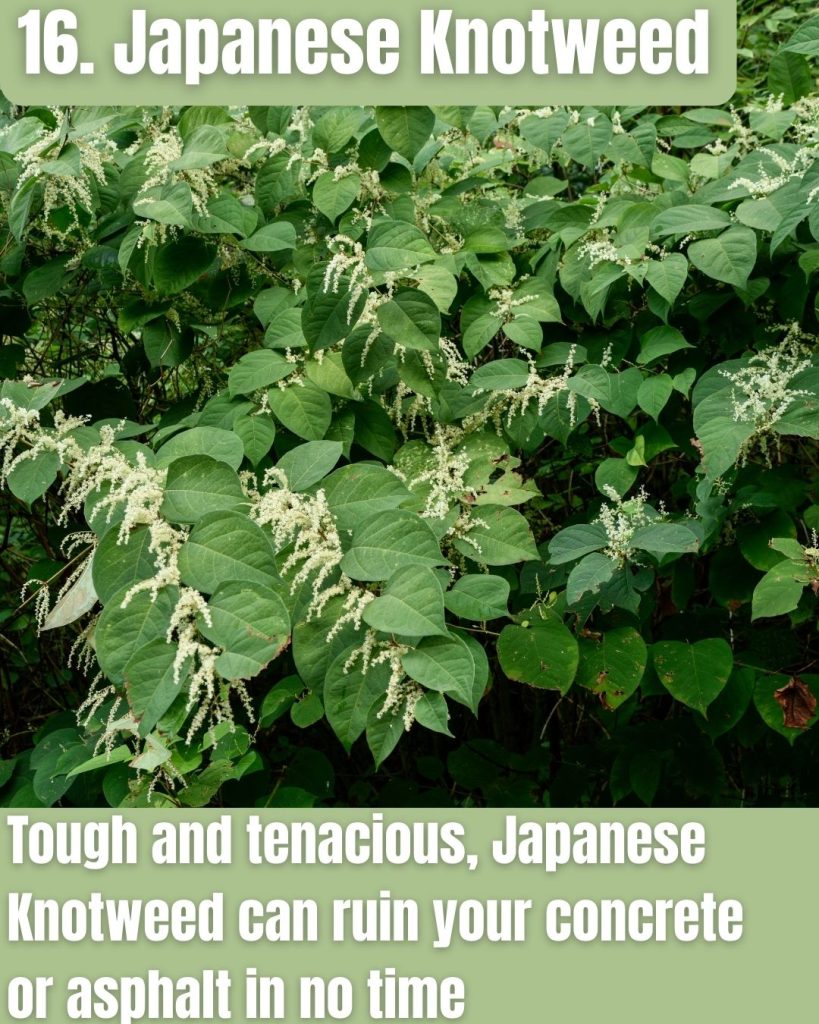
- Thicket builder: Forms dense walls that crowd out everything else.
- Riverbank takeover: Dominates stream edges and disturbed ground.
- Hard to kill: Small fragments can regrow and spread the infestation.
If you’ve ever walked a New York creek, railroad edge, or roadside and seen tall “bamboo-looking” stalks taking over, you’ve probably met Japanese knotweed.
It forms dense walls that choke out native plants, and it spreads by fragments (meaning a small piece can start a whole new patch). It also loves disturbance: floods, mowing, construction, and any opening it can exploit.
Once it gets a foothold, it’s a long, frustrating fight.
Common Buckthorn – The Tick Factory
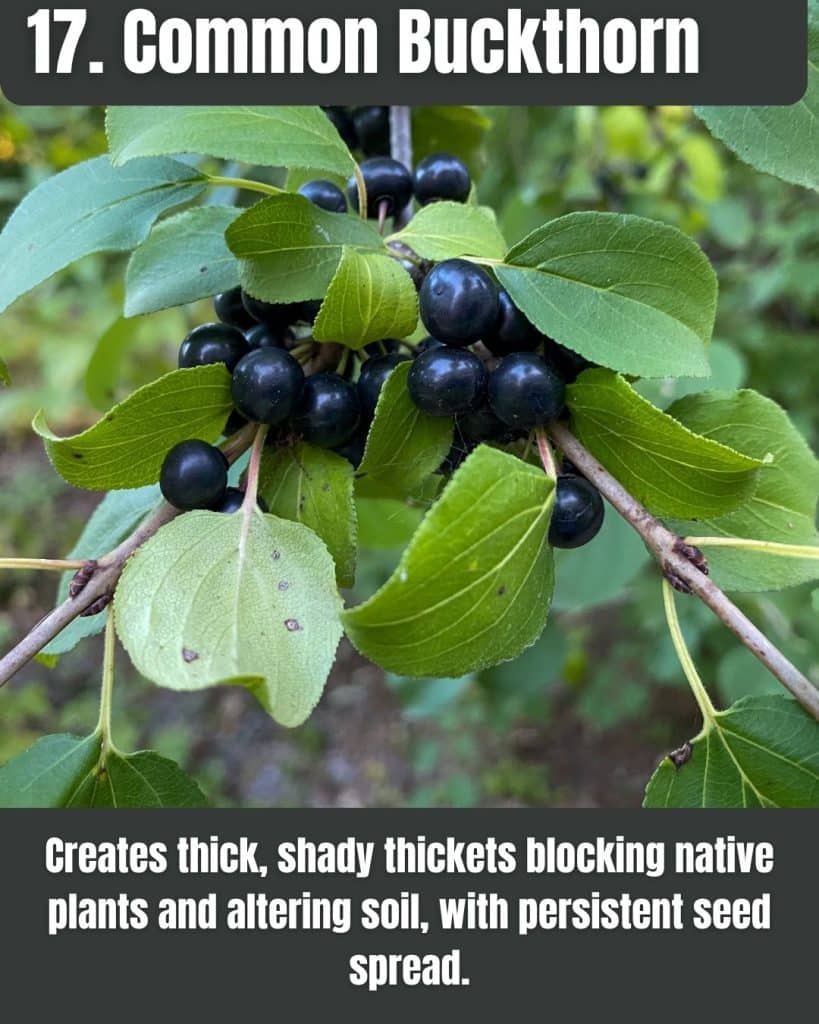
- Wall of shade: Dense thickets reduce plant diversity.
- Long leaf season: Leafs out early and holds leaves late, beating natives to sunlight.
- Tick-friendly habitat: Thick understory can mean more tick encounters on trails and edges.
Once popular as a tough hedge plant, common buckthorn can take over New York woodlands with dense, dark growth.
It shades out native seedlings and wildflowers, and those thickets create the kind of humid, sheltered understory that people often associate with higher tick activity.
It’s one of those invasives that changes how a woods “feels” to walk through.
Garlic Mustard – The Forest Floor Takeover
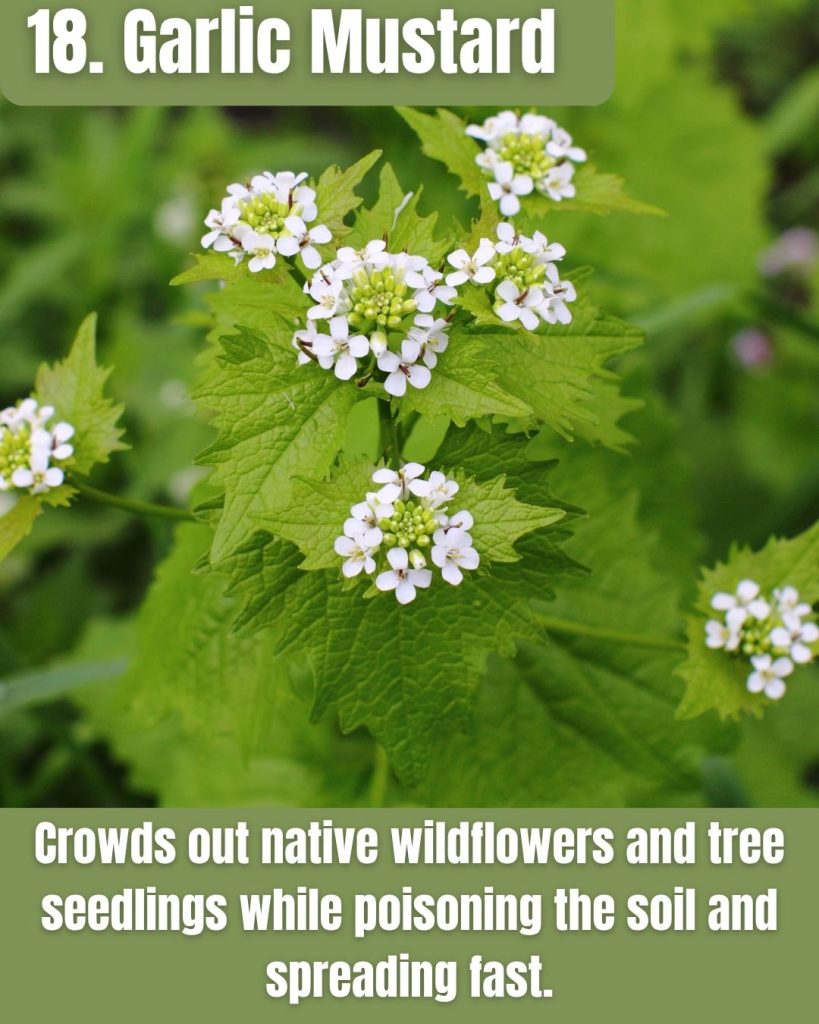
- Spring carpet: Outcompetes wildflowers and seedlings.
- Soil disruption: Can interfere with soil fungi many natives rely on.
- Seed persistence: Seeds can remain viable for years.
Garlic mustard sneaks into New York forests and shaded edges, often popping up before native plants are fully awake in spring.
Once it gets established, it can push out the wildflowers that make New York woods so beautiful in April and May.
It’s one of the most common “trail edge” invasions people walk right past without realizing what it’s doing.
Amur Honeysuckle – The Shade Hog
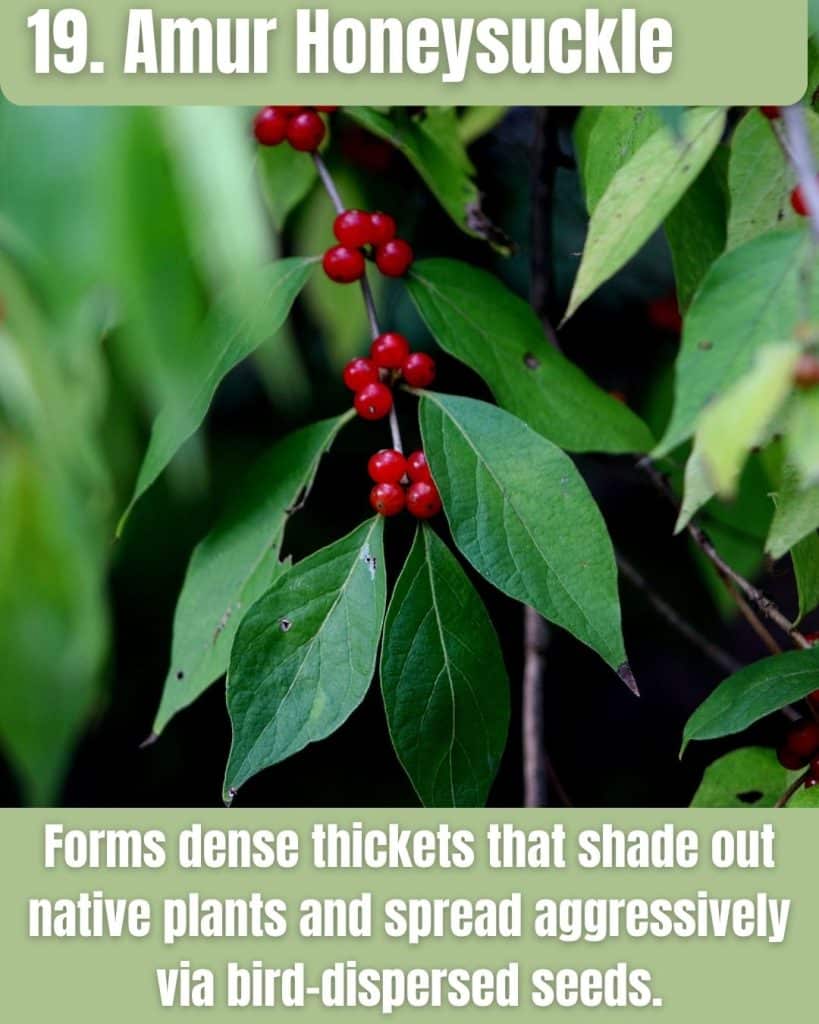
- Dense growth: Crowds out native plants and tree seedlings.
- Early leaf-out: Steals sunlight before natives get going.
- Bird-spread seeds: Berries help it spread into woodlands and edges.
This shrub was introduced and widely planted, but now it shows up where it was never invited—edges, creek lines, and forest margins.
It leafs out early, shades out wildflowers and seedlings, and forms thick growth that can turn a diverse understory into a honeysuckle monoculture.
It’s the kind of plant invasion that makes a healthy woods look “empty” underneath.
Phragmites – The Wetland Monopolizer
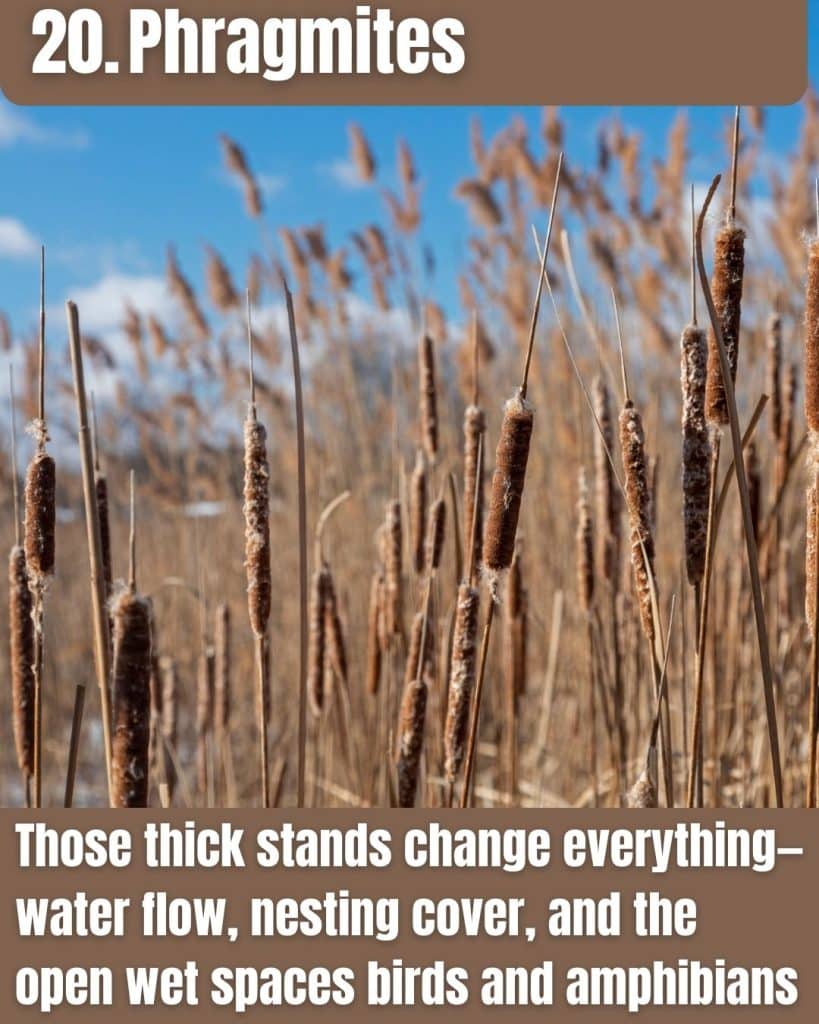
- Reed takeover: Forms huge stands that crowd out native marsh plants.
- Habitat changer: Can reduce open water and alter wetland structure.
- Spreads easily: Thrives along roadsides, ditches, shorelines, and disturbed ground.
If you’ve driven New York roads and seen tall reed walls in ditches and marsh edges, you’ve likely seen phragmites.
It forms dense stands that can push out native wetland plants, changing habitat for birds, amphibians, and everything that depends on a diverse marsh.
It’s not just “a tall grass.” It’s a takeover.
Invaders of New York’s Waters: Fish, Mussels & Plants
Zebra Mussel – The Infrastructure Clogger
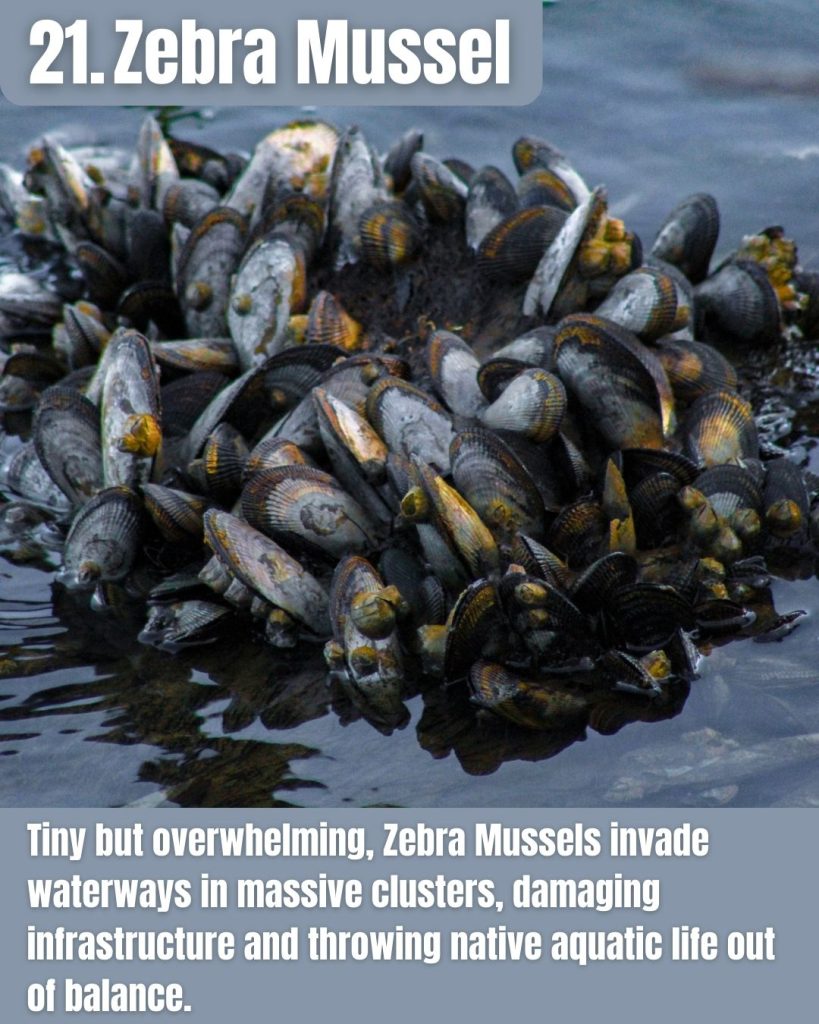
- Pipe clogs: Can clog water intakes and infrastructure.
- Native mussel impacts: Can smother native species.
- Sharp shells: Painful for swimmers and shoreline users.
These fingernail-sized mussels hitch rides on boats and equipment, then multiply fast once they’re established.
They alter aquatic ecosystems by filtering huge amounts of water and changing the food web. And for people, they bring a very real bill: clogged systems, sharp shorelines, and constant maintenance headaches.
They’re tiny. The impact is not.
Quagga Mussel – The Deeper-Water Twin
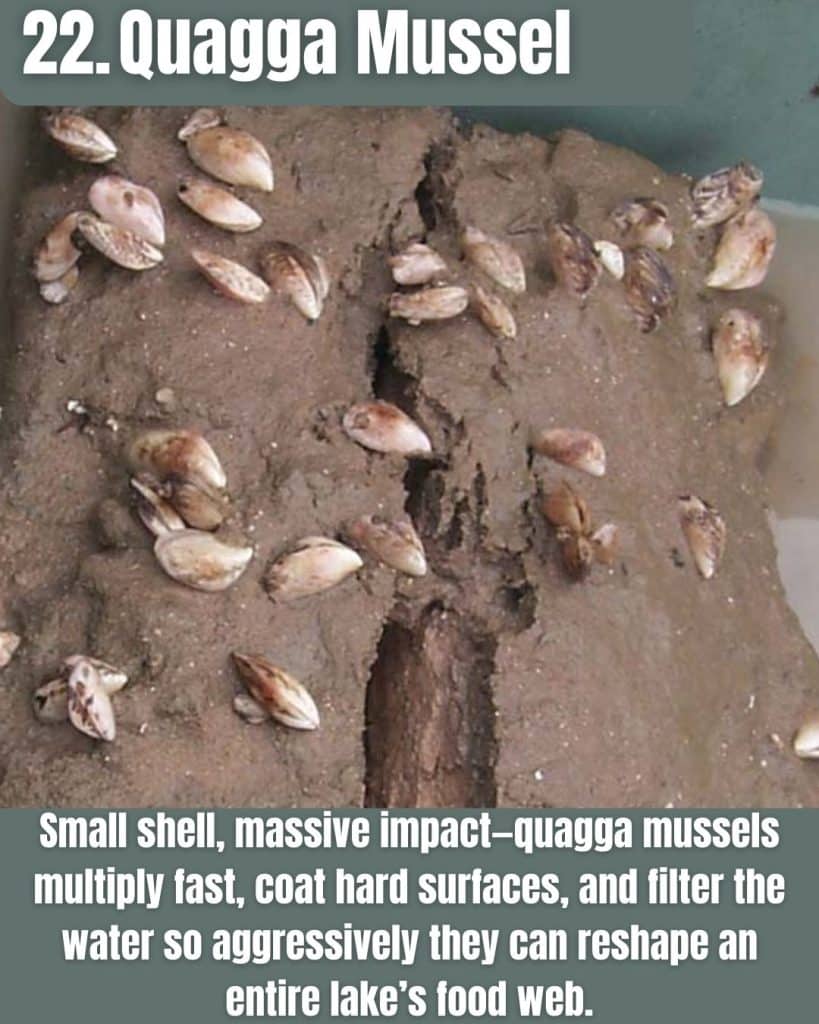
- Spreads in big lakes: Thrives in deep, cold water.
- Filters the food out: Can shift what fish and native species have to eat.
- Hard to stop: Once established, management becomes a long-term grind.
Quagga mussels are closely related to zebra mussels, but they can thrive in deeper, colder parts of large lakes, which makes them a serious problem in the Great Lakes region.
They filter huge amounts of water, changing how nutrients move through the system. That can ripple up through the entire food chain.
They’re one of those invasives that doesn’t just “add a nuisance.” They rewrite the rules underwater.
Eurasian Watermilfoil – The Weed That Won’t Quit
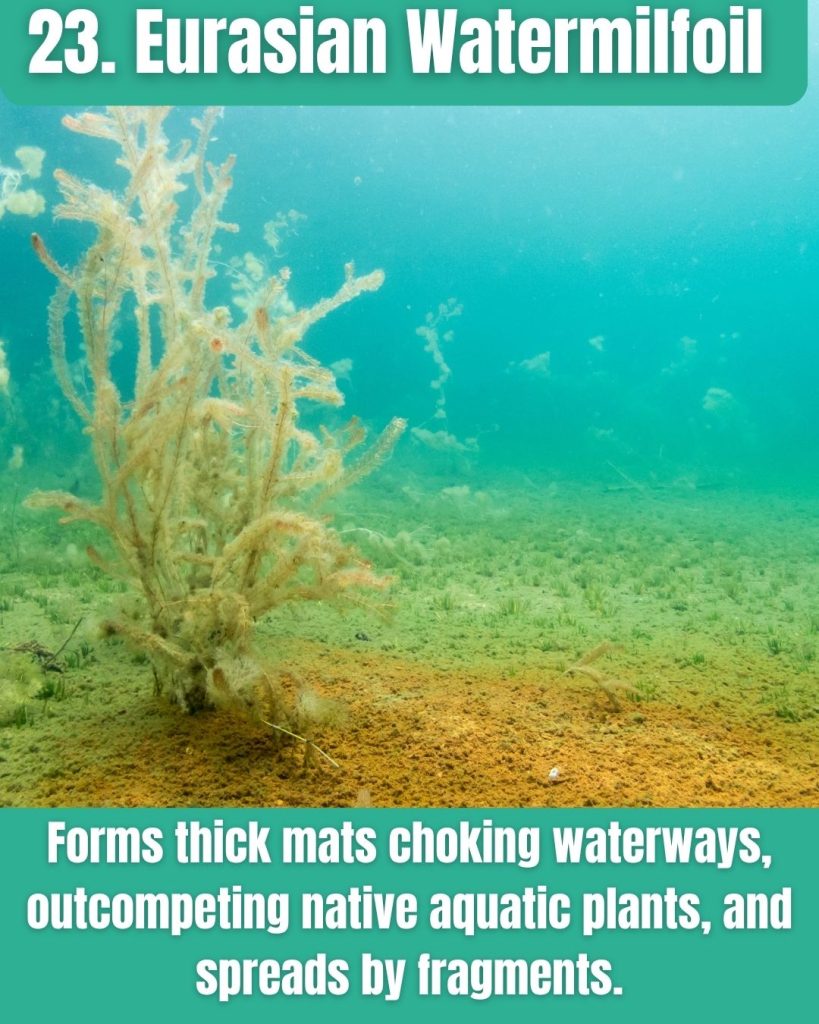
- Boat trap: Tangles propellers and fishing lines.
- Native plant killer: Chokes out beneficial aquatic plants.
- Fragment spreader: Small pieces can start whole new infestations.
This underwater plant grows thick mats that clog boats and block sunlight from native aquatic plants.
It spreads by breaking into pieces, which can hitch rides on boats, quickly turning a clear New York lake into a green mess.
If you’ve ever pulled a wet pile of “plant spaghetti” off a prop, you know exactly why it’s on this list.
Round Goby – The Food Chain Disruptor
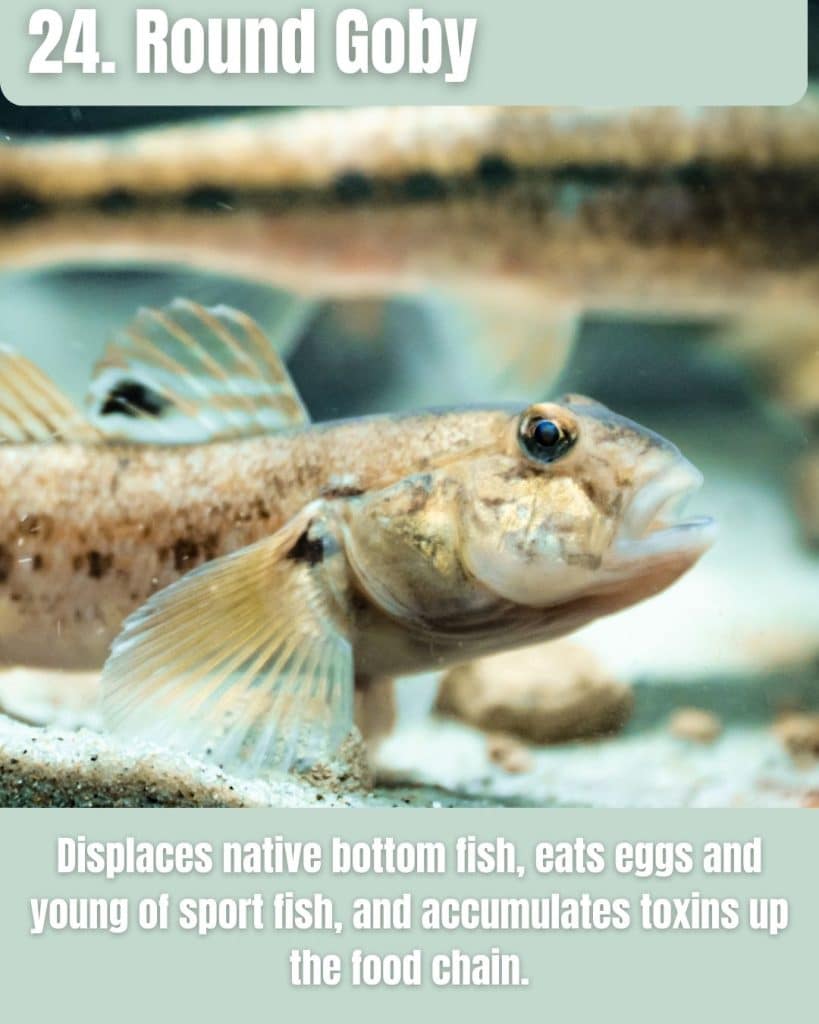
- Aggressive little fish: Outcompetes native fish for food and space.
- Spreads fast: Moves through connected waterways and by human activity.
- Ripple effects: Changes what predators eat and how the whole system balances.
The round goby isn’t famous because it looks scary; it’s famous because it’s a disruptor.
In Great Lakes-connected waters, it can outcompete native fish and change what bigger fish end up eating. That creates ripple effects that show up everywhere from baitfish populations to sportfish behavior.
Small fish. Big consequences.
Northern Snakehead – The Headline Predator

- Aggressive predator: Eats fish, frogs, and other aquatic animals.
- Human-assisted spread: Can expand when people move or release live fish.
- Simple takeaway: Never move live fish. Never dump bait. Never release pets.
Snakeheads are the kind of invasive that sound like a campfire story… until you realize they’re real.
In New York, they’re closely watched because they’re tough, adaptable predators. The biggest risk factor is human help—moving live fish, dumping bait, or releasing animals that should never be in local waters.
The message is simple: don’t be the reason they spread.
New York’s invasive species story is one of surprises, challenges, and ongoing work to protect native ecosystems.
Whether it’s birds that outcompete natives, insects that erase trees, or plants that take over forests and wetlands, these invaders are a reminder that small introductions can create big ripple effects.
Stay curious, stay aware, and if you spot any of these troublemakers, spread the word so we can keep New York healthy and wild for generations to come.