January feels early to start seeds in New York, but it’s exactly when the smartest gardeners begin. Some plants move at a crawl, and if you wait until March, they never fully catch up—especially in places where spring stays cool and the growing season feels like it’s always in a hurry.
Starting the right seeds indoors now gives them time to build roots, not just leaves.
This guide breaks down what you can safely start indoors (even in January) and lines it up with your actual last frost date so you’re not guessing or wasting seed.
New York has a wide range of last frost dates, so the “weeks before frost” timing is the part that keeps this useful whether you’re on Long Island, near NYC, in the Hudson Valley, or upstate.
Seed Starting Setup (Quick and Reliable)
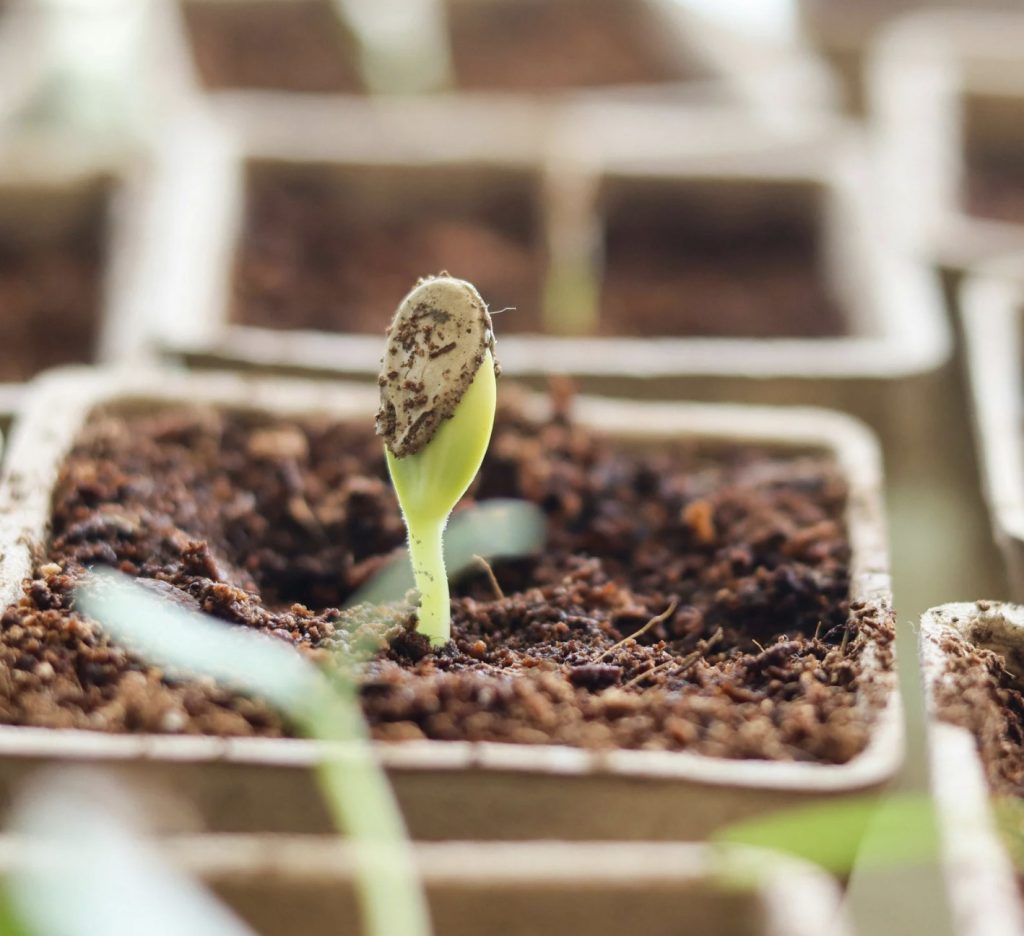
- Use a seed-starting mix (fine and fluffy), not heavy potting soil.
- Light matters more than anything: keep grow lights about 2–3 inches above seedlings and raise them as plants grow.
- Warmth matters for slow/heat lovers: a heat mat helps celery, peppers, and eggplant germinate faster and more evenly.
- Water the smart way: bottom-water when possible and keep the mix moist, not soggy.
- Airflow prevents problems: a small fan on low helps stop damping-off and strengthens stems.
- Start feeding lightly after true leaves appear (half-strength fertilizer is plenty).
- Pot up when crowded: if roots fill the cell or growth stalls, move up to a bigger container.
Quick Troubleshooting (Most Common Seedling Problems)
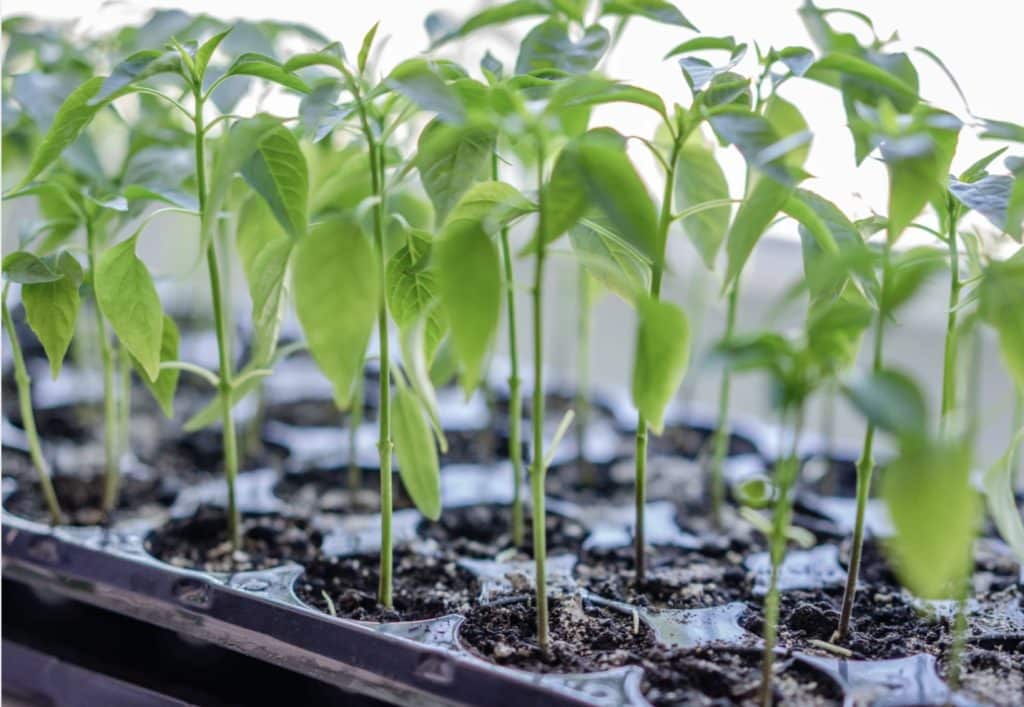
- Leggy seedlings: light is too far away or too weak. Move lights closer and increase duration.
- Damping-off (seedlings fall over at soil line): too wet + poor airflow. Let the surface dry slightly and add airflow.
- Seeds won’t sprout: temperature is off, or you buried seeds that need light.
- Mold on the soil: too wet. Scrape the surface, water less often, add airflow.
- Yellowing leaves: often overwatering or they’re ready for a light feed.
16–18 Weeks Before Your Last Frost (Early–Mid January in Much of NY)
Onions (from seed)
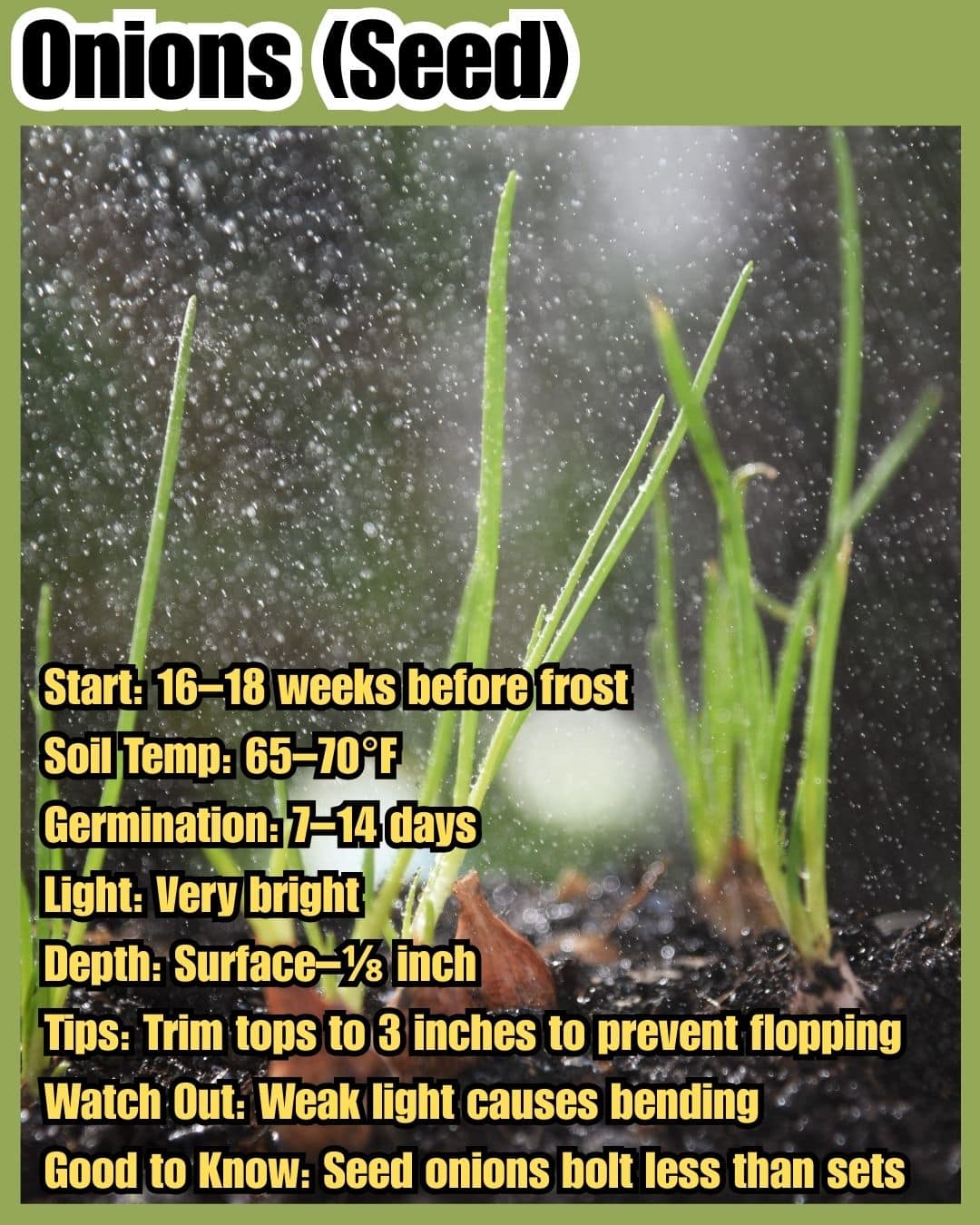
Onions grown from seed take patience, but they reward you with better bulb size and variety choice. Start seeds in shallow trays with fine, well-draining seed mix.
Sow thickly, barely covering the seed, and keep soil evenly moist. Ideal soil temperature is 65–70°F. Germination can take 7–14 days.
Once sprouted, onions need strong light to stay upright—weak light leads to floppy seedlings. Trim tops to about 3 inches tall to encourage stronger roots. Fun fact: onions started from seed often outperform sets because they’re less likely to bolt.
Next step: When seedlings are a few inches tall and sturdy, keep trimming and lighting strong until it’s time to harden off and transplant outdoors in early spring.
Leeks
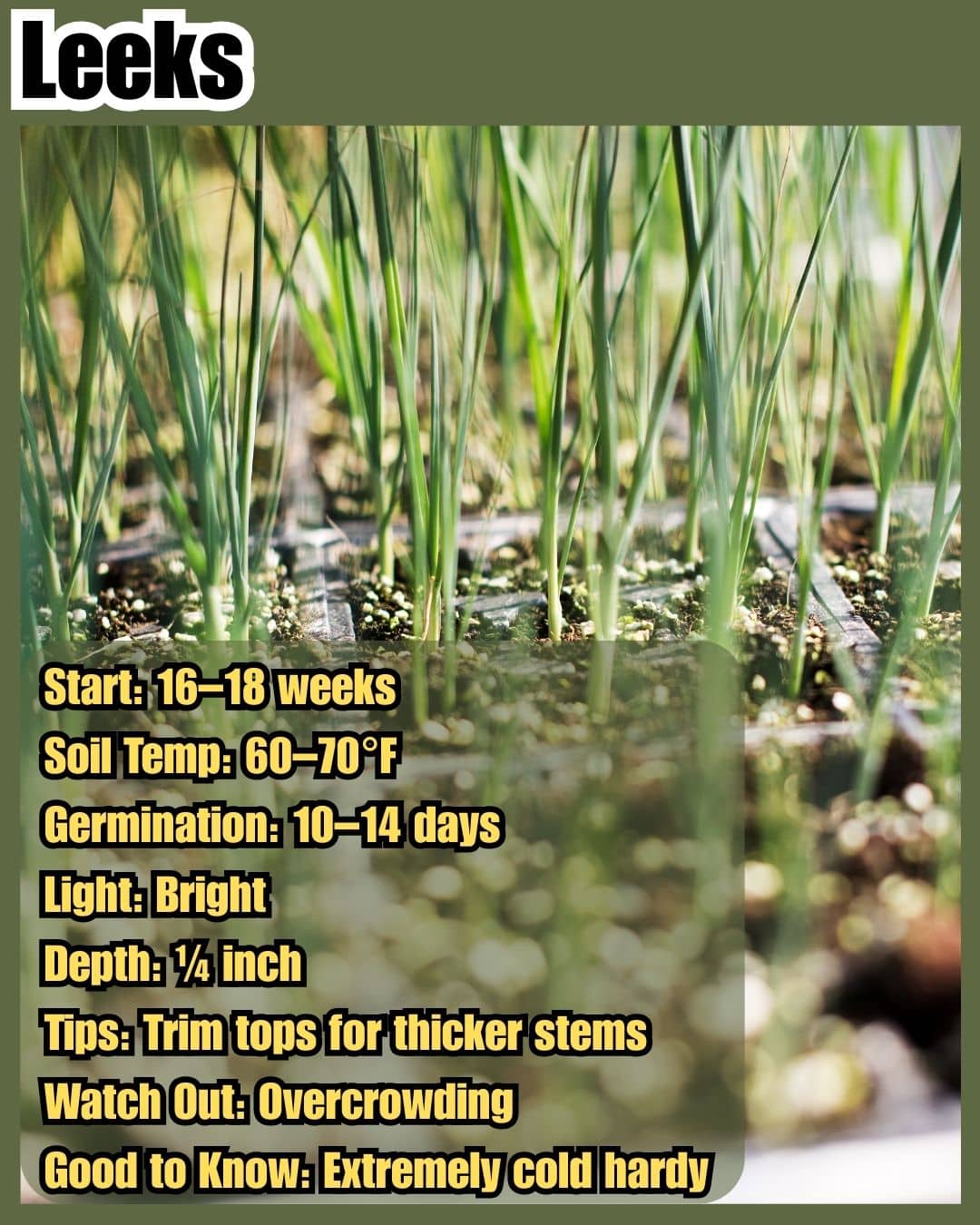
Leeks are slow, steady growers and perfect for an early January start. Sow seeds about ¼ inch deep in deep trays or cell packs to encourage long root growth.
Keep soil moist and temperatures around 60–70°F. Germination usually takes 10–14 days. Leek seedlings look like thin blades of grass at first—this is normal.
They tolerate trimming, so cutting tops back to 3–4 inches helps strengthen stems. Leeks handle cold better than onions and can stay in the garden late into fall. The earlier you start them, the thicker the edible stalk will be.
Next step: If they get crowded, pot up before they stall. Harden off and transplant once they’re pencil-thick enough to handle and weather is cooperative.
Celery
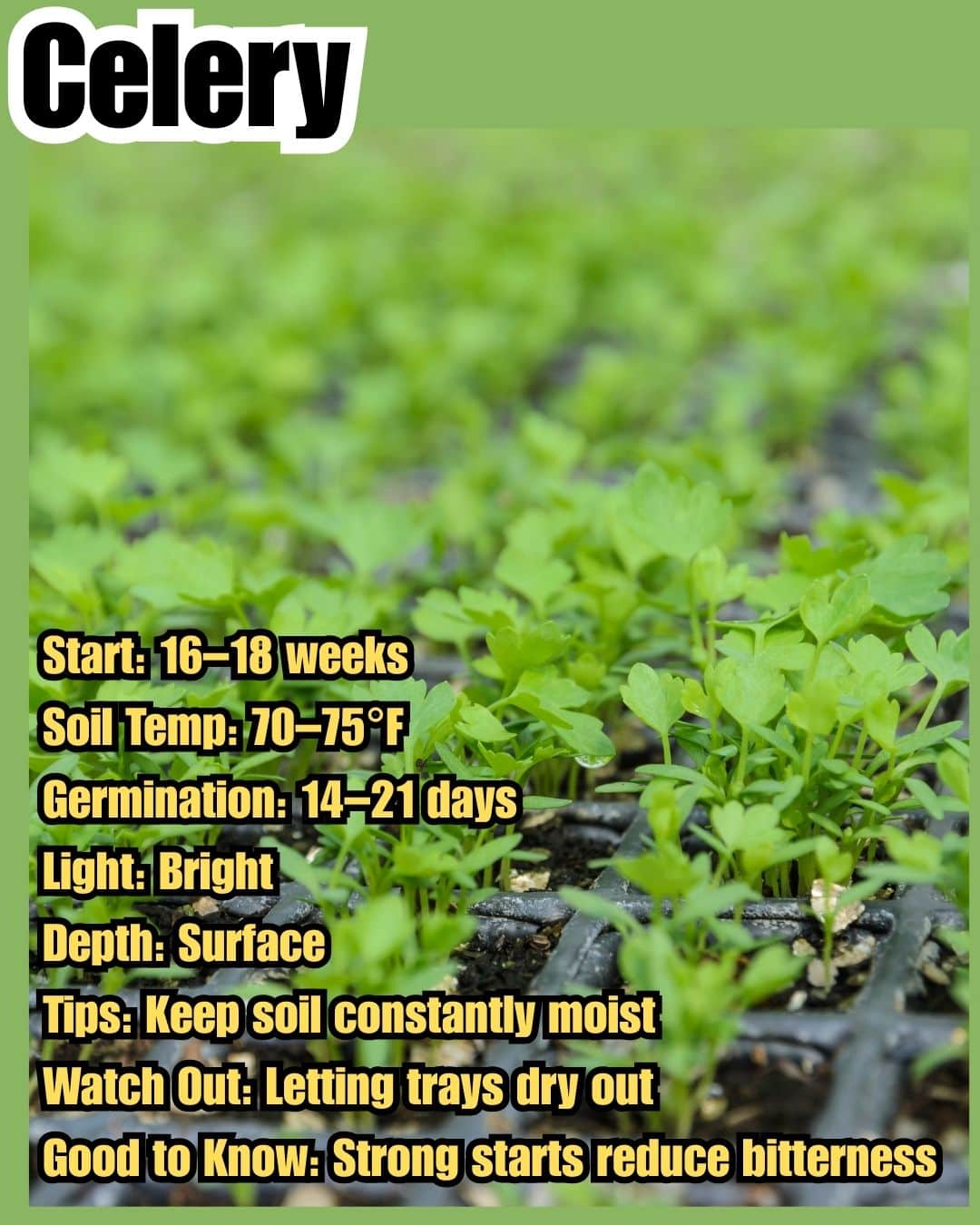
Celery is notoriously slow and picky, which is why early indoor starting matters.
Seeds are tiny and need light to germinate, so press them into the soil surface without covering. Keep soil constantly moist and warm (70–75°F is ideal), and expect germination to take 14–21 days. A humidity dome helps.
Celery seedlings grow slowly and hate drying out, so consistent moisture is key. Once established, feed lightly with diluted fertilizer.
Trivia worth knowing: celery grown from strong transplants is far less bitter than celery rushed into cold spring soil.
Next step: Don’t rush celery outside. Keep it growing steadily indoors, pot up if needed, then harden off carefully before transplanting.
Celeriac (Celery Root)
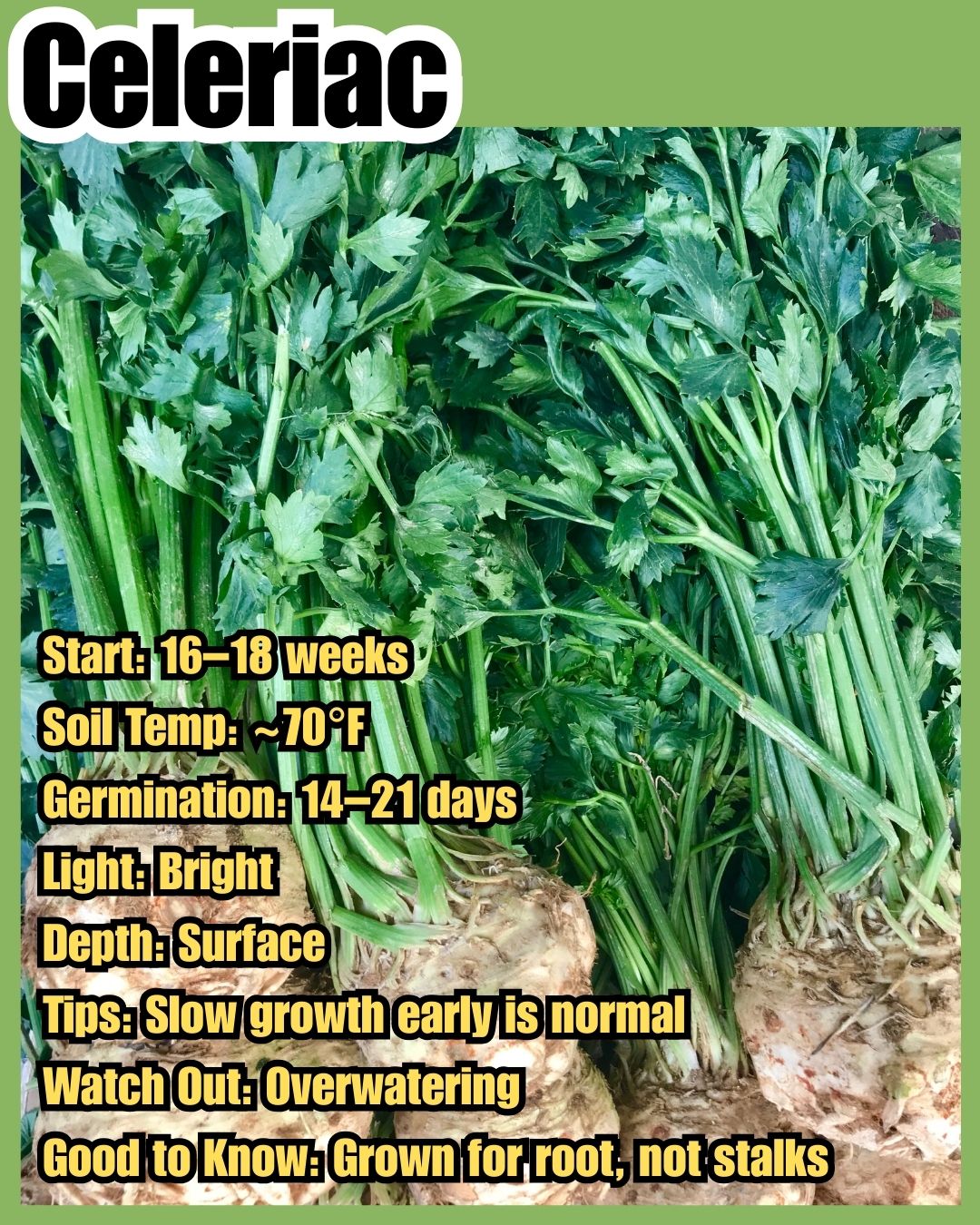
Celeriac grows much like celery but is prized for its knobby, flavorful root. Start seeds on the soil surface and gently press them in—light helps trigger germination.
Soil temperatures around 70°F speed things up, but sprouts may still take up to three weeks. Seedlings are slow and delicate early on, so avoid overwatering.
Strong light is essential. Thin seedlings early to avoid crowding. Celeriac needs a long season to size up underground, which is why January starts are ideal in New York.
Don’t worry if growth seems sluggish—it accelerates once transplanted outdoors.
Next step: If seedlings stall or get rootbound, pot up. Consistent growth now usually means a better-sized root later.
Globe Artichoke
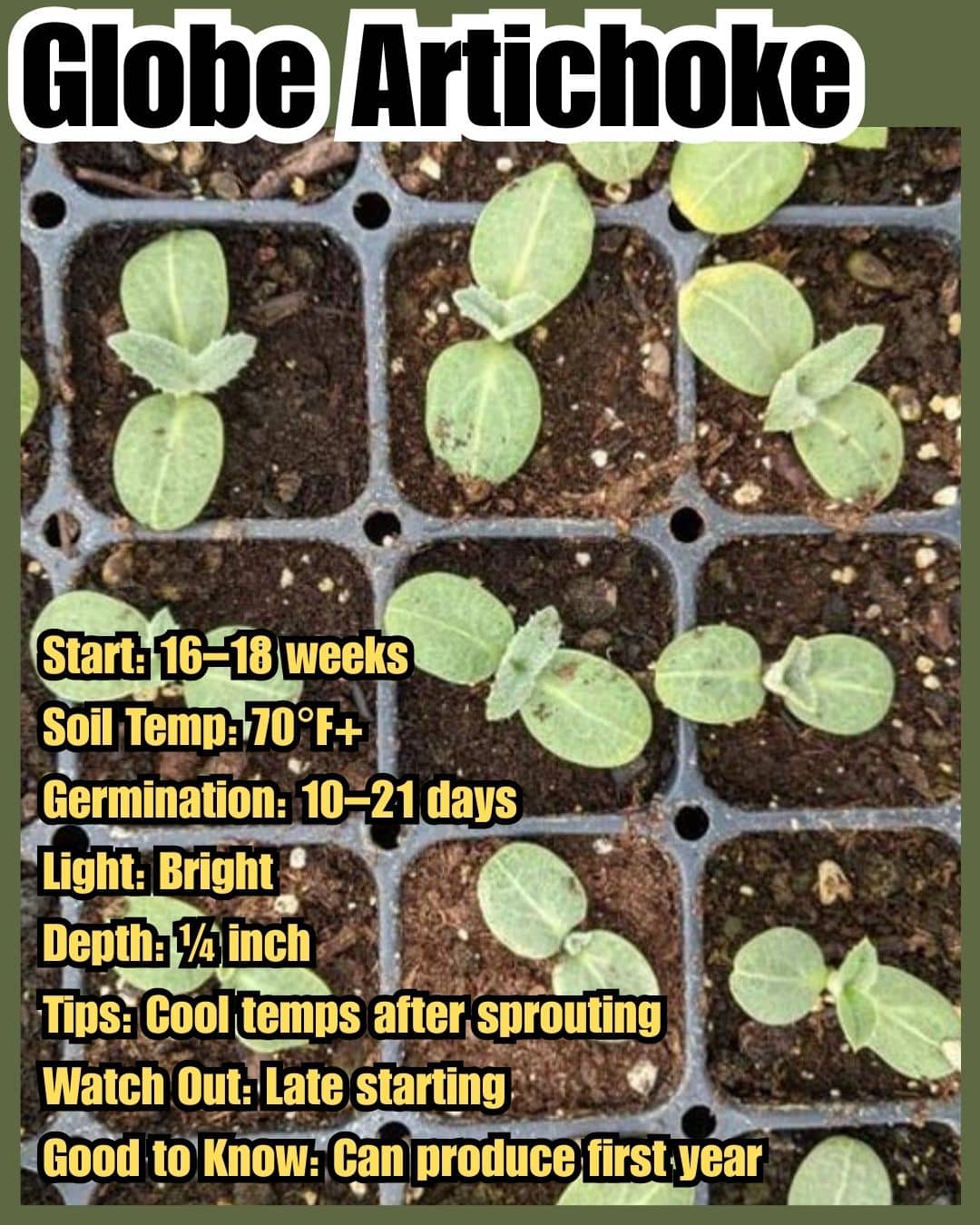
Globe artichokes need a long head start and are best grown as annuals in much of New York. Sow seeds ¼ inch deep and keep soil warm—70°F minimum. Germination takes 10–21 days.
Once sprouted, give them bright light and room to grow; these seedlings get big fast once established. Artichokes prefer cooler growing temps after germination, so keep them around 60–65°F if possible.
Fun fact: artichokes can produce buds the first year if started early enough, which is why January indoor sowing makes such a difference in northern climates.
Next step: Pot up before they get crowded. Harden off carefully and transplant once outdoor temps stabilize (they don’t like cold shock).
14–16 Weeks Before Your Last Frost (Mid–Late January in Much of NY)
Lavender

Lavender is slow to germinate and even slower to grow, which makes an early indoor start essential. Seeds benefit from cold stratification, so placing them in the refrigerator for 2–4 weeks before sowing can improve germination.
Press seeds onto the soil surface (light helps them sprout) and keep soil lightly moist—never soggy. Expect germination in 14–28 days.
Lavender seedlings stay small for a long time but develop deep roots early. Strong light and good airflow prevent damping-off. Useful tip: lavender prefers neglect once established, but seedlings need patience and consistency.
Next step: Don’t overpot early—lavender likes drainage. Pot up only when roots fill the container, then harden off slowly.
Swiss Chard
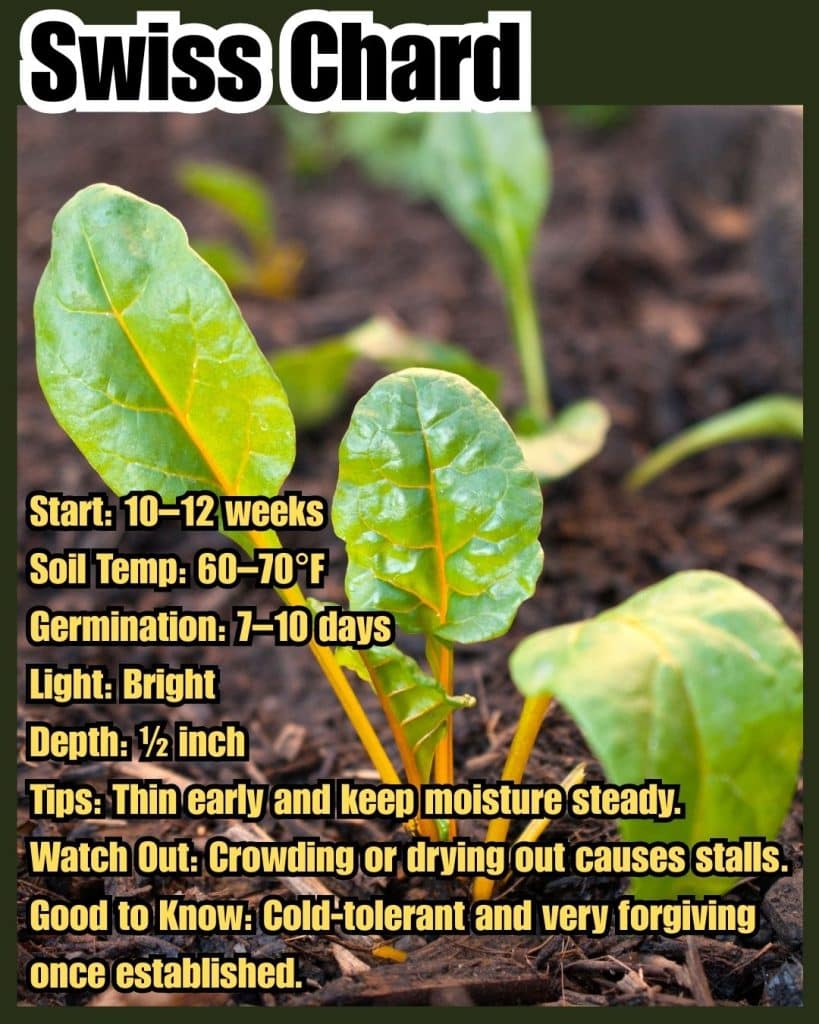
Swiss chard is one of the most useful “bonus” starts for New York because it handles cold, grows fast once transplanted, and gives you a long harvest window. It’s also forgiving if your spring weather flips from warm to cold and back again.
Soak the seeds for a few hours if you want faster sprouting (not required, just helpful). Plant seeds about ½ inch deep in moist seed-starting mix and keep them at 60–70°F.
Germination usually takes 7–10 days. One “seed” is often a cluster, so it’s normal to see multiple sprouts in one cell. Thin to the strongest seedling, or separate carefully once they have true leaves.
Chard seedlings like bright light and steady moisture, but don’t keep the mix soaked. If they stretch, move lights closer. If they stall, it often means they’re crowded or ready for a small pot-up.
Next step: Harden off and transplant early. Swiss chard tolerates cool nights and light frost better than most leafy greens, and strong starts help it power through New York’s unpredictable spring.
Pansies / Violas
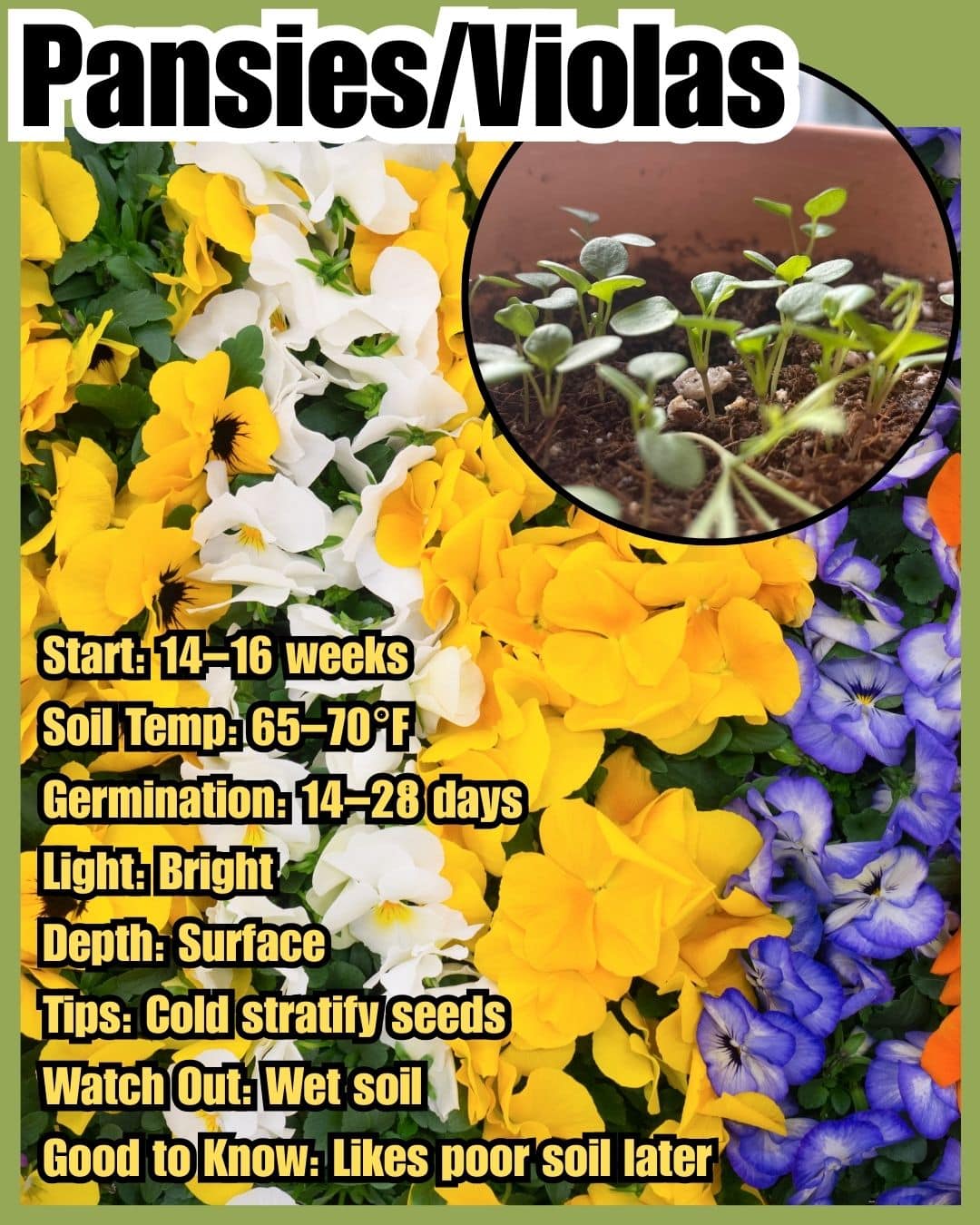
Pansies and violas are cold-tough flowers that thrive when started early. Sow seeds on the soil surface and lightly press them in; they germinate best in cooler soil (60–65°F).
Darkness actually helps, so cover trays loosely until sprouts appear, usually within 7–14 days. Once up, give bright light and cool conditions to keep plants compact.
These seedlings handle trimming well and transplant easily.
Fun fact: pansies tolerate frost better than most flowers, making them perfect for early spring color in New York gardens.
Next step: Harden off early and transplant as soon as the ground is workable—pansies can take chilly weather.
Snapdragons
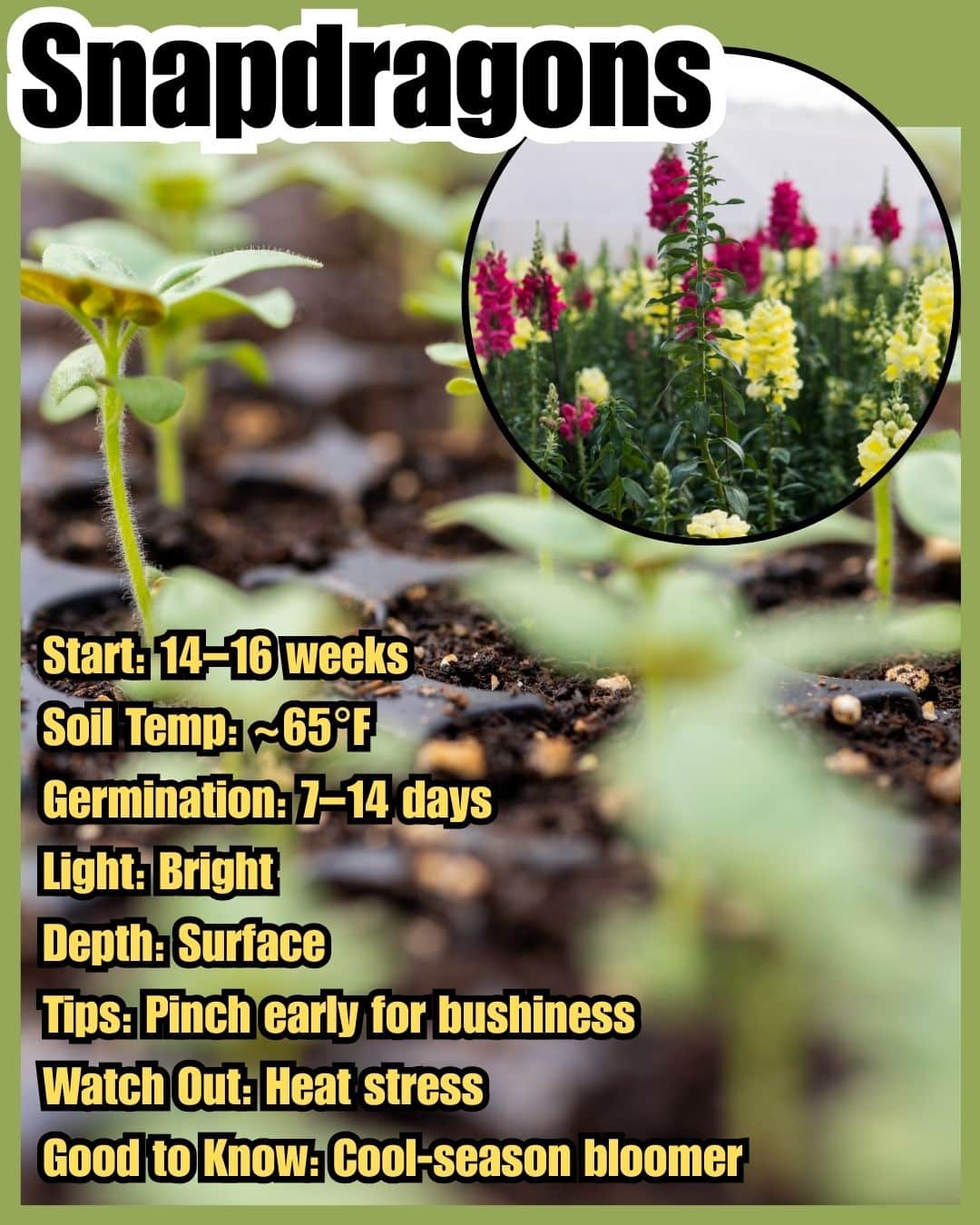
Snapdragons grow slowly at first, which is why January starts work so well. Sow seeds on the surface (light is required for germination) and keep soil moist but not wet.
Expect sprouts in 7–14 days at around 65°F. Once seedlings appear, cooler temperatures help prevent legginess. Strong light is critical.
Snapdragons branch naturally if pinched early, leading to more flower spikes later.
Useful tip: snapdragons thrive in cool weather and often stop blooming once summer heat hits, so early planting gives the longest display in New York.
Next step: Pinch when plants are a few inches tall. Harden off and plant out early—snapdragons like cool conditions.
Geraniums (Pelargonium)
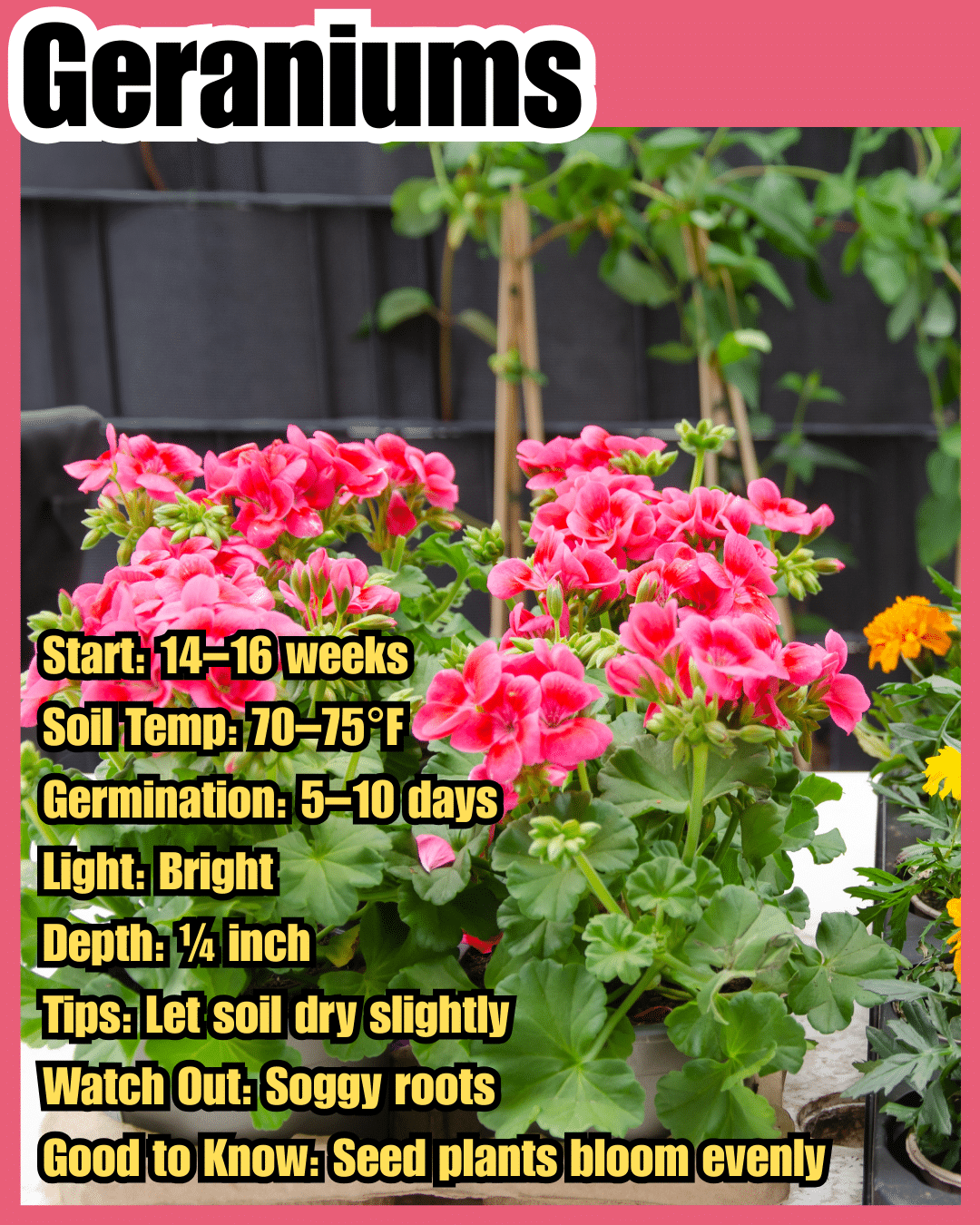
Geraniums grown from seed are more uniform and disease-resistant than cuttings. Sow seeds about ¼ inch deep and keep soil warm. 70–75°F speeds germination, which usually takes 5–10 days.
Once sprouted, reduce heat and provide bright light to keep growth sturdy. Geranium seedlings dislike soggy soil, so let the surface dry slightly between watering.
Trivia worth knowing: seed-grown geraniums often bloom earlier and more consistently than store-bought plants, especially when started early indoors.
Next step: Pot up once roots fill the cell. Harden off after nights are mild, then transplant after frost danger has passed.
12–14 Weeks Before Your Last Frost (Late January–Early February)
Parsley
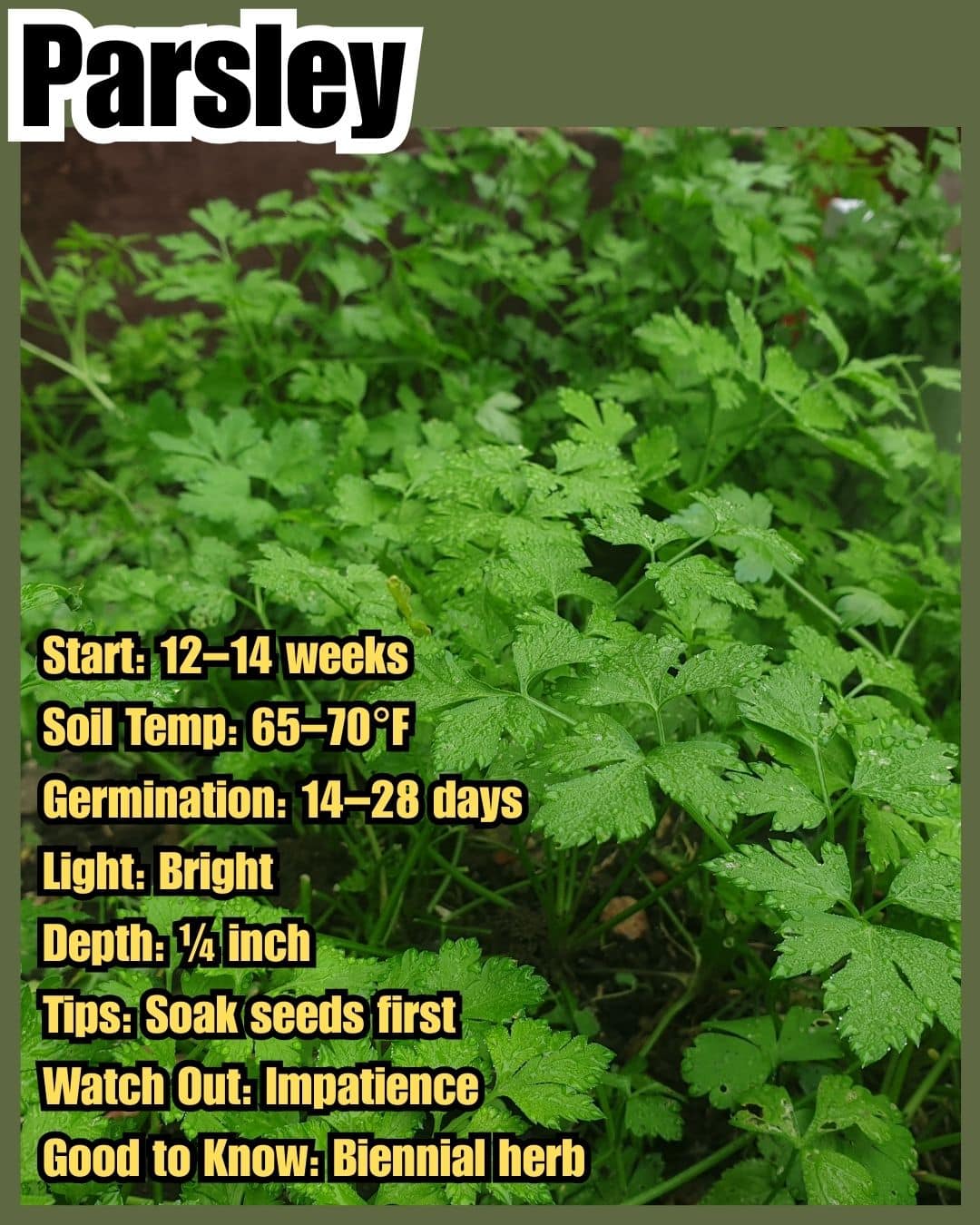
Parsley is slow to germinate and benefits from an early indoor start. Seeds have a hard coating, so soaking them in warm water for 12–24 hours before planting can speed things up.
Sow seeds about ¼ inch deep and keep soil consistently moist at around 65–70°F. Germination can take 14–28 days, so patience is key.
Once sprouted, parsley prefers bright light and cool conditions.
Parsley is technically a biennial, meaning strong first-year plants are often more cold-tolerant and flavorful.
Next step: Pot up if roots fill the cell. Harden off and transplant when plants are sturdy—parsley can handle cool New York spring weather.
Thyme

Thyme seeds are tiny and need light to germinate, so press them gently onto the soil surface without covering. Keep soil lightly moist and temperatures around 65°F.
Germination usually occurs within 10–21 days. Seedlings are very slow-growing at first and easy to overwater. Good airflow and bright light are essential.
Useful tip: thyme grown from seed develops a deeper root system than nursery plants, making it more drought-tolerant once established in the garden.
Next step: Keep thyme on the drier side once established. Pot up only when clearly rootbound.
Sage
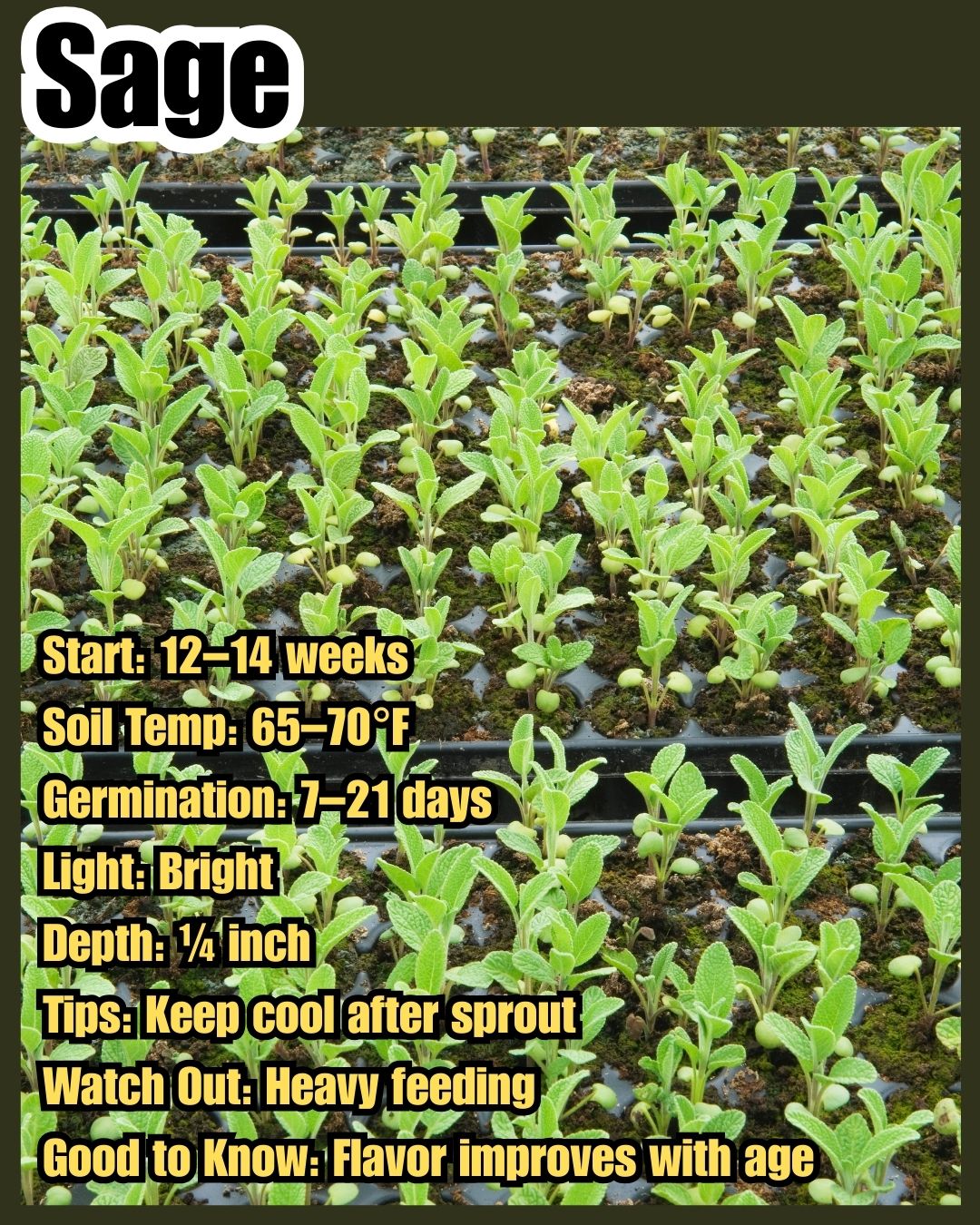
Sage is relatively easy but slow when started from seed. Sow seeds about ¼ inch deep in well-draining seed mix and keep soil moist but never soggy.
Germination takes 7–21 days at 65–70°F. Sage seedlings prefer cooler temperatures once established and need strong light to stay compact. Avoid heavy feeding early on.
Did you know? 👉 Sage becomes more flavorful as the plant matures, so early indoor starts lead to better harvests the first year.
Next step: Once growth is steady, pot up before it stalls. Harden off and transplant after frost danger passes.
Oregano
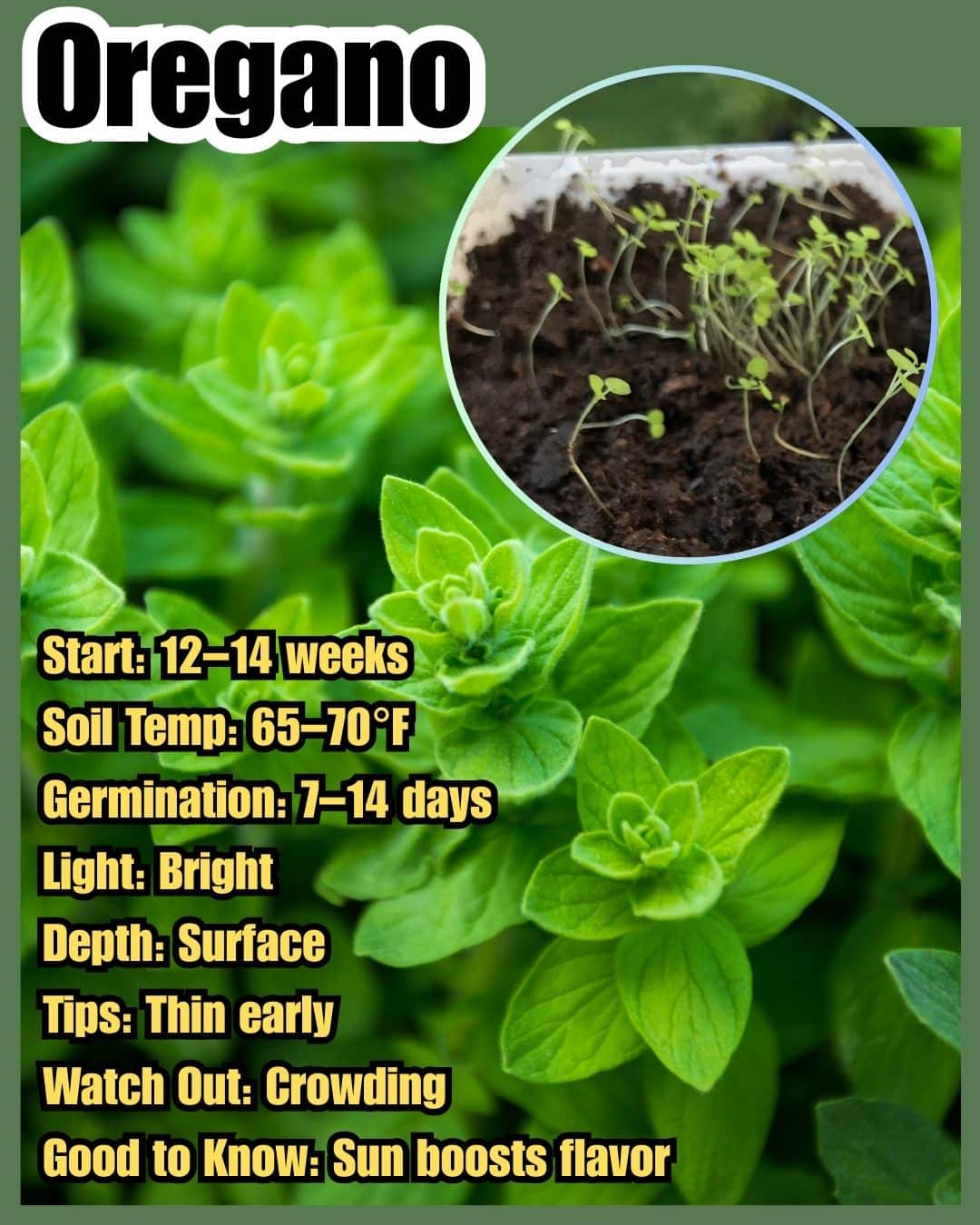
Oregano seeds are extremely small and require light to germinate. Scatter seeds on the soil surface and press them in gently.
Keep soil evenly moist and warm, around 65–70°F. Germination typically occurs within 7–14 days.
Seedlings grow slowly and benefit from bright light and good airflow.
Useful info: oregano flavor intensifies in full sun, so sturdy seedlings started indoors handle outdoor transplanting much better than rushed starts.
Next step: Thin or pot up so plants aren’t crowded. Harden off and transplant after frost danger passes.
Chives
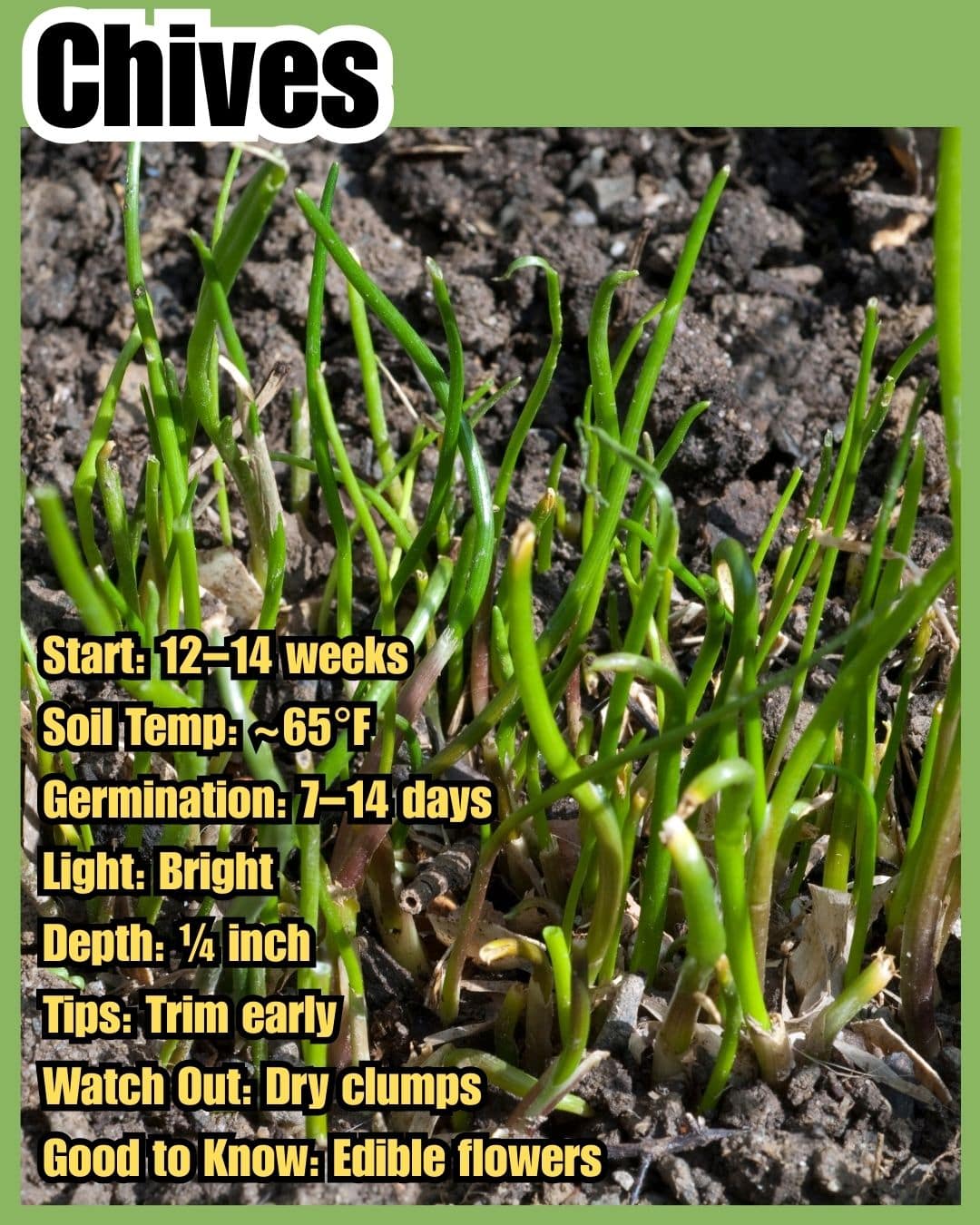
Chives are one of the easier herbs to start indoors but still benefit from an early start. Sow seeds about ¼ inch deep and keep soil moist at around 65°F.
Germination usually takes 7–14 days. Seedlings grow in clumps and can be trimmed early to encourage thicker growth.
Fun fact: chives are one of the first herbs to return each spring, and their purple flowers are edible and great for pollinators.
Next step: Pot up as a clump when roots fill the container. Harden off and transplant once weather settles.
10–12 Weeks Before Your Last Frost (February)
Peppers (Bell and Hot)
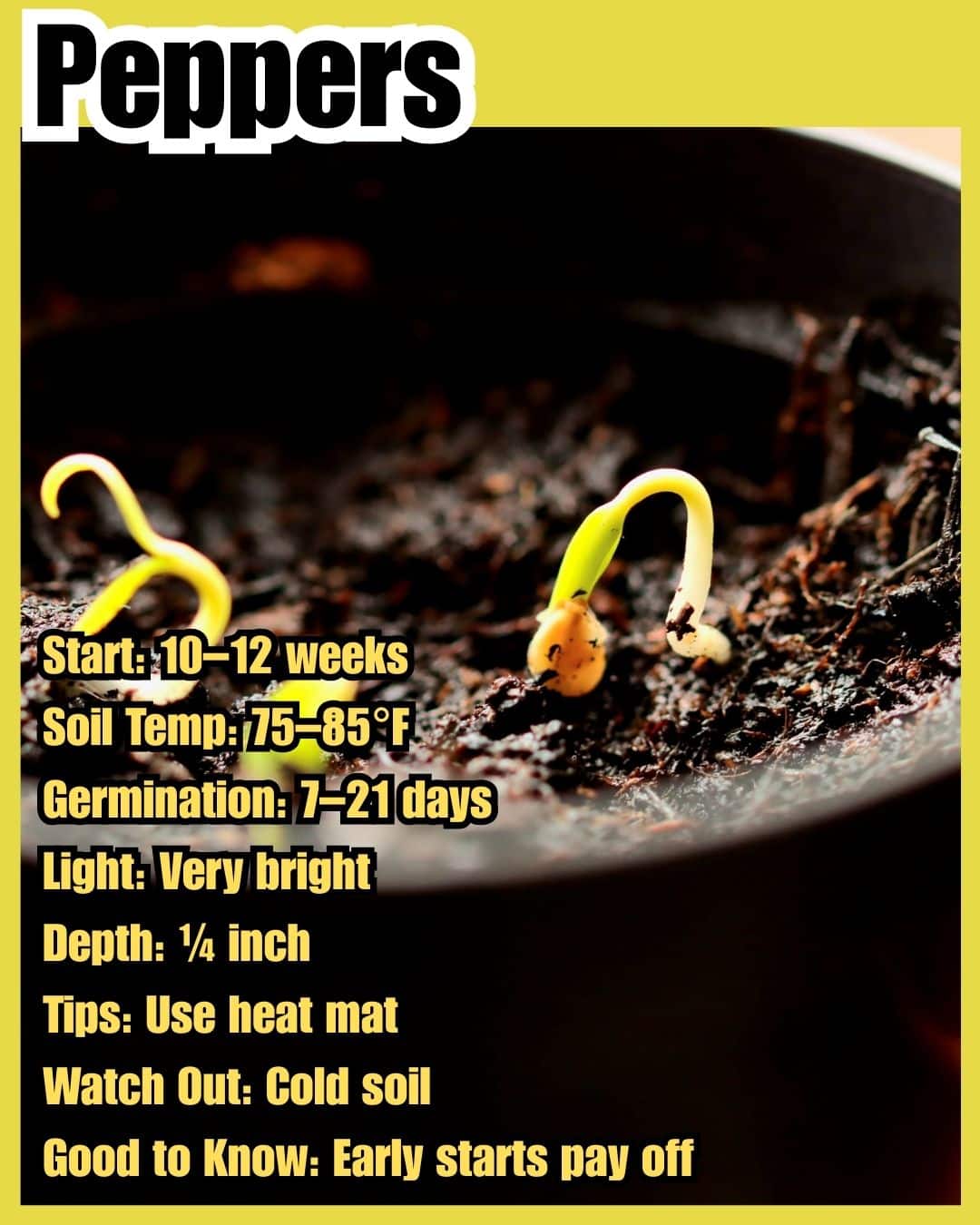
Peppers love warmth and need a long indoor start to perform well in New York. Sow seeds about ¼ inch deep and keep soil temperatures between 75–85°F (heat mats make a big difference).
Germination takes 7–21 days depending on variety. Once sprouted, reduce heat slightly but provide very bright light to prevent legginess.
Peppers grow slowly at first, so avoid overwatering and feed lightly after true leaves appear.
Strong indoor-grown pepper plants produce earlier and heavier harvests than direct-seeded plants.
Next step: Pot up when roots fill the cell. Harden off and transplant outdoors after your last frost date (warm nights help a lot).
Eggplant
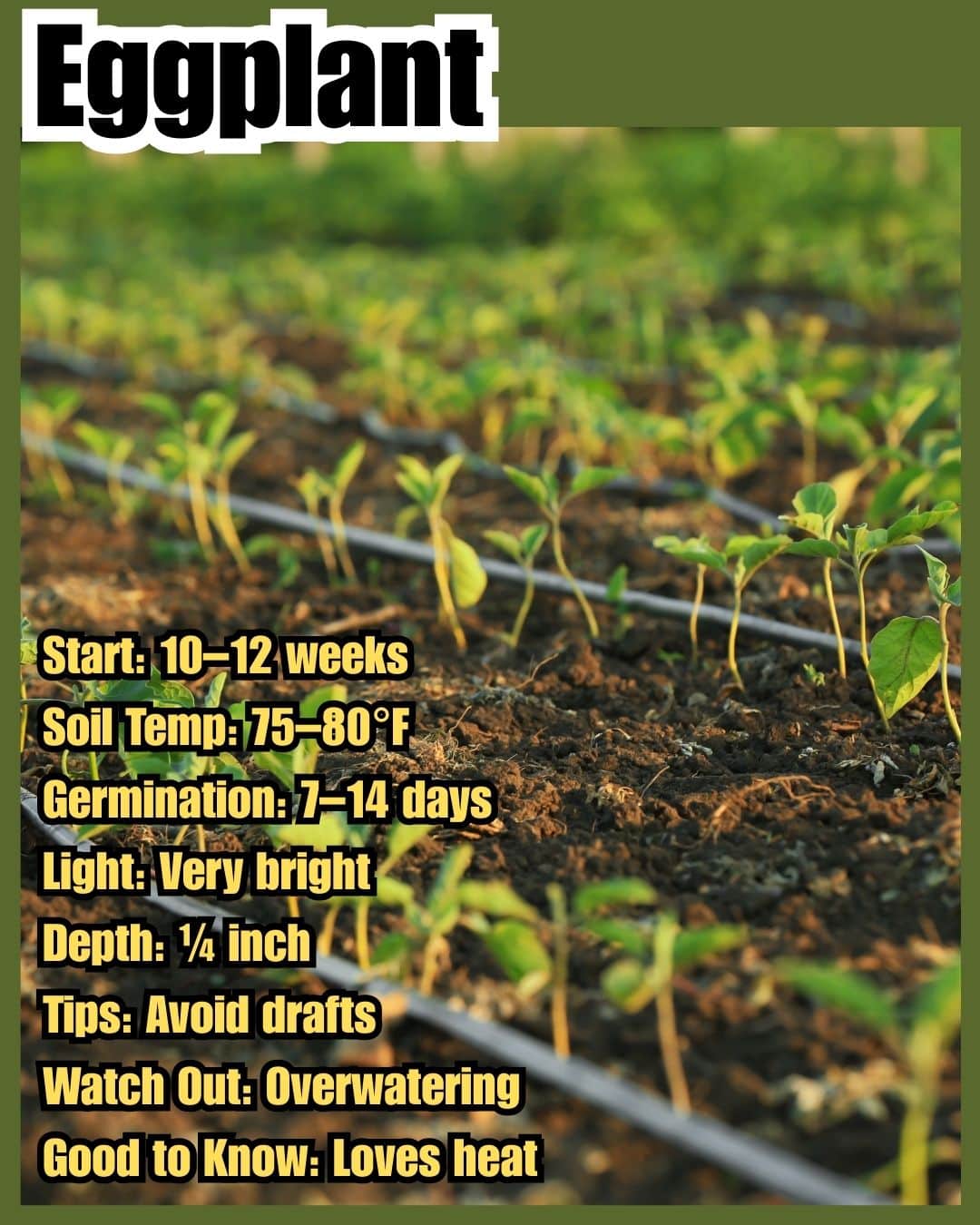
Eggplant seeds germinate best in warm conditions similar to peppers. Plant seeds ¼ inch deep and maintain soil temperatures around 75–80°F.
Germination usually takes 7–14 days. Eggplant seedlings are sturdy but need intense light to stay compact. They dislike cold drafts and wet soil.
Fun fact: eggplants started early indoors often flower sooner, which leads to larger fruit sets before late-summer heat slows production.
Next step: Pot up when growth slows or roots fill the cell. Transplant after last frost when nights are reliably warm.
Petunias
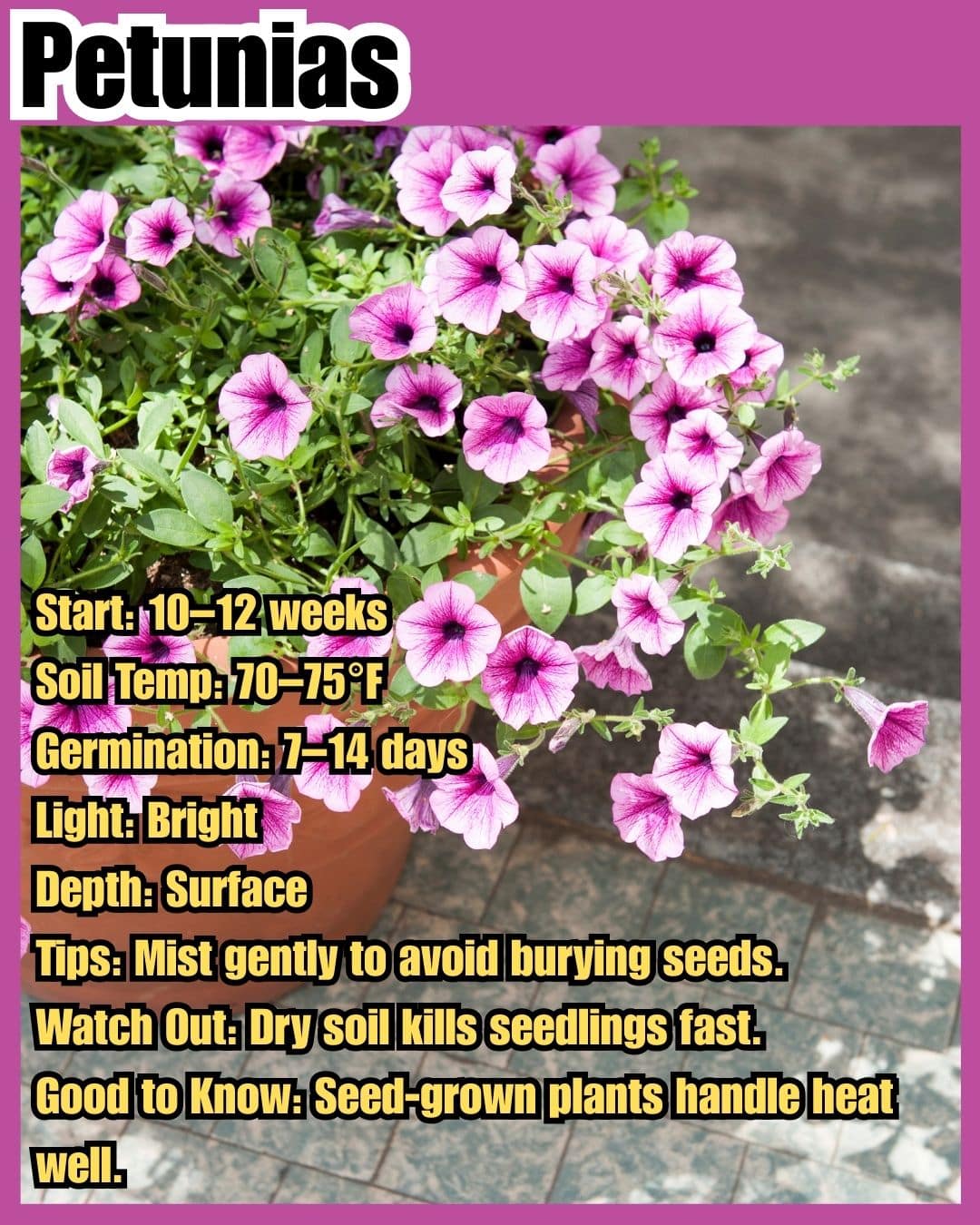
Petunia seeds are extremely small and require light to germinate. Sprinkle seeds on the soil surface and gently press them in without covering.
Keep soil consistently moist and warm, about 70–75°F. Germination takes 7–14 days. Seedlings are slow early and sensitive to drying out.
Strong light is essential.
Seed-grown petunias often outperform nursery plants in heat tolerance once properly hardened off.
Next step: Pot up once roots are established and plants are growing steadily. Transplant after frost danger passes.
Lobelia
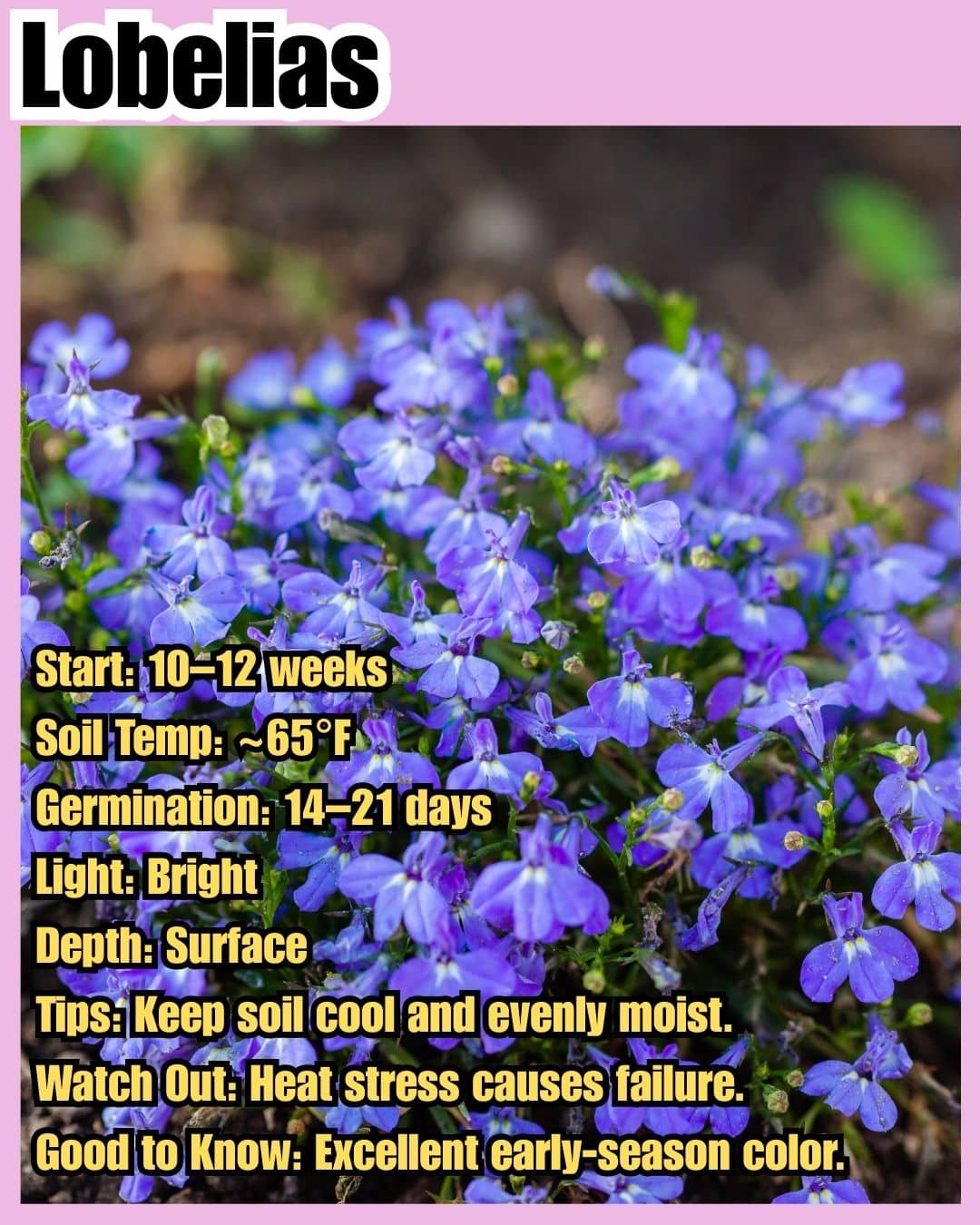
Lobelia seeds are tiny and best sown on the soil surface. Do not cover them (light is needed for germination). Keep soil moist and cool, around 65°F.
Germination typically occurs in 14–21 days.
Lobelia seedlings stay small and delicate, so avoid overwatering.
Lobelias prefer cool weather and will fade in extreme heat, making early spring planting especially important for New York gardens.
Next step: Harden off and plant out earlier in spring for the best display before summer heat hits.
Verbena

Verbena seeds can be slow and uneven to germinate. Sow seeds on the surface and lightly press them in; some varieties benefit from a brief cold stratification.
Keep soil moist at around 65–70°F. Germination can take 14–28 days. Seedlings grow slowly but become vigorous once established.
Verbena is drought-tolerant once mature, but early indoor starts give it the root system it needs to handle summer stress.
Next step: Pot up if growth stalls. Transplant after frost danger passes and give it full sun for best flowering.
8–10 Weeks Before Your Last Frost (Late February–Early March)
Broccoli
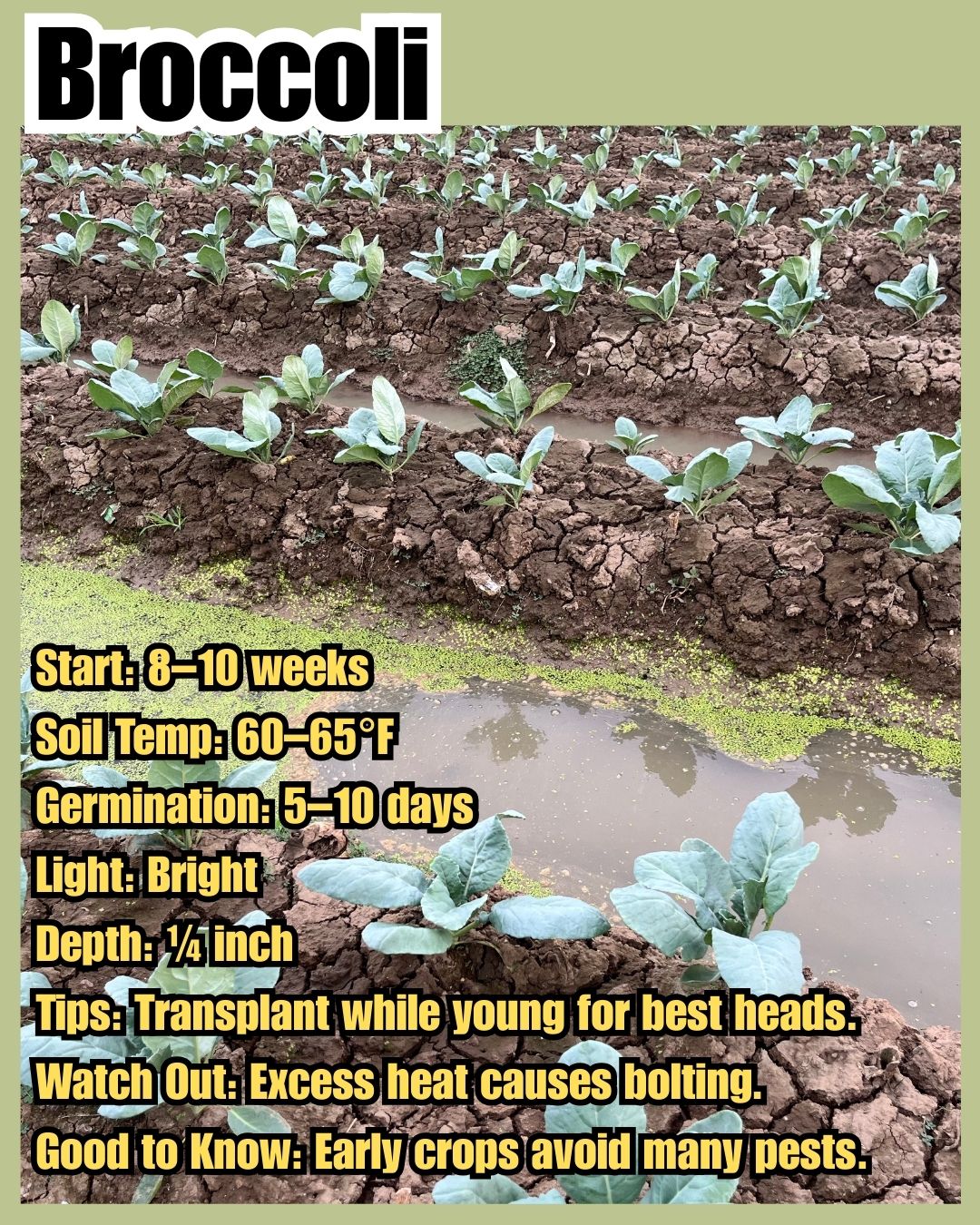
Broccoli germinates quickly but benefits from a controlled indoor start. Sow seeds about ¼ inch deep and keep soil temperatures around 60–65°F. Germination usually occurs within 5–10 days.
Once sprouted, cooler conditions and strong light help prevent leggy growth. Broccoli seedlings grow fast and should be transplanted while still young for best results.
Broccoli started indoors often matures earlier and avoids common spring pest pressure.
Next step: Harden off and transplant earlier than you think—broccoli prefers cool weather and can handle light frost.
Cabbage
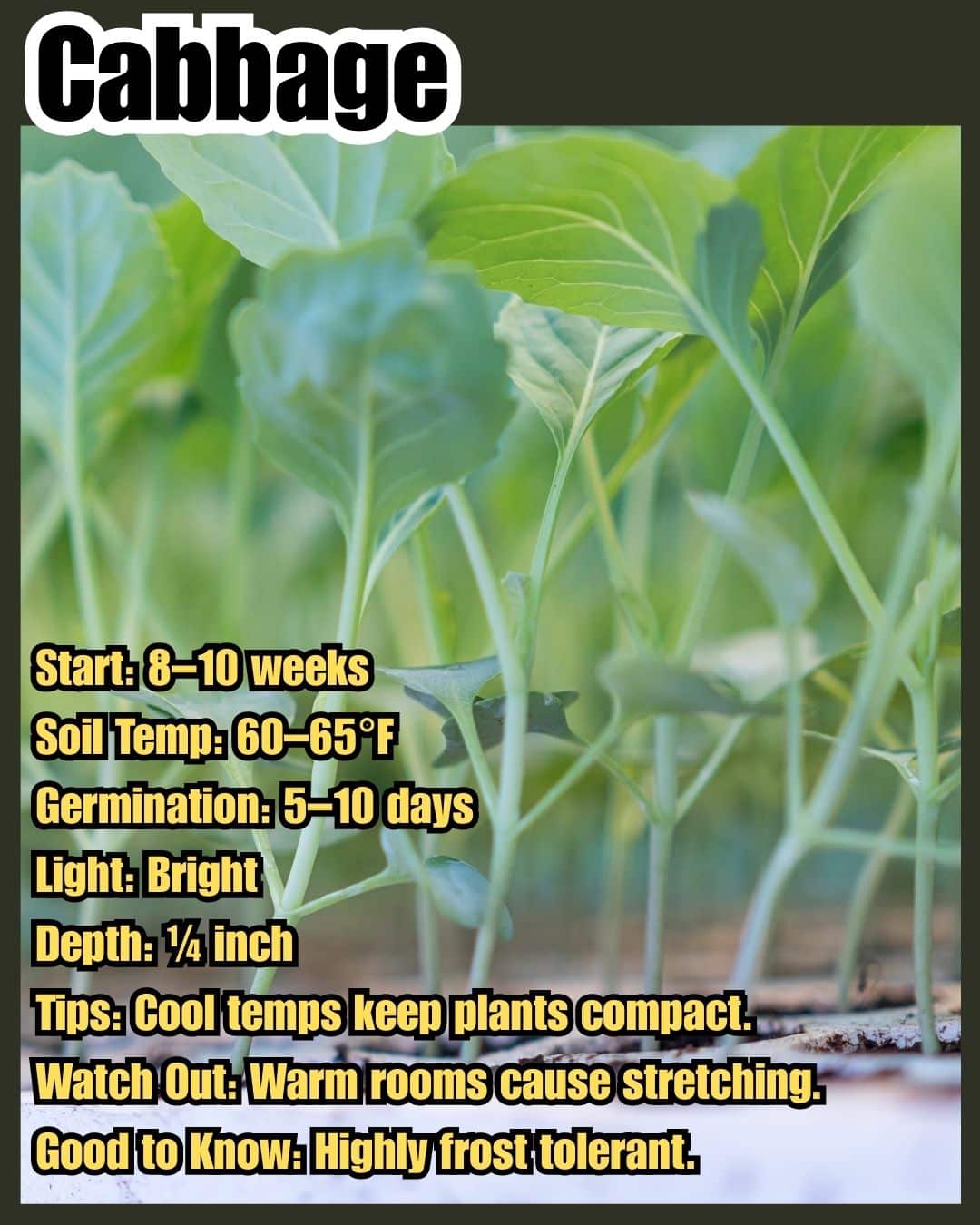
Cabbage is hardy and easy to start indoors. Plant seeds ¼ inch deep and keep soil moist at 60–65°F. Germination takes 5–10 days.
Seedlings prefer cool air and bright light to stay compact. Avoid excess heat, which causes stretching.
Cabbage tolerates frost well, and early transplants often produce tighter, better-formed heads than late-started plants.
Next step: Harden off and transplant early. Cabbage is one of the most cold-tolerant transplants you can grow in New York.
Cauliflower
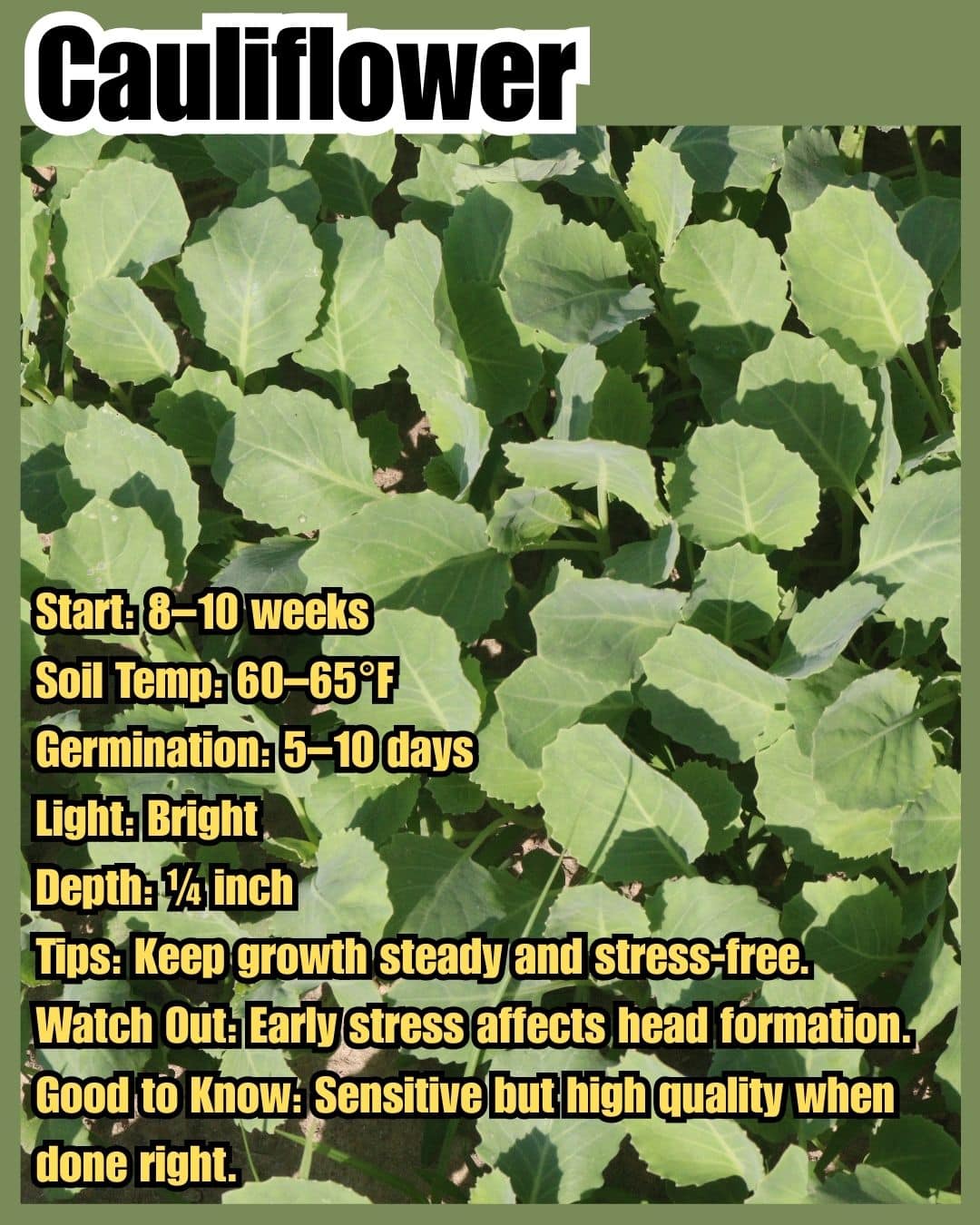
Cauliflower is more sensitive than other brassicas and benefits from careful indoor starting. Sow seeds ¼ inch deep and keep soil at 60–65°F. Germination occurs in 5–10 days.
Provide bright light and steady moisture without overwatering. Stress early on can affect head formation later. Useful info: cauliflower prefers consistency—strong, evenly grown seedlings lead to better, more uniform heads.
Next step: Don’t let seedlings get rootbound. Harden off and transplant on time so growth stays steady and stress-free.
Kale

Kale is fast-growing and very forgiving. Sow seeds ¼ inch deep and keep soil moist at around 60°F. Germination usually takes 5–8 days.
Seedlings grow quickly and handle cooler indoor conditions well.
Kale flavor actually improves after light frost exposure, making early spring planting ideal in New York.
Next step: Harden off and transplant early—kale is tough and usually performs best in cool weather.
Brussels Sprouts
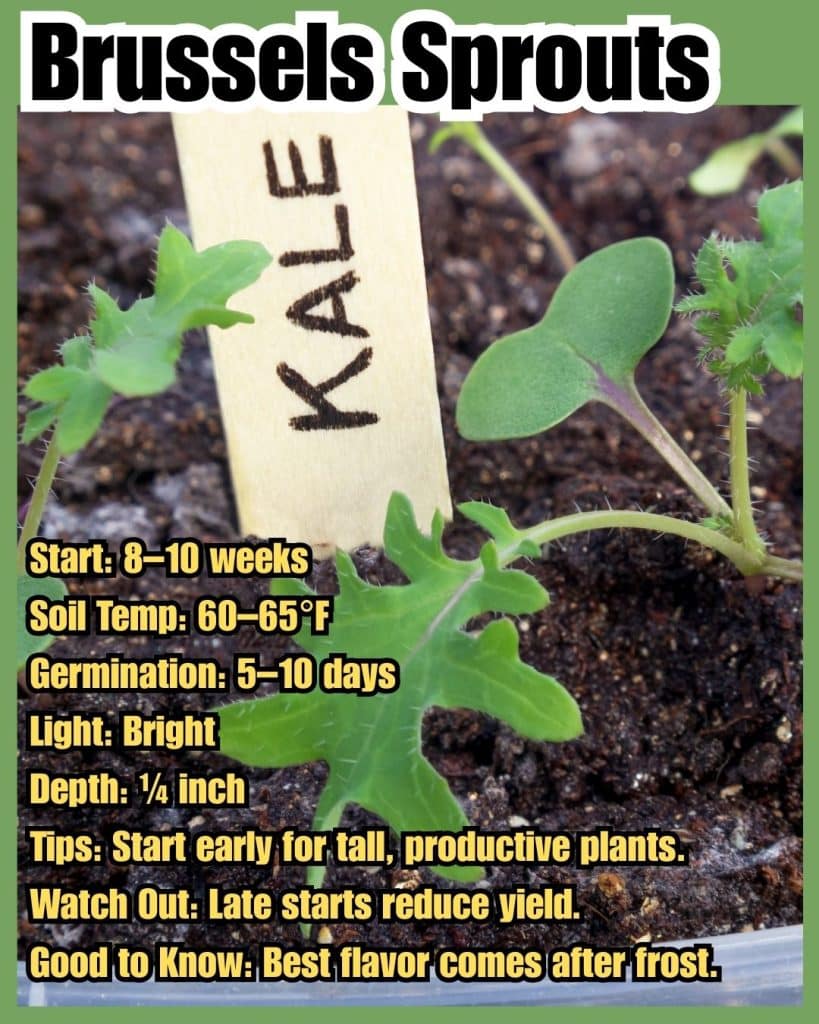
Brussels sprouts need a longer growing season than most brassicas, which is why early indoor starts matter. Sow seeds ¼ inch deep and keep soil around 60–65°F. Germination takes 5–10 days.
Seedlings grow steadily and prefer bright light and cool air.
Brussels sprouts develop better flavor after cool fall temperatures, but strong early growth is key to producing tall, productive plants.
Next step: Don’t let seedlings stall indoors. Transplant on schedule so plants have time to get big before summer and set sprouts before fall cool-down.
Thanks for reading!
Thank you so much for reading. May your day be bright and your garden green.