Ground cover sounds harmless. It is supposed to fill bare soil, knock back weeds, and make the yard feel finished without endless mowing.
Then one spring, it has crossed the mulch line. By the next, it is under the hedge, through the lawn, and popping up in a bed you never planted.
That is the catch with fast-growing ground covers: “spreading” can be a feature until it becomes a full-time removal project. Some are locally invasive, some are simply relentless in a home garden, and a few can do both. Check your state’s invasive-plant list before buying or sharing any of them.
The Evergreen Mats That Keep Moving
1. English Ivy
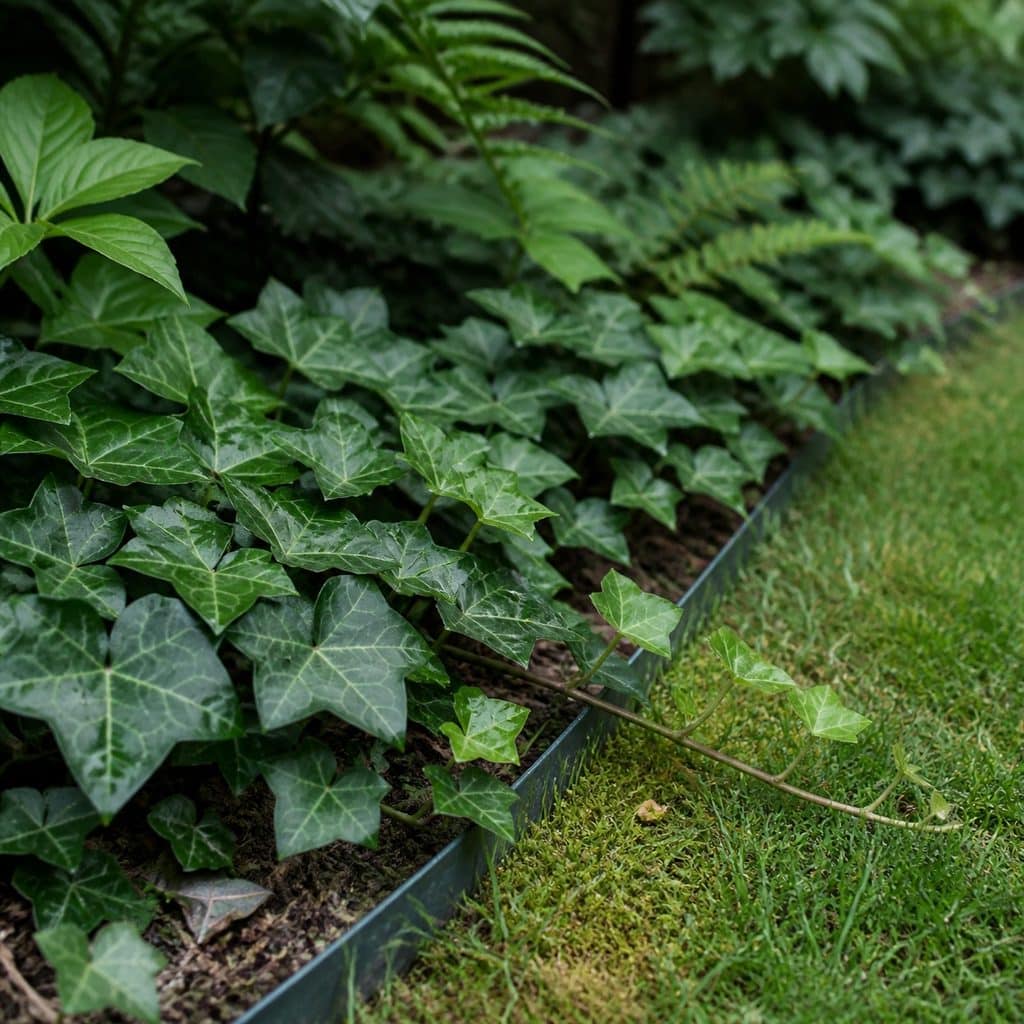
English ivy looks polished at first: glossy leaves, year-round color, and coverage in difficult shade. That tidy little patch can keep creeping long after the rest of the garden goes dormant.
It can spread across the ground, climb trees and walls, and escape into nearby natural areas. Once it reaches a tree, the issue is no longer just a messy border. Keep it from climbing, remove new runners early, and never toss live cuttings over a fence or into woods.
2. Periwinkle

Periwinkle, also called vinca, is famous for its cheerful blue-purple flowers and shiny leaves. It is also famous for rooting wherever a trailing stem touches soil.
That makes it fast at filling a slope, but it can form dense mats beneath shrubs and trees. Pull stray stems before they root, especially near woodlands or drainage areas. A pretty flower does not make a plant easy to control.
3. Japanese Spurge

Japanese spurge is often sold as the answer to dry shade. It stays green, crowds out weeds, and gives a bed a clean carpeted look.
But a thick carpet can crowd out nearly everything else too. Its spread can be slow enough to seem manageable for years, then suddenly become obvious when it reaches a bed edge or natural area. Use a hard edge, inspect the perimeter each season, and do not assume shade will slow it down.
4. Wintercreeper

Wintercreeper starts out looking like a dependable evergreen ground cover. The name is the warning: it creeps, roots, and can climb when it finds a wall, fence, or tree.
Its ability to shift from ground cover to climbing vine is what makes it especially troublesome. If it is already in your yard, keep it trimmed well away from trunks and watch for shoots beyond the original planting area.
The Root Runners That Laugh at Garden Borders
5. Creeping Jenny

Creeping Jenny has bright chartreuse leaves that practically glow around a pond, a patio, or a damp bed. It is easy to see why gardeners fall for it.
Its stems root at the nodes, especially where soil stays moist. One overlooked piece can become a new patch, which is why it often outgrows the tidy container or border where it began. Keep it contained and do not let trimmings wash into ditches, streams, or storm drains.
6. Bishop’s Goutweed

Bishop’s goutweed, sometimes sold as snow-on-the-mountain, is the plant gardeners warn each other about after the fact. Its variegated leaves look elegant in a shady bed. Its underground roots are another story.
Those roots can travel well beyond the visible foliage and send up new shoots in the lawn or between prized perennials. Digging only the tops usually creates a comeback tour. Small patches need repeated removal, and large infestations may be worth a plan from your local Extension office.
7. Chameleon Plant

Chameleon plant has leaves splashed with red, cream, orange, and green, so it looks more like a decorative accent than a future yard problem.
Under the soil, though, it spreads by tough rhizomes that can rebound from missed fragments. It also tends to revert to plain green while it expands, meaning the most aggressive growth may not even look like the plant you bought. A sturdy container is the safer choice if you cannot resist it.
8. Yellow Archangel

Yellow archangel offers silver-splashed leaves and yellow blooms, which makes it tempting for dark corners of the yard. It also has a habit of turning those dark corners into one large patch.
It can spread by creeping stems that root as they travel. If it is planted near woods or a natural area, the risk goes beyond your own flower bed. Treat any escaped stems as a problem now, not a chore for next year.
The “Easy” Ground Covers That Can Become a Weekend Project
9. Creeping Charlie

Creeping Charlie often arrives without an invitation. Also called ground ivy, it has round, scalloped leaves, small purple flowers, and a minty scent when crushed.
It thrives in damp shade, sends runners across the ground, and roots at the nodes. That is why a few stems in the lawn can become a mat surprisingly fast. Improving drainage, reducing soil compaction, and removing small patches early can make a major difference.
10. Creeping Lilyturf

Creeping lilyturf, Liriope spicata, is often confused with clumping lilyturf. That distinction matters. The clumping types stay more contained, while creeping lilyturf can keep marching outward.
Its grass-like leaves make it seem orderly, even as the roots spread into nearby beds. Before buying “monkey grass,” read the botanical name on the label. A single word can mean the difference between a clump and a roaming ground cover.
11. Lily-of-the-Valley

Lily-of-the-valley has one of the sweetest scents in the spring garden. Its small white bells look delicate, but the plant spreads underground through rhizomes and can build a thick colony in shade.
It deserves extra caution around children and pets because all parts of the plant are poisonous if eaten. Do not rely on a photo alone to identify it, and consider a less aggressive, non-toxic alternative where curious pets or kids play.
12. Bugleweed

Bugleweed, or ajuga, wins people over with colorful leaves and short blue flower spikes. It can look fantastic at the front of a border—right up until it decides the border is merely a suggestion.
Its runners form new little rosettes as they spread, so the patch can widen quickly in moist soil. Keep it out of natural areas, divide or remove it before it crosses its edge, and leave enough open space around it that new growth is easy to spot.
The best time to control an aggressive ground cover is when you can still point to one small patch and say, “It ends right there.”