A tree can make a house feel finished. Until the trunk gets too big, the roots start lifting the walk, and the “cute little sapling” becomes the most expensive thing in the yard.
Most tree problems do not begin with a bad tree. They begin with a bad address. A species that belongs in a big lawn, park, or open property can become a constant maintenance project when it is planted beside a foundation, driveway, roof, septic line, or utility run.

One important reality check: tree roots do not normally smash through an intact concrete foundation. The bigger concern is pressure on shallow hardscaping, branches over the roof, relentless shade and moisture, and roots taking advantage of existing cracks or leaky pipes. The safest move is simple: choose for the tree’s mature height and spread—not the size of the nursery pot.
These ten trees can be wonderful in the right setting. Just do not give them a front-row seat next to your house.
1. Silver Maple
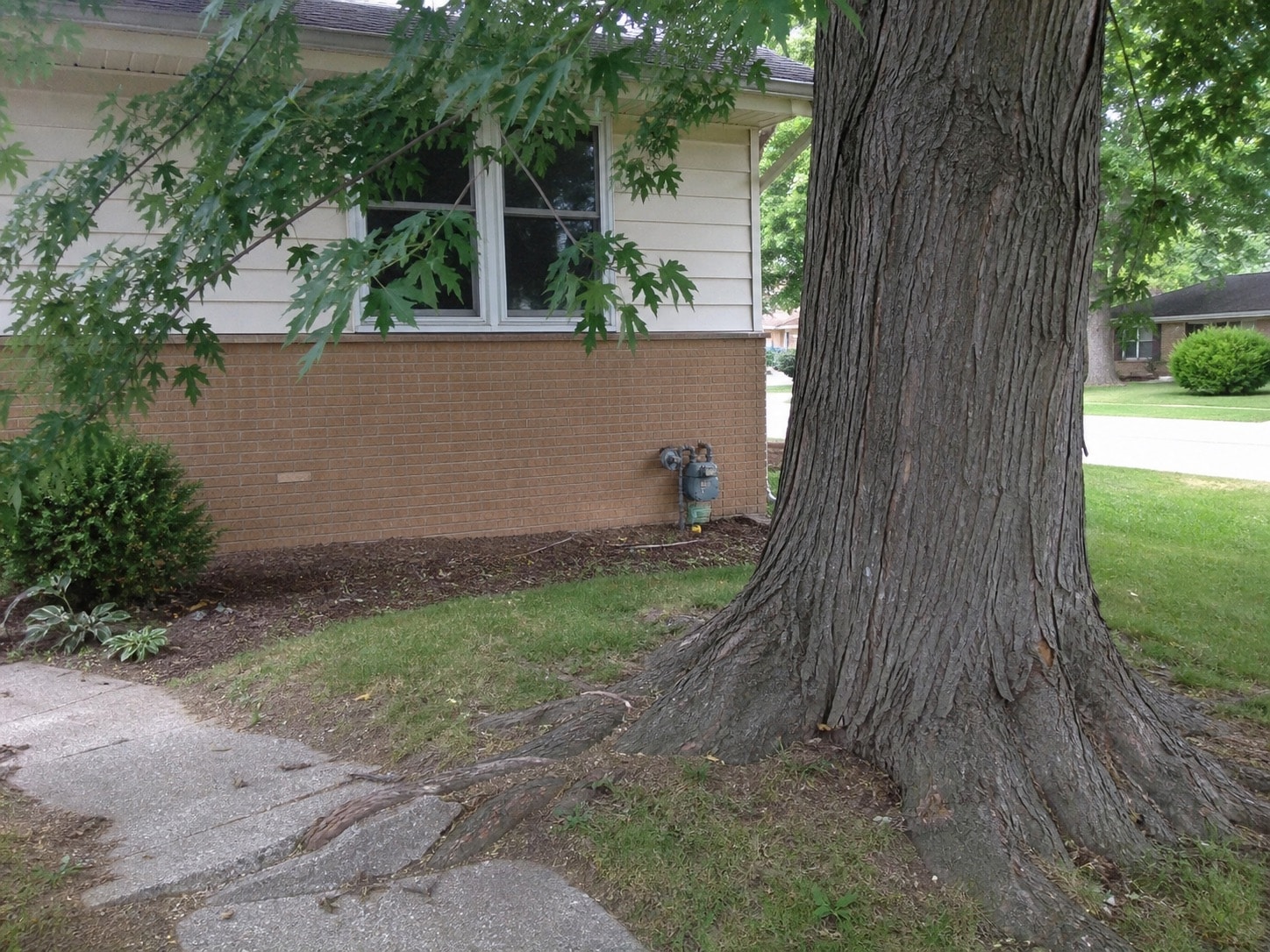
Silver maples grow quickly, which is exactly why homeowners fall for them. The problem is that fast growth comes with a very large mature tree and a root system that often runs close to the soil surface. Near a house, those roots can make mowing awkward, push up a sidewalk, crowd a patio, and turn a narrow planting bed into a losing battle.
They also cast a wide canopy and drop plenty of twigs, seeds, and leaves. That may be manageable in a big yard, but it is a nuisance when the canopy sits above a roof or driveway. Give a silver maple room to be a shade tree, not a foundation shrub with ambitions.
2. Weeping Willow
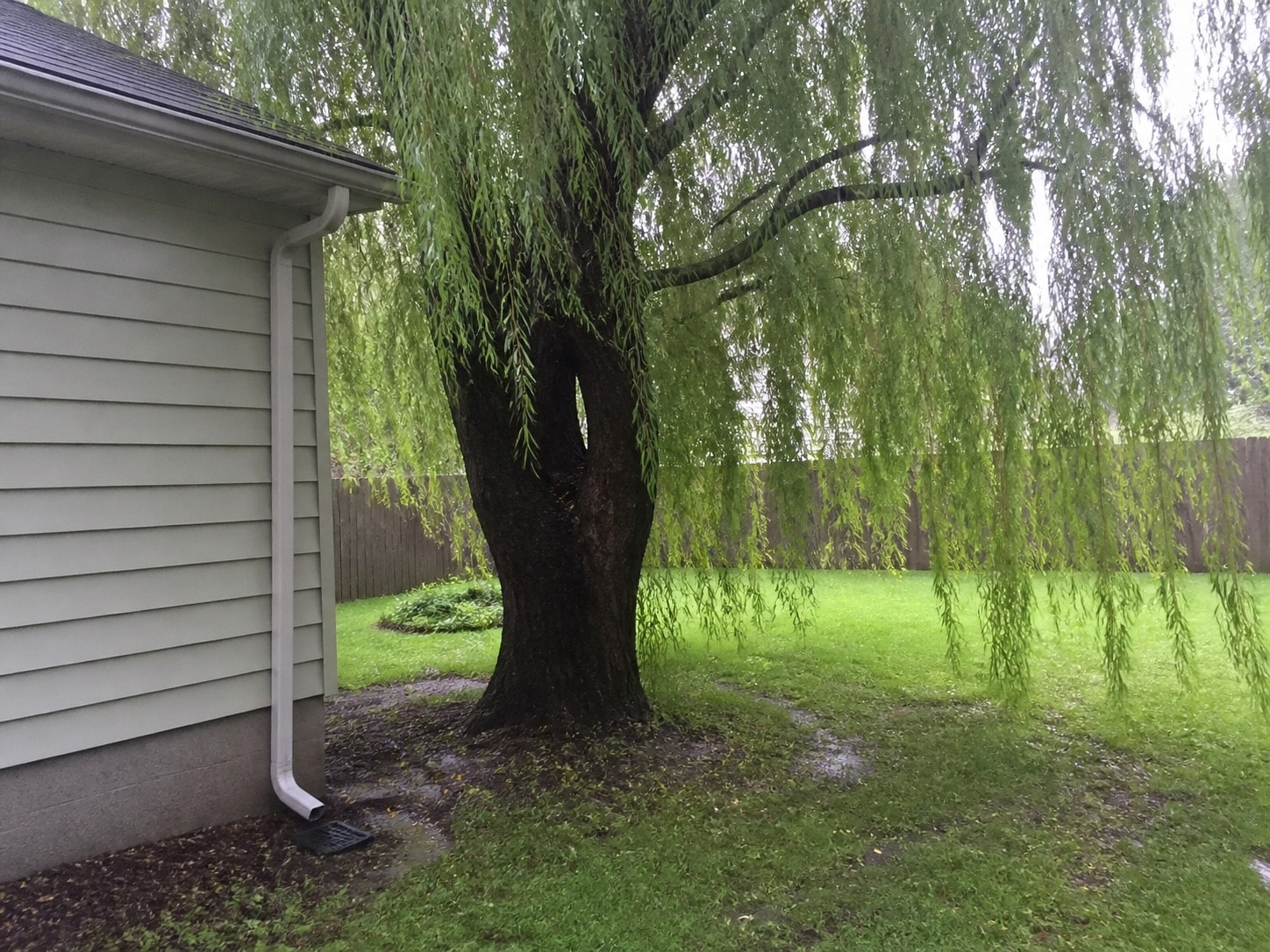
A weeping willow beside water can look straight out of a postcard. A weeping willow beside your plumbing is a different story. Willows are vigorous, moisture-loving trees with broad root systems, so they are a poor choice near old sewer lines, drainage pipes, septic systems, or spots that stay damp around the house.
They do not magically drill through sound pipes. But if a line already has a crack, failed joint, or slow leak, roots can exploit that moisture. Add the tree’s size and sweeping branches, and a willow belongs well away from the house—ideally in the open, where wet soil is not a structural concern.
3. Eastern Cottonwood
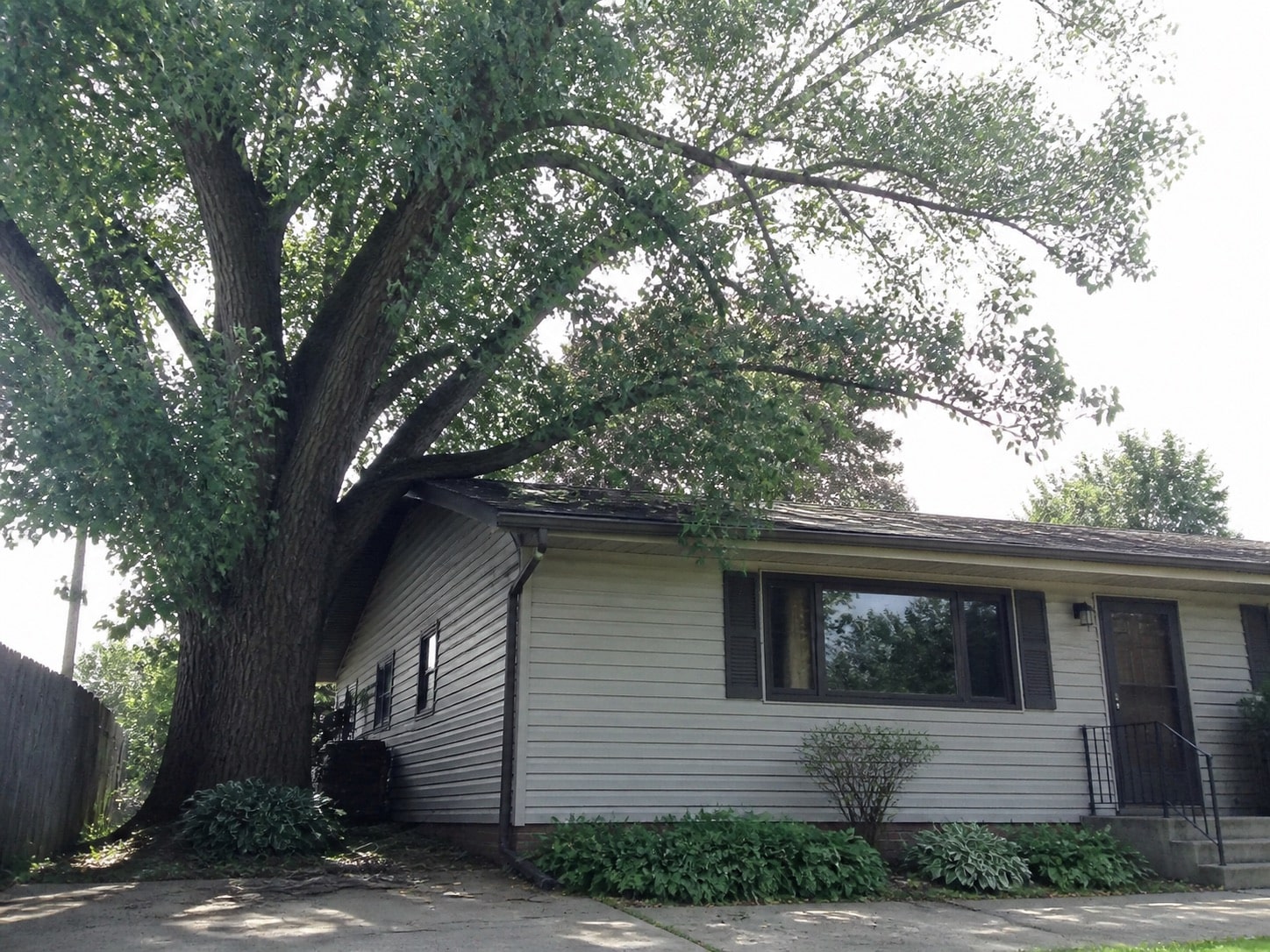
Eastern cottonwoods can rocket upward, becoming towering shade trees far faster than many people expect. That speed is useful in a large, open landscape. It is trouble when the trunk is tucked beside a roofline, driveway, or fence.
These trees can become massive, and their larger branches are not something you want hanging over shingles, cars, or a patio set. Cottonwoods also bring the seasonal clutter: falling twigs, leaves, and, on female trees, the familiar cottony seed fluff. Plant one only where its eventual height and branch spread will not loom over the house.
4. Lombardy Poplar
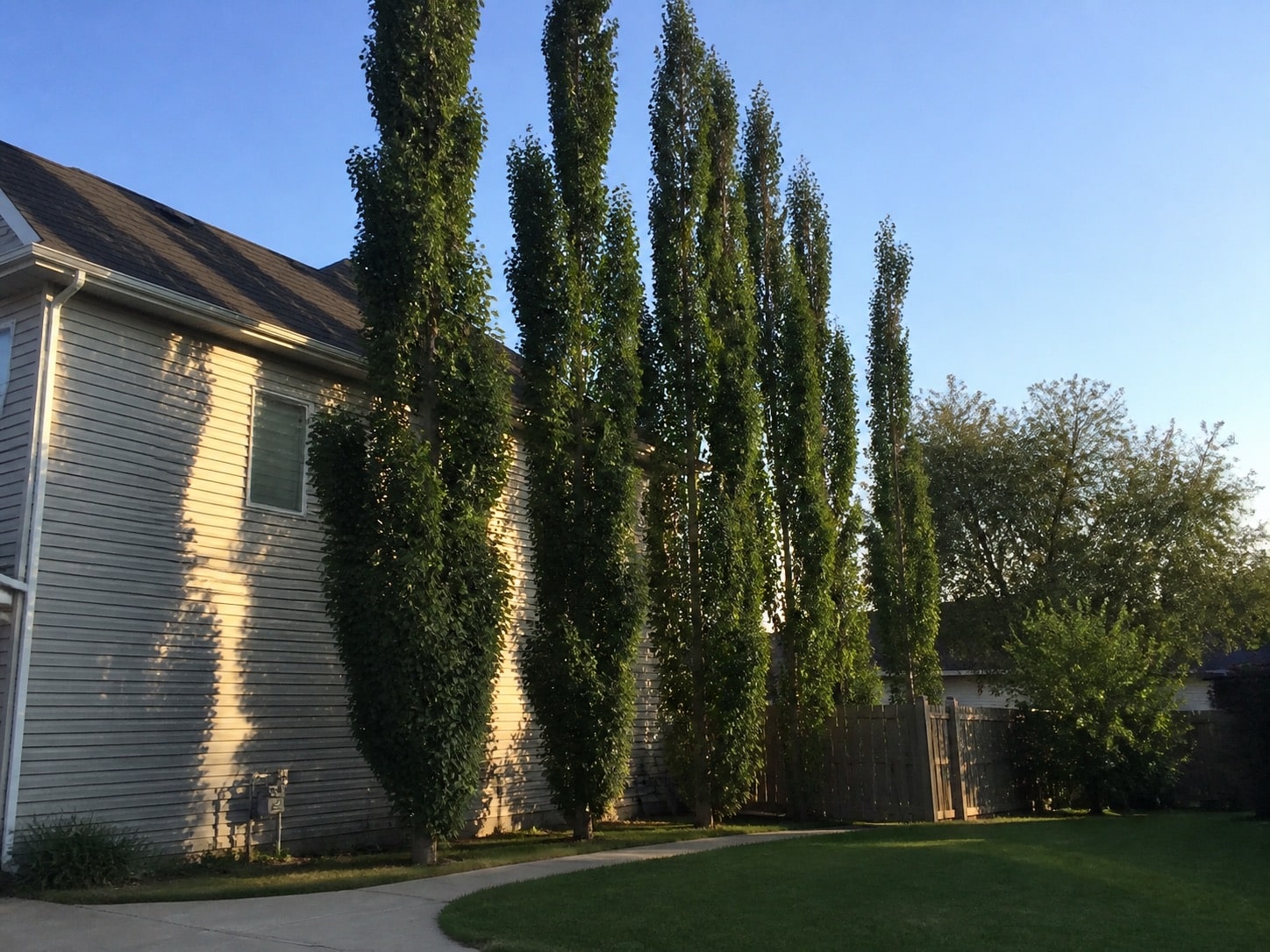
Lombardy poplars have that dramatic pencil-thin silhouette people love for a quick privacy screen. The catch is that “quick” is doing a lot of work. They grow fast, can become very tall, and are often short-lived compared with slower, sturdier landscape trees.
A row planted close to the house may look tidy for a few years. Then it can block light, crowd gutters, trap moisture against siding, and leave you with a line of aging trees that is difficult to remove safely. If privacy is the goal, consider a mixed screen of shrubs and smaller trees instead of a wall of poplars.
5. White Oak
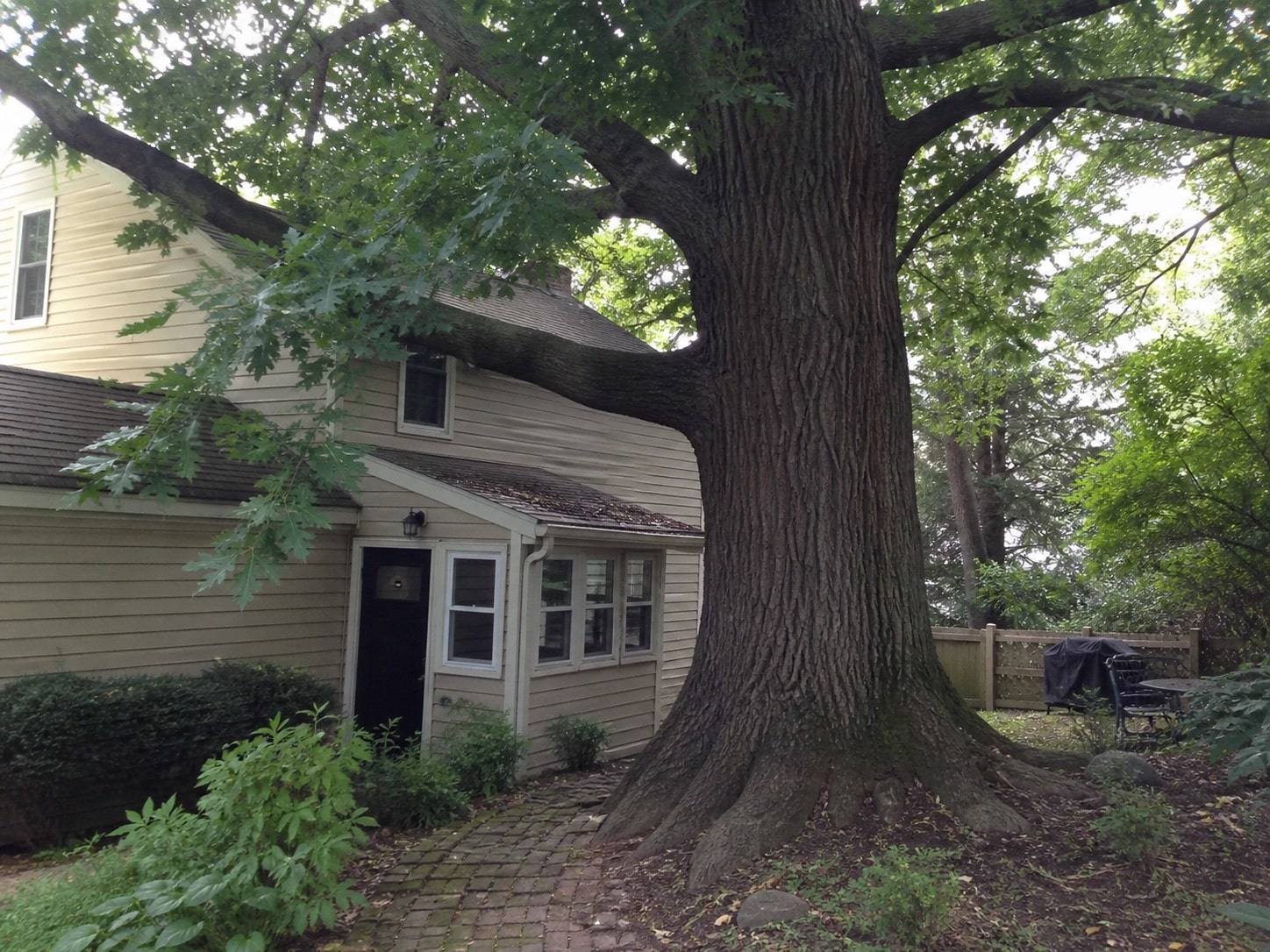
White oaks are magnificent native trees—and that is exactly why they need serious space. A mature oak can outlive the house beside it, with a broad crown, heavy limbs, and a root zone that deserves more than a slim strip of lawn between the foundation and sidewalk.
This is not an argument against planting oaks. It is an argument for planting them where they can become the landmark tree they are meant to be. Put an oak too close to a house, and future pruning decisions get complicated, expensive, and heartbreaking. Put it in the open, and it can be the best thing on the property.
6. American Elm
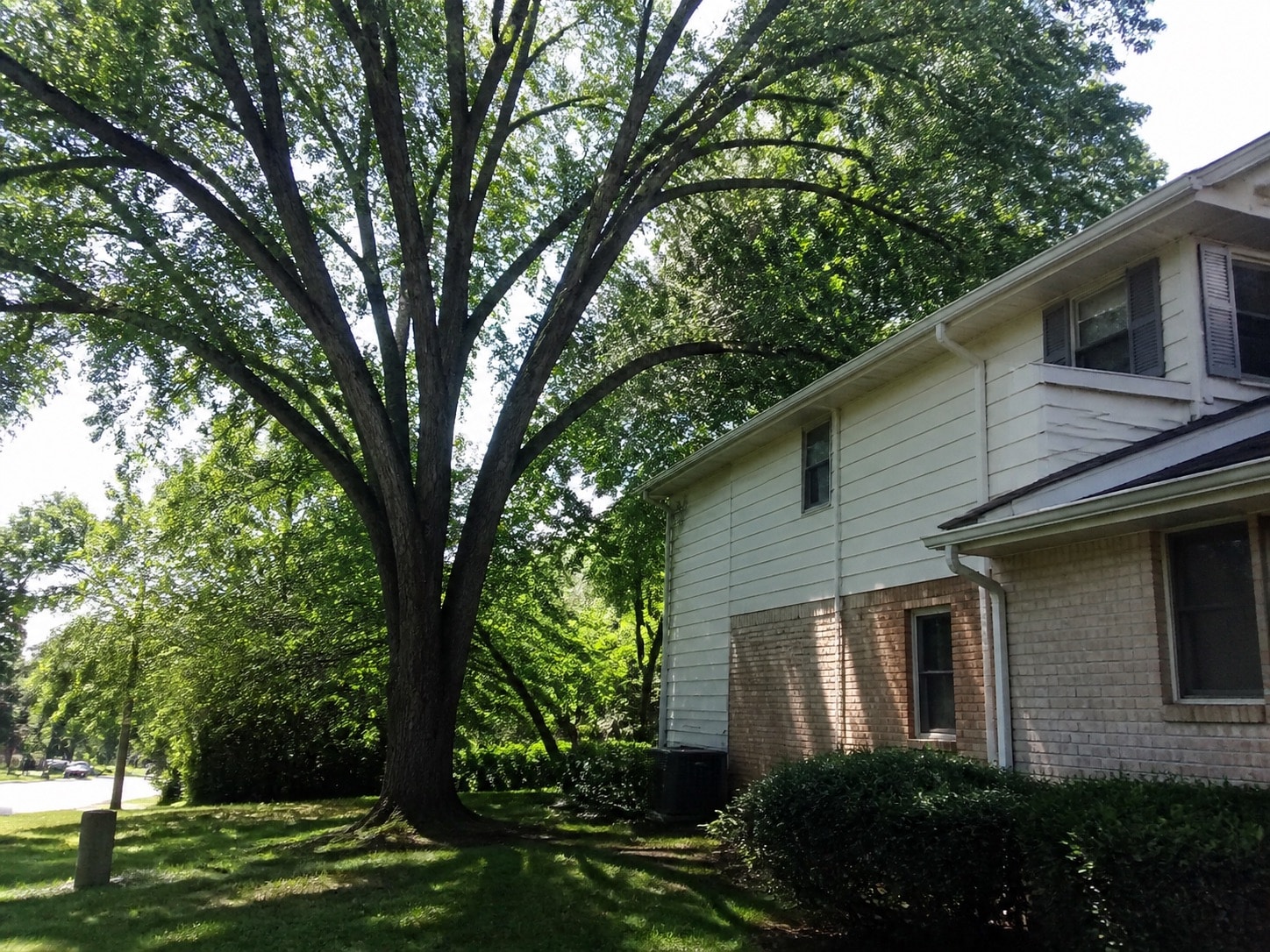
The classic American elm has a soaring, vase-shaped canopy that can spread far beyond its trunk. That beautiful arch is not designed for a tight side yard. Near a house, the limbs can overhang the roof, shade windows, fill gutters, and turn routine pruning into a recurring bill.
Modern elm cultivars can offer better disease resistance than older plantings, but disease resistance does not change their eventual scale. Before planting an elm, picture it decades from now—not the day it fits neatly beside the garage. If the mature canopy has nowhere safe to go, choose a smaller tree.
7. Leyland Cypress
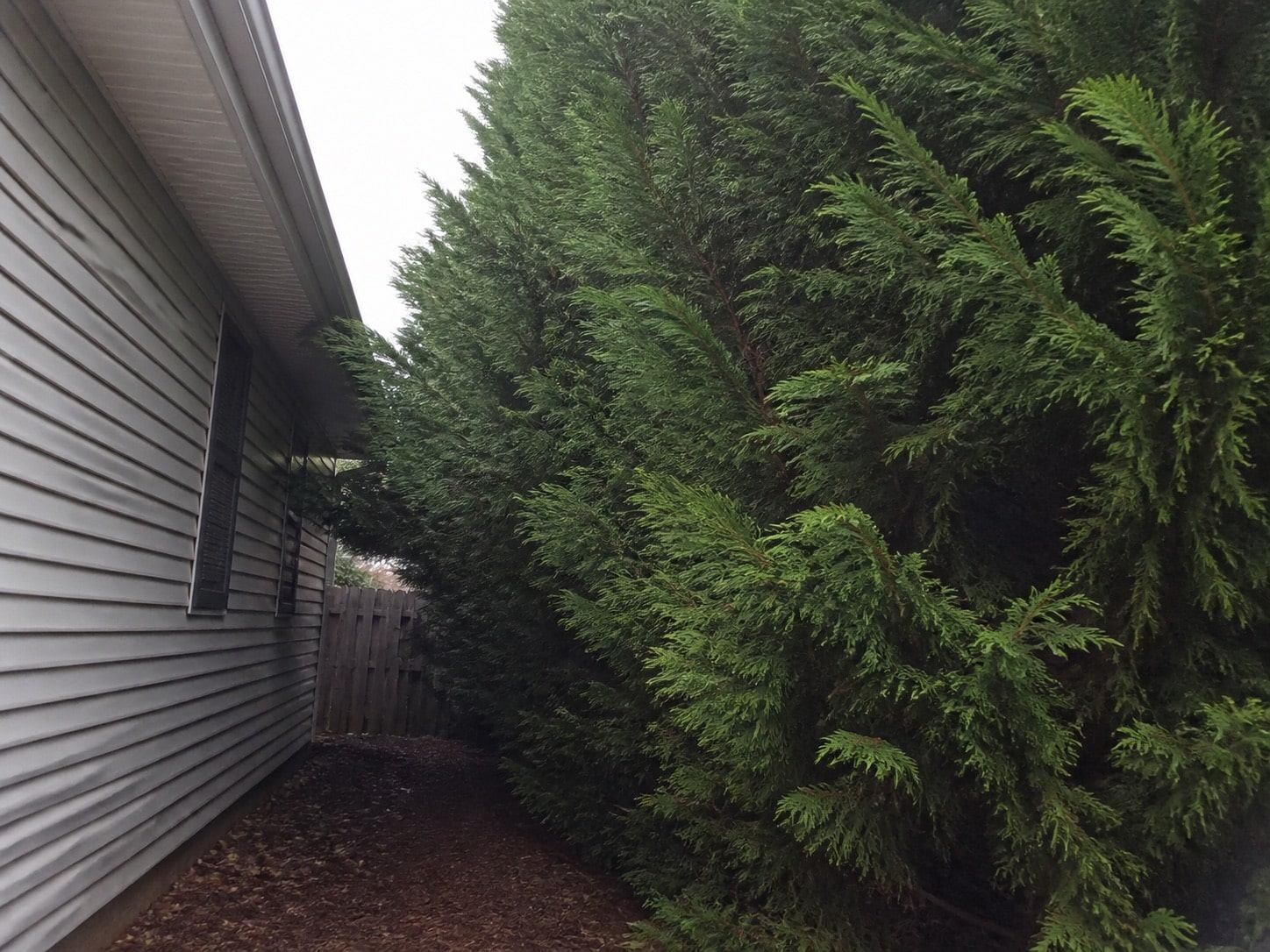
Leyland cypress is the classic “I need privacy yesterday” tree. It fills in quickly, stays green all year, and can turn a bare lot line into a screen. It can also race to 60 feet or more, depending on conditions, while becoming too dense and too tall for the narrow space it was given.
Planted near a house, a dense cypress row can block airflow, keep siding damp, and shade out everything below it. In wildfire-prone regions, dense resinous evergreen foliage close to a home deserves extra caution as well. A screening tree needs room on both sides—not just the space it occupies on planting day.
8. Callery Pear (Often Sold as Bradford Pear)
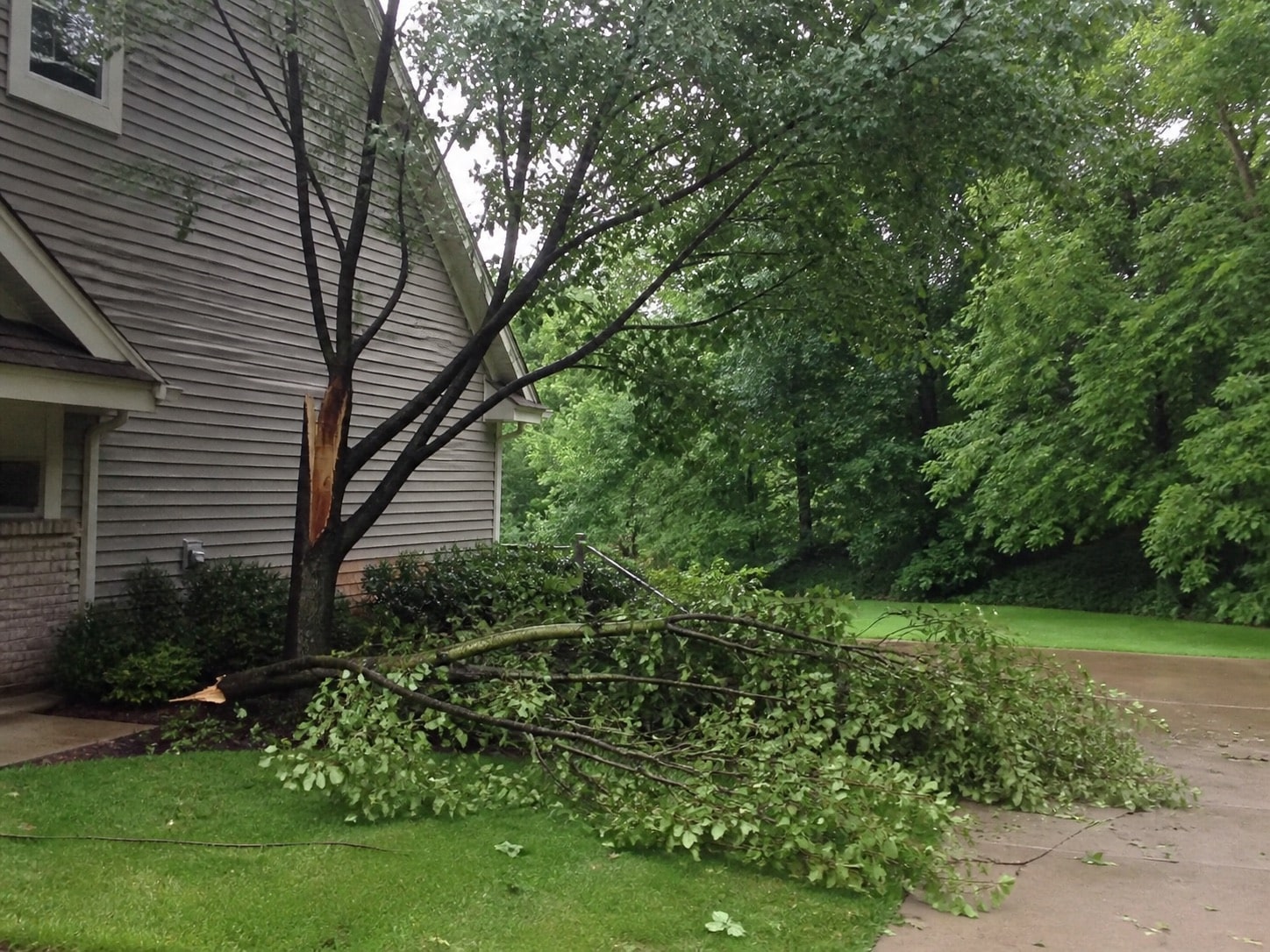
Callery pears became popular because they flower heavily, grow fast, and look neat when young. But many develop weak branch angles that make limb breakage more likely as the tree matures. That is a bad trait anywhere near a roof, driveway, or front walk.
There is another reason to skip them: Callery pear has escaped cultivation and is invasive in many parts of the United States. It is one of those plants that can create problems well beyond your yard. If you want spring flowers near the house, choose a smaller, region-appropriate tree with a stronger structure instead.
9. Black Walnut
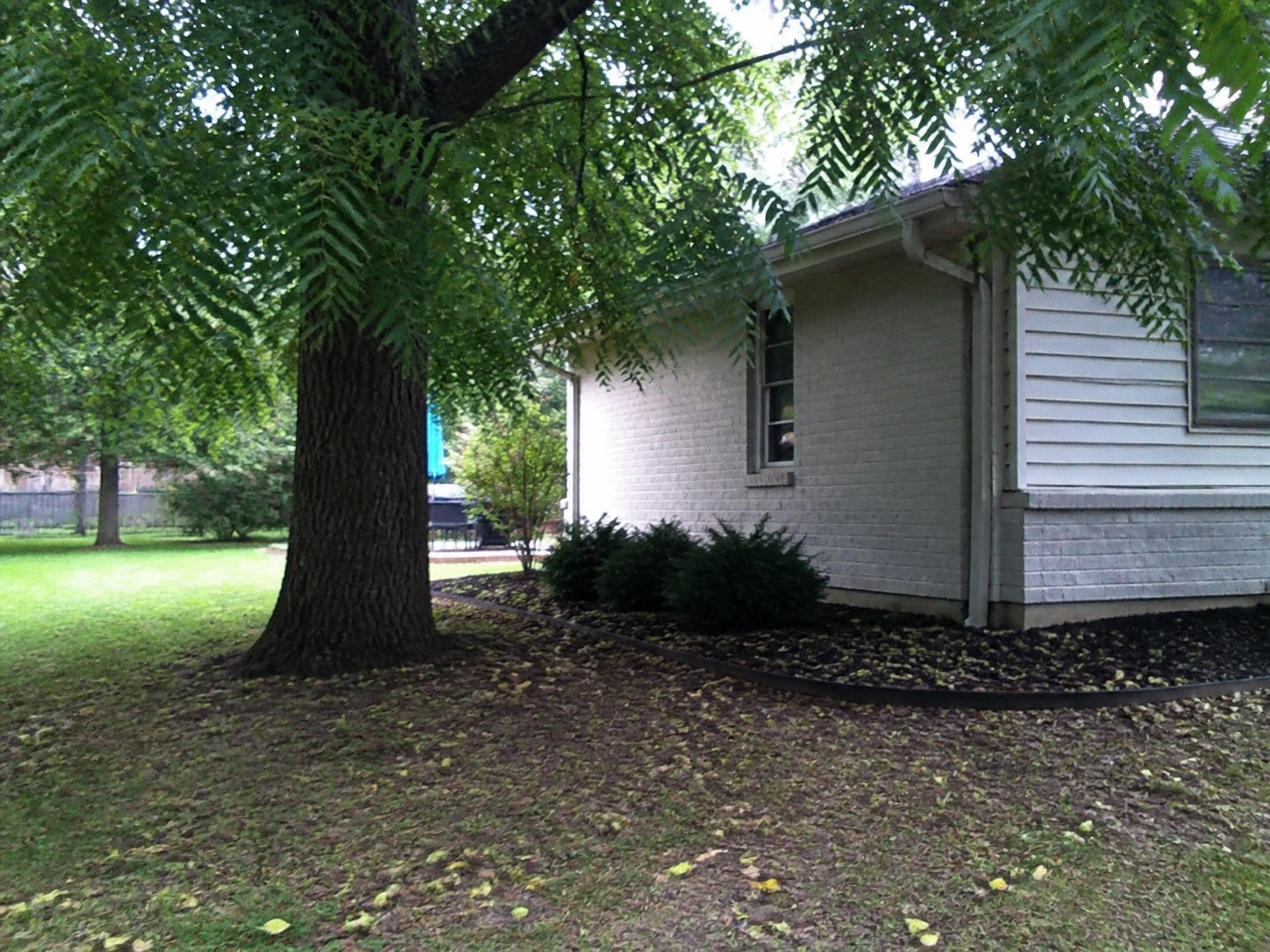
Black walnut is a valuable native tree, but it is not an easygoing foundation planting. It grows large, drops heavy fruit and debris, creates deep shade, and produces juglone—a natural compound that can make life difficult for some nearby garden plants.
The issue is not that nothing can grow near a walnut. Plenty of plants tolerate it. The issue is that a tight space beside a house gives you fewer options when roots, shade, leaf litter, and sensitive landscaping all start competing. Keep black walnut where its canopy and root zone can breathe, and build the garden around it instead of under it.
10. Eucalyptus
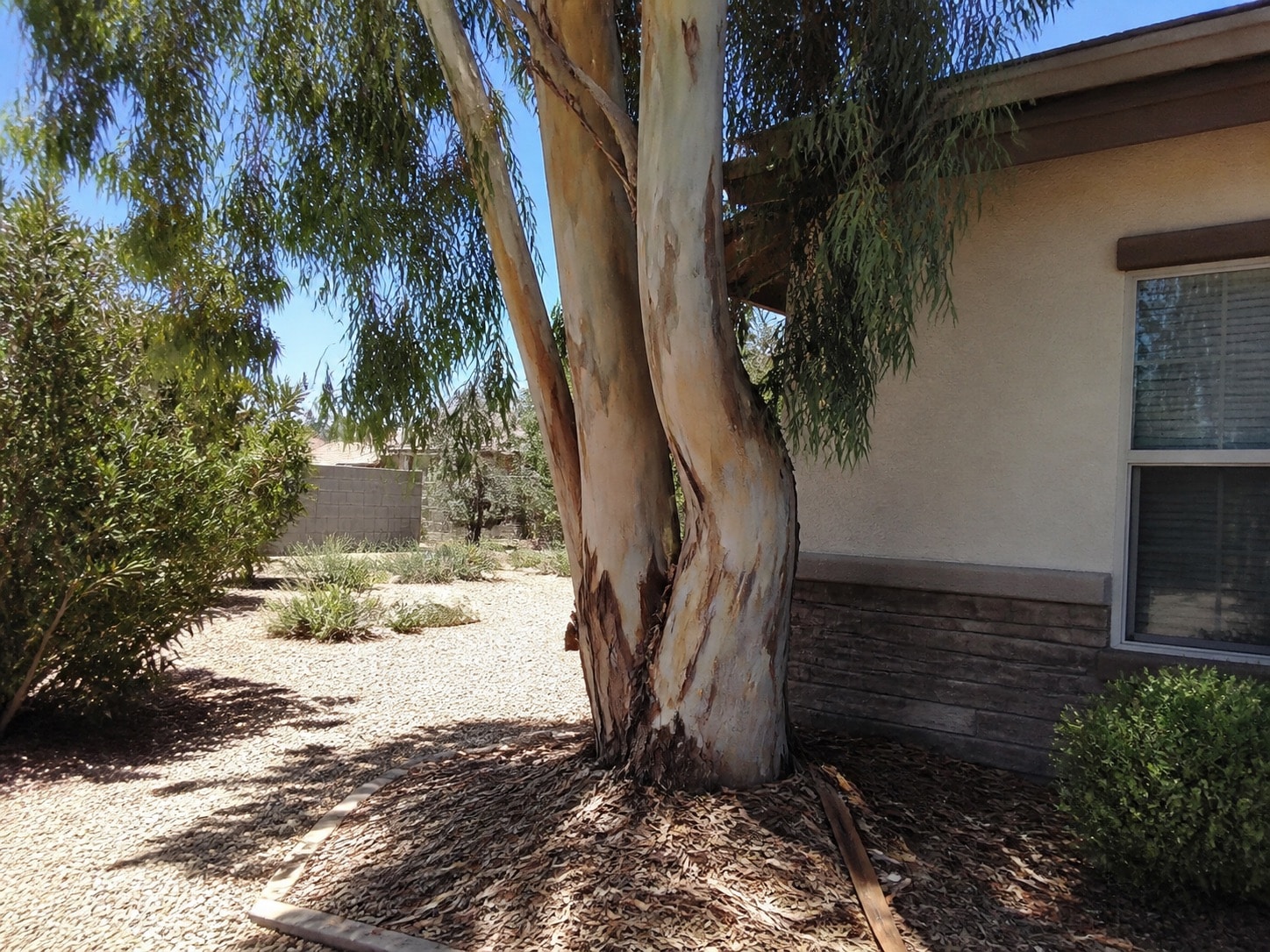
In mild climates, eucalyptus can shoot up faster than a homeowner expects and become a very large tree with shedding bark, leaf litter, and a broad crown. That combination can be messy and demanding beside a roof, pool, or narrow driveway.
Location matters even more in places with wildfire risk. Oils, bark, and dry litter can increase the fire concern around a home, so local fire-safe landscaping guidance should come before the nursery impulse. If eucalyptus fits your climate and your goals, plant it where its mature size—and its cleanup—will not become your house’s problem.
The five-minute check before you dig: look up the exact tree’s mature height and canopy width, mark your foundation, roof overhang, drive, underground utilities, and septic or sewer routes, then imagine the tree at full size. If the answer requires constant pruning to keep it off the house, it is not the right tree for that spot.
A healthy tree is an asset. A healthy tree in the wrong place is a future quote from an arborist. Plant for the version of the tree you will have years from now, and your house—and your weekends—will thank you.