A productive zucchini plant can turn a kitchen counter into a vegetable parking lot. The easiest way to reclaim that space is to freeze grated zucchini in the exact amounts your favorite recipes need.
There is one important step before those portions head into the freezer: a brief steam blanch. Do it once, label everything clearly, and your next batch of zucchini bread starts with a ready-to-use portion instead of another round of grating.
1. Choose Good Zucchini and Get the Grating Done
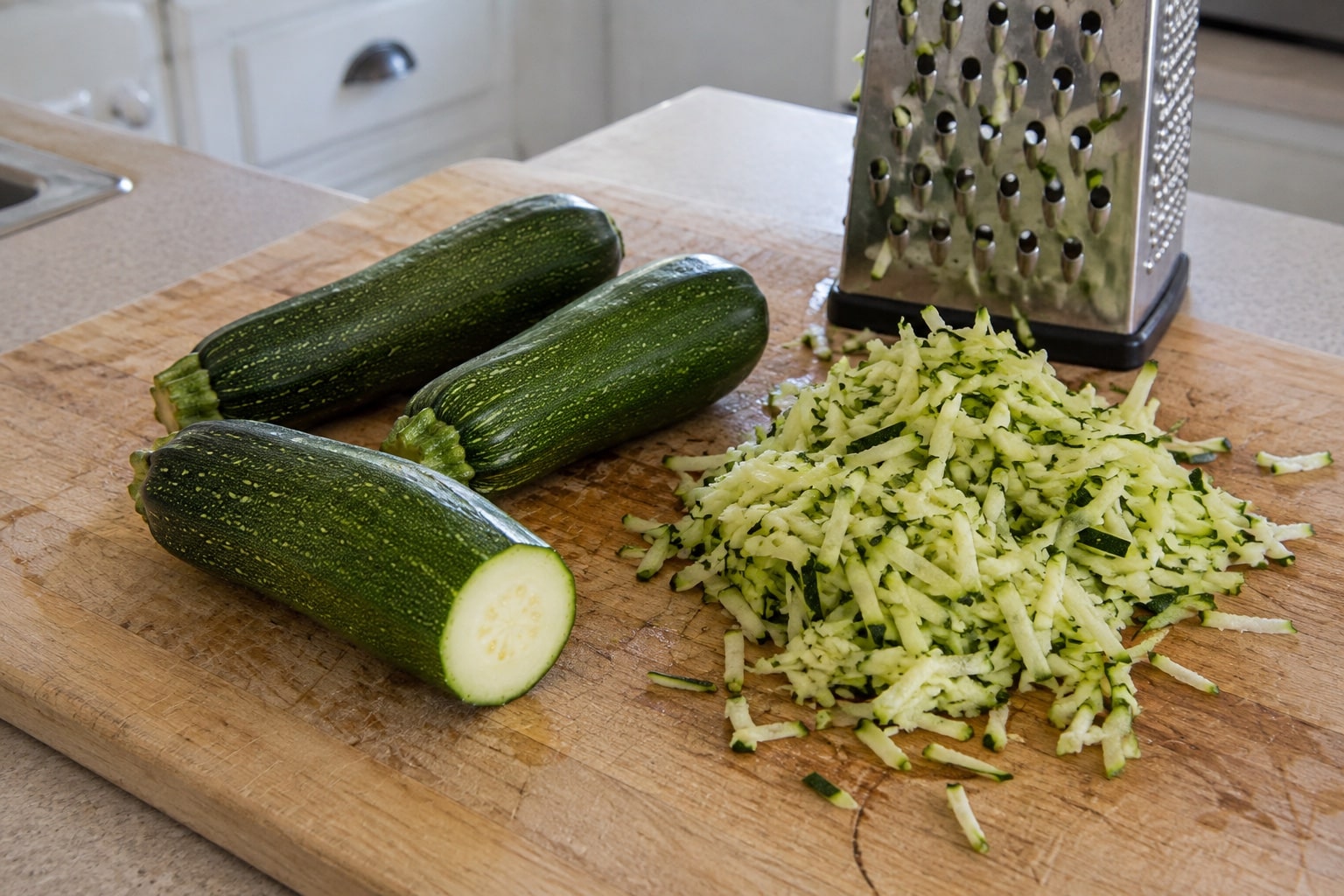
Start with firm, young zucchini with tender skin. Small, glossy squash are a better bet than neglected giants with tough seeds and stringy flesh. Freezing preserves what you put into it; it does not give an overmature zucchini a fresh start.
Utah State University Extension recommends choosing squash without decay or blemishes and preserving it soon after harvesting or buying it. A freezer project is a good use for surplus produce, not a rescue plan for moldy vegetables.
Before you pick up the grater, look at your favorite recipe. Does one loaf need a cup of zucchini, or does your usual batch need two? Let the recipe decide the portion size. A collection of useful little packages beats one enormous frozen block.
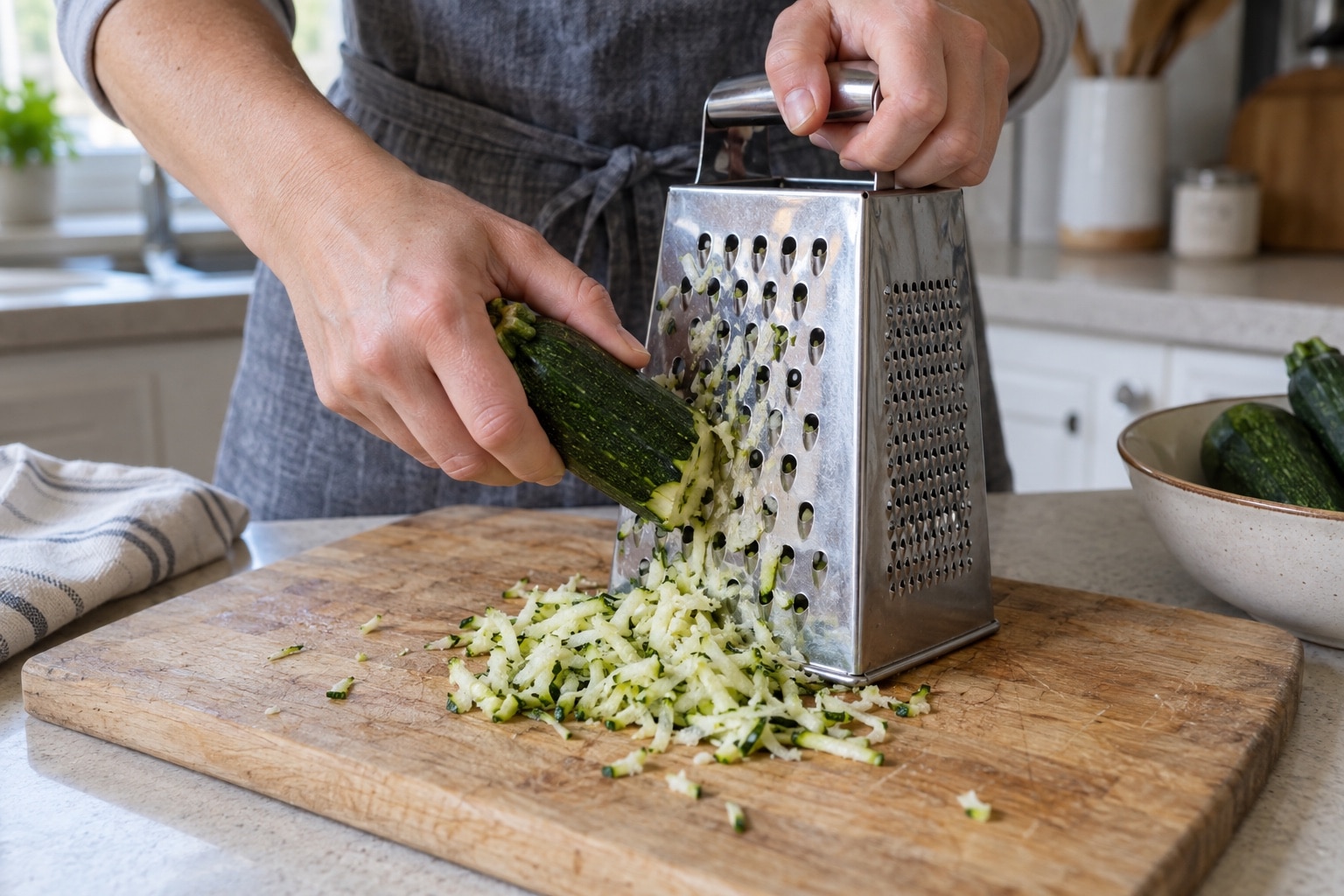
Wash your hands, clean the work surface, and rinse the zucchini under cool running water. Trim away the stem and blossom ends. For young, tender zucchini, you can leave the skin on; those green flecks are perfectly at home in zucchini bread.
Use the large holes of a box grater, or the shredding attachment on a food processor. Aim for shreds rather than purée, and keep fingertips away from the cutting surface. Grate only what you can promptly process in manageable batches.
Set out a measuring cup, a timer, a covered steamer, and small rigid containers labeled for freezer use. Have cold water ready for cooling the filled containers. Getting everything ready first keeps this from turning into a search for matching lids with steaming zucchini waiting nearby.
2. Steam-Blanch, Measure, and Cool Your Portions

For grated zucchini intended for baking, steam-blanch small batches for 1–2 minutes, until translucent. That is the specific method recommended by the National Center for Home Food Preservation. Do not substitute its three-minute boiling-water treatment for squash slices; these are different preparations.
Blanching briefly heats the shreds to slow or stop enzyme activity that damages quality during storage. Simply freezing raw grated zucchini does not accomplish the same thing. Penn State Extension warns that unblanched shreds can continue changing and become tough.
Bring water to a boil beneath a steamer basket, keeping the zucchini above the water. Spread the shreds in a thin layer so steam can reach them evenly. Cover the pot, start timing when the lid goes on, and maintain strong steam. Work in small batches rather than packing the basket deep.
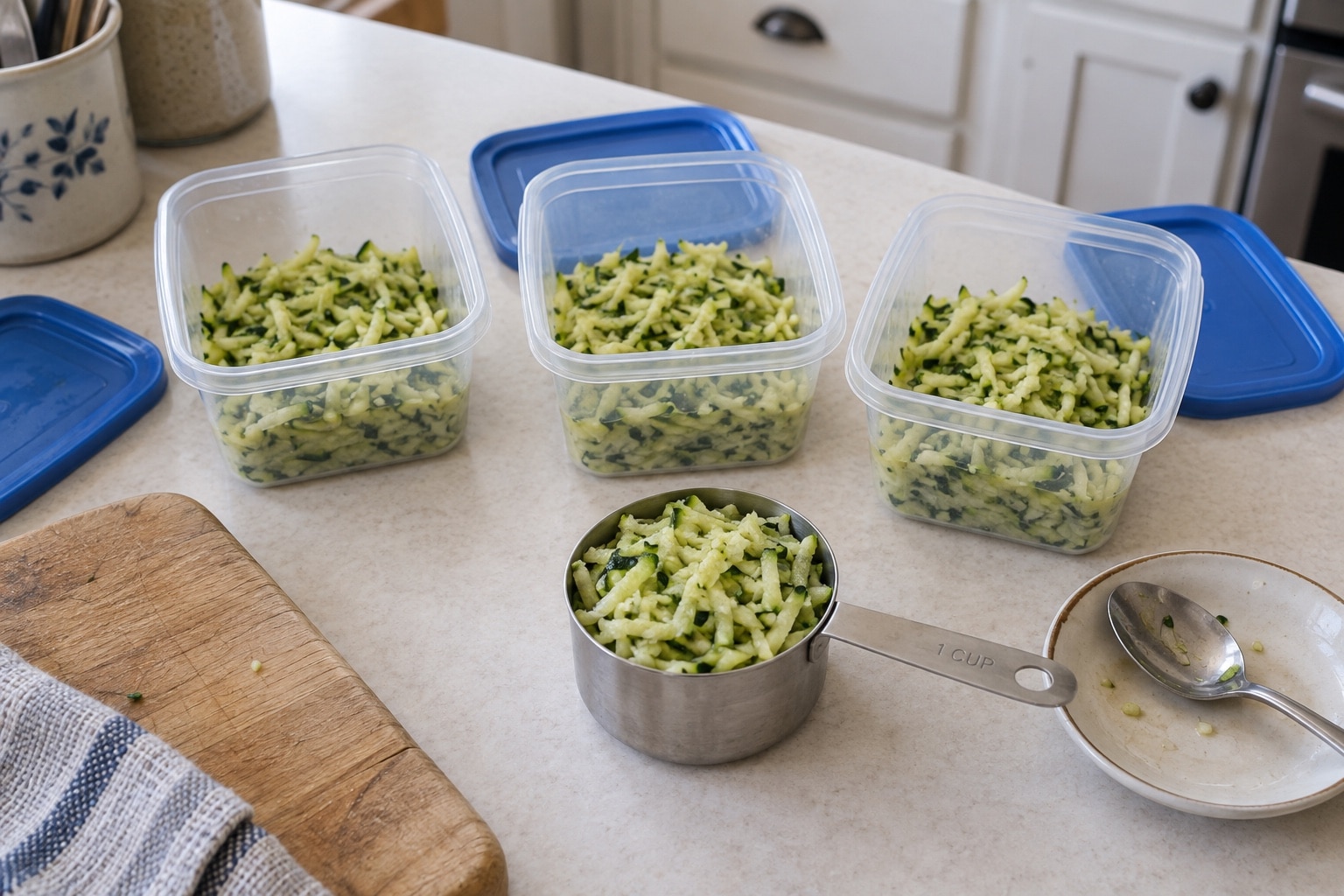
Measure the blanched zucchini into recipe-size freezer containers, leaving ½ inch of headspace. For example, use one-cup portions for flexibility, or a two-cup portion if that matches your regular baking recipe. The measuring cup—not the container’s advertised capacity—determines how much zucchini goes inside.
Cool promptly by placing the filled containers in cold water, as the National Center directs. Keep the cooling water out of the food. Once the contents are cool, seal the containers and freeze.
Those tidy mounds on a parchment-lined tray are a useful reminder to portion before freezing. But you do not need a tray to make recipe-ready portions: the National Center’s grated-zucchini method packages measured amounts directly in containers. This also avoids handling the same shreds several extra times.
There is no need to salt the zucchini for this freezing method. Save any squeezing or other recipe-specific preparation for baking day; discarding thawed excess liquid is not the same as wringing every last drop from the shreds.
3. Store the Portions for Your Next Baking Day
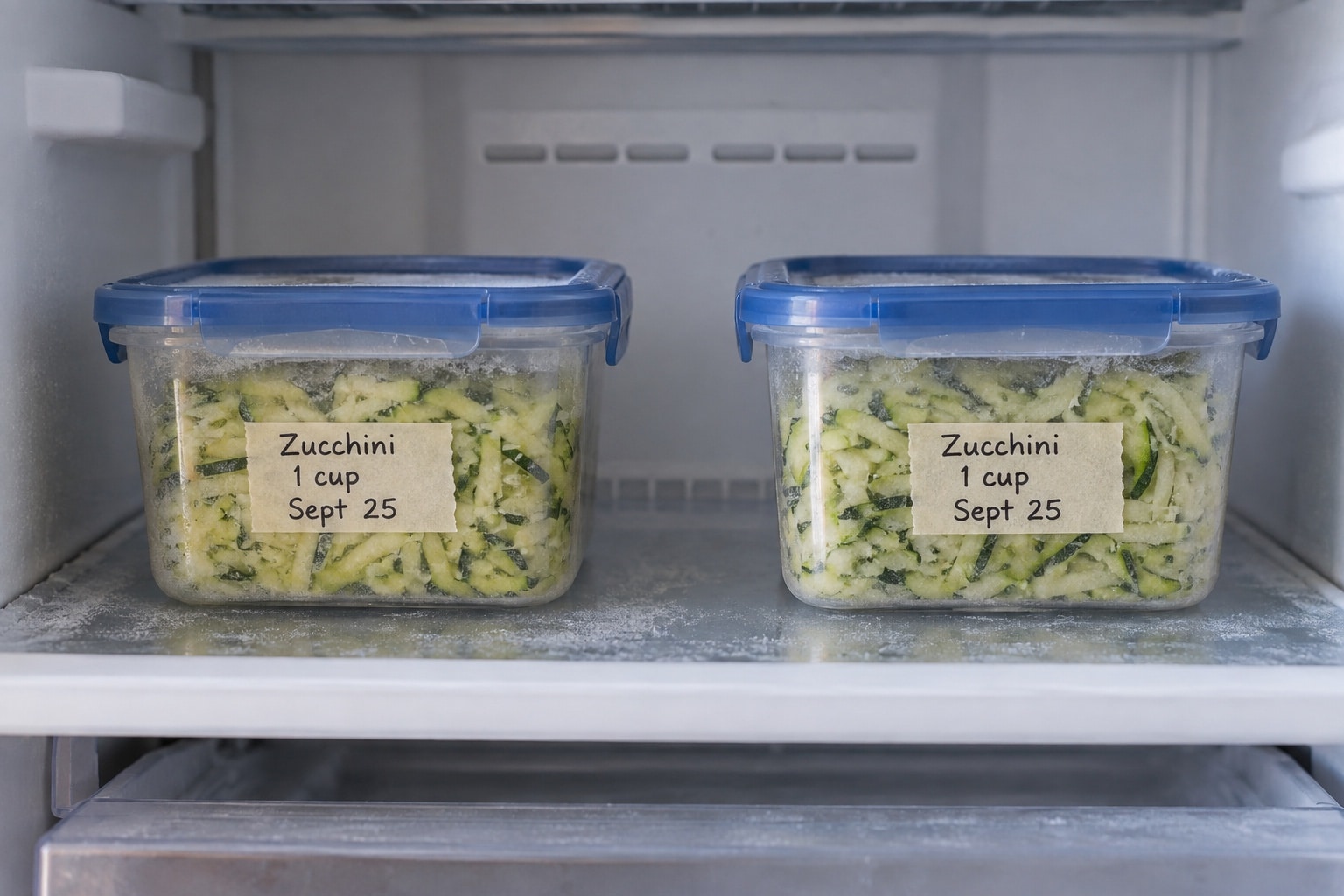
Label each container with the food, preparation, amount, and date. Something like “Grated zucchini — steam-blanched — 1 cup before freezing — Sept. 25” is much more useful than “zucchini.” Add the intended recipe name if that will help you remember why you chose that amount.
Freeze the containers with space around them so cold air can circulate, then stack them once solid. Use tight-fitting lids and freezer-rated packaging. A loose cover allows moisture loss and freezer burn; an unmarked tub is how a good harvest becomes a mystery ingredient.
Keep the freezer at 0°F or below. Utah State University gives approximately 10 months as a high-quality storage period for properly packaged frozen zucchini. Treat that as a quality target, not a promise that any food becomes safe just because it has been frozen.
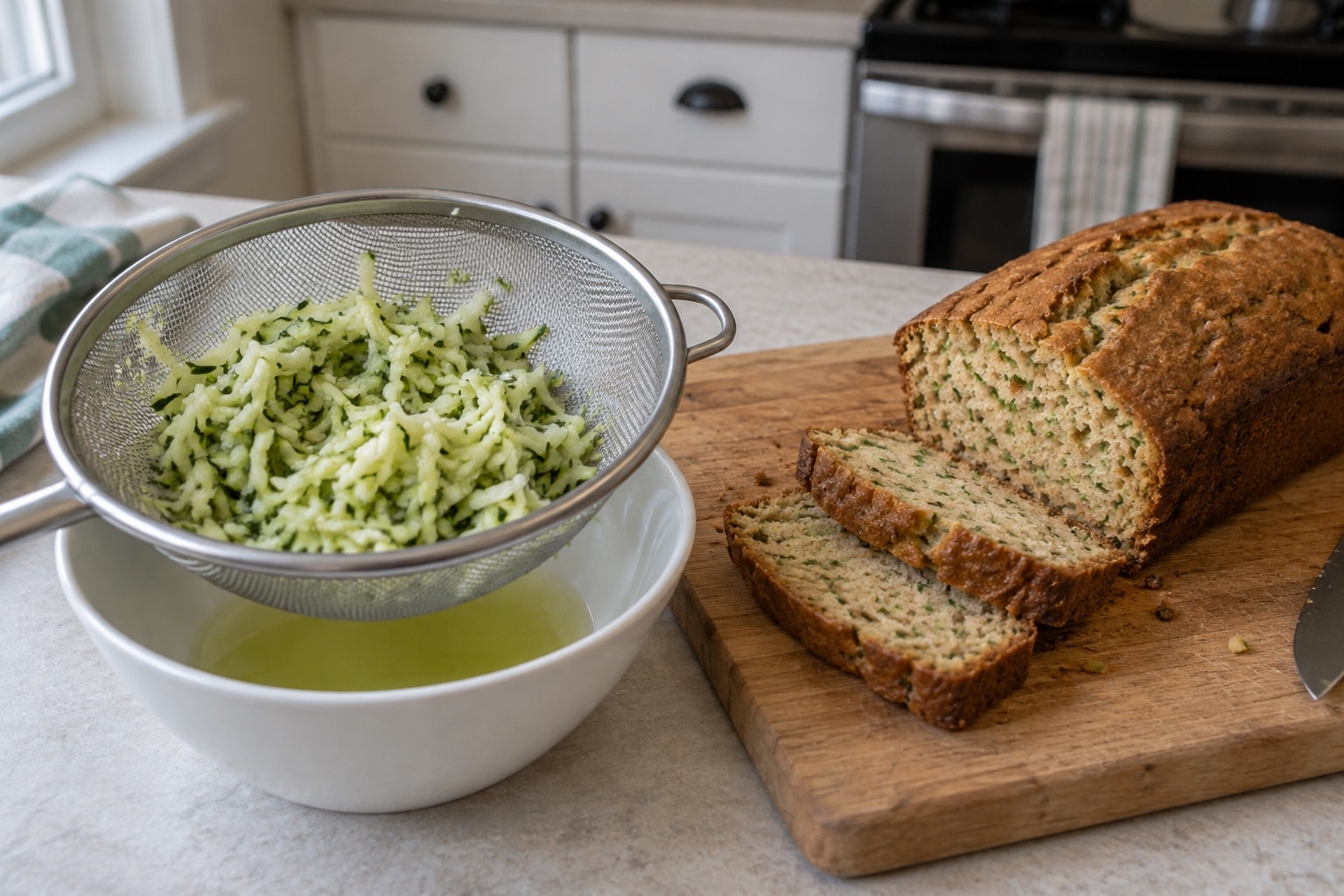
Thaw the portion in the refrigerator before baking. If it releases excess liquid, drain and discard that liquid before using the zucchini. Follow your recipe’s instructions for any additional squeezing; different batters are built around different amounts of moisture.
Expect softer shreds after thawing. Zucchini contains plenty of water, and ice crystals damage its cell structure. That is why thawed zucchini is a better fit for bread, muffins, and cakes than for a crisp raw salad. Blanching helps preserve quality, but it cannot prevent every texture change.
Remember that freezing does not reliably kill harmful bacteria. Clean preparation, cold storage, refrigerator thawing, and proper cooking still matter. A package that thawed during a power failure needs a separate food-safety assessment; the date written on its lid cannot answer that question.
Prefer to do all the baking now? Zucchini bread and chocolate zucchini cake can also be frozen after baking. Penn State recommends cooling baked goods completely before wrapping them tightly for the freezer.
Before putting away the marker, write one more thing on the label: the recipe you actually plan to make. “Sunday muffins” is a much better destination for a summer harvest than “somewhere behind the ice cream.”
References
- National Center for Home Food Preservation: Freezing Summer Squash — the specific measured-portion method for grated zucchini.
- National Center for Home Food Preservation: Blanching Vegetables — steam-blanching equipment, timing, and enzyme control.
- Utah State University Extension: How to Preserve Zucchini — produce selection, preparation, and storage quality.
- Penn State Extension: Zucchini — changes after freezing, excess moisture, and freezing baked zucchini products.
- Penn State Extension: Let’s Preserve—Freezing Vegetables — washing, packaging, labeling, and quick freezing.
- Penn State Extension: Let’s Preserve—Squash and Pumpkins — grated-zucchini portions and refrigerator thawing.
- University of Minnesota Extension: Preserving Food at Home—Freezing — freezer temperature, texture changes, packaging, and microbial safety.