Your peace lily looks healthy, but the white blooms have disappeared. Before you reach for stronger fertilizer, check the window.
Bright, indirect light is often the missing piece; extra water and fertilizer cannot replace it. The rest comes down to steady moisture, a pot that drains, and modest feeding while the plant grows.
Get those basics right, and you give your peace lily a better chance to flower—without turning its care into a guessing game.
1. Give It Blooming Light, Not Just Survival Light
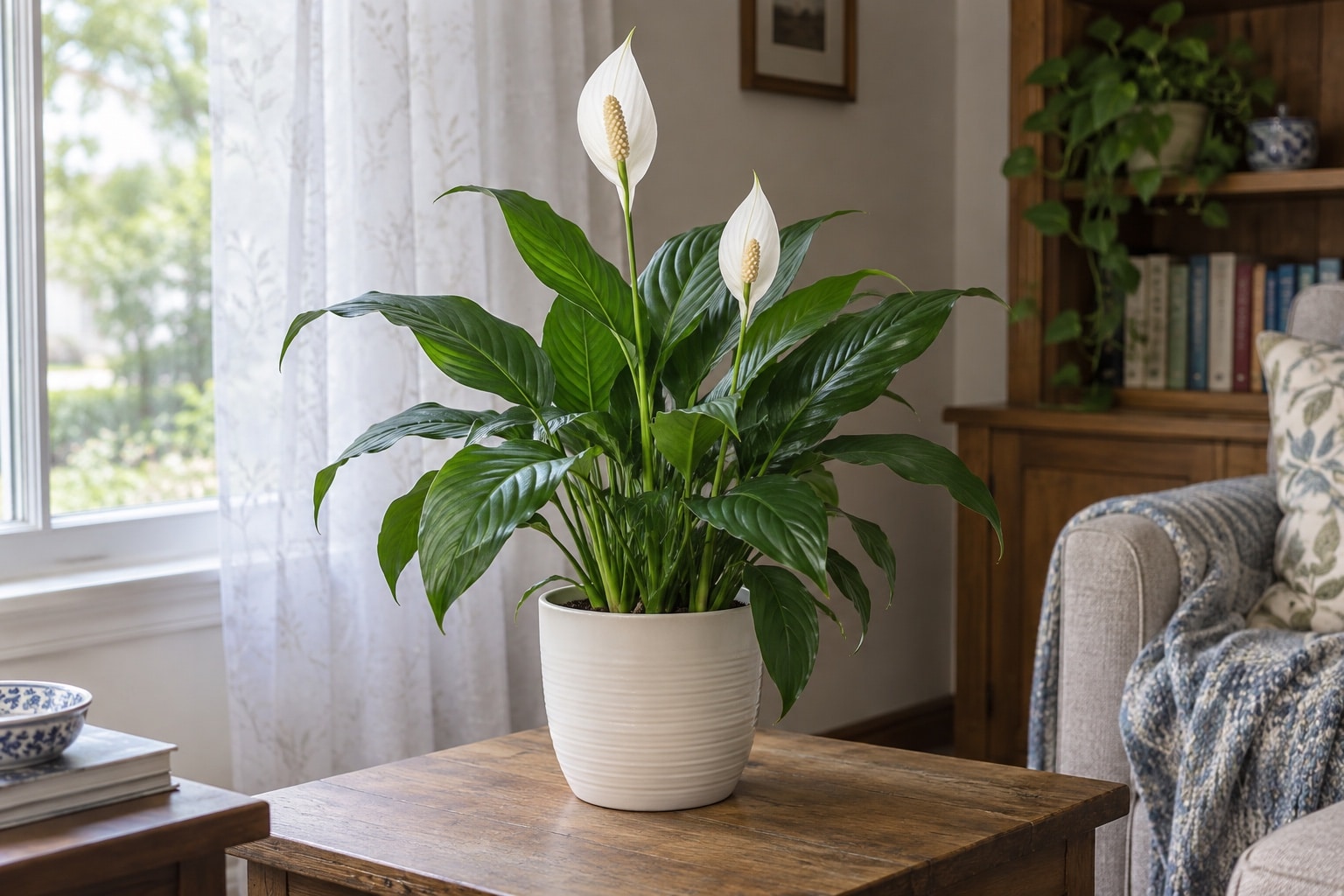
A peace lily can stay green in a dim room for a surprisingly long time. That does not mean the spot supports reliable flowering. If you have plenty of leaves but no blooms, light is the first condition to review.
Start near a bright window with light filtered through a sheer curtain. An unobstructed east-facing window can be a useful option, but trees, neighboring buildings, screens, and the season all change what reaches the leaves. Avoid a hot afternoon sunbeam.
Check the plant’s actual position, not just the room. A shelf several feet back—or tucked beside the window rather than in front of it—may be much darker than it looks to your eyes. Move the pot into brighter, filtered light and keep the placement consistent.
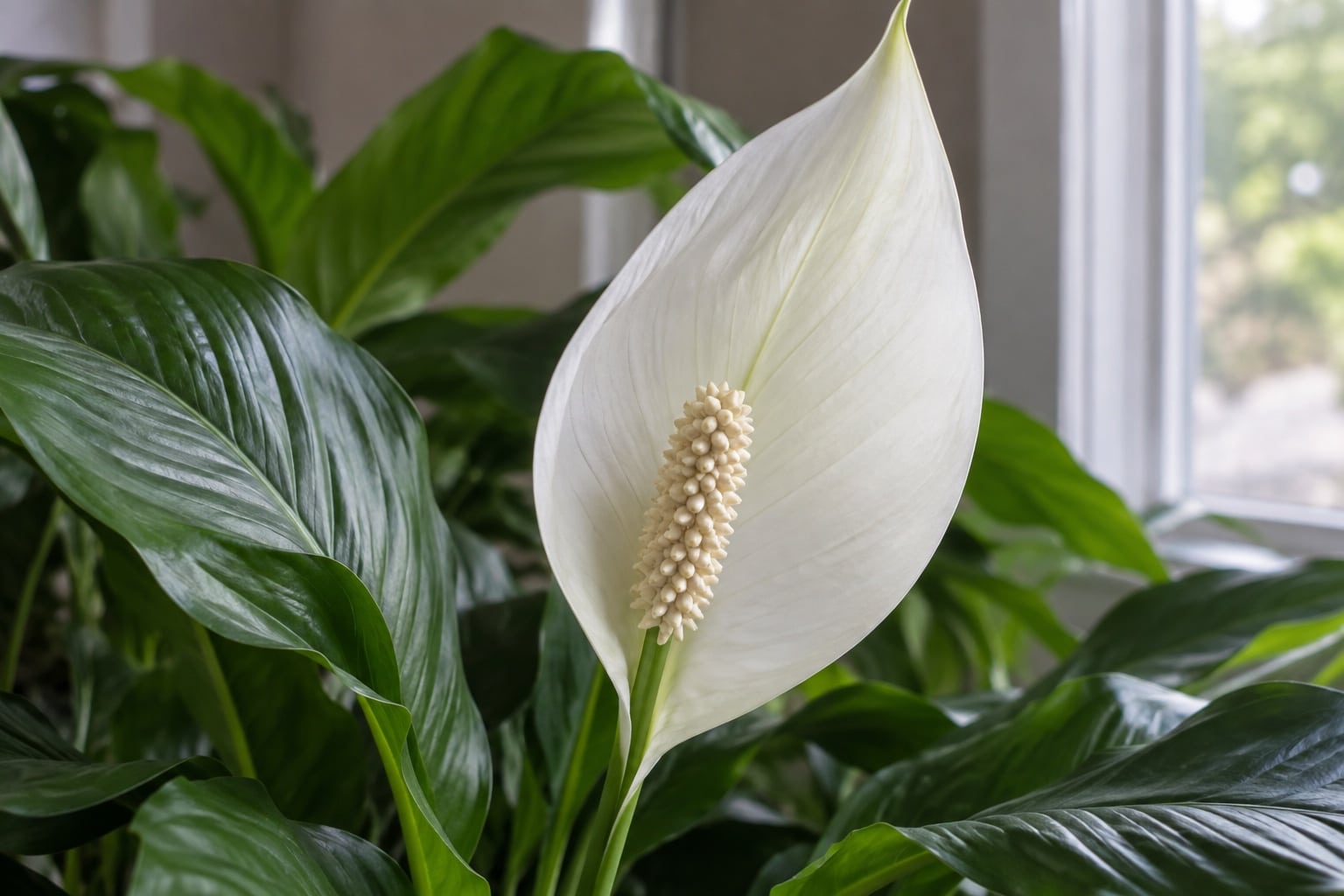
Here is the lovely botanical detail: the white “petal” is a modified leaf called a spathe. The tiny true flowers sit on the cream-colored central spike, or spadix. An older spathe naturally turning green is not the same problem as a plant failing to produce new ones.
There is also a reason that nursery plant arrived looking like a bouquet. Commercial growers can use gibberellic acid to schedule flowering, as University of Florida IFAS explains. A spectacular retail display does not establish a year-round blooming schedule for your living room.
Expect an opportunity to bloom, not an overnight transformation. Flowering varies with the cultivar, maturity, season, and growing conditions. Many plants flower most readily in spring and summer; some produce blooms intermittently. A healthy plant making new leaves can still be between flowering cycles.
2. Water the Root Ball, Then Let the Pot Drain
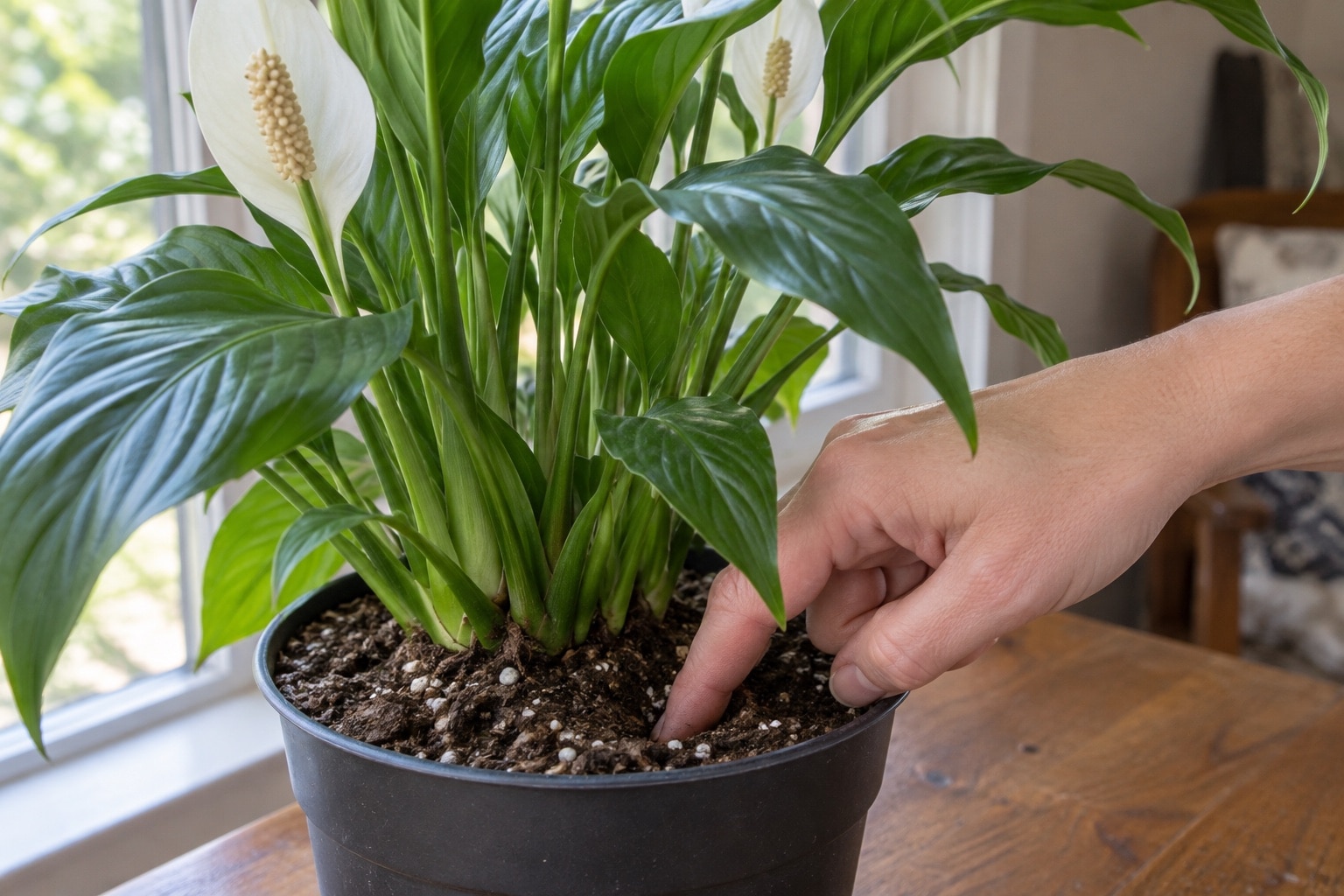
Forget “every Sunday.” Check the potting mix instead. Water when the top inch feels somewhat dry, while the deeper mix still retains some moisture. Do not wait for the entire root ball to become bone-dry. Maryland Extension gives this inch-deep check specifically for peace lilies.
Push a finger gently into the mix near the pot’s edge. If it still feels moist there, wait and check again. Learn the pot’s weight, too: a recently watered plant feels noticeably heavier than one ready for another drink.
A warm, bright room may shorten the interval between waterings; cooler conditions and slower growth may lengthen it. Use a calendar to remind yourself to check, not to tell you to pour.
Drooping is a clue, not a diagnosis. A dry peace lily can wilt dramatically, but an overwatered plant can wilt too. Feel the mix before adding water. Pouring more into an already wet pot can make the underlying problem worse.
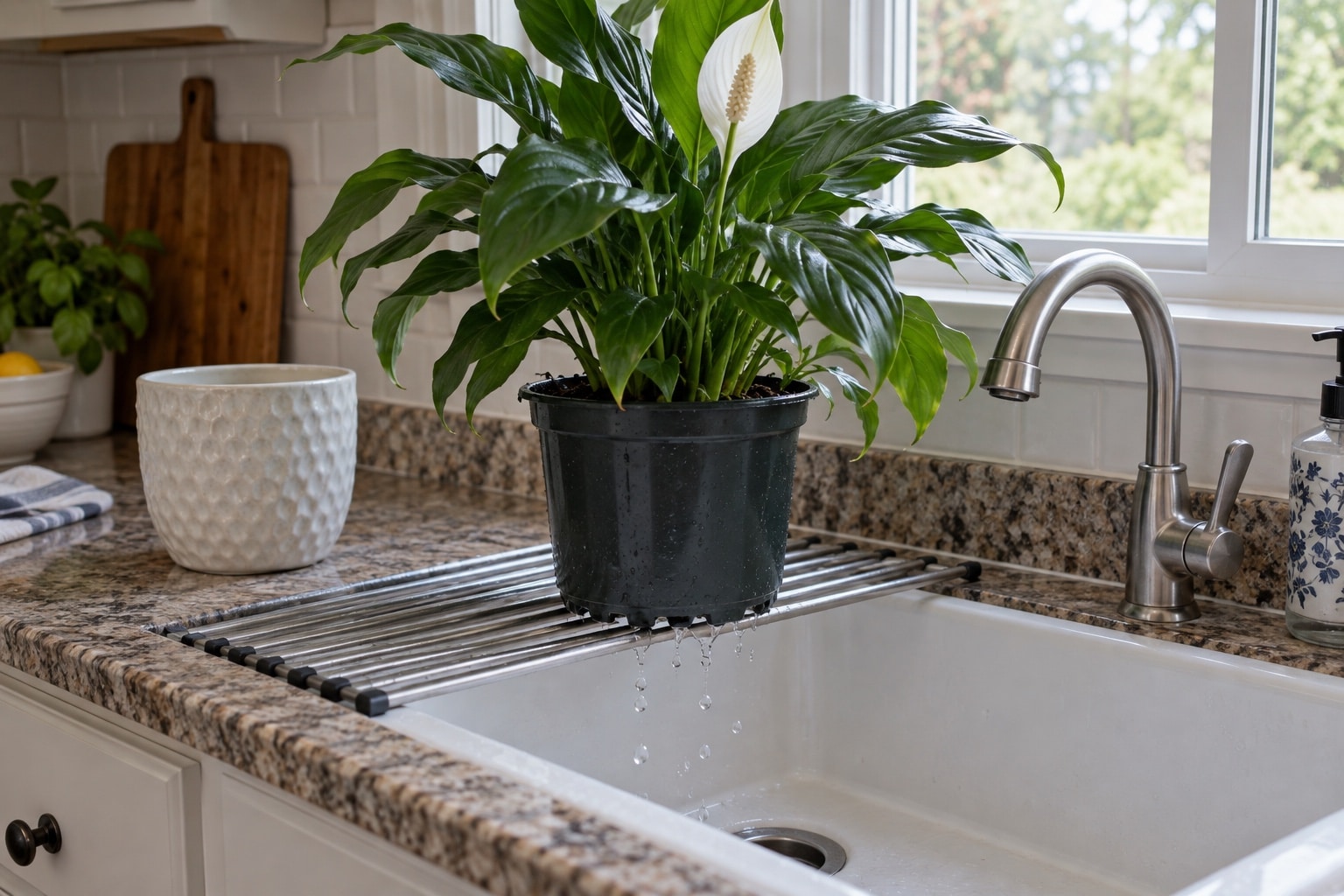
When watering is needed, take the nursery pot out of its decorative outer container. Apply room-temperature water evenly over the mix until excess flows from the drainage holes. Let it finish draining before putting it back.
Empty the saucer or outer pot; do not leave the roots sitting in the runoff. A pretty container without a hole works as an outer cover, not as permission to trap water around the nursery pot.
If the mix remains persistently soggy, investigate the drainage and potting mix before thinking about flowers. Yellowing or wilting alongside wet soil calls for a closer look at the roots and watering routine—not another dose of fertilizer.
3. Feed Lightly and Give Healthy Growth Time
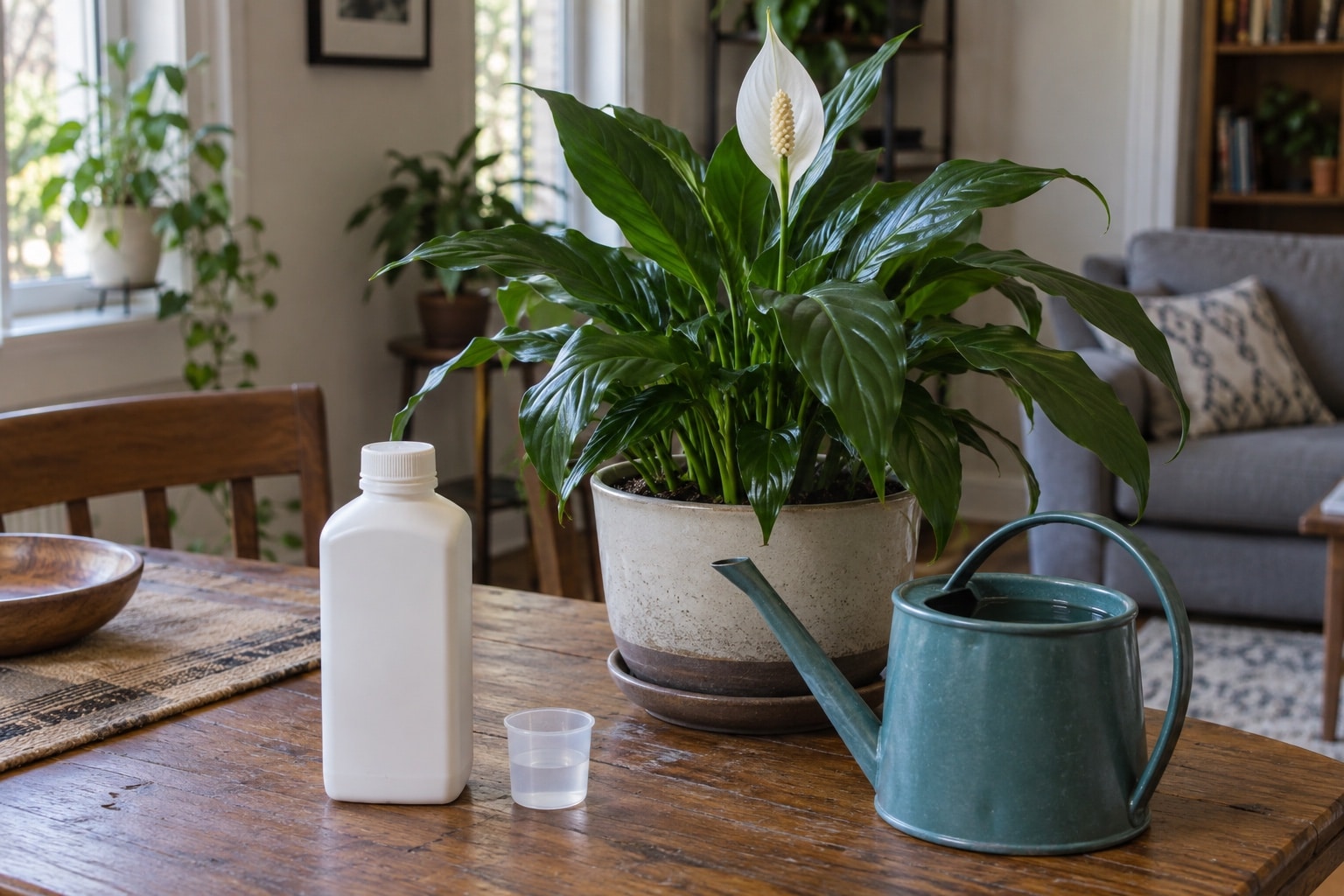
Peace lilies are light feeders. More fertilizer is not a shortcut to more white spathes. Excess fertilizer salts can damage roots and leave browned leaf tips, making a struggling plant look even worse.
For a conservative routine, Clemson Extension recommends a balanced liquid houseplant fertilizer at one-quarter strength every six to eight weeks during spring and summer. Choose a product intended for houseplants and check its mixing directions; ready-to-use products are not concentrates.
That quarter-strength guidance means one-quarter of the concentrate normally mixed into the same volume of water. Measure it—do not eyeball an extra splash. If the potting mix already contains fertilizer, account for that before adding more.
When growth slows in winter, reduce or pause feeding rather than trying to force a bloom. Correct the light and watering first. A plant dealing with saturated roots or chronic drying needs better growing conditions, not a richer fertilizer solution.
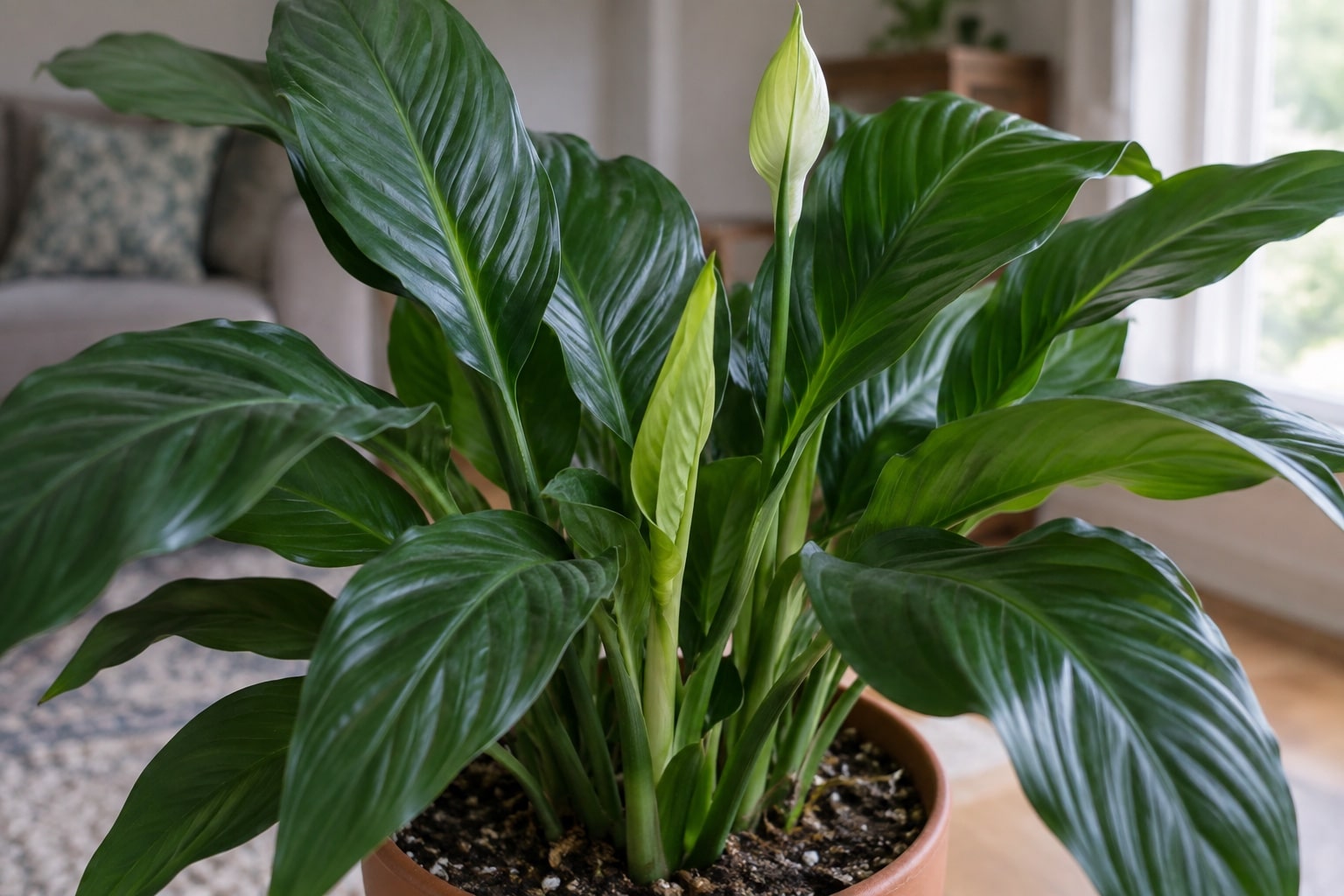
Keep the plant comfortably warm and away from cold drafts or blasts from heating and air-conditioning vents. Wipe dusty leaves gently with a damp cloth. These small maintenance jobs help you notice pests and changes in the foliage before they become bigger problems.
Do not repot solely because flowers are absent. Check whether the roots have densely filled the container and the plant has become difficult to keep evenly watered. When it genuinely needs more room, choose a pot only about 1–2 inches wider, with drainage holes.
An oversized pot leaves extra wet mix around the roots. At the other extreme, keeping a severely crowded, repeatedly wilting plant cramped is not a dependable flowering trick. Aim for a workable root environment, not a stress test.
You can remove a spent flower stalk near its base with clean scissors without cutting healthy leaves. Wear gloves when pruning, since the sap can irritate skin. A fading old bloom does not need to stay on the plant while you wait for the next one.
Keep peace lilies away from pets and young children. They are not true lilies, but they contain irritating calcium oxalate crystals. The ASPCA lists them as toxic to cats and dogs; contact your veterinarian promptly if a pet chews the plant.
For your next care check, do just three things: inspect the light at leaf level, feel an inch into the mix, and look inside the outer pot for leftover water. Those observations tell you far more than the number of days since the last bloom.
References
- Royal Horticultural Society — How to Grow Peace Lilies
- Clemson Cooperative Extension — Peace Lily (HGIC 1512)
- NC State Extension Gardener Plant Toolbox — Spathiphyllum
- University of Maryland Extension — Peace Lilly Care, Ask Extension #908402
- University of Maryland Extension — Watering Indoor Plants
- University of Florida IFAS — Cultural Guidelines for Commercial Production of Interiorscape Spathiphyllum
- University of Arkansas Cooperative Extension — Spath (Peace Lily)
- ASPCA — Peace Lily Toxicity