That handful of tomato trimmings does not have to end up in the trash.
Healthy leaves you actually need to remove can become useful compost—but leaves still feeding a productive plant are usually more valuable right where they are.
The smart approach is simple: prune for a reason, keep questionable material out of the pile, and let decomposition do the recycling. No mystery fertilizer recipe or kitchen experiment is required to make them useful.
1. Keep the Leaves That Are Still Doing Their Job
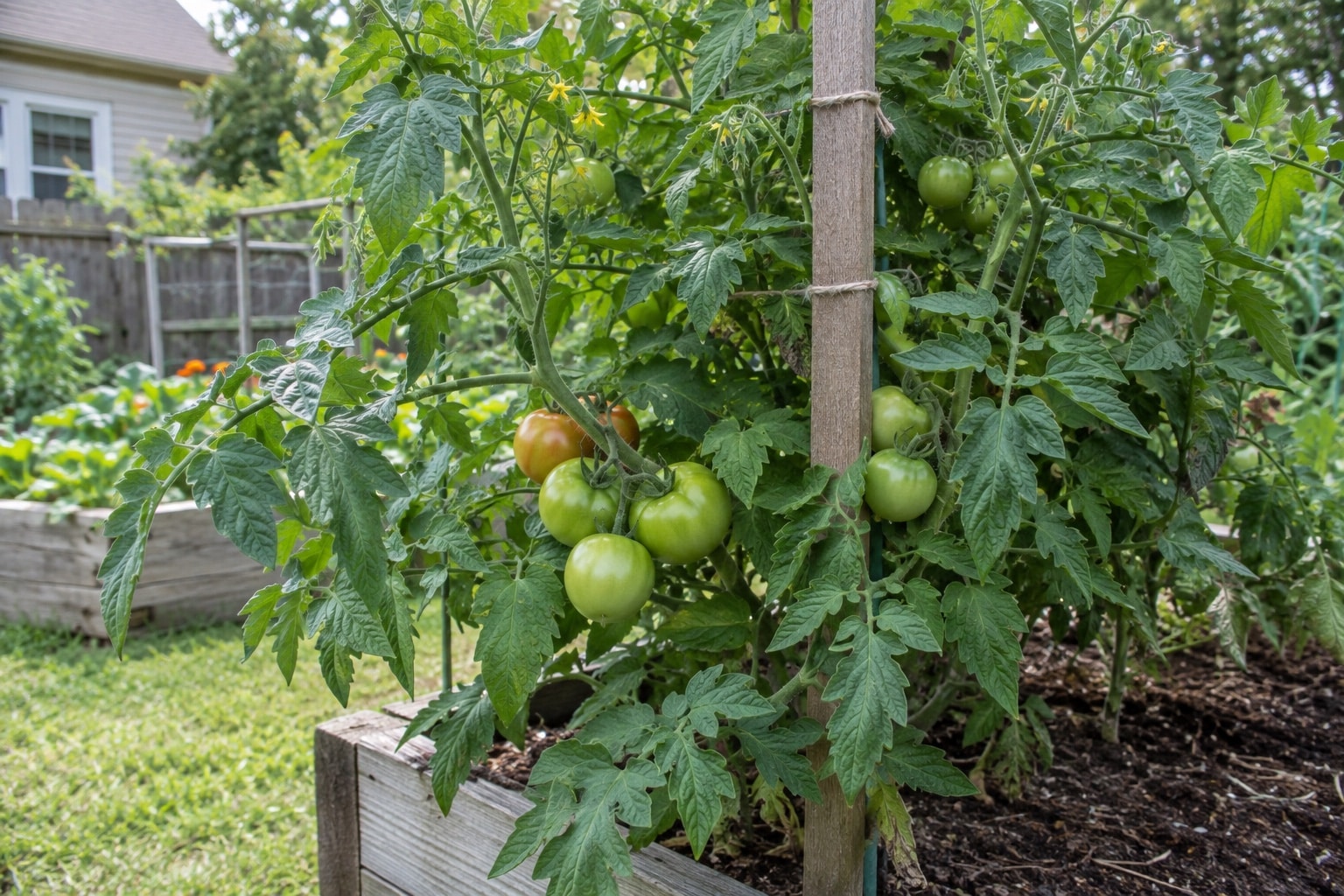
Do not strip a tomato plant just to collect leaves. Its foliage makes the sugars that support growth and fruit development, while the canopy helps protect tomatoes from sunscald. More exposed fruit is not automatically better fruit.
Check the variety before pruning. Determinate, or bush, tomatoes generally need little pruning. Indeterminate tomatoes keep growing and may benefit from selective pruning to suit their stakes, cages, or trellises. The aim is a manageable plant—not a bare stem with tomatoes dangling from it.
A sucker is a new shoot growing where a leaf joins the main stem. It is not the same thing as a leaf, and it can eventually carry flowers and fruit. Removing selected suckers is a training choice, not proof that all leafy growth is wasting the plant’s energy.
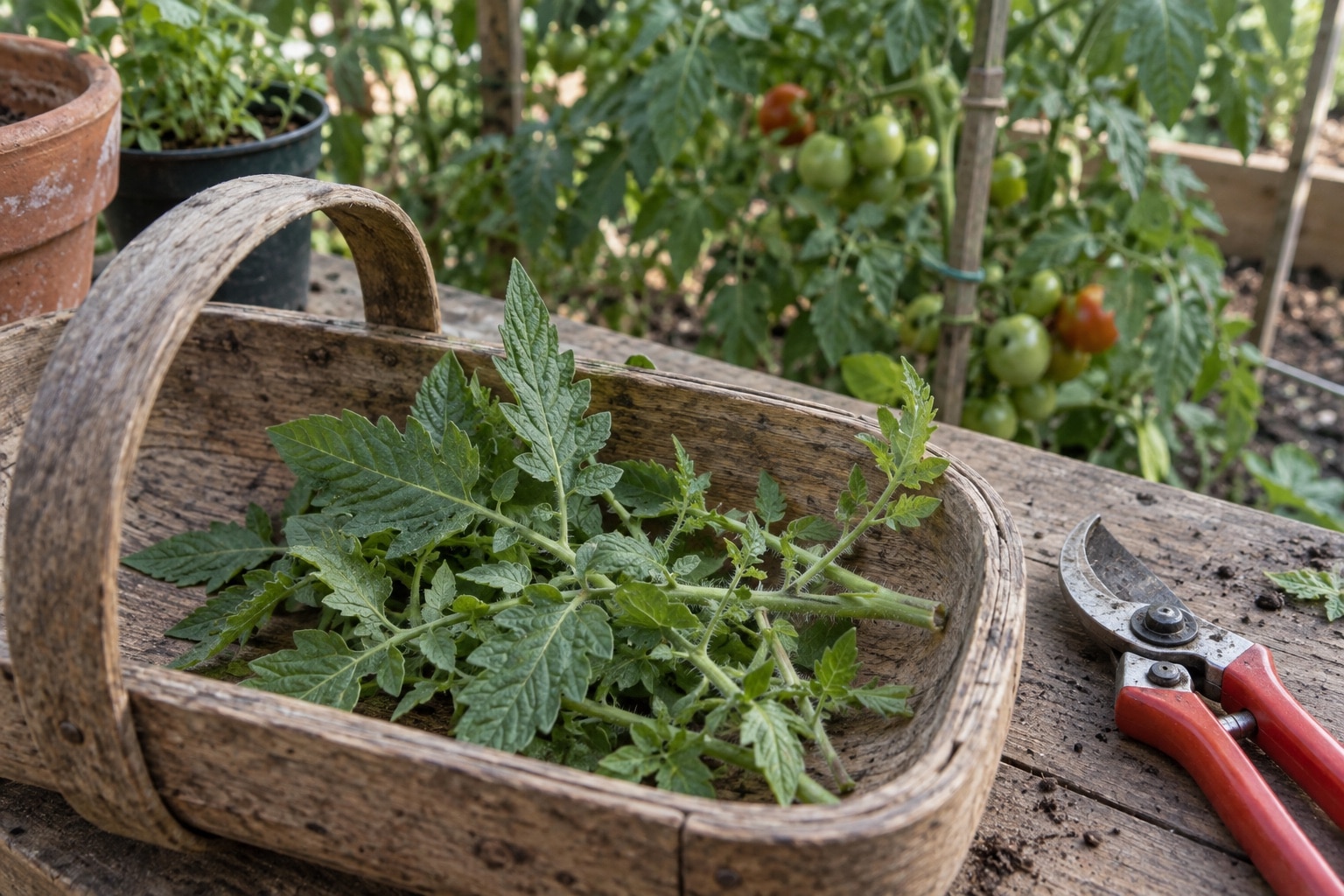
Save the sound trimmings that result from necessary work, such as thinning an indeterminate plant or removing foliage that touches the soil. Keep enough healthy canopy to shade the fruit, especially during hot, bright weather.
Collect healthy trimmings separately from suspect leaves. If a plant has unexplained spotting, unusual mottling, rot, or persistent wilting, do not use a few green-looking leaves as proof that the plant is disease-free. Ask your local Extension service for help if the cause is unclear.
Use clean tools, and clean and disinfect pruners between plants. University of Wisconsin Extension recommends rubbing alcohol with at least 30 seconds of contact for pruning tools. Apply it to the tools, not the leaves, and keep it away from ignition sources.
2. Turn Sound Trimmings Into Compost—With Plenty of Browns
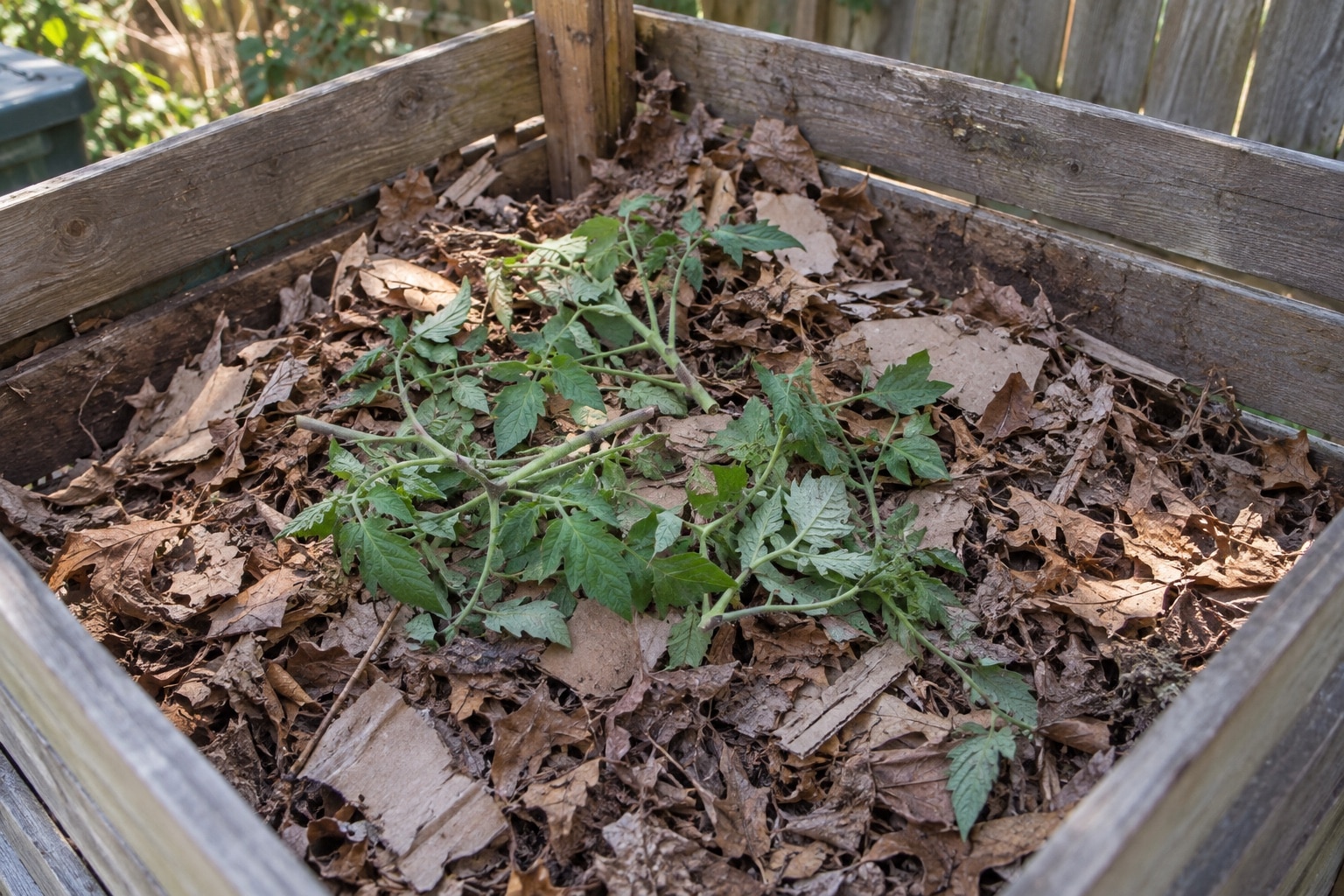
Fresh tomato foliage is a nitrogen-rich “green” compost ingredient. Pair it with carbon-rich materials such as dry autumn leaves or shredded, uncoated cardboard. A bucket of greens needs company; a dense pile of wet foliage is not a complete compost recipe.
The EPA recommends at least two to three times as much brown material as green material by volume. For a small bucket of fresh trimmings, start with two or three similarly filled buckets of loose browns. Treat that as a starting mix, then adjust for moisture and airflow.
Snip long pieces into shorter lengths and mix them through the browns. There is no need to mince every leaflet. Cutting up tougher stems helps avoid finding the same tangled vine every time you turn the pile.
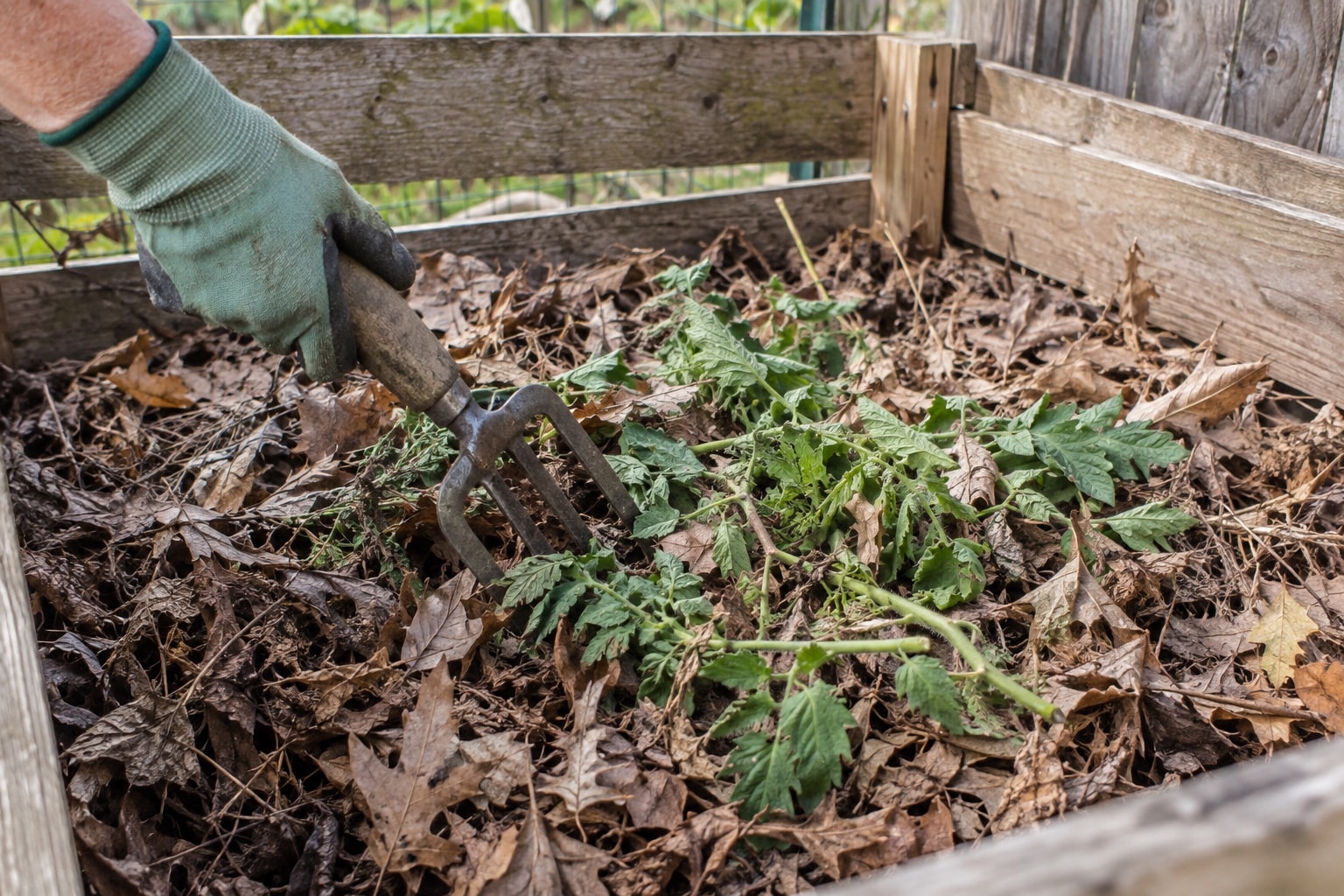
Keep the mixture damp, not soggy, and turn it occasionally. It should feel like a squeezed-out sponge. A sour smell or slimy mat is a cue to add dry browns and introduce more air, not to pour in another bucket of water.
The word “healthy” matters here. Kansas State Extension warns that tomato diseases can carry into another season when a compost heap fails to reach adequate temperatures for long enough. A pile that feels warm in the middle is not a guarantee that every piece has been treated.
For an ordinary home pile, leave out material from plants known or suspected to be diseased, along with heavily pest-infested or herbicide-damaged foliage. Do not turn those trimmings into mulch beneath next year’s tomatoes, either. Follow local disposal rules; a municipal facility may have different acceptance rules from a backyard bin.
A useful habit is to carry two containers during cleanup: one for sound trimmings and one for questionable material. Sorting at the plant is easier than picking through a mixed heap later.
3. Let It Finish Before Returning It to the Garden
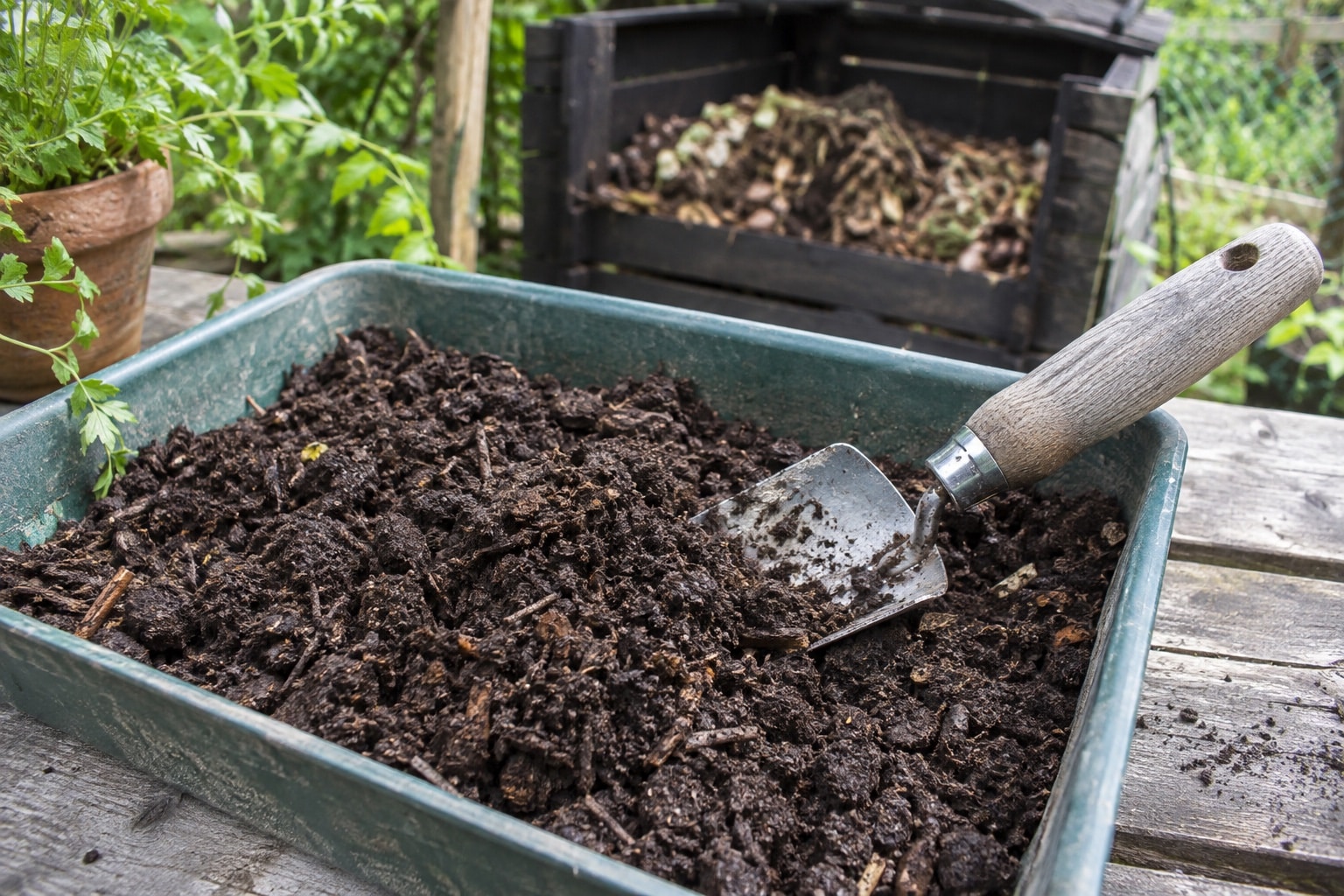
Fresh tomato leaves are an ingredient, not finished fertilizer. Composting turns a mixed collection of plant material into a more stable soil amendment. There is no special reason the finished product has to go back to tomatoes; it can benefit other garden beds, too.
Look for compost that is dark, crumbly, and earthy-smelling, with most original material no longer recognizable. A heap full of intact green leaves, reheating material, or unpleasant odors still needs time and attention.
Once the pile stops reheating after mixing and the fresh scraps have broken down, the EPA advises at least four weeks of curing. Stop adding new scraps to that batch, or move it aside to finish. Otherwise, yesterday’s leaves will keep joining the compost you hoped to use tomorrow.
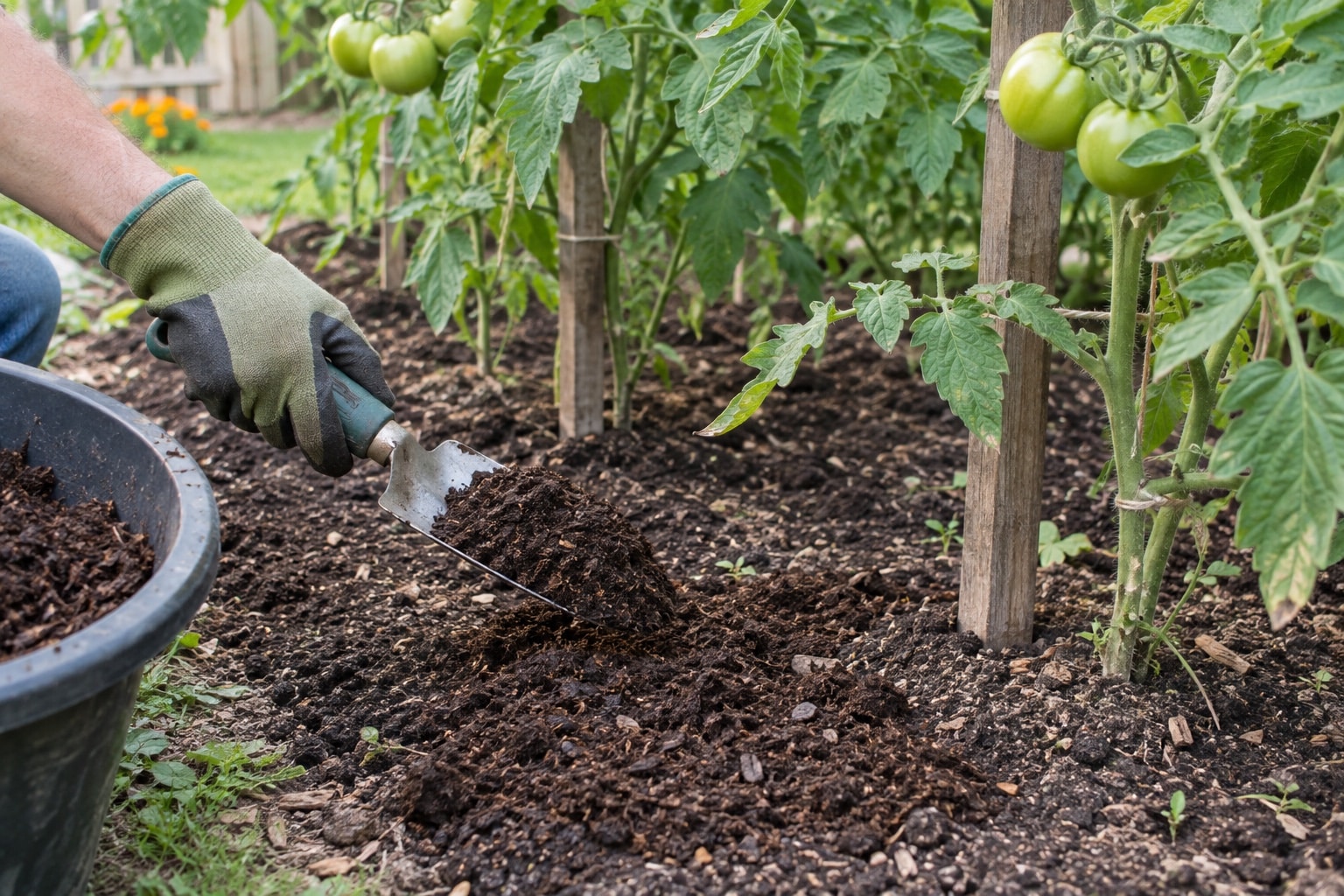
Add mature compost to garden soil or use it as a surface dressing, keeping it clear of plant stems. University of Maryland Extension notes that compost improves soil structure and water-holding capacity while supplying nutrients. It is a soil-building material, not a promise of an instant bumper crop.
Skip the tomato-leaf tea and homemade pesticide shortcuts. A jar of soaked leaves has no standardized nutrient analysis or tested application rate. Extension specialists caution that homemade pest remedies may harm plants and have not necessarily been tested for reliable, safe control. Identify the actual pest before choosing a treatment.
Keep these trimmings out of the kitchen, too. The Texas Poison Center Network advises against ingesting tomato leaves. Do not treat them like basil, brew them into a drink, or assume that something compostable is also edible.
Keep pets away from fresh clippings and the active compost pile. The ASPCA lists tomato plants as toxic to dogs, cats, and horses. If a pet eats foliage, contact your veterinarian for advice; ripe tomato fruit and tomato leaves are not the same thing.
The easiest setup is a container of dry leaves beside your compost bin. When a small batch of sound tomato trimmings arrives, the browns are already waiting—and those leftovers can start their next useful job.
References
- University of Wisconsin Extension — Tomato Pruning
- University of Minnesota Extension — Growing Tomatoes in Home Gardens
- U.S. Environmental Protection Agency — Composting at Home
- Kansas State University Extension — Should I Compost My Tomato Plants? (August 19, 2024 newsletter, page 5)
- University of Maryland Extension — How to Make Compost at Home
- University of Maryland Extension / Ask Extension — Guidance on Homemade Plant Treatments (June 21, 2021 response)
- Texas Poison Center Network — Poisonous Plants
- ASPCA Poison Control — Tomato Plant