A plant can look perfectly polite in a nursery pot and become a very different neighbor once its roots reach open soil. Chinese lantern, yellow loosestrife, and variegated ground ivy all deserve a second look before planting. T
he mistake is giving a vigorous spreader unlimited room beside plants you want to keep. We’ll show you what makes these beauties troublesome, when containers help, and when choosing another plant is the smarter move.
1. Chinese Lantern: The Fall Favorite With Underground Ambitions

Those orange lanterns look made for an autumn porch. Chinese lantern, Alkekengi officinarum—also sold as Physalis alkekengi—is a perennial with a habit that deserves as much attention as its color.
It spreads through underground stems called rhizomes. What starts as one plant can become a patch, with new shoots appearing beyond the spot you originally gave it. A tidy outline above ground doesn’t tell you what is happening underneath.
There’s a lovely botanical detail here: the orange lantern is an enlarged calyx, the flower’s outer covering. It surrounds a berry. As the covering weathers, it can leave a delicate, netlike cage around the fruit.

For a small mixed flower bed, we would keep this one out of open soil. Where it is an appropriate plant locally, a separate container makes its spread easier to monitor. Give it a suitable sunny or partly shaded position and well-drained growing conditions.
Don’t count on a decorative border to restrain it. If shoots have already wandered into neighboring plants, remove the unwanted growth with its connecting rhizomes and keep checking for regrowth.
Treat Chinese lantern as an ornamental, not a snack plant. Its leaves and unripe fruit can be harmful if eaten. Keep it away from children and pets that chew plants, and never decide whether a fruit is edible from a photograph.
2. Yellow Loosestrife: A Sunny Display That Keeps Getting Wider

A stand of golden flowers can make yellow loosestrife look like the answer to an empty border. The plant we mean here is dotted loosestrife, Lysimachia punctata, with yellow flowers clustered around upright leafy stems.
It can reach about 3 feet tall and spread into substantial colonies. Rich, moist soil helps it thrive—which is wonderful for the loosestrife and less wonderful for a smaller perennial trying to hold its place beside it.
Its main route of expansion is through rhizomes, although it can also spread by seed. Removing faded flowers addresses only the seed part of that problem. The underground growth can keep moving.

The common name needs care. Dotted loosestrife is different from yellow garden loosestrife, Lysimachia vulgaris, and purple loosestrife, Lythrum salicaria. Their behavior and regional concerns differ; a label that says only “loosestrife” isn’t enough.
We would avoid planting L. punctata among delicate, slow-growing favorites. It may be less aggressive in drier shade, but that is a tendency, not a containment plan.
Before buying, check the scientific name against your local Extension guidance and invasive-plant list. If it is invasive or restricted where you garden, choose something else. Where it is suitable, a separate, monitored pot is easier to manage than a spreading colony threaded through your border.
3. Variegated Ground Ivy: The Pretty Trailer That Roots as It Goes
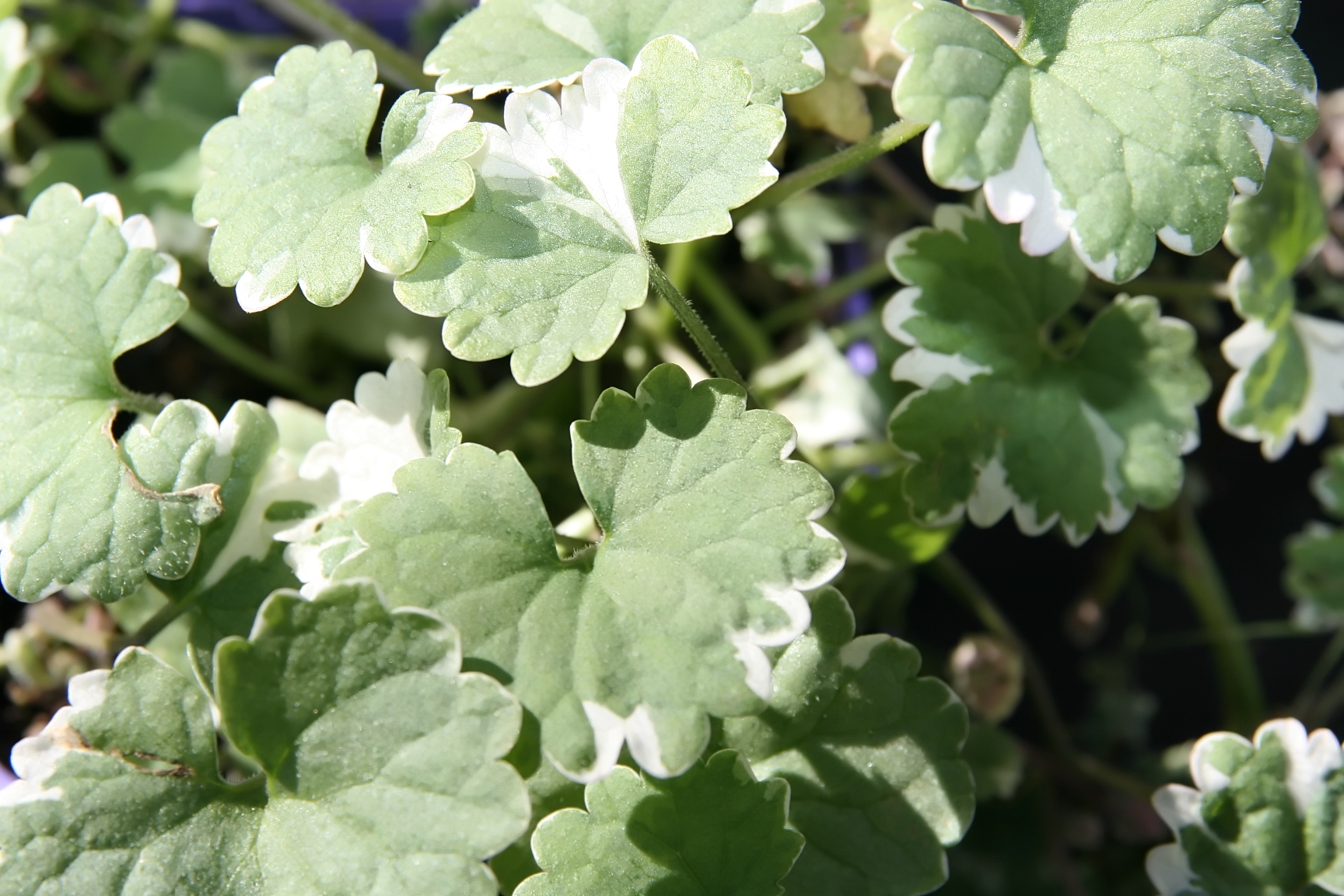
The creamy edges make it look especially decorative. Variegated ground ivy, Glechoma hederacea ‘Variegata’, is a cultivated form of the same species widely known as creeping Charlie.
Those trailing stems can root wherever their nodes touch soil. A node is the point where leaves join the stem. Let a trailing shoot reach a nearby bed and it can start establishing itself there.
The species spreads by creeping stems and seed, and it favors moist, fertile, shaded conditions. It is recognized as invasive in parts of the United States. Decorative leaf coloring is not a reason to ignore that history.
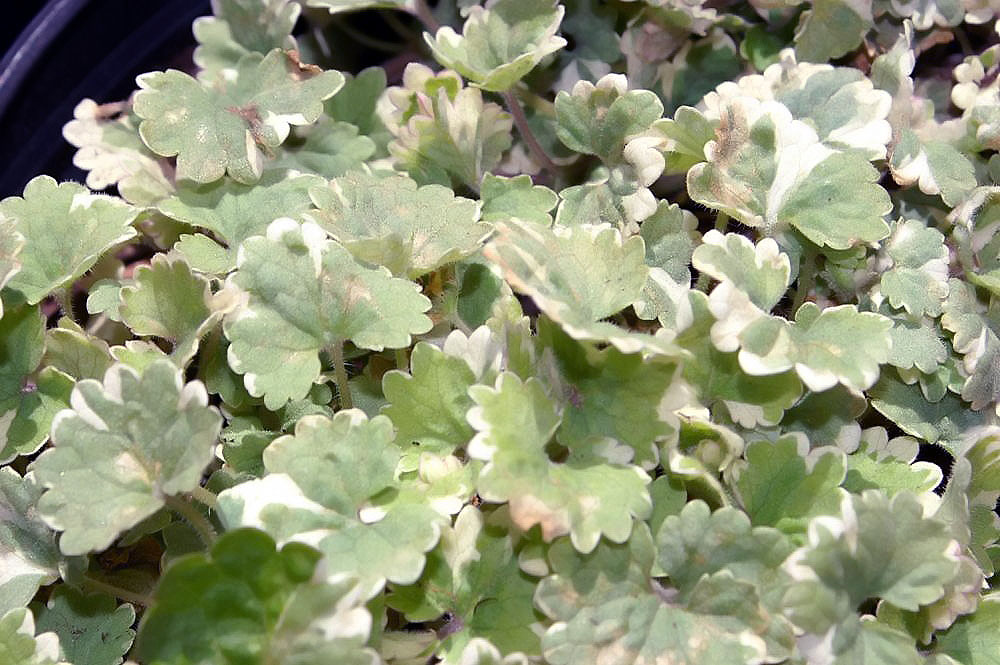
Our first choice where ground ivy is invasive is a different container plant. Where growing it is appropriate, keep every trailing stem clear of the ground and check beyond the pot’s rim regularly. A raised pot only helps if the plant cannot bridge the gap.
Already finding it in a bed? Follow the creeping stems and remove their rooted sections carefully. Gather up the pieces instead of leaving them on damp soil, where they may root again. A quick haircut leaves the rooted network behind.
Check the plant tag before dismantling a fall planter. Similar-looking trailing plants are sold under other names, and a mixed container’s mums and ornamental grass aren’t automatically the culprits. Confirm the plant’s identity from its label and multiple features; the photo alone is not enough.
Make the Container Do Its Job

A pot can limit underground spread. It cannot stop every escape route. Start by confirming that the plant is appropriate for your region; container growing is not a workaround for local invasive-plant restrictions.
For suitable vigorous growers, we prefer a separate, sturdy container above ground, positioned where you can inspect it. Keep it off garden soil. Check beneath it for roots or rhizomes emerging through drainage holes, and keep trailing stems from reaching nearby beds.
Use a container with drainage holes and a potting mix made for containers. Match the pot’s size to the plant, and check moisture regularly. Don’t plug the holes to keep roots inside—you would create a drainage problem instead.

Watch flowers, fruit, and trimmings as well as roots. Remove seedheads before they ripen where self-seeding is a concern. Collect Chinese lantern stems and fruit before they are scattered during cleanup.
When a plant outgrows its pot, repot or divide it as appropriate rather than tipping the whole root ball into a flower bed. That end-of-season shortcut can undo the containment you maintained all summer.
Keep viable rhizomes, rooted stem pieces, and seedheads out of ordinary home compost. Follow local disposal guidance for aggressive or invasive plants, and never dump garden waste in woods, ditches, or vacant ground.
Before you dig a planting hole, ask one useful question: “If this spreads beyond its spot, am I willing to keep removing it?” If the answer is no, choose a plant whose mature habit fits the space.
References
- Royal Horticultural Society: Chinese lantern plant profile
- University of Maryland Extension: Chinese lantern spread
- NC State Extension: Dotted loosestrife
- USGS: Lysimachia punctata species profile
- NC State Extension: Ground ivy
- University of Illinois Extension: Managing creeping Charlie in home landscapes
- Royal Horticultural Society: Potentially invasive plants and containment
- UC Master Gardeners of Santa Clara County: Container gardening basics
Image Attributions
Featured illustration supplied by the publisher. Article photographs appear below with their original file pages and licenses.
1. Chinese Lantern: The Fall Favorite With Underground Ambitions
- “Atlas roslin pl Miechunka rozdęta 1038 7567.jpg” by Joanna Boisse, licensed under CC BY-SA 4.0.
- “Alkekengi in my garden.jpg” by Albarubescens, licensed under CC BY-SA 4.0.


2. Yellow Loosestrife: A Sunny Display That Keeps Getting Wider
- “Atlas roslin pl Tojeść kropkowana 9848 7359.jpg” by Ludwik Polak, licensed under CC BY-SA 4.0.
- “Atlas roslin pl Tojeść kropkowana 769 7359.jpg” by Joanna Boisse, licensed under CC BY-SA 4.0.


3. Variegated Ground Ivy: The Pretty Trailer That Roots as It Goes
- “Glechoma hederacea Variegata 1zz.jpg” by David J. Stang, licensed under CC BY-SA 4.0.
- “Glechoma hederacea Variegata 0zz.jpg” by David J. Stang, licensed under CC BY-SA 4.0.


Make the Container Do Its Job
- “Terracotta pots (54588497997).jpg” by Torsten Behrens, licensed under CC BY 2.0.
- “Terracotta Pots (Unsplash).jpg” by Annie Spratt, made available under CC0 1.0 Universal Public Domain Dedication.
.jpg)
.jpg)