Bougainvillea can swallow a sunny fence in color, yet a few cuttings from that same plant may shrivel before making a single root. A clear plastic bag supported over the pot can help by keeping the air around the leaves humid.
The trick works best with the right stem, an airy rooting mix, and protection from direct sun. Here’s how we give stubborn cuttings a better chance without turning their pots into miniature swamps.
The Trick Is Holding Moisture Around the Leaves
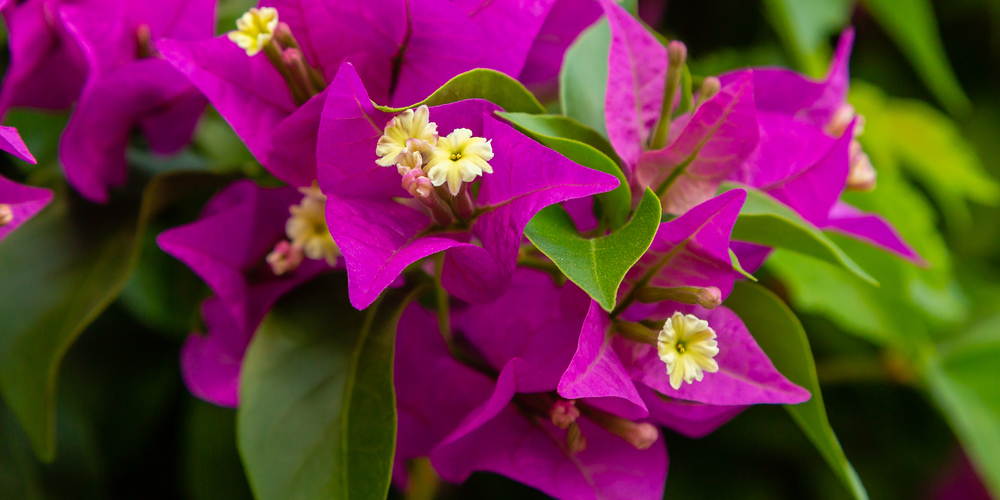
A leafy cutting has a water problem before it has a rooting problem: its leaves keep losing moisture, but it no longer has the parent plant’s root system to replace it.
A clear humidity cover slows that water loss, buying the cutting time to develop roots. It is especially useful in dry indoor air, where an uncovered cutting can wilt even while its potting mix is damp.
You still need drainage, suitable light, and healthy material. A bag cannot rescue a rotten stem or guarantee that every cutting will take.
One small botanical bonus: bougainvillea’s brilliant pink, purple, orange, or white “petals” are actually bracts, which are modified leaves. The true flowers are the little tubular structures inside them. For propagation, we want a leafy shoot without that floral display.
Choose a Stem That Has Started to Firm Up

For this method, choose healthy, nonflowering growth from the current season that has begun to turn firm and woody at the base. Gardeners call this semi-ripe or semi-hardwood growth. Summer is a practical time to find it.
Skip limp, damaged shoots and thick, old branches. Bougainvillea can also grow from other cutting types, but those may need different handling and more time.
Wear gloves for the thorns and use clean, sharp pruners. Take a piece about 4–6 inches long, then make the bottom cut just below a node—the point where a leaf joins the stem.
Remove leaves from the lower half, along with any flowers or buds. Keep a few healthy leaves near the top. Take cuttings in the morning and prepare them promptly so they do not dry out on the workbench.
Give the Base Air as Well as Water
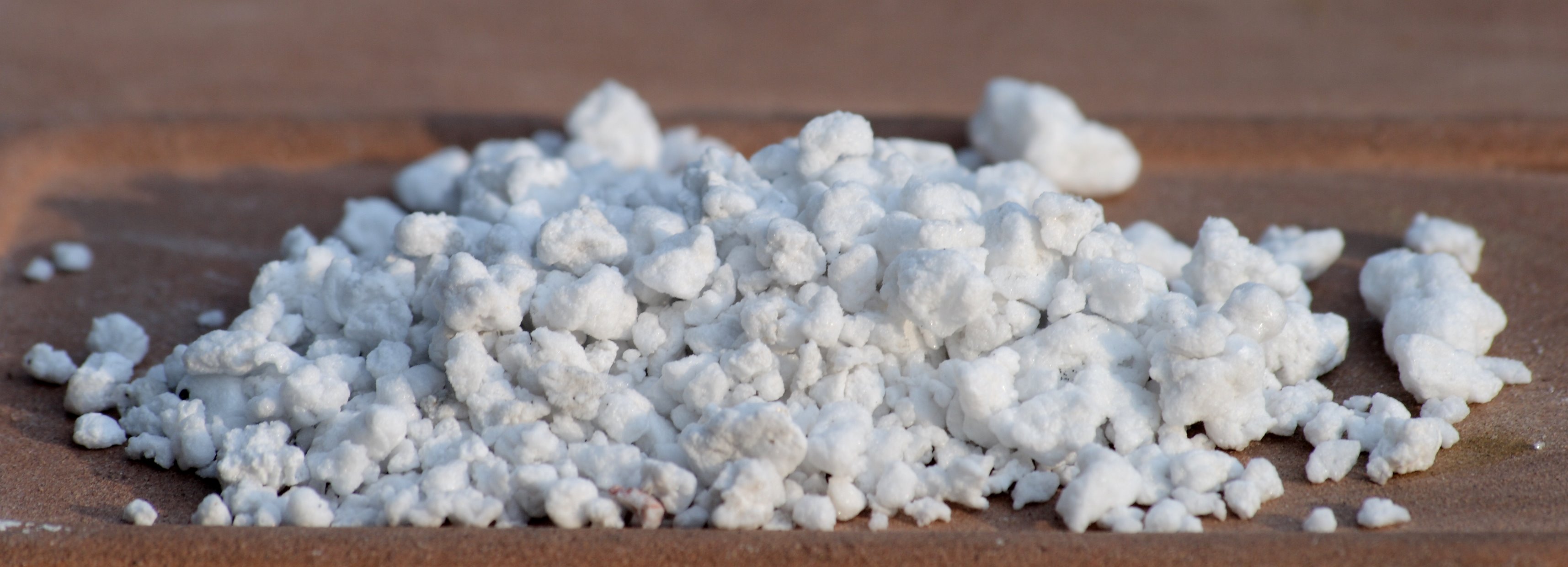
Use a clean, small pot with drainage holes. A clear cup can make roots easier to spot later, but it needs holes in the bottom before you plant anything.
Fill it with a fresh propagation mix that drains freely. Equal parts peat moss and coarse perlite are one established option; a prepared, well-drained cuttings mix also keeps the job simple. Moisten the medium and let excess water drain.
A commercial rooting hormone can help stubborn cuttings. Choose one labeled for the type of cutting you are taking and follow its directions. Put a little in a separate dish rather than dipping stems into the main container.
Make a planting hole with a pencil, insert the bare lower portion roughly 2 inches, and firm the mix gently. Keep every remaining leaf above the surface. Water to settle the medium, then let the pot drain completely.
Make a Humidity Tent—and Keep It Out of Direct Sun
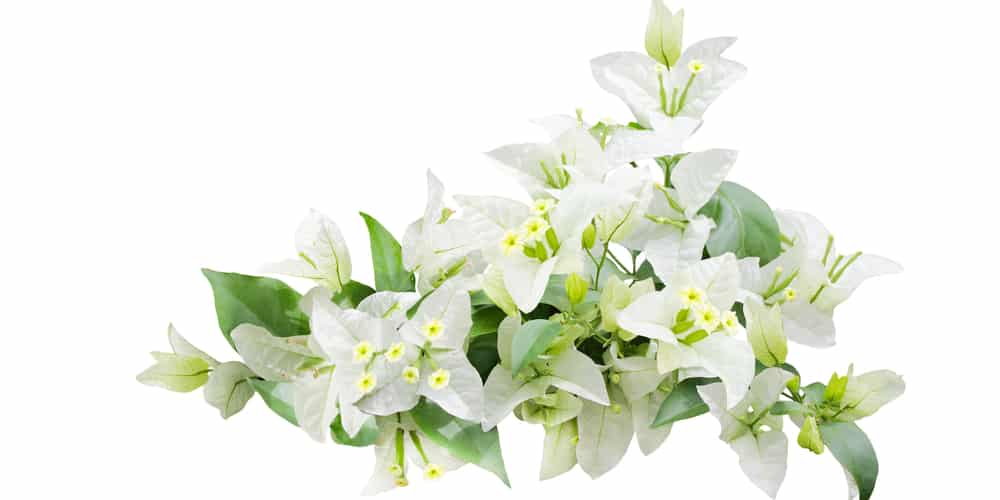
Push a few short stakes into the pot near its rim and slip a clear plastic bag over the pot and cutting. The supports should hold the plastic above the foliage. Secure the opening loosely around the pot so you can lift it easily for checks.
Place the covered pot somewhere warm with bright, indirect light. Never leave it in direct sun. A sunny windowsill can overheat a covered cutting surprisingly quickly.
An established bougainvillea loves sunshine. A rootless cutting inside plastic needs gentler conditions. That difference matters more than finding the brightest window in the house.
Inspect it daily. Lift the cover for ventilation, remove fallen leaves, and release excess moisture if the inside stays heavily wet. Check the mix before watering: it should stay lightly moist, with no standing water beneath the pot. A covered pot may need much less watering than you expect.
Watch for Roots Without Constantly Disturbing the Cutting
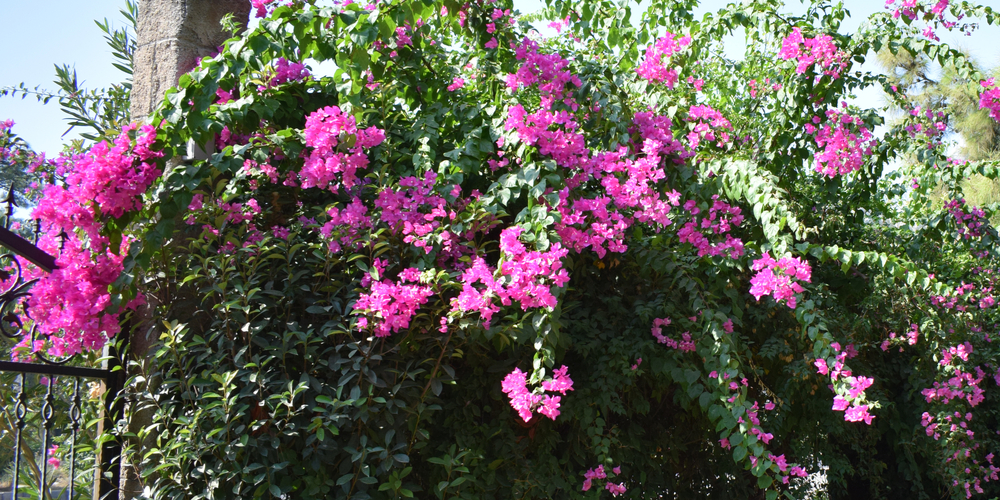
Semi-ripe bougainvillea cuttings may root in about 4–6 weeks under suitable conditions, but treat that as a guide, not a deadline. The variety, condition of the stem, and growing environment all affect the result.
Resist pulling the stem out every few days. Young bougainvillea roots are brittle, and repeated handling can undo the progress you are waiting for. Look for roots along a clear container’s wall or at drainage holes.
Fresh leaves are encouraging, but wait for evidence of a root system before treating the cutting as an established plant. A green stem that is taking its time needs patience.
A base that becomes black and mushy, or develops spreading decay, needs a different response: remove that failed cutting and check drainage and ventilation. More water will not fix rot.
Ease the New Plant Out of Its Protected Bubble
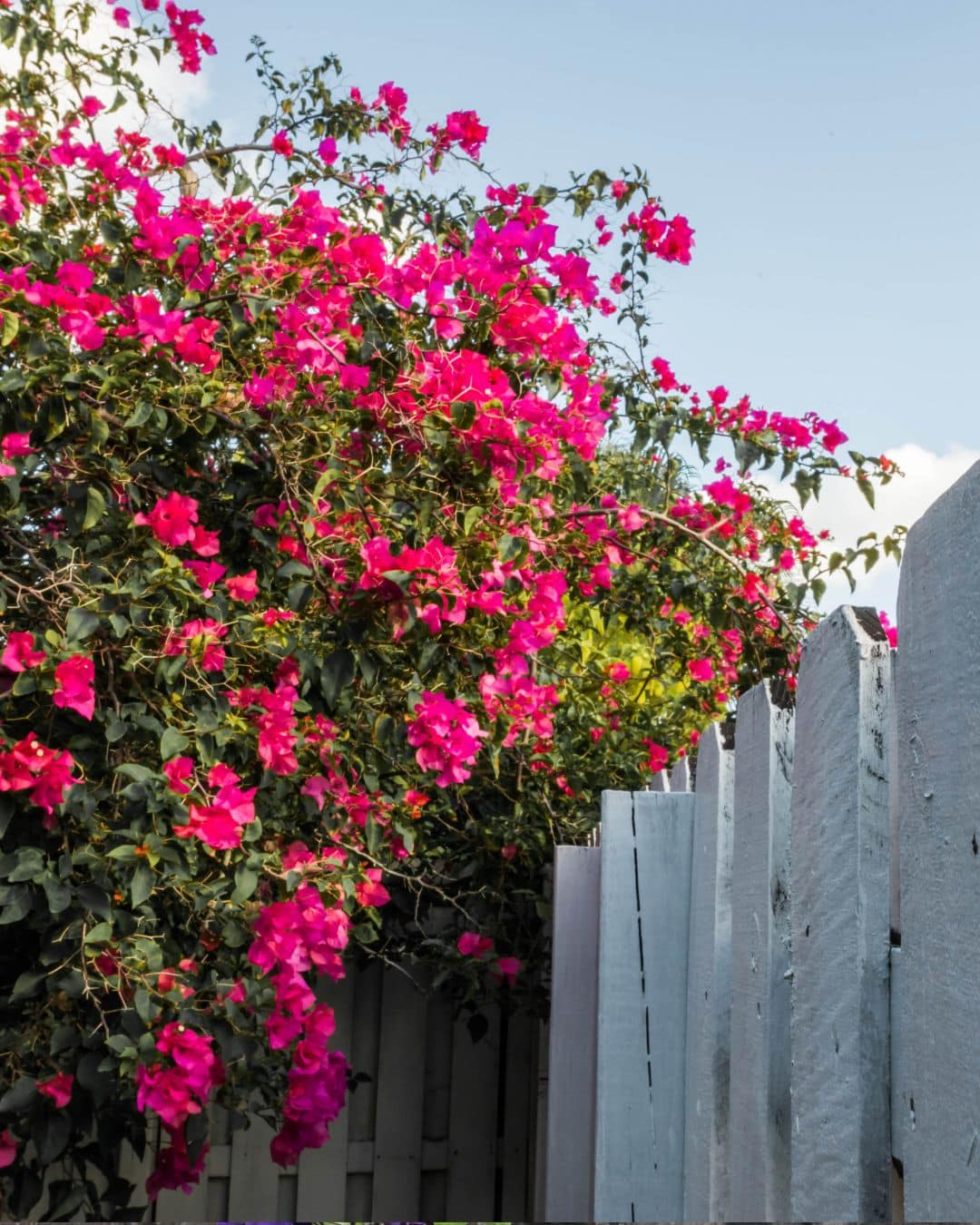
Once several roots have developed, begin opening the cover more each day. Reduce humidity gradually, then increase the light gradually. Moving directly from a humid bag into hot outdoor sun can overwhelm a young plant.
If leaves wilt as you increase ventilation, slow the transition. Keep the mix moist while the cutting adjusts, and protect it from cold drafts and frost.
When it is ready for a larger pot, handle the root ball gently and keep the new roots intact. Choose a container only modestly larger, with drainage, and use a suitable container potting mix.
For your next batch, label each pot with the date and plant name. Start several cuttings if you have suitable growth available. A few carefully tended backups are a better plan than asking one little stem to deliver the whole fence.
References
- Royal Horticultural Society: How to Grow Bougainvillea
- Royal Horticultural Society: Semi-ripe Cuttings
- Iowa State University Extension: Propagation from Semi-Hardwood Cuttings
- University of California Master Gardeners: Propagating Bougainvillea Shrub from Cuttings, pages 5–6
- University of Florida IFAS Extension: Plant Propagation Techniques for the Florida Gardener
- Nebraska Extension: Propagation with Stem Cuttings
- NC State Extension Gardener Plant Toolbox: Bougainvillea
- Anders Wisnewski and Jay S. Koths: Commercial Bougainvillea Culture, archived by NC State Extension
Image Attributions
The Trick Is Holding Moisture Around the Leaves
- Bougainvillea flower detail — GFL Outdoors media library.
Choose a Stem That Has Started to Firm Up
- “Secateur ouvert.jpg” by KoS, released into the public domain.

Give the Base Air as Well as Water
- “Schultz Horticultural Perlite.jpg” by Ragesoss, licensed under CC BY-SA 3.0.

Make a Humidity Tent—and Keep It Out of Direct Sun
- White Bougainvillea Vine — GFL Outdoors media library.
Watch for Roots Without Constantly Disturbing the Cutting
- Bougainvillea beside a fence — GFL Outdoors media library.
Ease the New Plant Out of Its Protected Bubble
- Bougainvillea Fence — GFL Outdoors media library.
Featured illustration supplied by the publisher.