Houseplants and pets can absolutely live in the same house you just need the right lineup and smart placement.
This list breaks it down into two parts: 20 plants that are widely considered pet-safe, and 10 common houseplants that can cause problems if chewed. No panic, no jargon…just a safer, greener home.
20 Pet-Safe Houseplants
1. Spider Plant (Chlorophytum comosum)
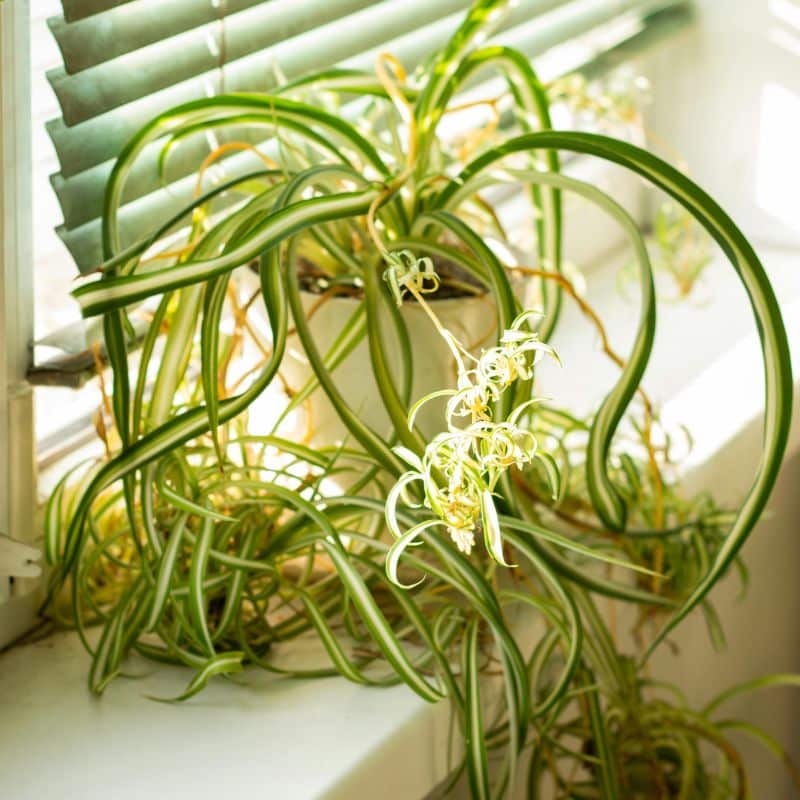
Originally from southern Africa, spider plants became popular because they are tough and fast-growing.
Give it bright, indirect light for best striping, but it will tolerate lower light.
Water when the top inch of soil feels dry, and do not let it sit in soggy mix. Average indoor humidity is fine, and a light monthly feeding in spring and summer helps.
Those dangling “spiderettes” are baby plants you can snip and root in water, which is why one plant can turn into a whole family.
2. Boston Fern (Nephrolepis exaltata ‘Bostoniensis’)
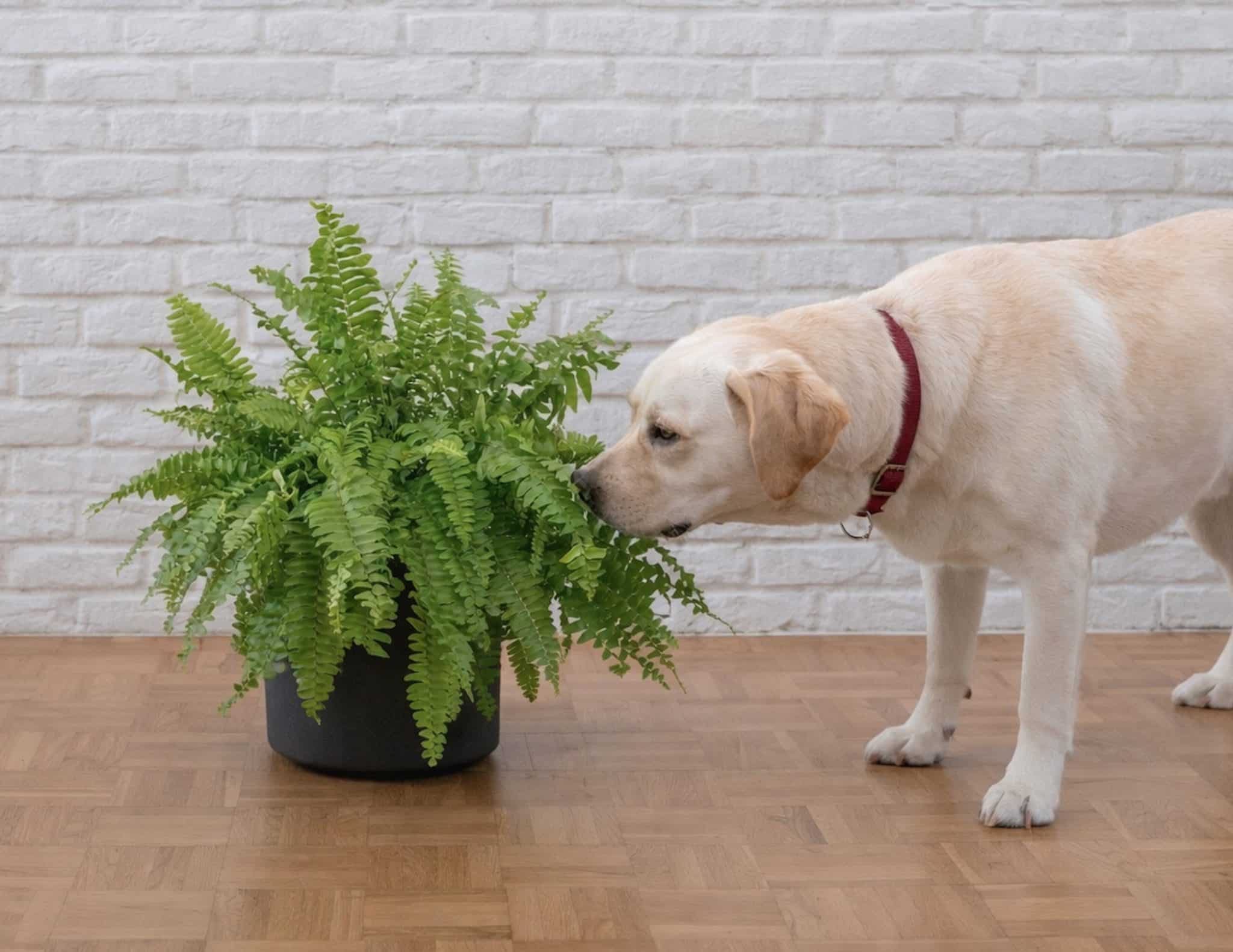
The Boston fern is a cultivated form of a tropical sword fern, originally tied to humid forests and warm climates.
Indoors, it wants bright, filtered light and consistently moist soil, not mud.
If fronds crisp or drop, it usually needs more humidity, so a pebble tray, humidifier, or a bathroom spot helps. Keep it away from heat vents and cold drafts.
It became a houseplant craze in the late 1800s after a unique fern form was noticed in Boston, kicking off a fern-loving “parlor” trend.
3. Areca Palm (Dypsis lutescens)
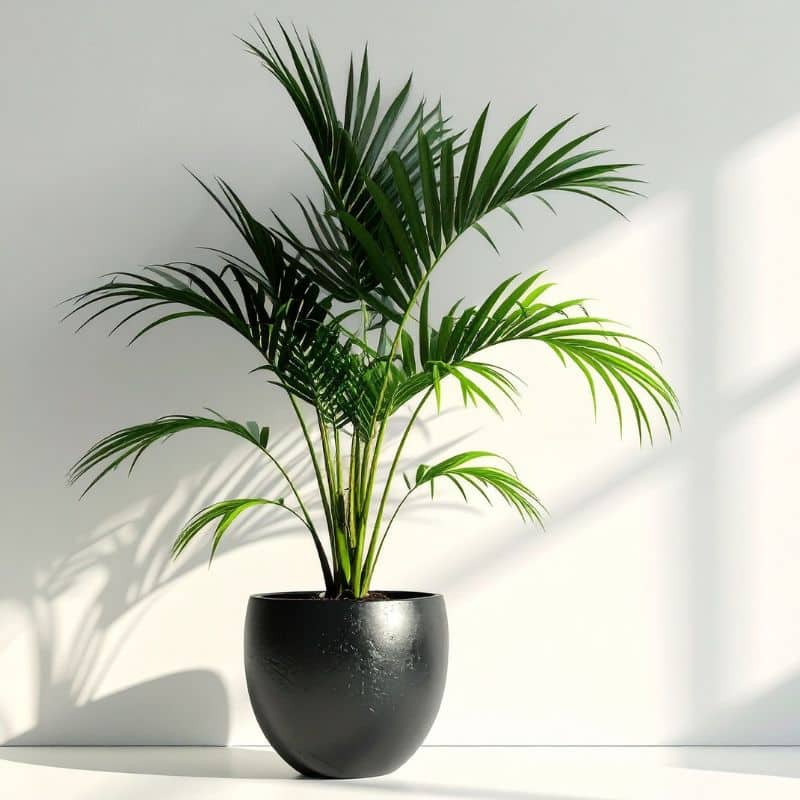
Native to Madagascar, the areca palm is a classic “feathery” palm that makes a room feel brighter.
It prefers bright, indirect light and evenly moist soil, letting the top inch dry slightly between waterings.
Use a pot with drainage, and rinse salts from the soil occasionally to prevent brown tips. It appreciates moderate to higher humidity and warm temperatures.
Areca palms are often sold as “butterfly palms” because their canes grow in clumps and the fronds arch outward like wings, creating a naturally full shape.
4. Parlor Palm (Chamaedorea elegans)
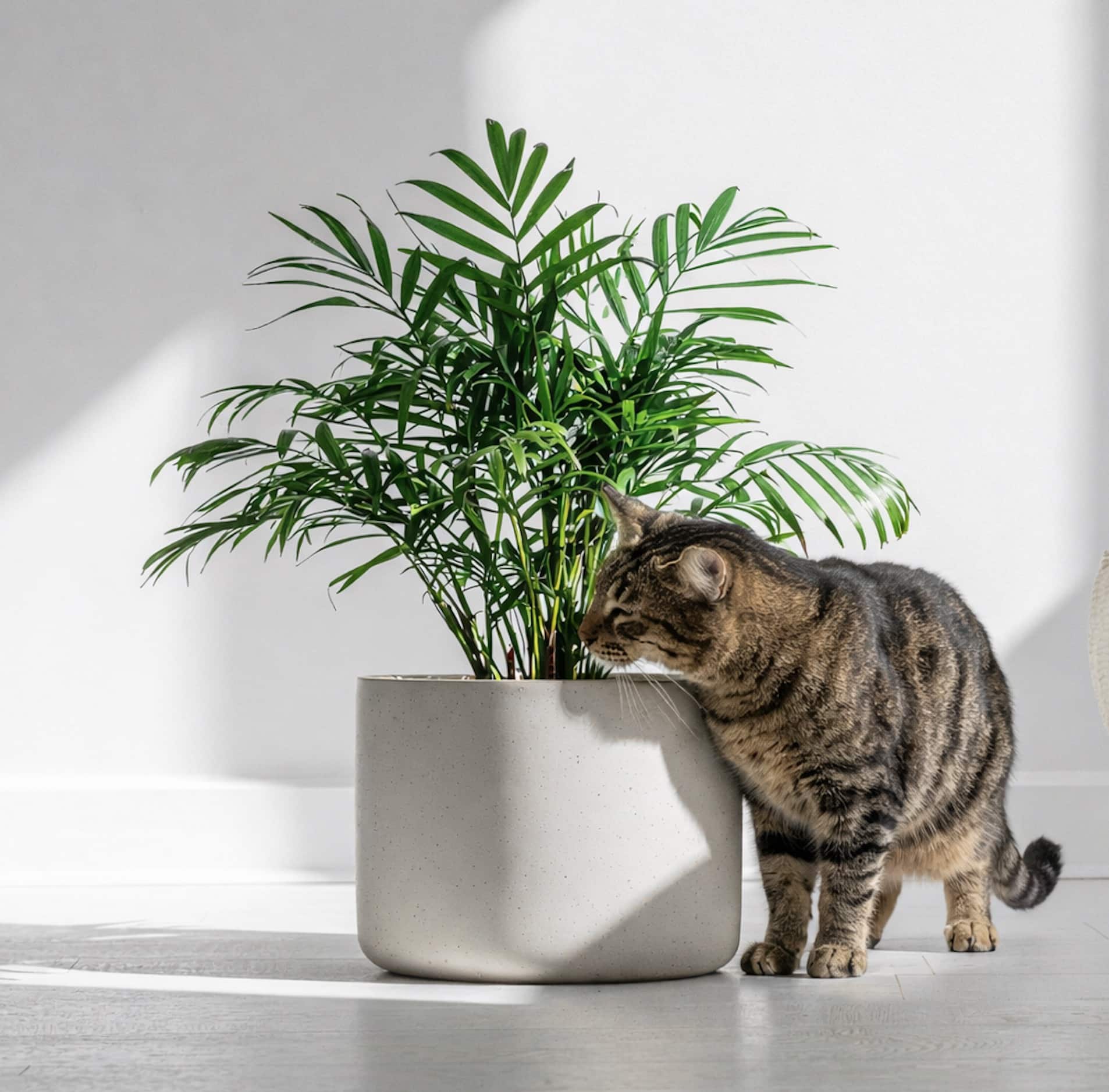
This small palm comes from the forests of southern Mexico and Guatemala, where it grows under the canopy in low light.
That makes it a strong indoor pick for medium to low indirect light, though it grows faster with brighter light.
Water when the top inch is dry, and do not overdo it, since it dislikes wet feet. Normal home humidity works, and it is fine with average temperatures.
It earned the name “parlor palm” because Victorians loved it for dim sitting rooms and it tolerated coal-heated air better than many plants.
5. Ponytail Palm (Beaucarnea recurvata)
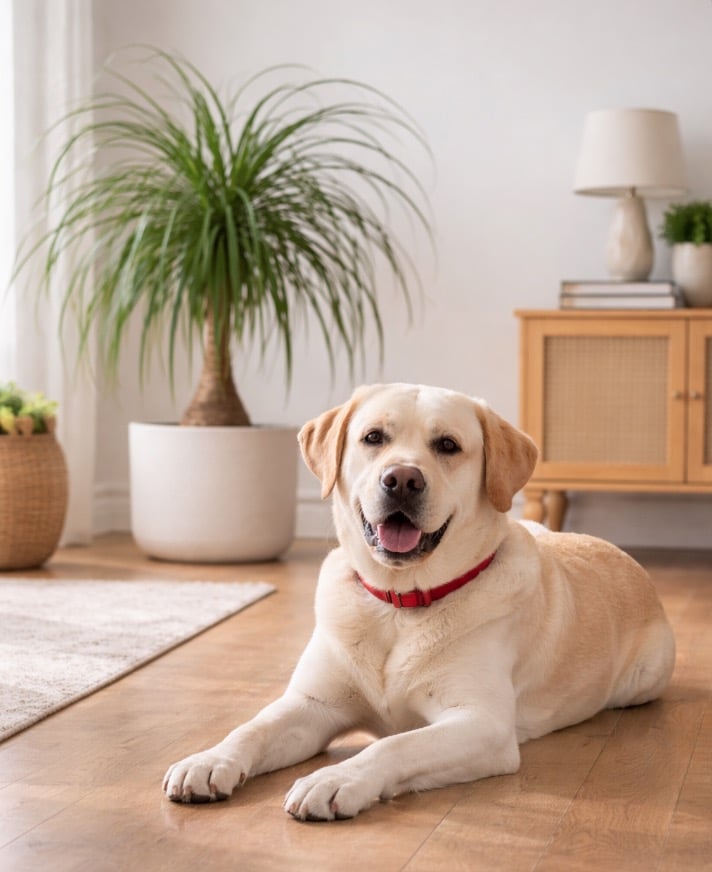
Native to eastern Mexico, the ponytail palm is not a true palm, it is a drought-adapted plant with a swollen base that stores water.
Give it bright light, even some gentle sun, and use a fast-draining cactus-style mix.
Water deeply, then let the soil dry out most of the way before watering again. It prefers being slightly pot-bound and can go weeks without attention.
That bulbous “elephant foot” trunk is a built-in reservoir, which is why it can survive forgetful watering better than almost any other houseplant.
6. Cast Iron Plant (Aspidistra elatior)
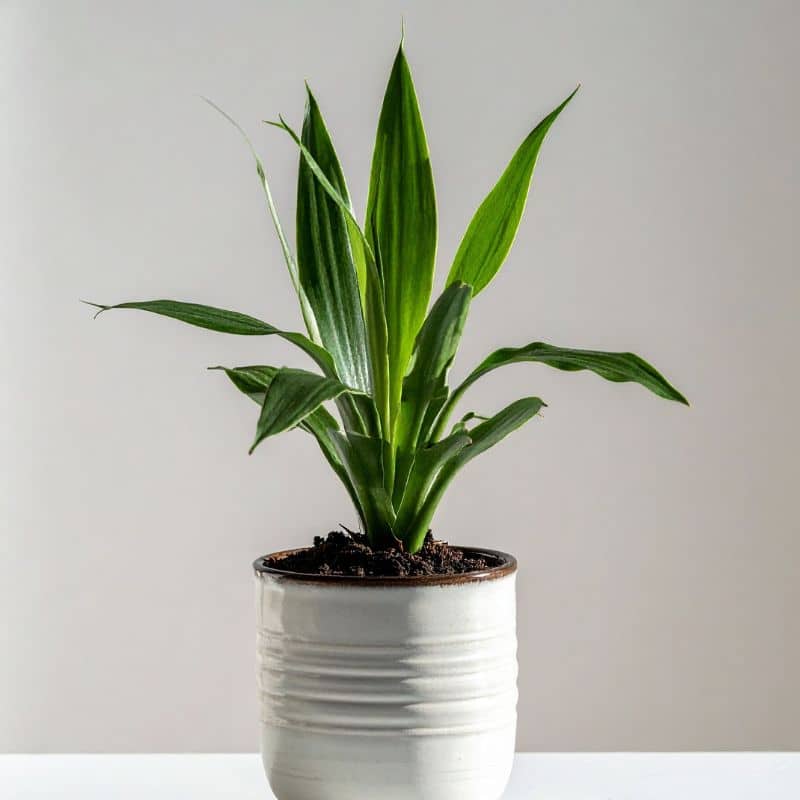
Originally from China and Japan, the cast iron plant earned its reputation by surviving the kind of neglect that kills most houseplants.
Give it low to medium indirect light, and it will still look polished and deep green. Water only when the top couple inches of soil dry out, and always use a pot with drainage.
It likes steady indoor temps and does not need high humidity. Keep it out of direct sun, which can scorch leaves.
It can produce small purple flowers right at soil level, but indoors they are usually a rare treat.
7. Blunt Leaf Peperomia / “Baby Rubber Plant” (Peperomia obtusifolia)
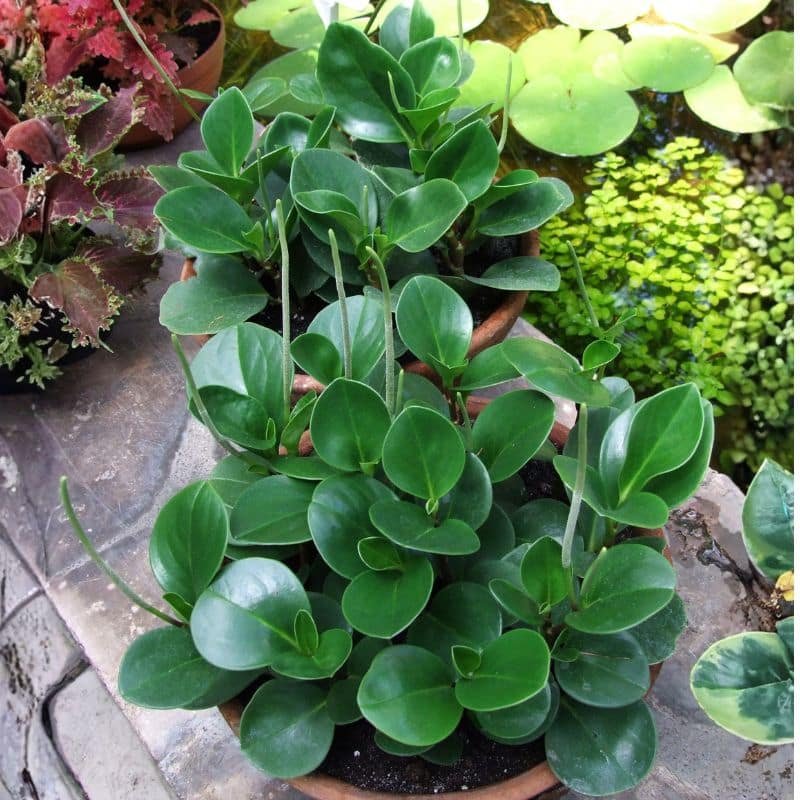
Native to southern Florida and the Caribbean, blunt leaf peperomia is a compact, waxy-leaved plant that stays tidy on a shelf or desk.
Give it bright, indirect light for the best color, but medium light works too. Water when the top half of the potting mix dries, since overwatering is the quickest way to lose it.
Use a chunky, fast-draining mix and pinch the tips if you want a bushier shape. Wipe dusty leaves so they can breathe.
It is nicknamed “baby rubber plant,” even though it is not closely related to the rubber tree.
8. Watermelon Peperomia (Peperomia argyreia)
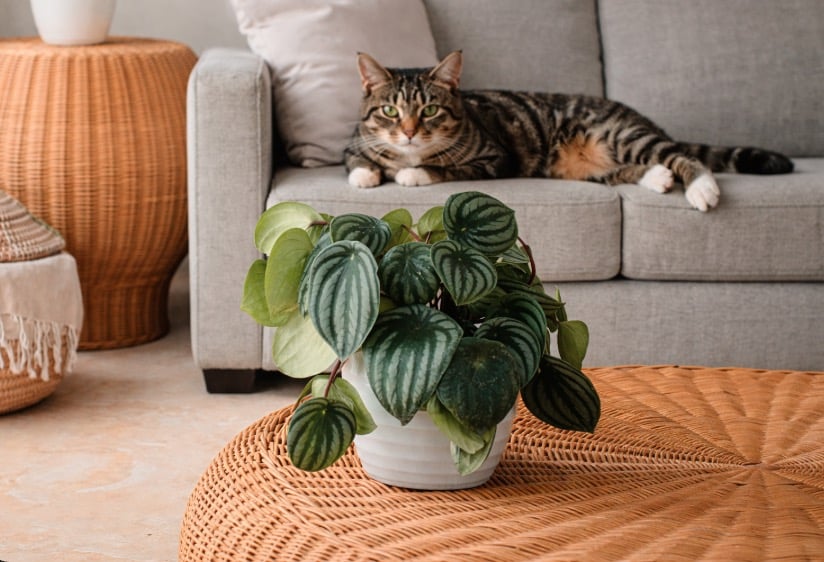
Watermelon peperomia is native to South America and is grown for its round leaves that look painted with stripes.
It prefers bright, indirect light and a light, airy potting mix. Water when the top inch dries, then let excess drain away, because soggy soil leads to root trouble fast.
Avoid harsh sun, and rotate the pot now and then so it grows evenly. It enjoys normal indoor humidity but appreciates a little extra in winter if your air gets dry.
The name “argyreia” refers to its silvery striping, and those red leaf stems make the whole plant pop.
9. Calathea (Prayer-Plant Relatives; Calathea spp.)
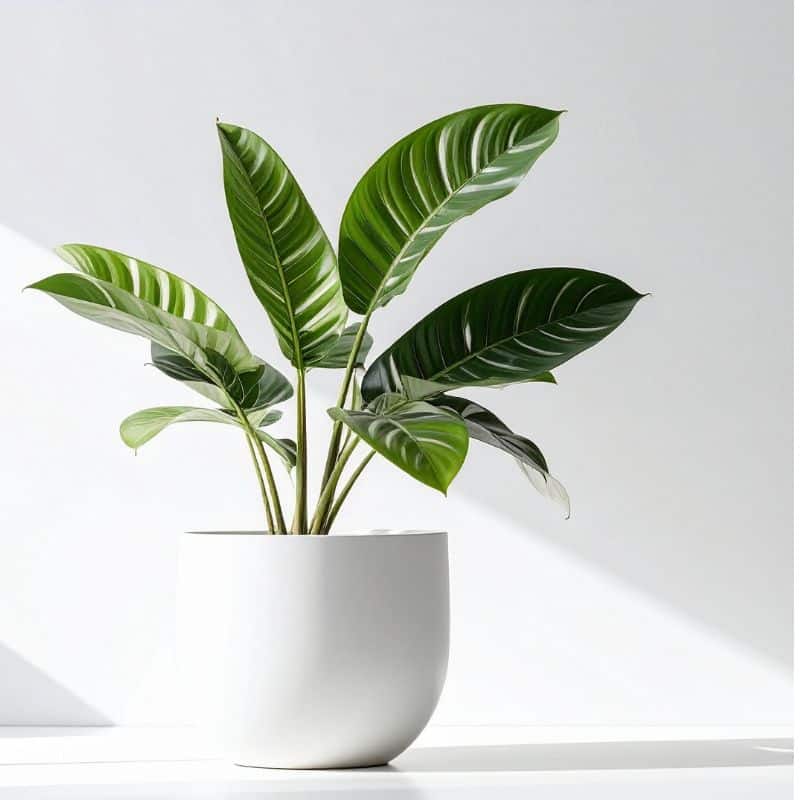
Calatheas come from the tropical Americas, where they live on humid rainforest floors under filtered light.
Indoors, give them low to medium indirect light, keep the soil lightly moist, and avoid letting the pot dry out completely. They also like higher humidity, and many do best with filtered or distilled water to help prevent crispy edges. They are grown mostly for their patterned leaves.
Warm temps and gentle airflow matter more than heavy feeding. Grouping plants together can help hold humidity.
Many calatheas fold their leaves upward at night, a “prayer plant” move called nyctinasty.
10. African Violet (Saintpaulia spp.)
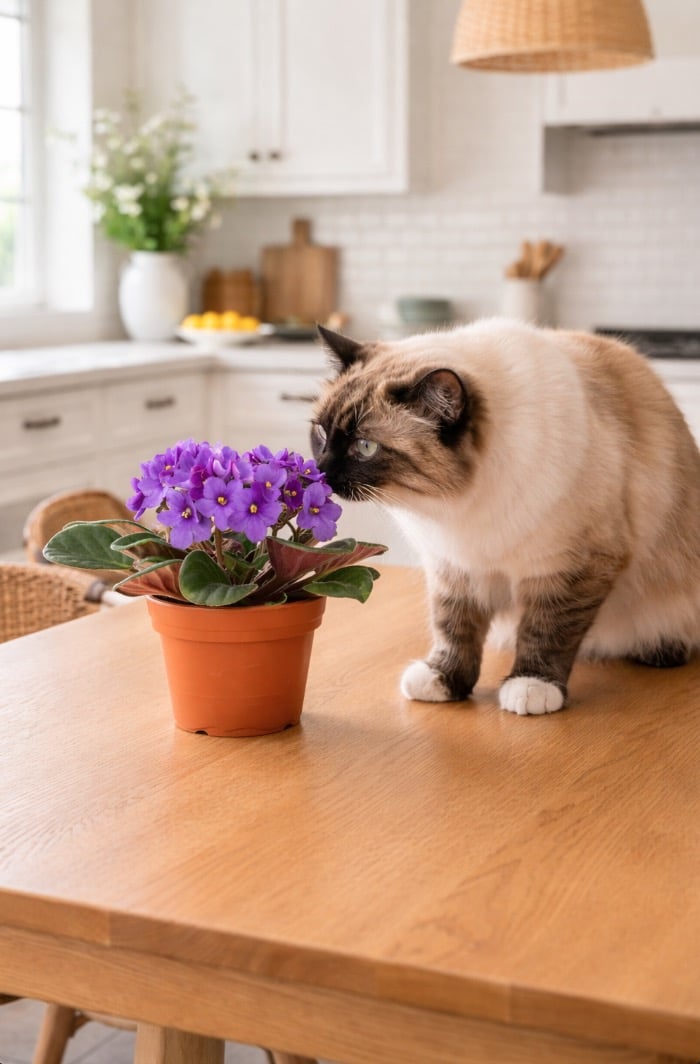
African violets hail from the rainforest regions of East Africa near Tanzania and Kenya, and they are famous for blooming on a windowsill.
Give them bright, indirect light, warm temps, and a small pot with well-draining mix. Water with room-temperature water and try to keep the crown dry, since cold water and wet leaves can spot.
Remove spent blooms to encourage more flowers, and rotate the pot so growth stays even. A simple saucer-watering routine works well.
They were named after Baron Walter von Saint Paul-Illaire, who helped introduce them to Europe.
11. Christmas Cactus (Schlumbergera bridgesii)
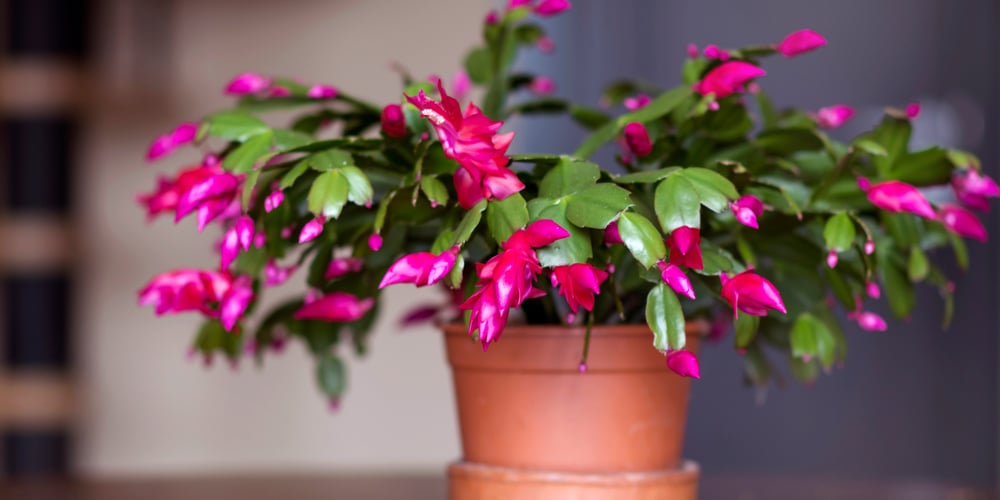
Christmas cactus comes from Brazil’s coastal rainforest, where it grows on trees and rocks instead of in desert sand.
Give it bright, indirect light and water when the top inch of mix feels dry. It likes a light, airy potting mix that drains fast.
Average home humidity is fine, but it appreciates a little extra in winter. To encourage blooms, give it cooler nights and longer dark periods in the weeks before flowering.
It is a “jungle cactus,” and those flat segments are not leaves, they are modified stems that store moisture.
12. Phalaenopsis Orchid (Phalaenopsis sp.)
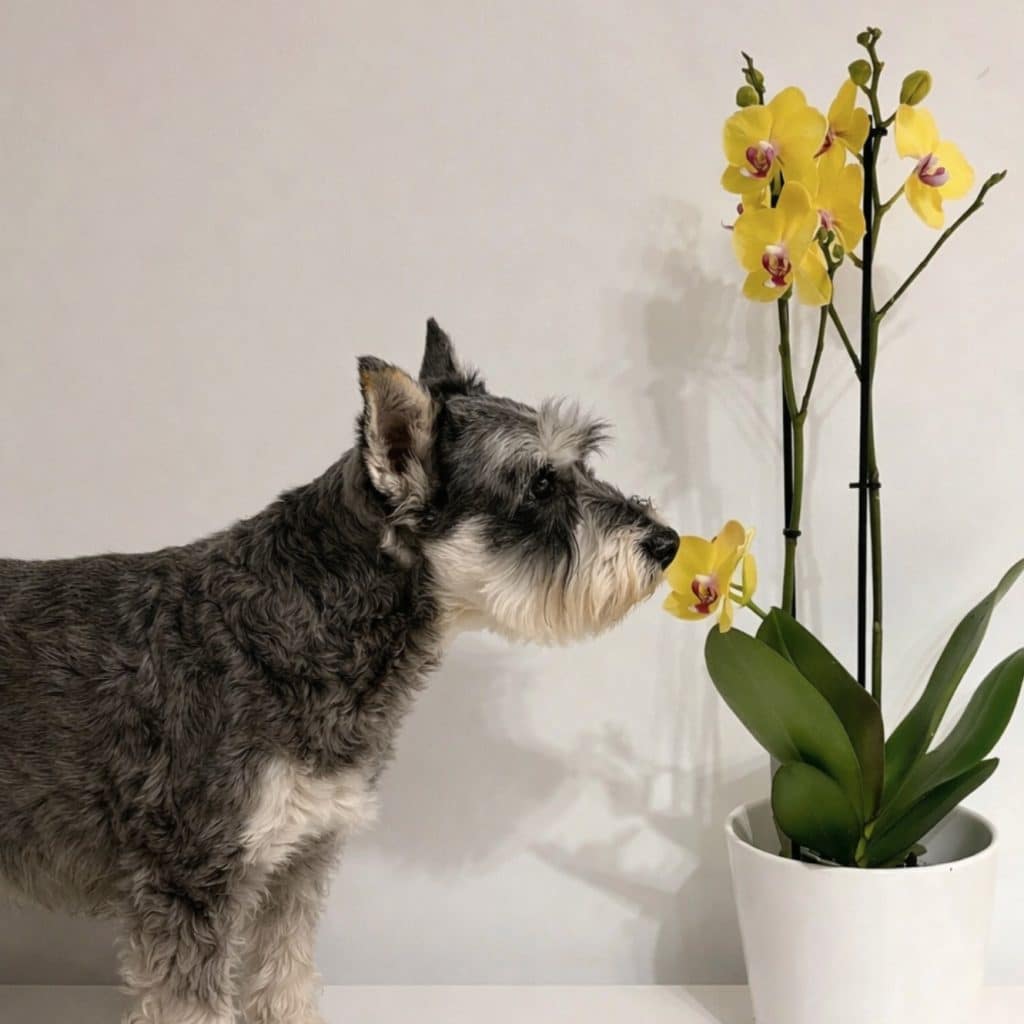
Phalaenopsis orchids are native to Southeast Asia and nearby islands, growing as epiphytes clinging to tree bark in warm, humid forests.
Indoors, they prefer bright, indirect light and a potting mix made for orchids, usually bark. Water thoroughly, then let the mix approach dryness before watering again.
Keep water out of the crown to prevent rot, and give gentle airflow. A light orchid fertilizer can help during active growth.
They are called “moth orchids” because the blooms can look like moths in flight, and a single spike can flower for weeks.
13. Money Tree (Pachira aquatica)
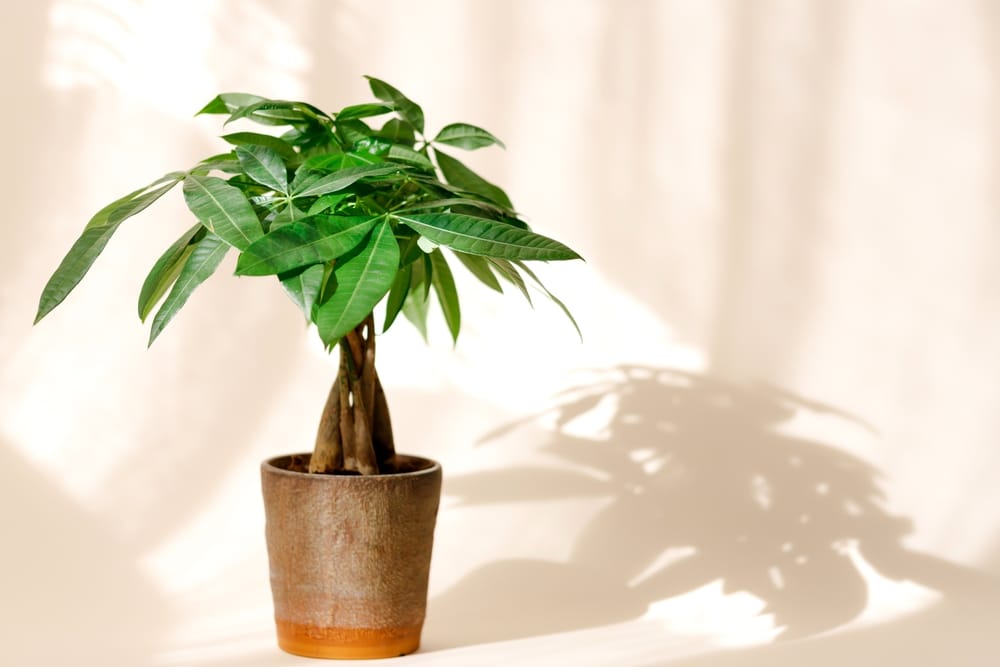
Money tree is native to Central and South America, where it grows in swampy or seasonally wet areas.
As a houseplant, it likes bright, indirect light and a well-draining mix. Water when the top couple inches dry out, then empty the saucer so roots are not sitting in water.
Rotate it so the trunk stays straight, and do not overfeed. It handles normal indoor humidity but grows faster with a little extra.
The braided trunk is man-made, trained when young, and the “money” reputation comes from a popular feng shui tradition.
14. Wax Plant / Porcelain Flower (Hoya carnosa ‘Krinkle Kurl’)
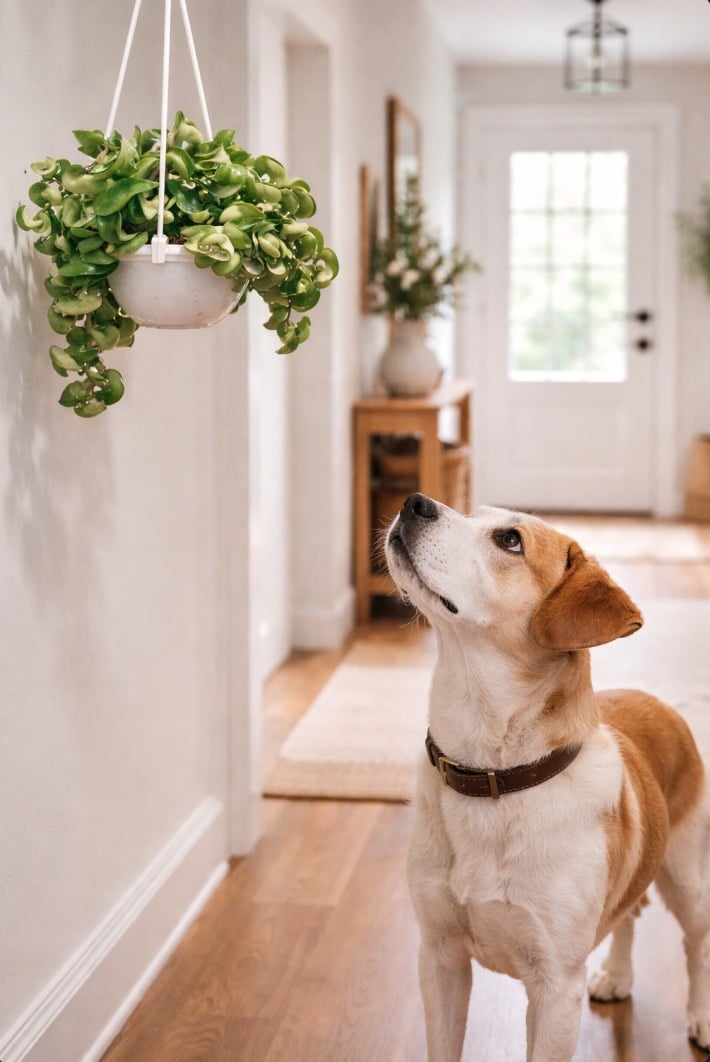
Hoyas come from parts of Asia and Australia, where many grow as climbing epiphytes in bright forest edges.
Give this one bright, indirect light and let the potting mix dry partway between waterings. A chunky mix helps, and it enjoys being slightly root-bound.
Warm temps and steady conditions keep it happy. If you get flower buds, do not cut the little spurs because it can bloom again from the same spot.
The blooms can look unreal, like wax or porcelain, and many hoyas release a sweet evening scent when they flower.
15. Swedish Ivy (Plectranthus australis)
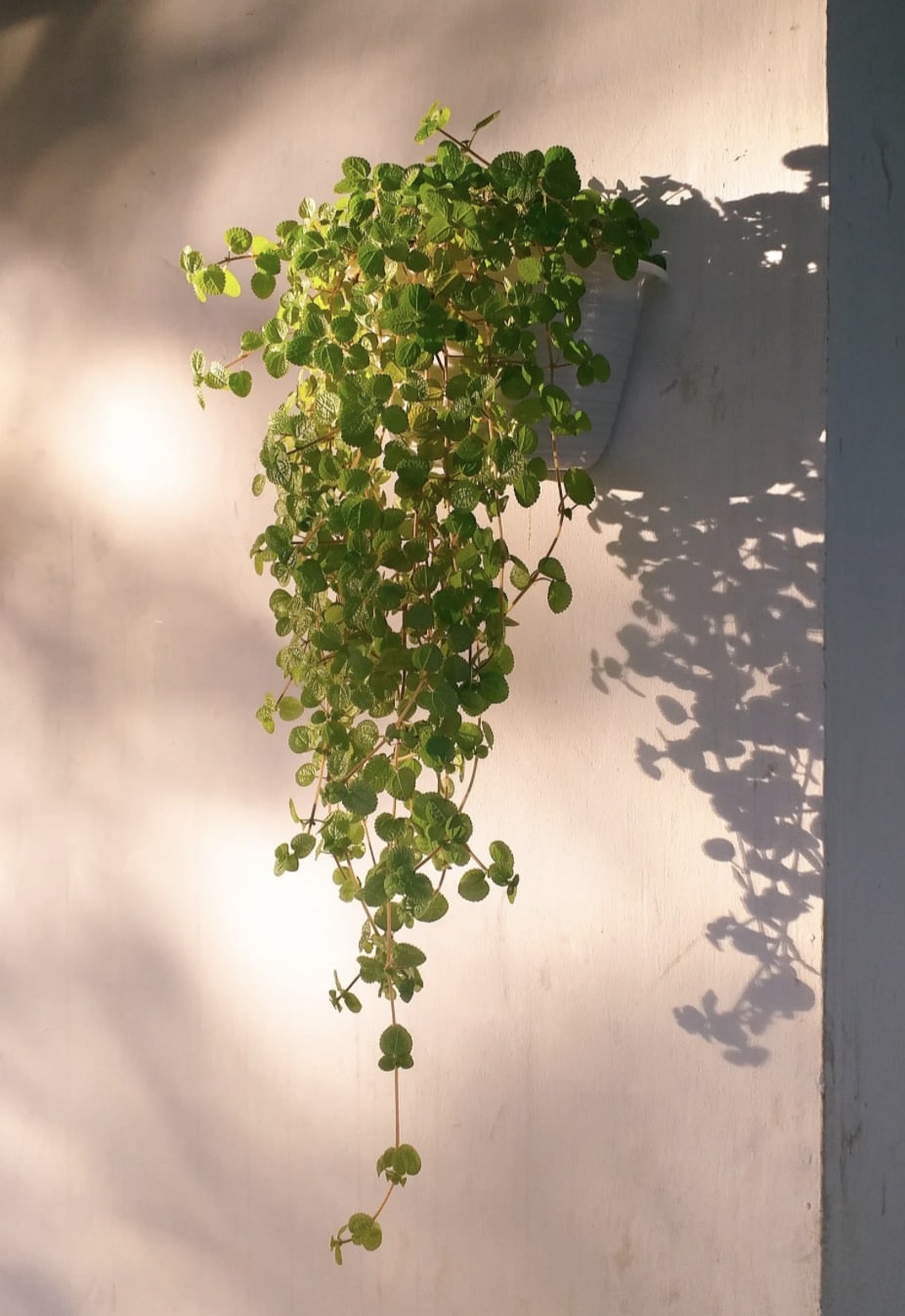
Swedish ivy is associated with southern Africa and has long been grown as an easy trailing houseplant.
It does best in bright, indirect light, but it also tolerates medium light. Water when the top inch dries, and pinch the tips to keep it full instead of leggy.
It is forgiving, but it dislikes soggy soil. A simple all-purpose mix and occasional feeding in spring and summer is plenty.
Despite the name, it is not actually from Sweden, but it became a classic because it was so easy to share as cuttings between friends.
16. Nerve Plant (Fittonia verschaffeltii)
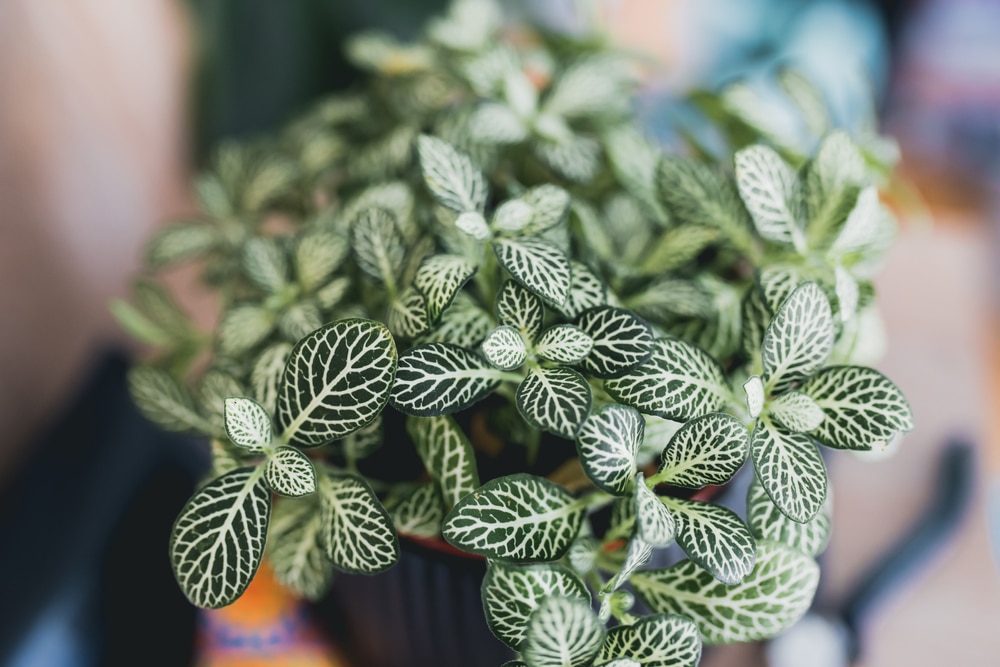
Nerve plant comes from the rainforests of South America, where it spreads low and enjoys steady warmth and moisture.
Indoors, it likes bright, indirect light, but it can handle medium light if you keep it consistent. Keep the soil lightly moist, not soaked, and do not let it dry out for long.
It loves humidity, so it shines in terrariums or grouped plant setups. Pinch the tips to keep it compact and bushy.
It is famous for its high-contrast “veins,” and it will dramatically wilt when thirsty, then perk back up after watering.
17. Polka Dot Plant (Hypoestes phyllostachya)
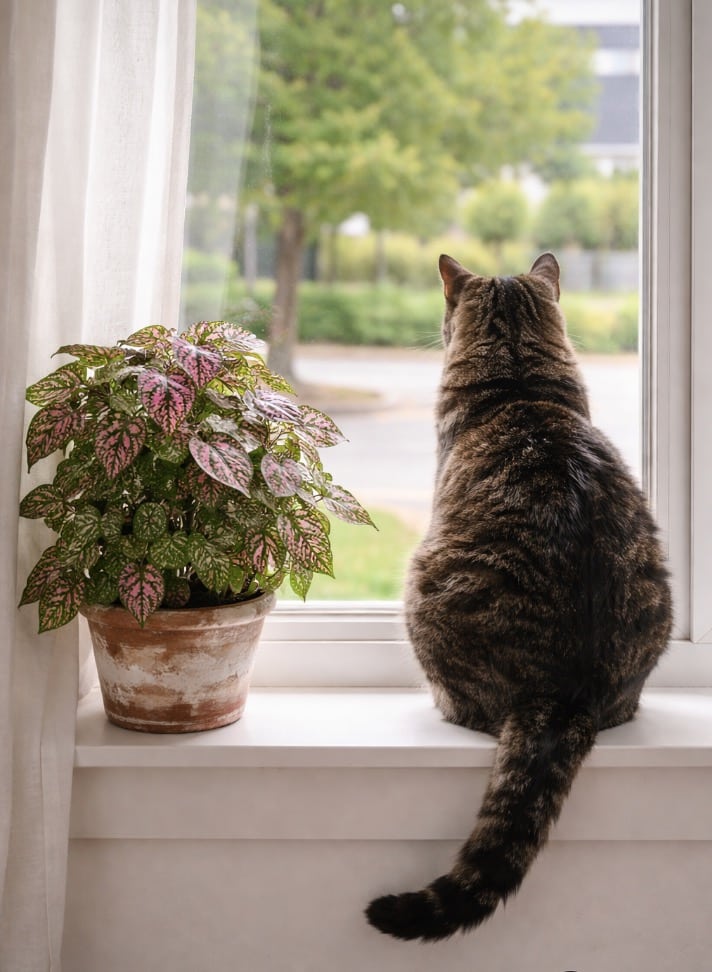
Polka dot plant is native to Madagascar, where it grows in warm, humid conditions with filtered light.
Give it bright, indirect light for the best spotting, and water when the top inch of soil dries. If it dries too much, it can drop leaves fast.
Pinch it regularly, because it wants to stretch and get leggy. It appreciates higher humidity and does well as a short-lived, colorful accent plant indoors.
Those pink, white, or red “dots” are a natural camouflage trick in its native habitat, and the colors can fade if light is too low.
18. Haworthia (Haworthia species)
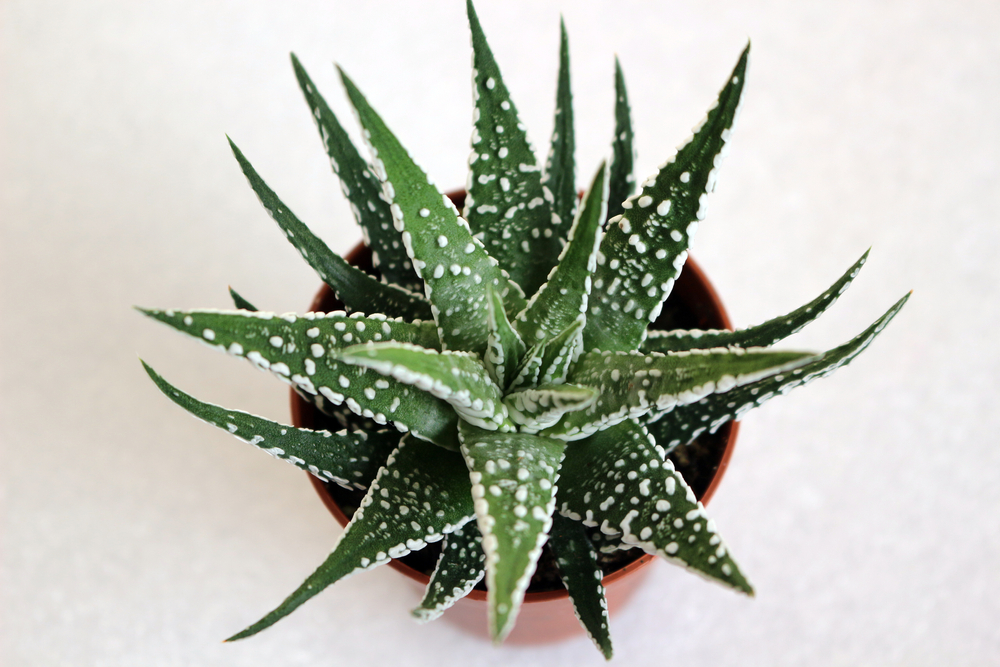
Haworthias come from South Africa, where they grow in rocky spots and often tuck themselves into partial shade.
They prefer bright light, including gentle sun, but not harsh afternoon scorch through glass. Use a fast-draining cactus mix and water only after the soil dries out fully.
They stay small, making them perfect for tight spaces and small pots. Too much water is the main problem, especially in cool weather.
Many have transparent “window” tips that help light reach the inside of the leaf, almost like a tiny plant skylight.
19. Mexican Snowball (Echeveria elegans)
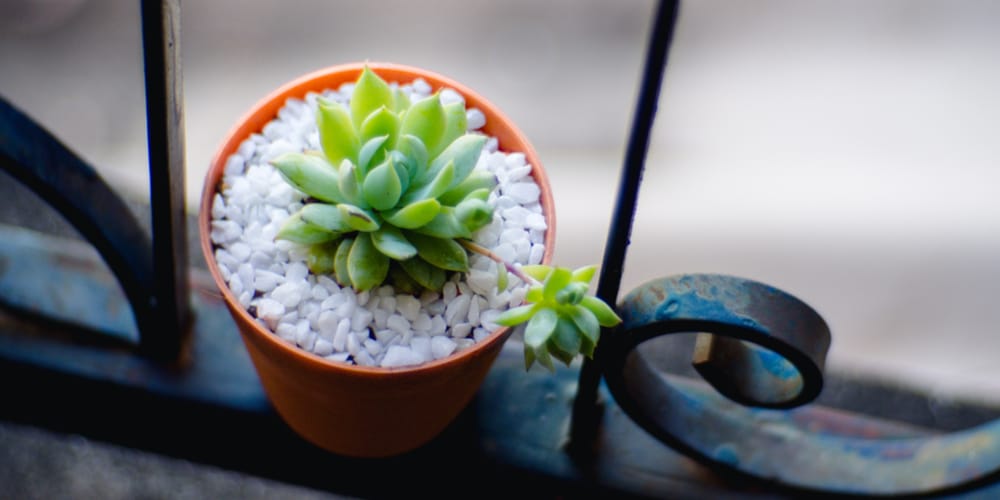
Echeveria elegans is native to Mexico and is loved for its tidy rosettes that look like living flowers.
Give it the brightest light you have, including several hours of sun, and use a gritty, fast-draining mix. Water deeply, then let the pot dry completely before watering again.
Keep water out of the rosette when possible to reduce rot. It is happiest in a pot with drainage and plenty of airflow.
People often call any rosette succulent “hens and chicks,” but the classic “hens and chicks” name is usually used for Sempervivum. Echeveria offsets too, and the “chicks” are offset rosettes that pop up around the mother plant.
20. Orange Star Bromeliad (Guzmania lingulata minor)
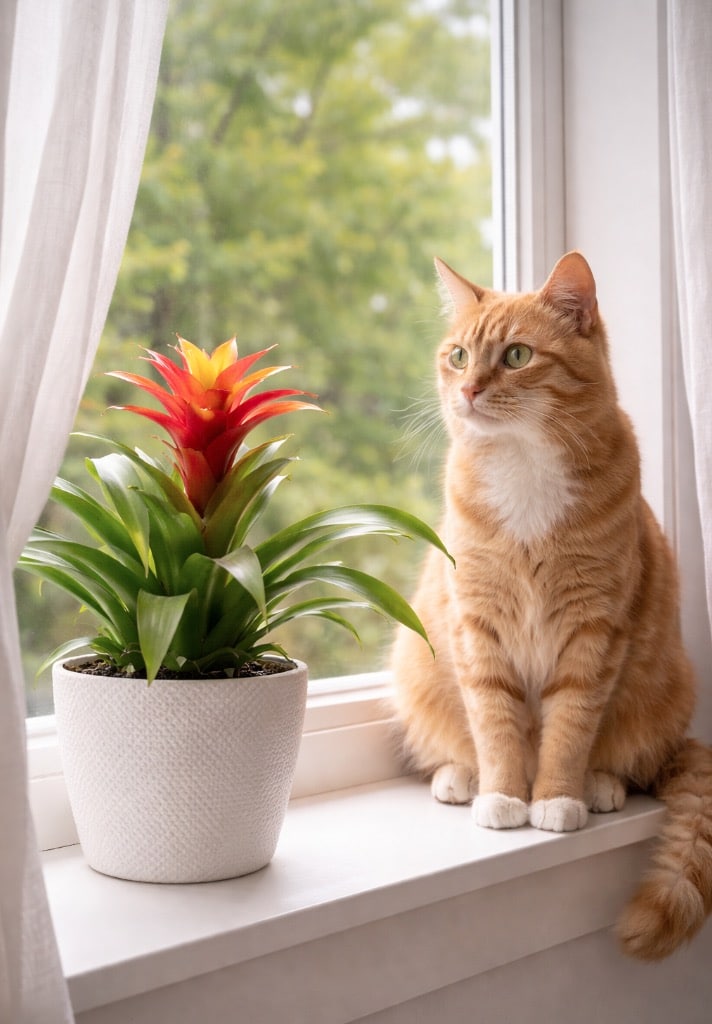
Guzmania bromeliads come from tropical Central and South America, where they grow attached to trees and catch water and debris in their leaf cups.
Indoors, give bright, indirect light and keep the central cup lightly filled with clean water, refreshing it often. Water the potting mix lightly, since it does not want wet roots.
Average home humidity works, but it likes warmth and gentle humidity boosts. After flowering, the main plant slowly fades while pups form at the base.
Trivia: that bright “flower” is actually a colorful bract, and the real blooms are small and tucked inside.
The NO NO List – Houseplants That Hurt
Some houseplants are “look but do not taste” for pets. A few only cause mouth irritation and drooling, but others can trigger serious illness if chewed.
Below are 10 common indoor plants that are best kept on high shelves, in hanging baskets, or behind a closed door.
If you suspect a bite happened, do not wait for symptoms. Call your vet or a pet poison hotline with the plant name and an estimated amount.
1. Sago Palm (Cycas revoluta)
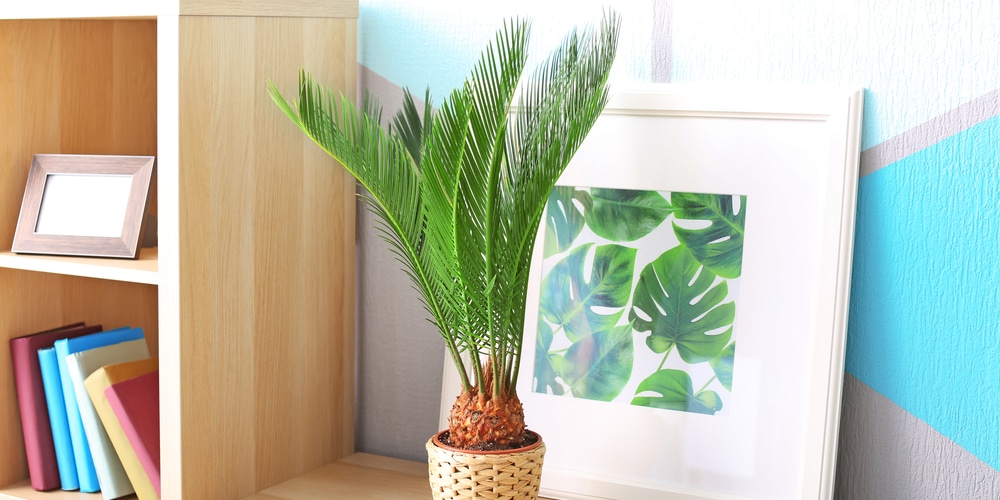
Sago palm is native to southern Japan and has been grown for centuries as a tough, tropical-looking accent plant.
It likes bright light, including some sun, and a fast-draining mix. Water only when the top few inches dry, since soggy soil can rot the roots.
Keep it warm, and do not overfeed. Slow growth is normal, so do not chase it with extra water.
This is one of the most dangerous houseplants for pets, and chewing can lead to severe vomiting, liver failure, and even death. Trivia: it is not a true palm, it is a cycad.
2. ZZ Plant (Zamioculcas spp.)
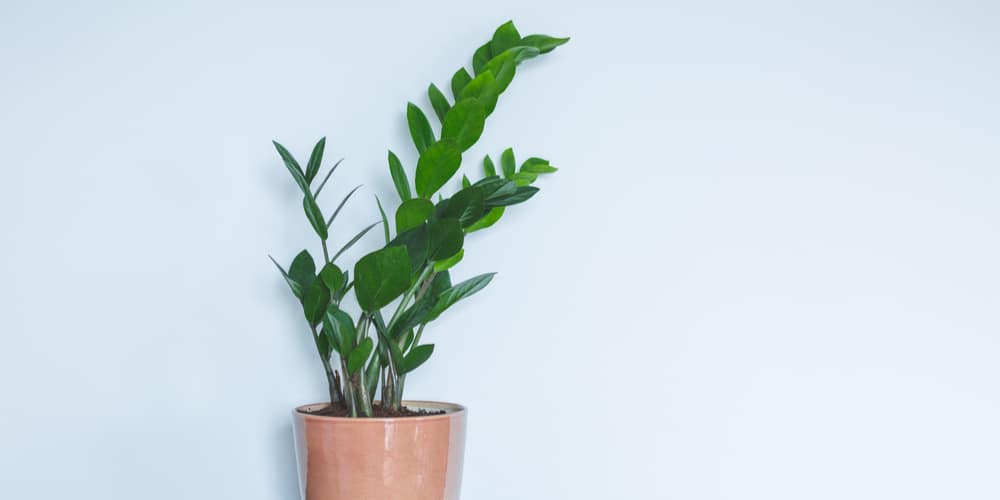
ZZ plant is native to eastern Africa and became popular because it tolerates low light and missed waterings.
It does best in bright, indirect light, but it will survive in medium to low light. Let the pot dry out well between waterings, and use a well-draining mix.
Wipe leaves occasionally to keep them glossy and dust-free. It is more likely to suffer from overwatering than from underwatering.
ZZ plant contains insoluble calcium oxalate crystals, which can cause mouth pain, drooling, and vomiting if chewed. Trivia: its thick stems store water like a built-in canteen.
3. Snake Plant / Mother-in-Law’s Tongue (Sansevieria trifasciata)
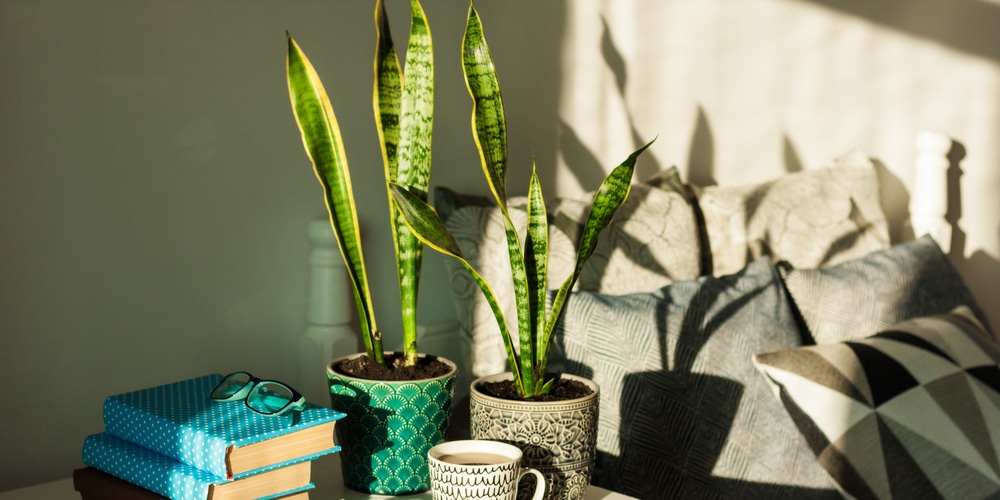
Snake plant is native to West Africa and is famous for surviving almost anywhere indoors.
It prefers bright, indirect light, but it also handles low light. Use a gritty, fast-draining mix and water only after the soil dries fully.
Keep it in a pot with drainage and go easy in winter, when it needs even less water.
The plant contains saponins, and chewing often causes vomiting and stomach upset. Trivia: it uses a water-saving growth style that helps it tolerate dry indoor air.
4. Jade Plant (Crassula argentea)
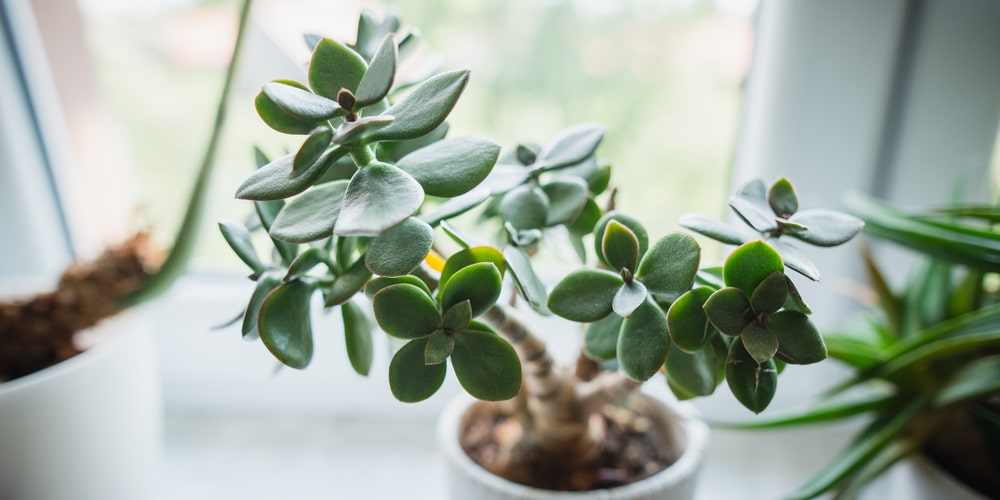
Jade plant comes from South Africa and is a classic “good luck” succulent that can live for decades.
Give it bright light and a gritty mix. Water deeply, then let the soil dry completely before watering again.
Pinch the tips to encourage a fuller shape, and rotate the pot so it grows evenly. Too much water is the main cause of failure.
Chewing jade can lead to vomiting, depression, and incoordination, so it is best kept up high. Trivia: old jade plants can form thick, woody trunks that look like tiny trees.
5. Aloe (Aloe vera)
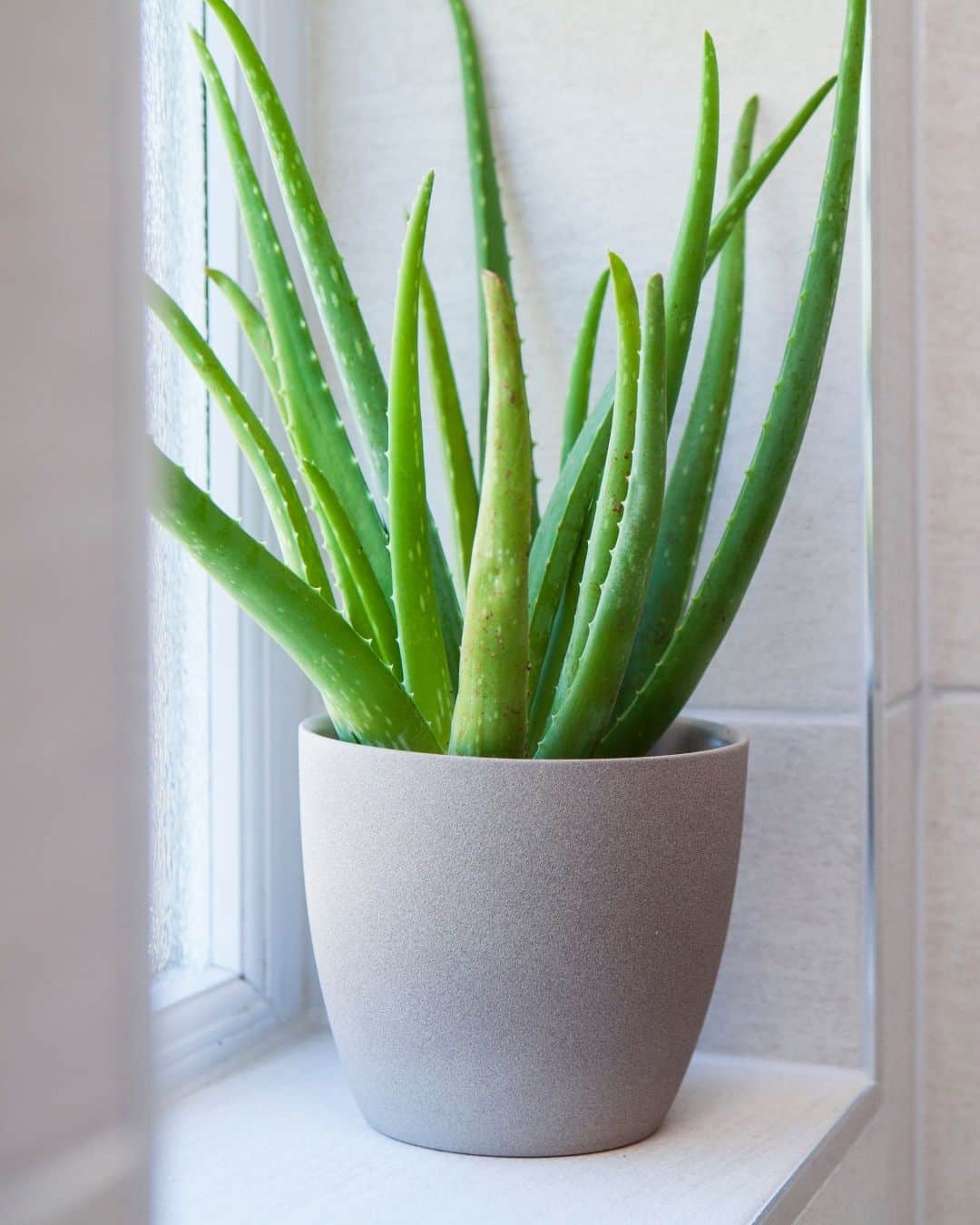
Aloe is native to arid regions and has been grown worldwide for its thick, gel-filled leaves.
It needs bright light, even some sun, and a cactus-style mix that drains fast. Water only after the pot dries out fully.
A small pot with drainage helps prevent root rot, and aloe actually prefers being slightly snug in its container.
Aloe contains compounds that can cause vomiting, diarrhea, and lethargy in cats and dogs if chewed. Trivia: aloe pups often sprout at the base, letting one plant become a small cluster over time.
6. Golden Pothos / Devil’s Ivy (Epipremnum aureum)
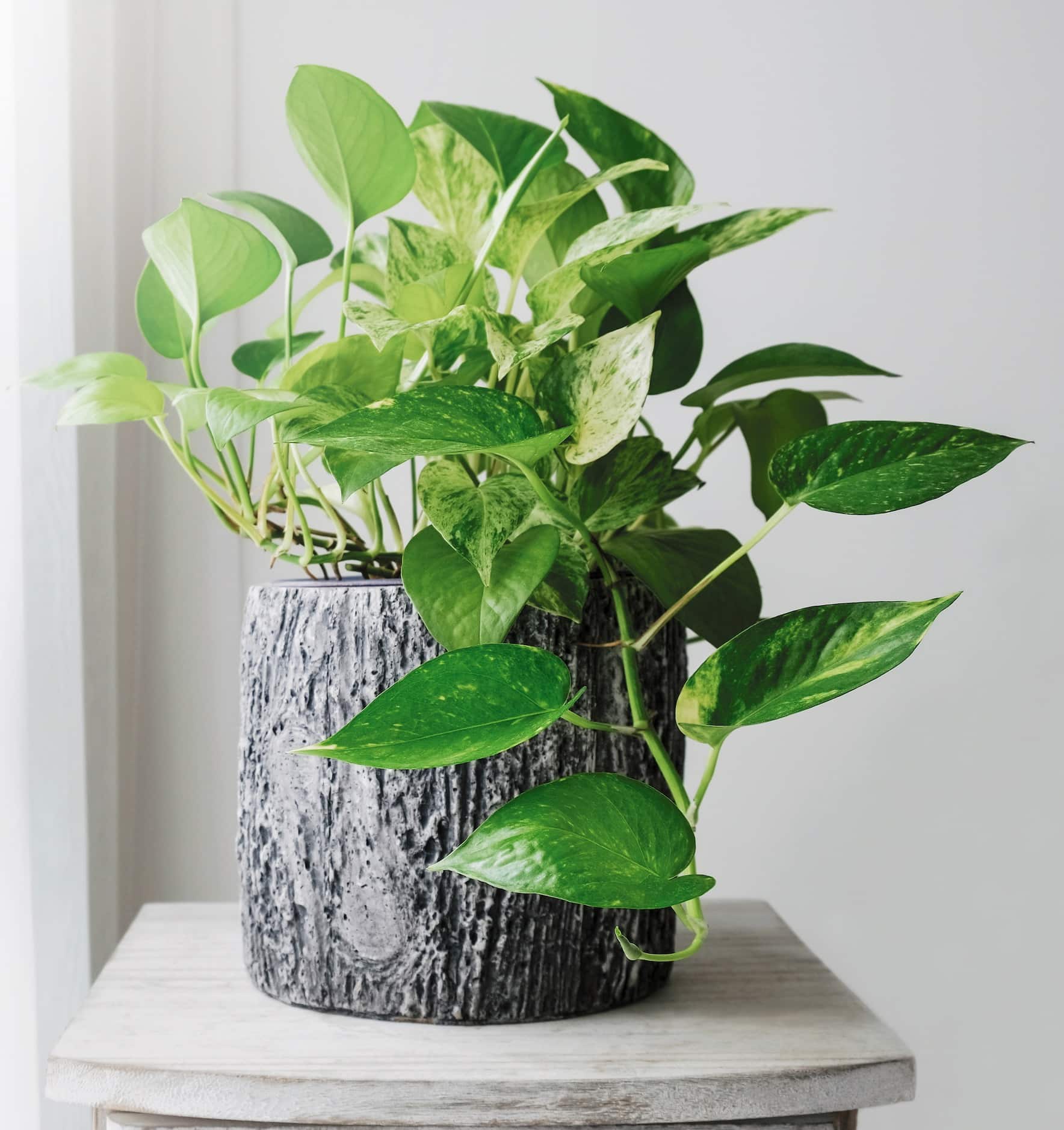
Pothos is native to the South Pacific region and is one of the easiest trailing houseplants to grow.
It thrives in bright, indirect light but tolerates medium light. Water when the top inch or two dries, and trim vines to keep it full.
It roots easily from cuttings in water, so it is a favorite “share with a friend” plant.
Pothos contains insoluble calcium oxalates, which can cause intense mouth irritation, drooling, and vomiting. Trivia: in the wild, pothos can climb and develop much larger leaves than it does indoors.
7. Peace Lily (Spathiphyllum)
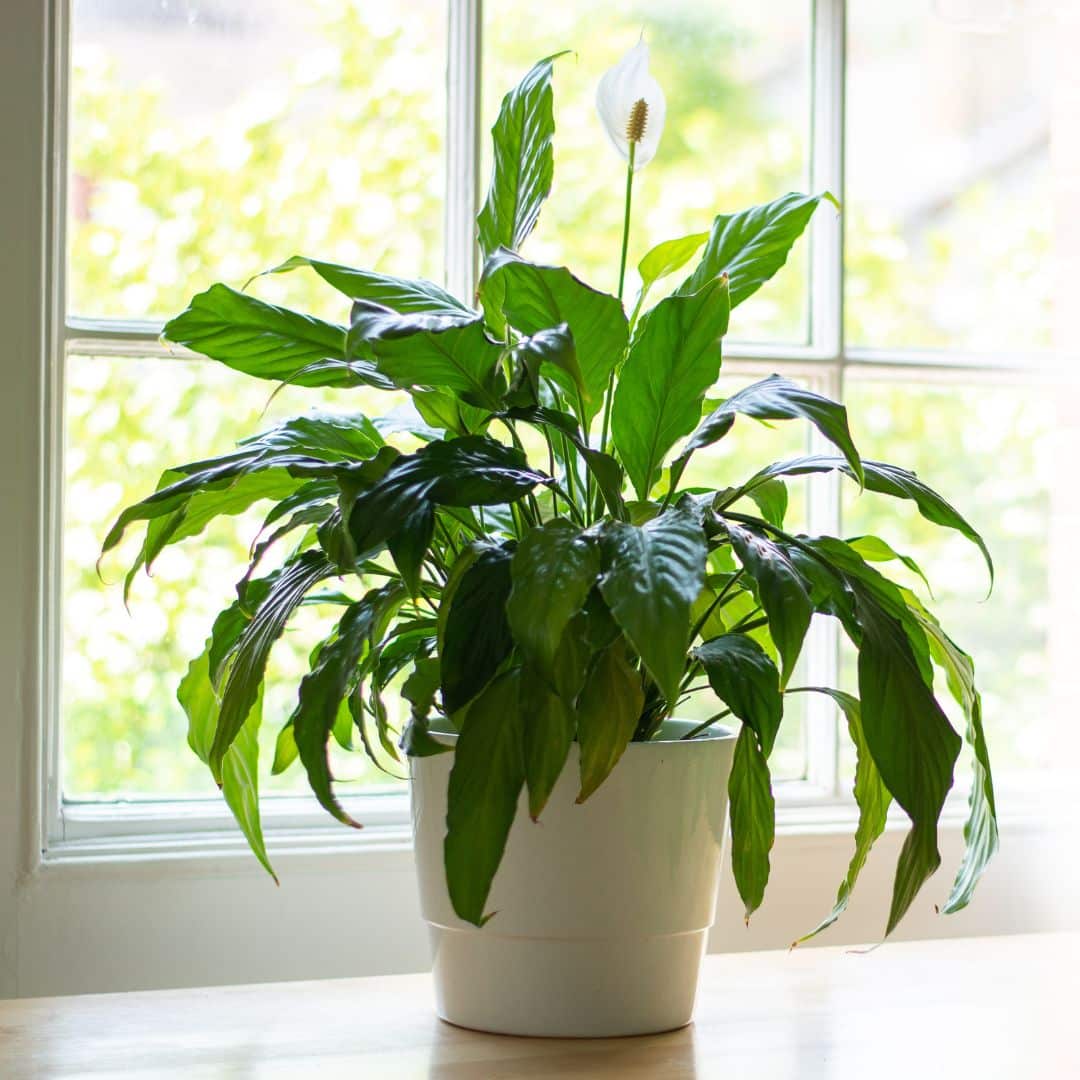
Peace lily is native to tropical regions of the Americas and is loved for its glossy leaves and white blooms.
It prefers medium to bright indirect light and evenly moist soil, not soggy soil. If it droops, it is usually asking for water, but it should bounce back quickly.
It also appreciates a bit more humidity, especially in winter. Remove spent blooms to keep it tidy.
Peace lily contains insoluble calcium oxalates, and chewing can cause mouth burning, drooling, and vomiting. Trivia: the white “flower” is a showy bract around a central spike.
8. Swiss Cheese Plant / Monstera (Monstera deliciosa)
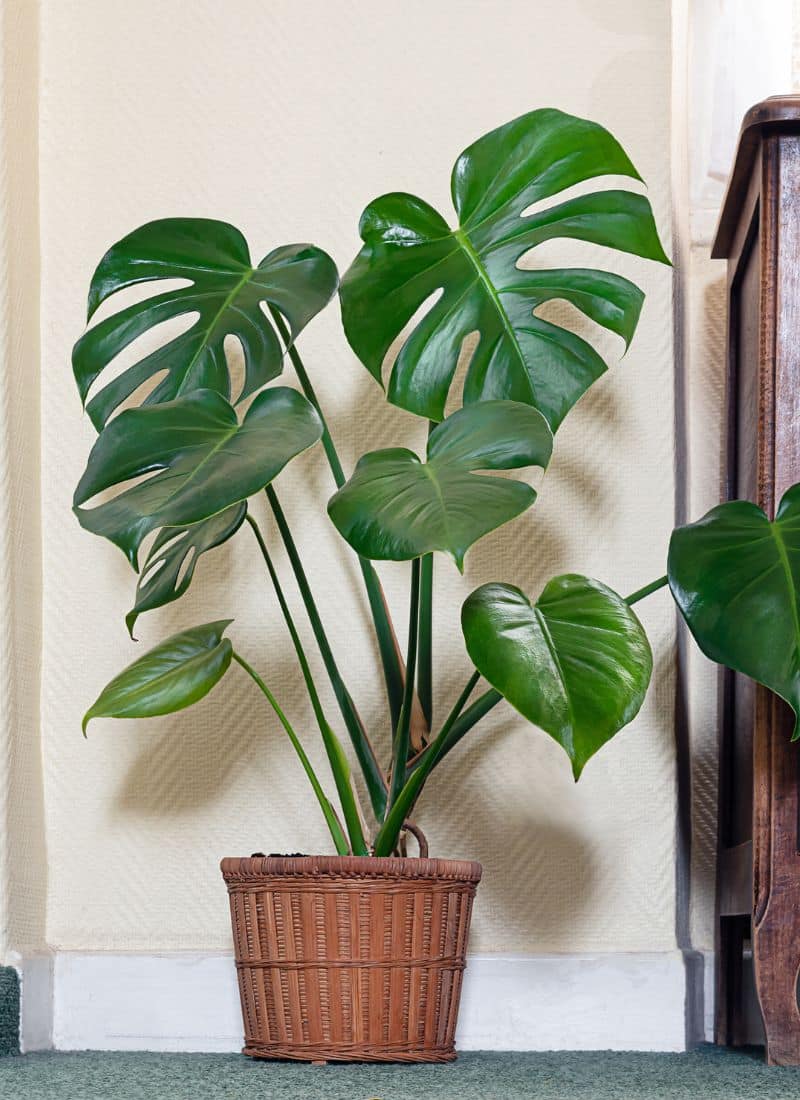
Monstera is native to Central America and is famous for big leaves with splits and holes as it matures.
Give it bright, indirect light and water when the top couple inches dry. A chunky mix helps, and a moss pole can support climbing growth.
Rotate the pot so it does not lean, and wipe leaves so they can photosynthesize well. It likes warmth and steady conditions.
Monstera contains insoluble calcium oxalates, causing oral irritation, drooling, and stomach upset if chewed. Trivia: the leaf holes help it handle wind and dappled jungle light.
9. Philodendron (Example: Heartleaf Philodendron, Philodendron hederaceum)
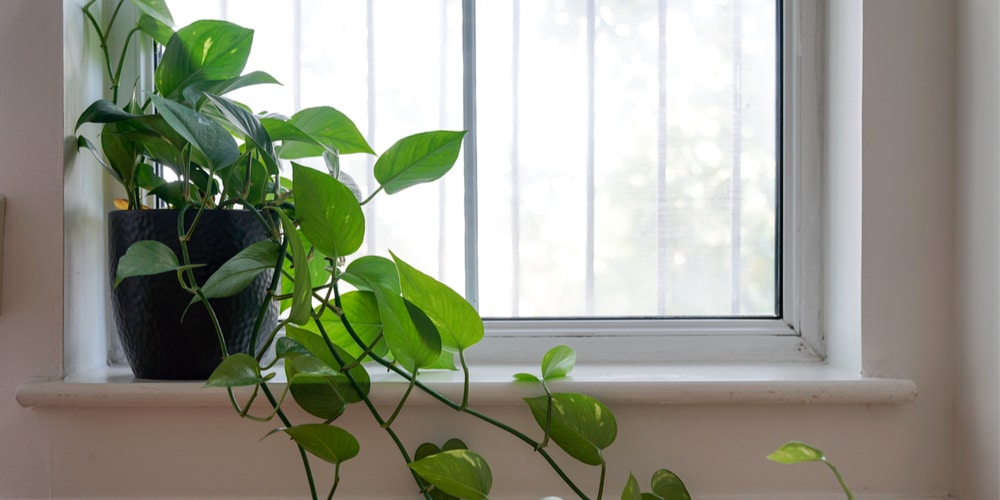
Many philodendrons come from tropical Central and South America, where they climb trees in warm, humid forests.
Indoors, they do best in bright, indirect light but tolerate medium light. Water when the top inch dries, and keep the mix airy, not heavy.
Trim long vines to encourage branching, and let cuttings root in water for easy propagation. They like warmth and moderate humidity.
Philodendrons contain insoluble calcium oxalates, so chewing can cause oral pain and drooling. Trivia: philodendron means “tree lover,” a nod to its climbing habit.
10. Dumb Cane (Dieffenbachia)
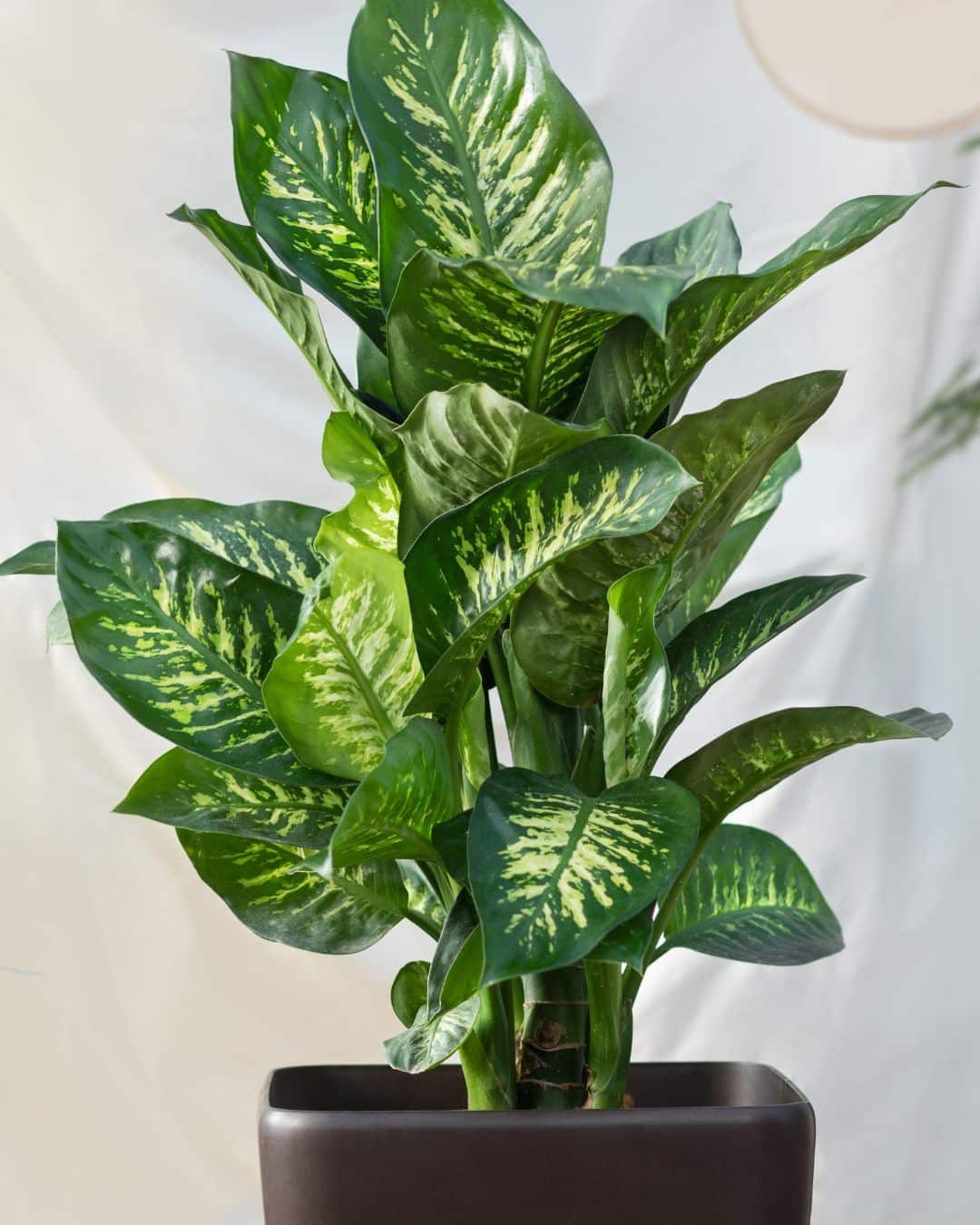
Dieffenbachia is native to tropical Central and South America and is grown for its bold, patterned leaves.
It likes bright, indirect light and evenly moist soil, letting the top inch dry slightly between waterings. Use a pot with drainage and avoid cold drafts, since it prefers warmth.
Rotate the plant so it grows straight, and wipe leaves to keep them clean. It can get tall over time, so staking may help.
Dumb cane contains insoluble calcium oxalates plus enzymes, causing intense mouth irritation, drooling, and vomiting if chewed. Trivia: its old nickname comes from temporary mouth swelling in people.