Tired of staring at that drab, lifeless fence in your backyard? Imagine transforming it into a lush, vibrant wall of color and fragrance that buzzes with pollinators and turns heads from the neighbors!
Climbing plants are nature’s quick-fix decorators, scaling heights in no time to create privacy, beauty, and even edible treats.
In this guide, we’ll dive into 15 fast-growing climbers that’ll revamp your fence pronto—perfect for beginners or green thumbs alike. Get ready to plant your way to paradise!
1. Clematis: The Queen of Climbing Vines
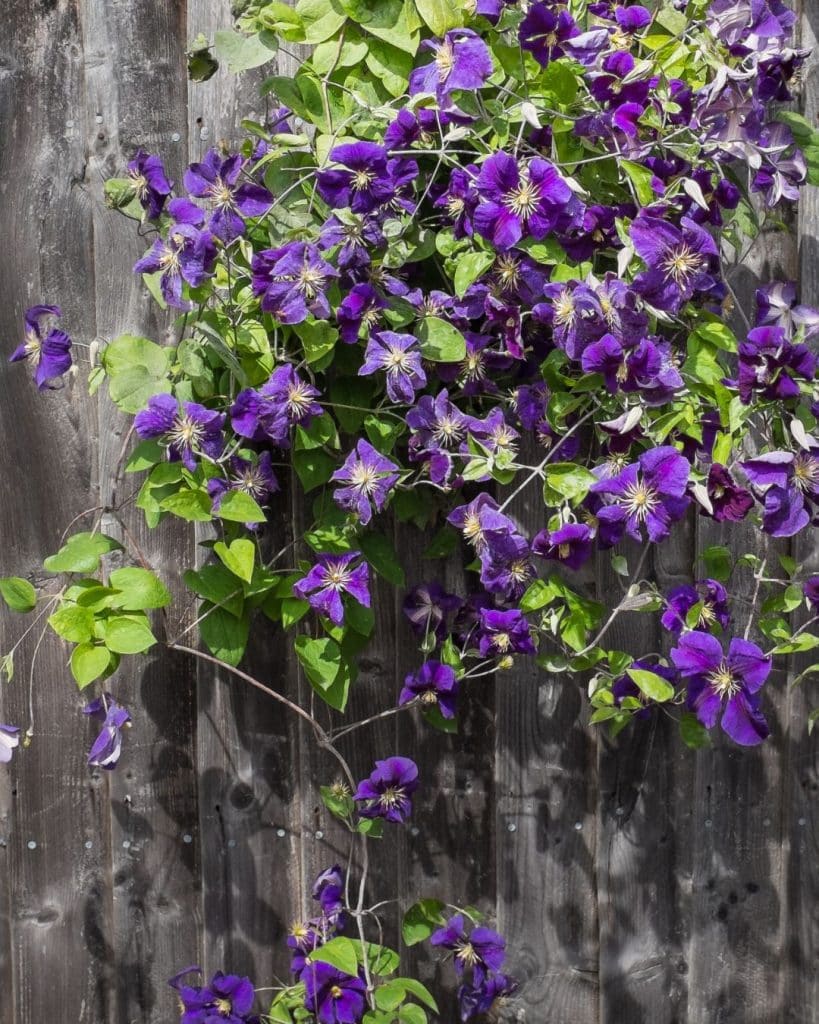
Clematis, the “Queen of the Vines,” boasts star-shaped blooms in purple, pink, white, and more, climbing 20 feet with green foliage for a colorful fence transformation. Flowers appear spring through fall.
Suited to USDA zones 4-9, temperate climates; prefers well-drained soil (pH 6.5-7.0), full sun, cool roots.
Excels on fences with twining stems for quick grip and growth (10-15 feet/season), providing dense privacy.
Plant deep, mulch, prune appropriately, and you’ll get stunning results fast!
Greek-named “vine branch,” cultivated since 16th century, attracts hummingbirds and butterflies.
2. Honeysuckles: Fragrant Twining Delight
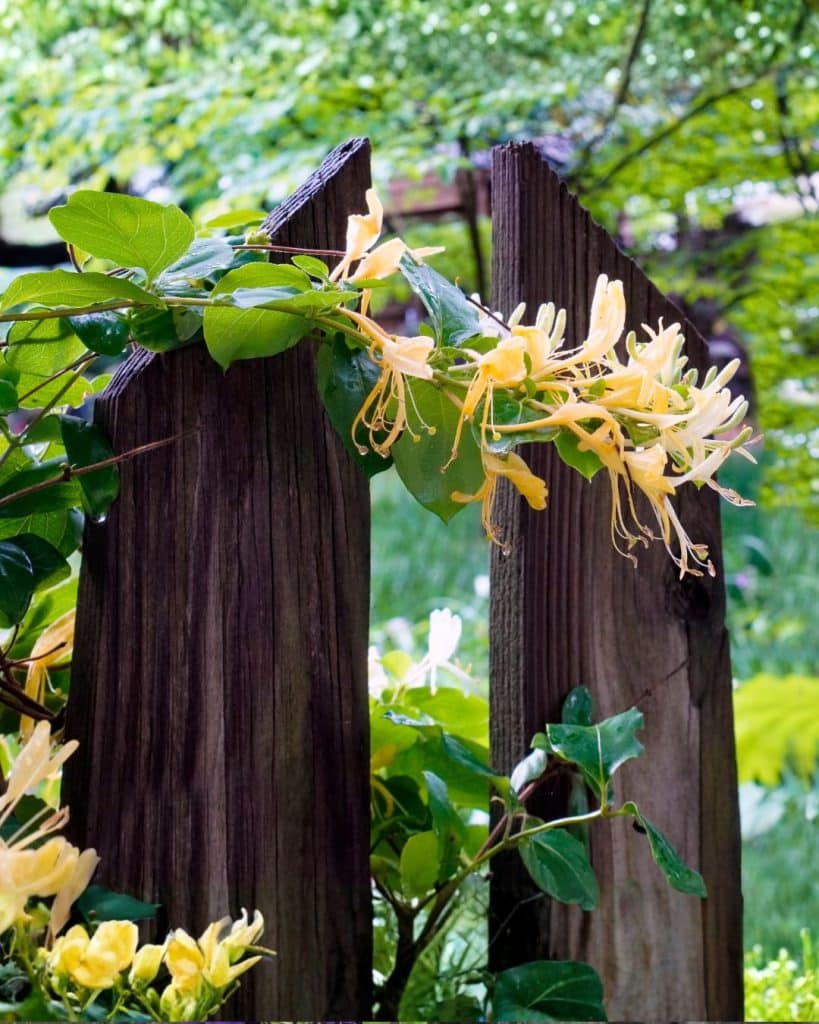
Honeysuckles enchant with tubular flowers in pink, yellow, or white, often blooming profusely from late spring to fall, filling the air with sweet perfume.
These vigorous vines climbs 10-20 feet, with oval leaves creating a dense, evergreen or semi-evergreen screen.
Best for USDA zones 4-9, in mild to temperate climates; thrives in well-drained soil (pH 6.0-7.5), partial to full sun (4-6 hours), tolerating some shade.
It shines on fences via twining stems that wrap around supports, growing rapidly (up to 10 feet/year) for quick coverage and natural privacy barriers.
Plant in spring, water regularly, and prune after flowering.
Native to Asia and Europe, it’s symbolized love in folklore; attracts hummingbirds and butterflies, but some species are invasive. Choose natives like Lonicera sempervirens.
3. Star Jasmines: Evergreen Scented Star
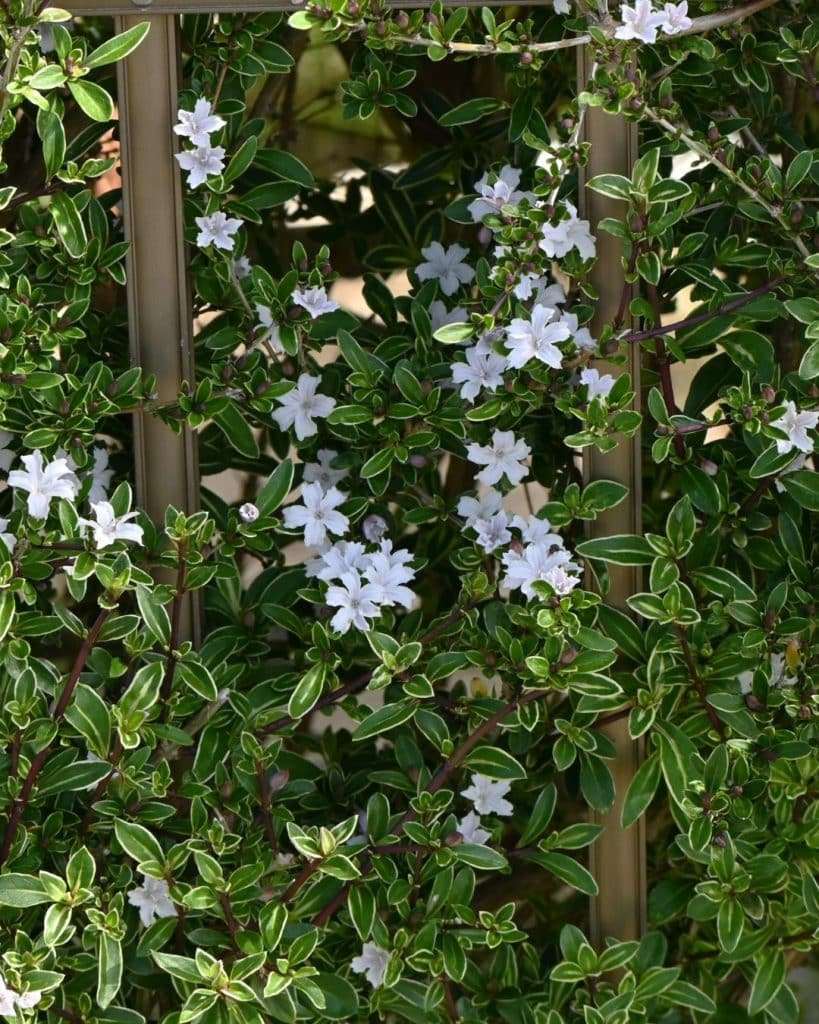
Star jasmines captivate with glossy, dark green leaves and clusters of white, star-shaped flowers exuding a heady fragrance, blooming spring through summer. They climb 15-20 feet, forming a lush, year-round backdrop.
Suited to USDA zones 8-10, warmer subtropical climates; needs well-drained, fertile soil (pH 6.0-7.0), full sun to partial shade (6+ hours ideal), frost-sensitive so protect in cooler areas.
Perfect for fences with twining vines that cling effortlessly, offering fast growth (5-10 feet/year) and thick foliage for screening.
Plant in spring, mulch for moisture, train on wires, and watch the scented elegance transform fences swiftly!
Native to Asia, it’s not true jasmine but Trachelospermum jasminoides; used in perfumes, and its blooms symbolize purity in some cultures.
4. Wisterias: Cascading Purple Majesty
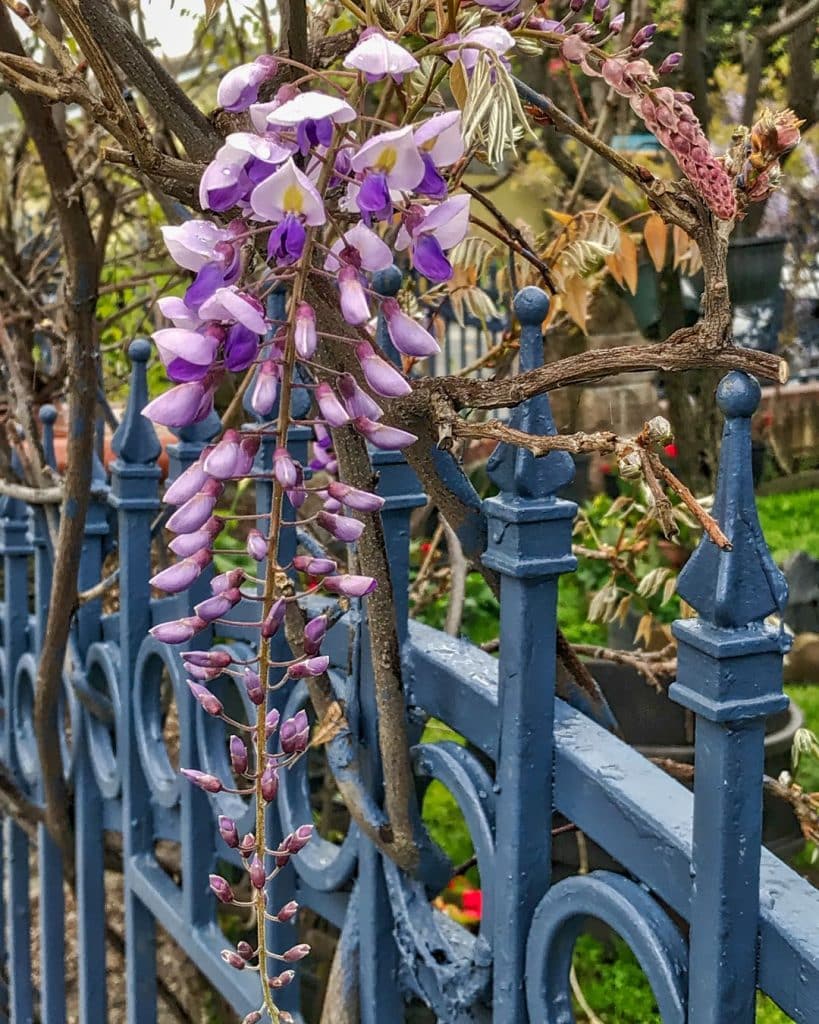
Wisterias mesmerize with long, dangling clusters of lavender, blue, or white flowers in spring, followed by velvety seed pods and pinnate leaves that turn golden in fall. These robust vines climb 20-30 feet, creating a dramatic, pergola-like effect on fences.
Adapted to USDA zones 5-9, temperate to subtropical climates; requires rich, well-drained soil (pH 6.0-7.0), full sun (6+ hours), and sturdy support due to heavy growth.
It dominates fences with twining stems that coil tightly, achieving rapid expansion (10-15 feet/year after establishment) for lush, arching coverage.
Plant grafted varieties in spring, train early, and water deeply.
Native to Asia, it’s over 200 years old in some US gardens; symbolizes longevity in Japan, but can be invasive…prune aggressively.
5. Climbing Roses: Thorny Romantic Charm
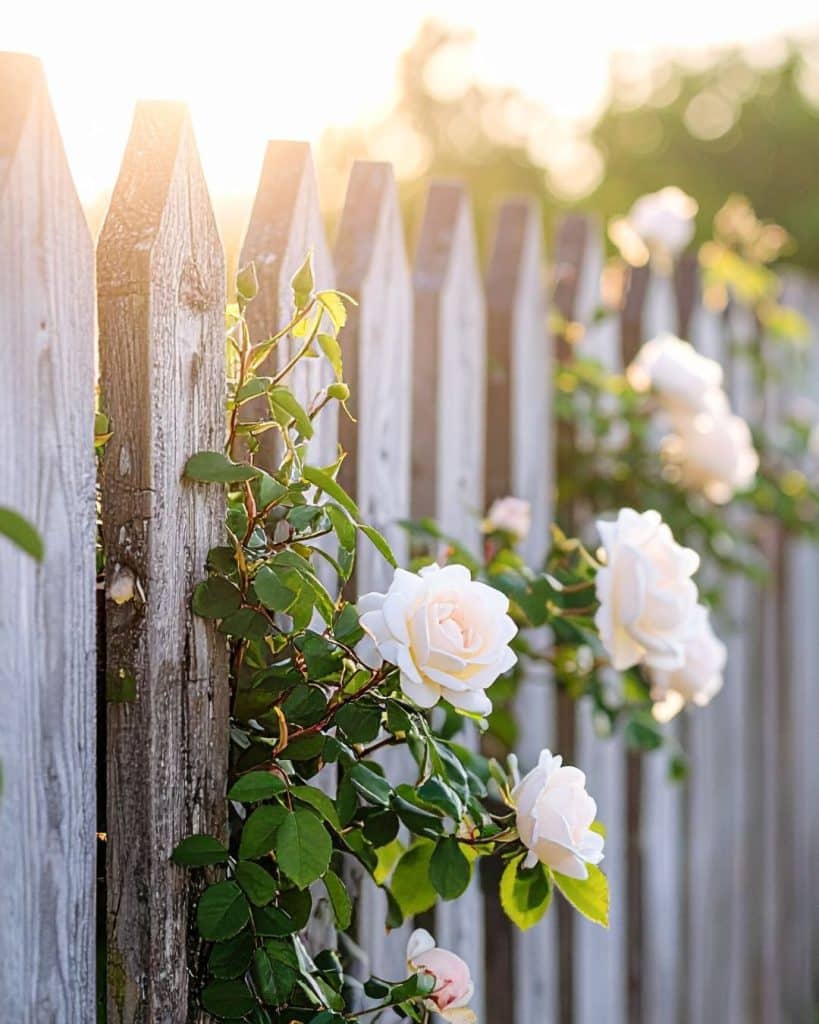
Climbing roses enchant with abundant, fragrant blooms in red, pink, yellow, or white, repeating from spring to frost, amid glossy leaves and thorny canes that add rustic appeal. They reach 8-20 feet, weaving a floral fence fantasy.
Suitable for USDA zones 5-9, mild climates; demands fertile, well-drained soil (pH 6.0-6.5), full sun (6+ hours), and good air circulation to fend off diseases.
They excel on fences using flexible canes tied to supports, growing swiftly (5-10 feet/year) for dense, blooming screens that enhance privacy.
Plant bare-root in winter/spring, mulch, fertilize monthly, prune in dormancy.
Cultivated for millennia, roses symbolize love; varieties like ‘New Dawn’ are everblooming, attracting bees and butterflies.
6. Boston Ivy: Fiery Foliage Climber
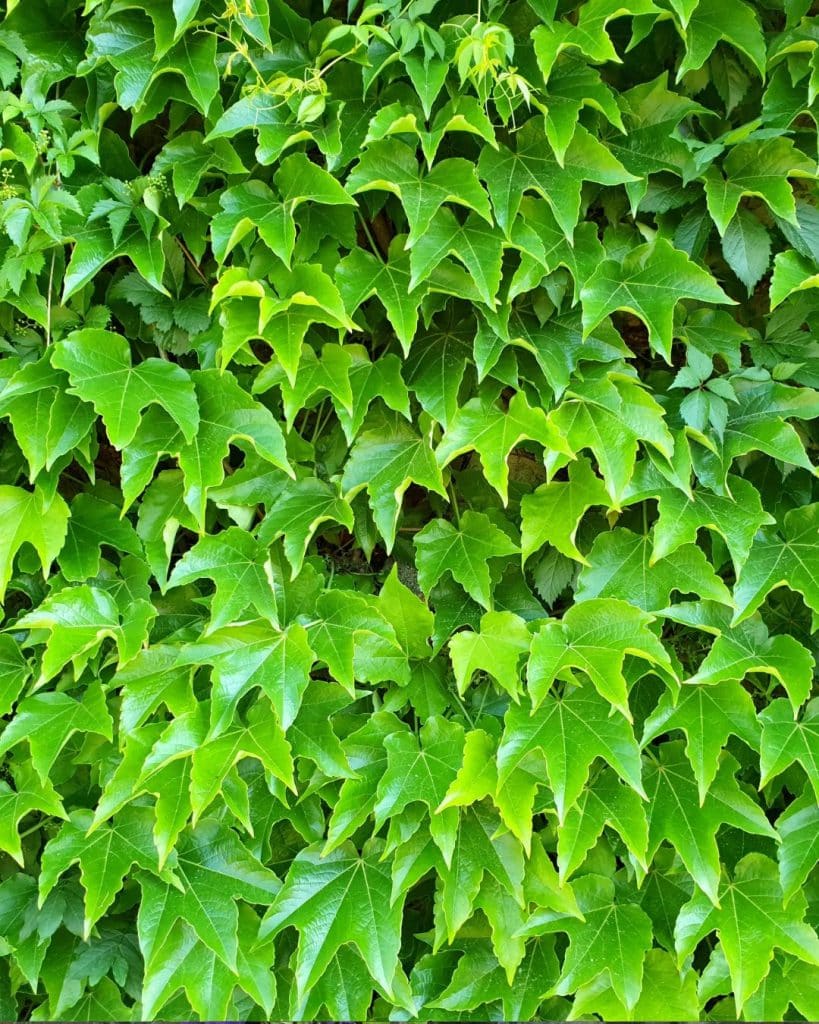
Boston ivy impresses with lobed, green leaves that explode into crimson and orange in fall, providing year-round interest. These self-clinging vines spread 30-50 feet, blanketing surfaces in a ivy-league style.
Thrives in USDA zones 4-8, cooler temperate areas; tolerates various soils (pH 5.5-7.5), full sun to shade, but colors best in sun.
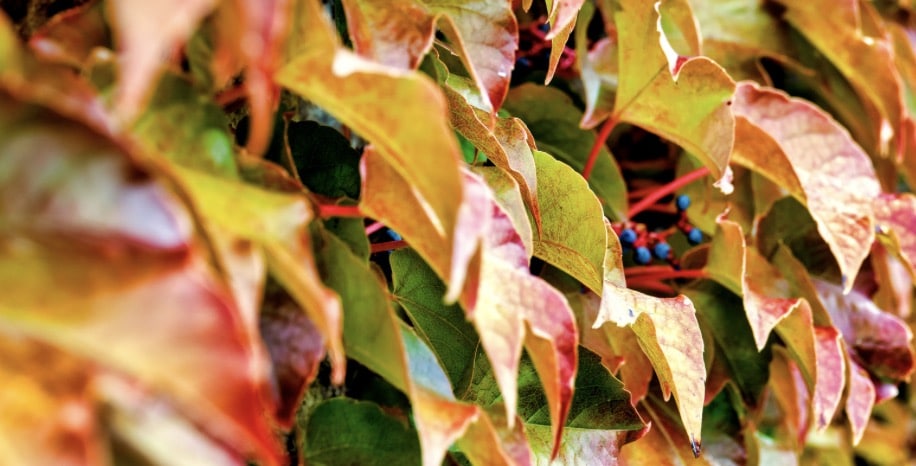
Ideal for fences via adhesive tendrils that grip wood or wire without damage, expanding quickly (10-20 feet/year) for complete, low-maintenance coverage.
Plant in spring/fall, water until established, minimal pruning—autumn fireworks transform bland barriers!
Native to Asia, it famously covers Ivy League buildings; non-toxic to humans but can irritate skin—great for wildlife habitats.
7. Virginia Creeper: Autumn Blaze Climber
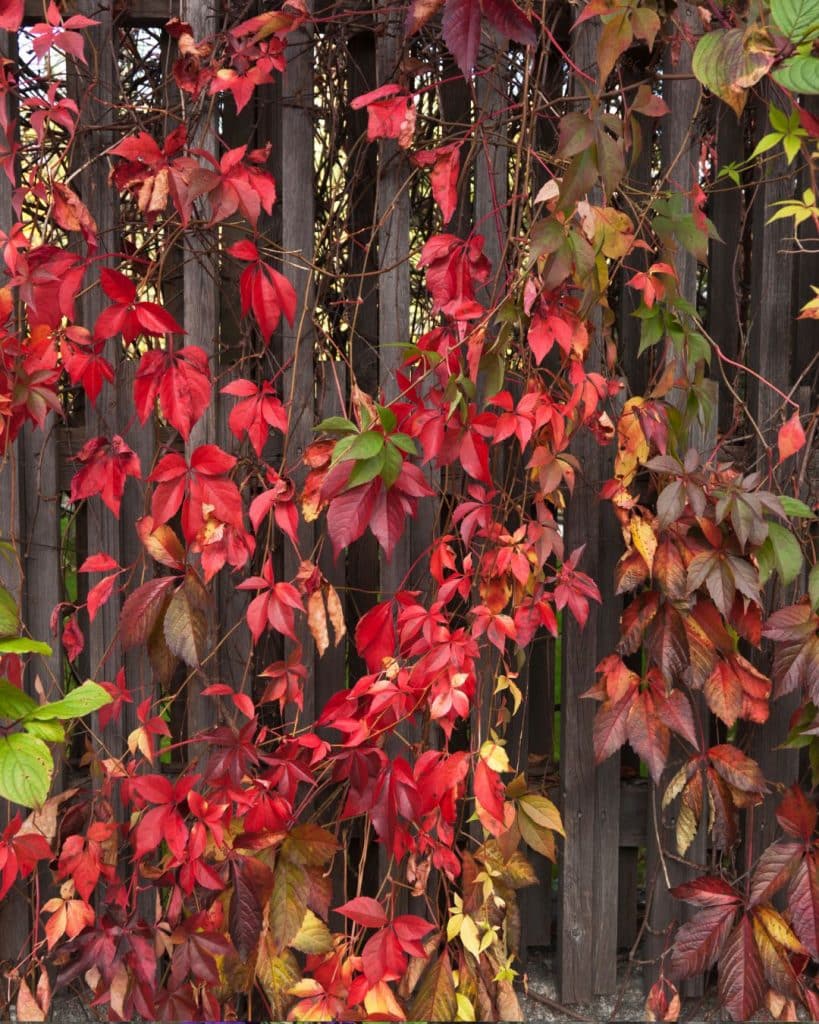
Virginia creepers dazzle with five-lobed leaves that shift from green to brilliant red and purple in fall, offering seasonal spectacle. These native vines sprawl 20-40 feet, with tendrils creating a wild, textured fence cover.
Adapted to USDA zones 3-9, versatile climates; handles various soils (pH 5.0-7.5), full sun to shade, drought-tolerant once established.
It clings to fences using adhesive disks on tendrils, spreading rapidly (10-15 feet/year) for extensive, maintenance-free screening.
Plant in spring/fall, this guy is super low maintenance.
Native to eastern North America, birds love its berries, but they’re toxic to humans.
8. Morning Glories: Twining Dawn Bloomers
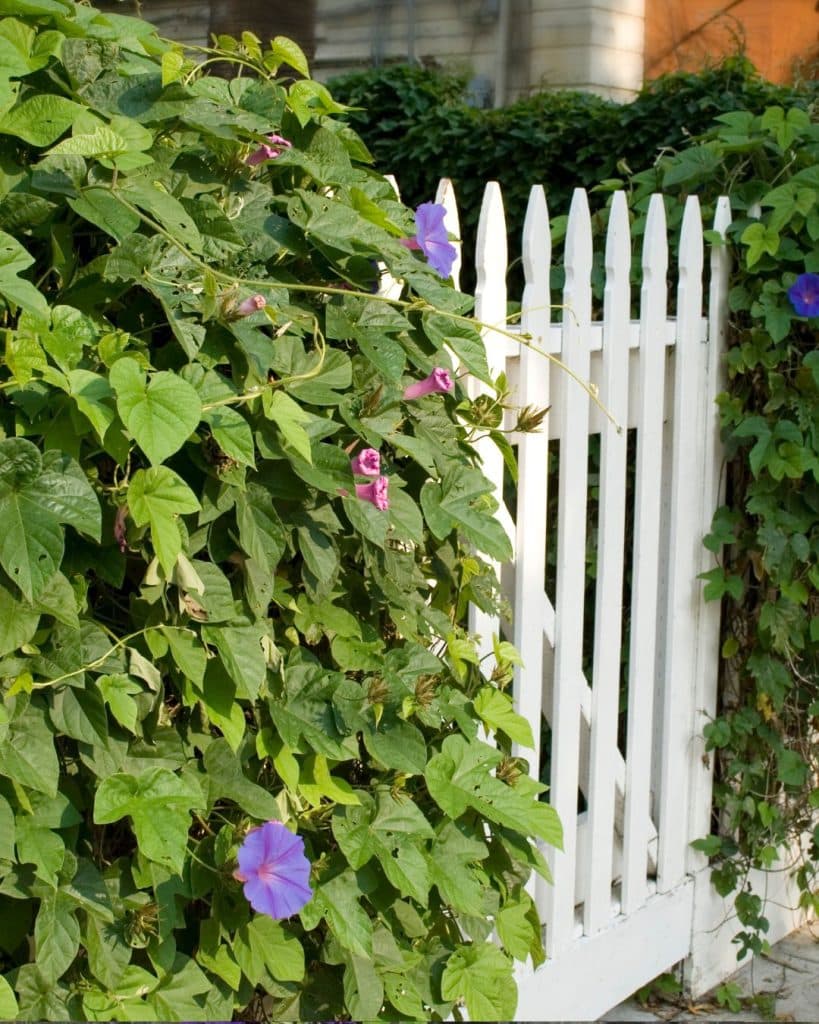
Morning glories captivate with trumpet-shaped flowers in blue, purple, pink, or white, unfurling at dawn and closing by afternoon, blooming summer to frost. Vines reach 10-15 feet, with heart-shaped leaves for cheerful coverage.
Suited to USDA zones 3-10 as annuals/perennials; prefers fertile, well-drained soil (pH 6.0-7.0), full sun (6+ hours), warm conditions.
Excels on fences via twining stems that climb quickly (up to 10 feet/season), providing fast, colorful vertical accents.
Sow seeds after frost, soak overnight, and train on supports.
Ipomoea species, related to sweet potatoes; seeds were used in ancient Aztec rituals for hallucinogenic properties—now prized for pollinator attraction.
9. Passionflowers: Exotic Tendril Star
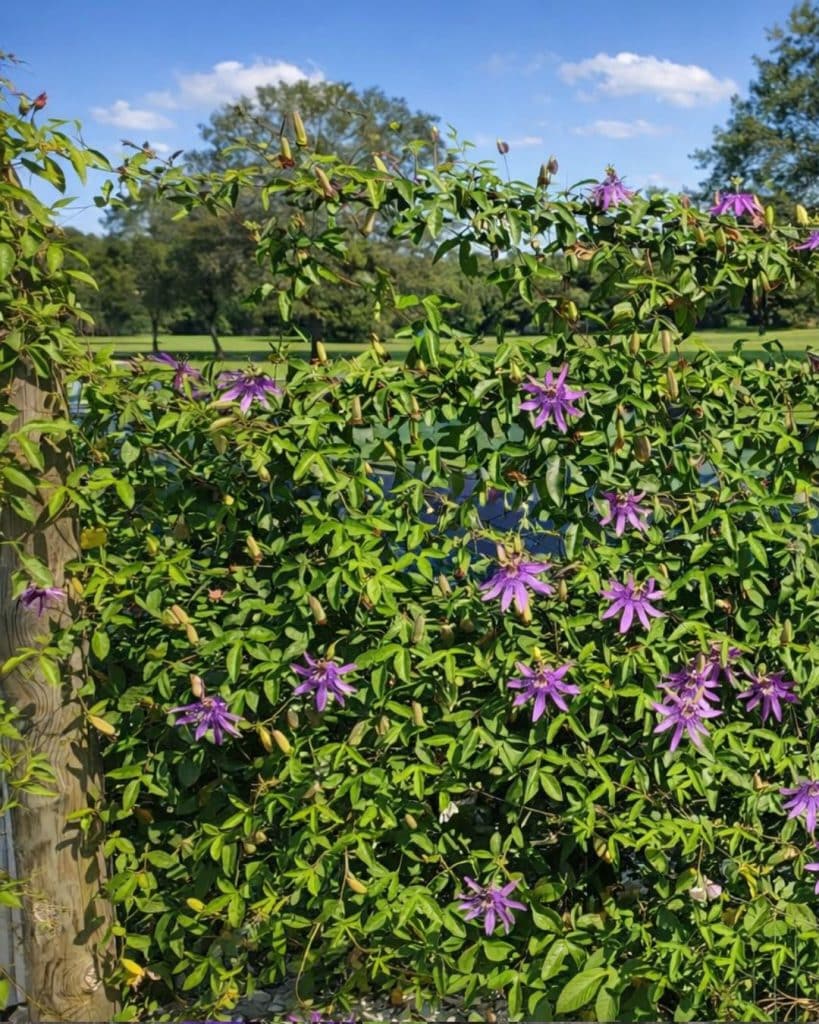
Passionflowers intrigue with intricate, fringed blooms in purple, white, or blue, featuring a corona of filaments, flowering summer to fall. Vines extend 15-30 feet, with lobed leaves adding tropical flair.
Thrives in USDA zones 6-10, subtropical to temperate; needs moist, well-drained soil (pH 6.5-7.5), full sun to partial shade, humidity-loving.
It grips fences with coiling tendrils, growing swiftly (10-20 feet/year) for dense, ornamental privacy.
Plant in spring, fertilize sparingly, protect from frost!
Passiflora incarnata symbolizes Christ’s passion; edible fruits (maypops) taste like guava, and it’s a host for gulf fritillary butterflies.
10. Bougainvilleas: Vibrant Tropical Explosion
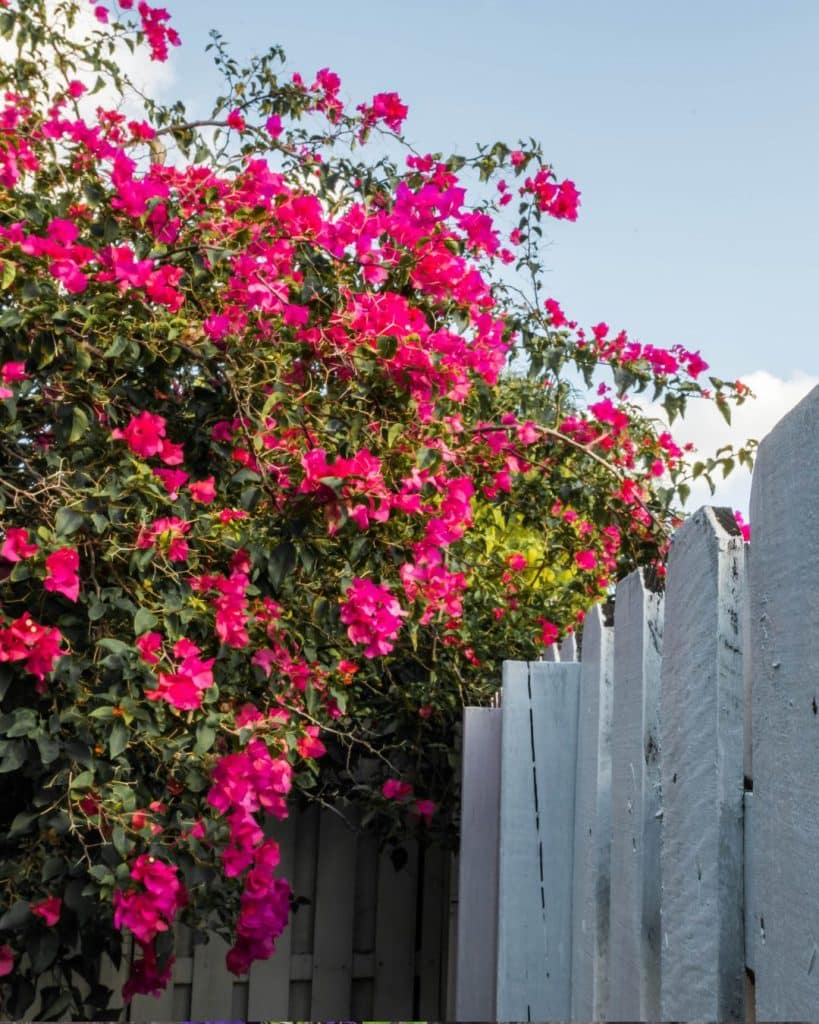
Bougainvilleas stun with papery bracts in hot pink, magenta, purple, orange, or red surrounding tiny white flowers, blooming year-round in warm climates. Thorny vines climb 15-30 feet, draping fences in a riot of color.
Best for USDA zones 9-11, hot subtropical or Mediterranean climates; needs well-drained soil (pH 5.5-6.5), full sun (6+ hours), drought-tolerant once established.
It thrives on fences with twining stems that wrap supports, growing rapidly (10-20 feet/year) for bold, impenetrable privacy screens.
Plant in spring, water sparingly, and prune after blooms.
Native to South America, named after explorer Louis Antoine de Bougainville; bracts are actually modified leaves, not petals—perfect for xeriscaping.
11. Trumpet Vines: Bold Orange Trumpets
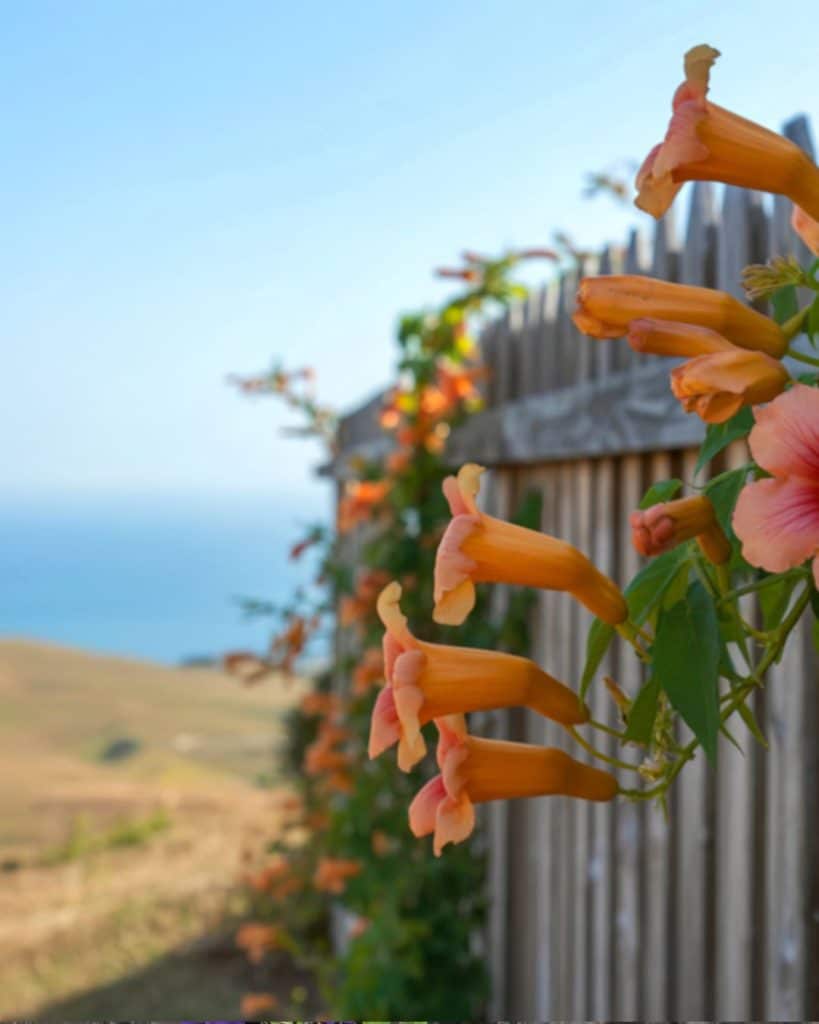
Trumpet vines burst with clusters of orange-red, trumpet-shaped flowers in summer, drawing hummingbirds like magnets. Vines scramble 20-40 feet, with compound leaves for lush coverage.
Suited to USDA zones 4-10, adaptable climates; tolerates poor soils (pH 5.5-7.5), full sun to partial shade, aggressive spreader.
It clings to fences via aerial roots and twining, expanding quickly (10-15 feet/year) for thick, wildlife-friendly barriers—may need containment.
Plant in spring/fall, cut back hard in winter, monitor spread—vibrant pollinator paradise!
Native to eastern US, it’s called “hummingbird vine”; historically used by Native Americans for medicinal purposes.
12. Sweet Peas: Fragrant, Delicate Climber
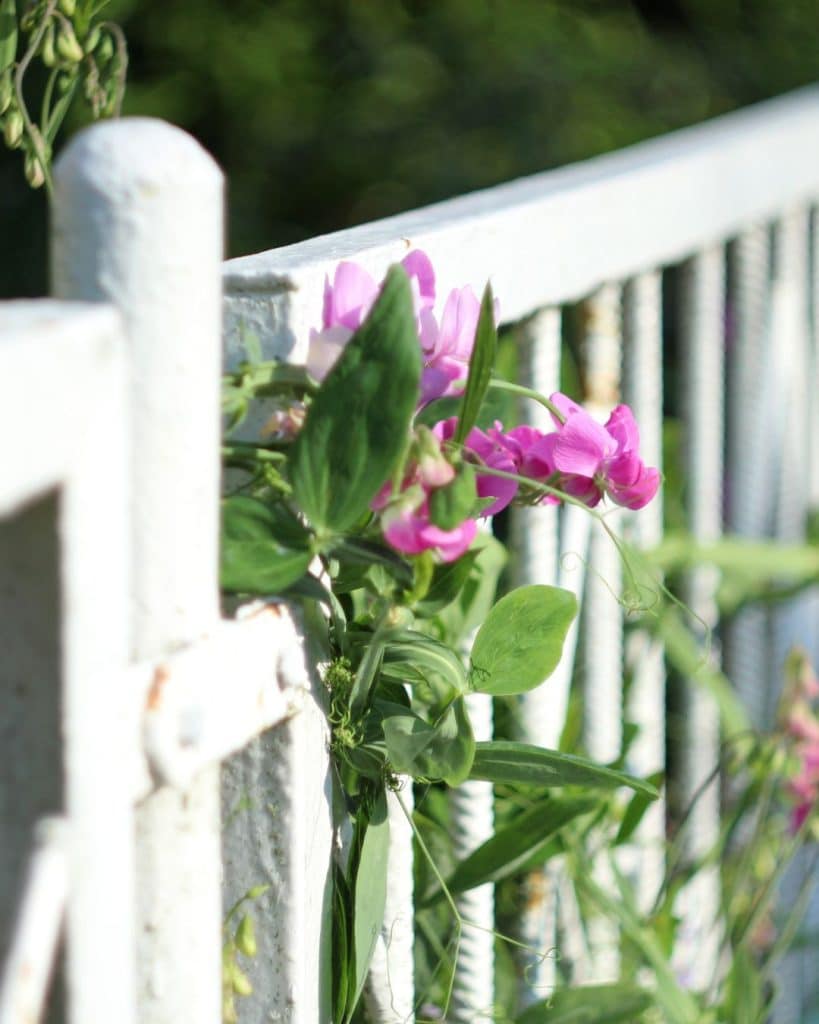
Sweet peas enchant with delicate, butterfly-like blooms in pastel pinks, purples, whites, and bicolors, releasing intense fragrance from spring to early summer. Vines reach 6-10 feet, ideal for softer fence accents.
Grows as an annual in most areas (USDA zones 2-11); prefers cool, moist, fertile soil (pH 7.0-7.5), full sun, cool weather for best blooms.
It excels on fences with twining tendrils, climbing fast (up to 8 feet/season) for quick, romantic coverage.
Trivia: Lathyrus odoratus, bred in the 19th century by Henry Eckford; seeds are toxic—never confuse with edible peas!
Sow seeds early spring, soak overnight, and provide strings or netting!
13. Kiwi Vines: Edible Fruit & Lush Greenery
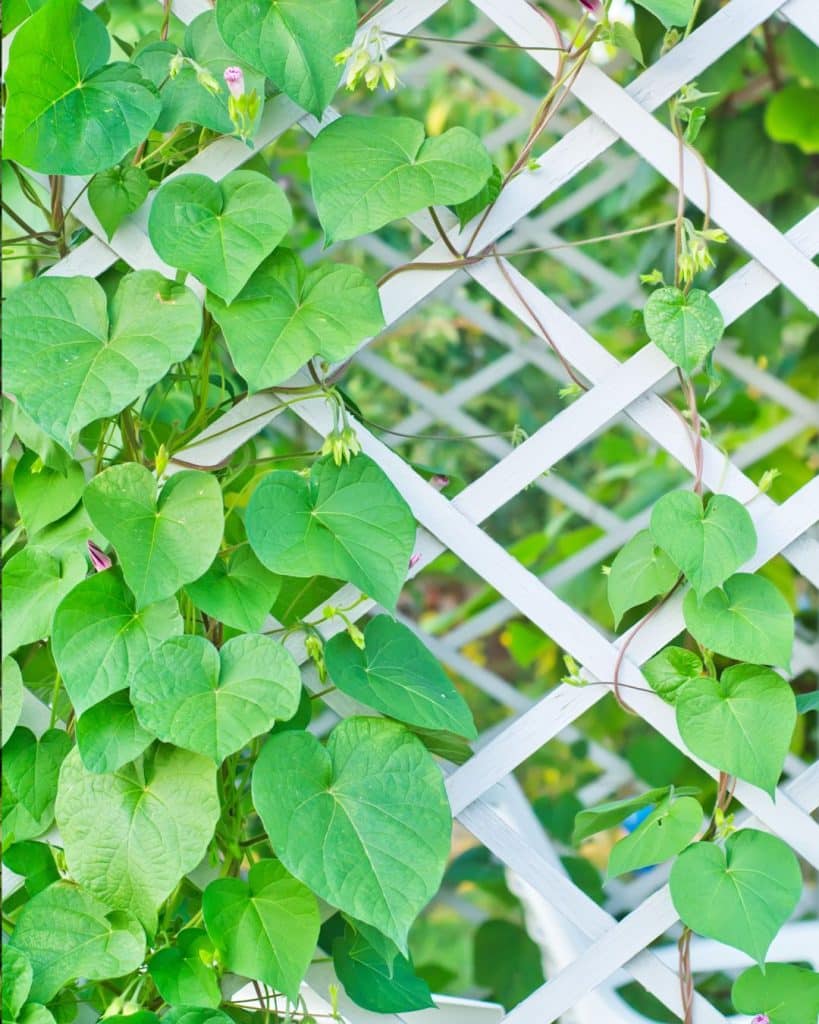
Kiwi vines offer large, heart-shaped leaves and vigorous growth, producing fuzzy kiwi fruit on female plants after pollination. Vines climb 20-30 feet, creating dense, tropical-looking screens.
Adapted to USDA zones 4-9 (hardy kiwi varieties); needs rich, well-drained soil (pH 5.5-7.0), full sun to partial shade, consistent moisture.
It grips fences with twining stems, growing rapidly (10-20 feet/year) for fast, edible privacy hedges.
Plant male/female pairs in spring, trellis heavily, and prune in winter!
Actinidia deliciosa or hardy A. arguta; native to China, fruit was called “Chinese gooseberry” before marketing as kiwi.
14. Grapevines: Classic Fruitful Climber
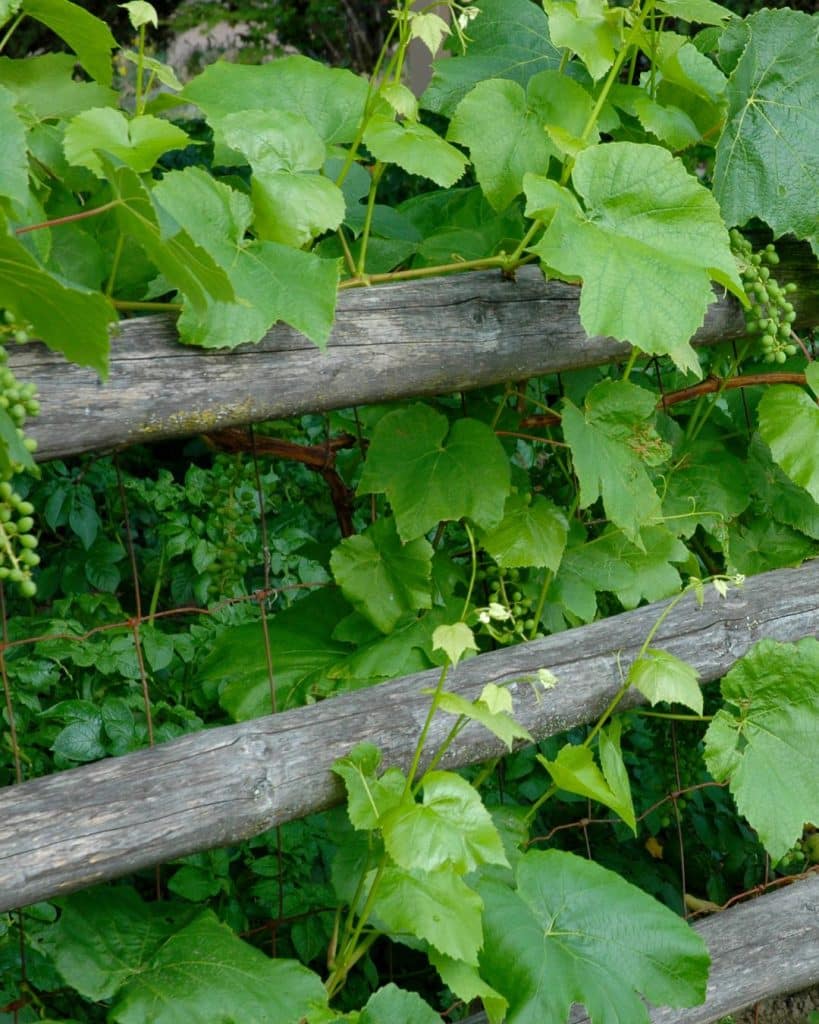
Grapevines deliver lush, broad leaves that turn fiery red in fall, plus clusters of sweet grapes in late summer on mature plants. Vines sprawl 20-40 feet, creating a traditional, productive fence cover with rustic charm.
Suited to USDA zones 5-9 (depending on variety like Concord or table grapes); requires well-drained, fertile soil (pH 6.0-7.0), full sun (6+ hours), good air flow to prevent mildew.
It excels on fences with twining tendrils and strong canes, growing vigorously (10-20 feet/year) for dense shade and edible rewards.
Plant bare-root in early spring, trellis firmly, and prune heavily in winter.
Vitis species, cultivated for 6,000+ years; wine grapes trace to ancient Persia—home gardeners prize seedless varieties for fresh eating.
15. Black-eyed Susan Vines: Cheerful Sunny Twiner
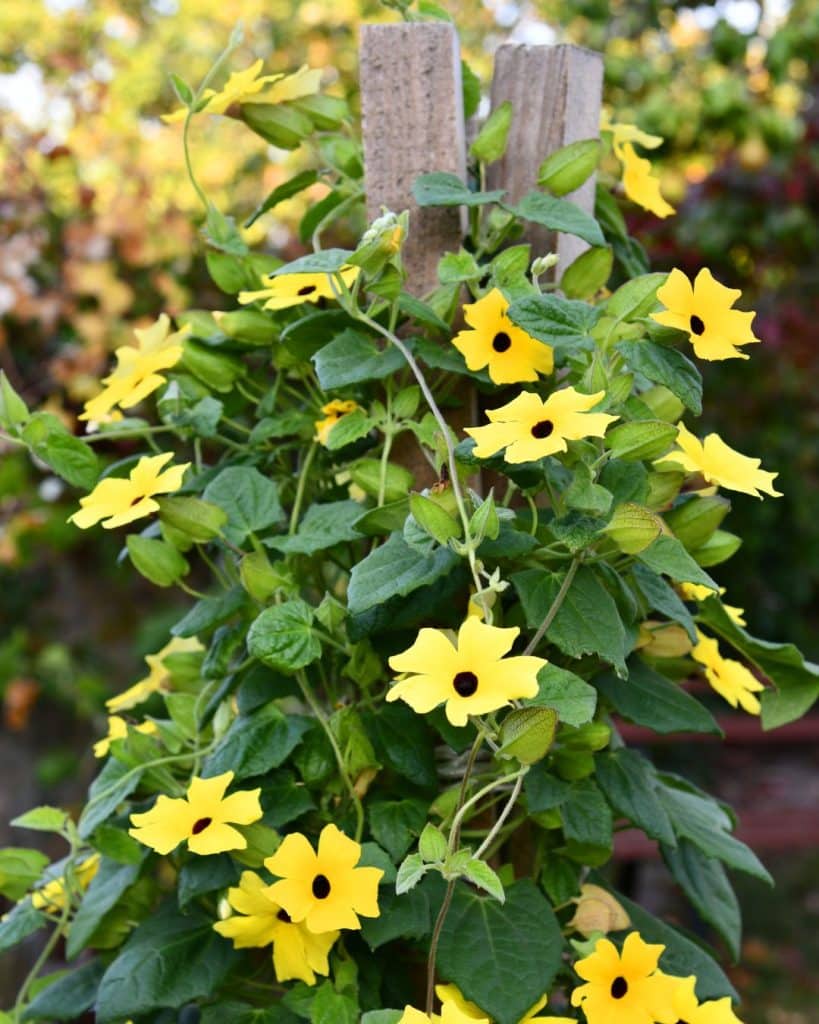
Black-eyed Susan vines charm with daisy-like flowers in yellow, orange, white, or pink with dark centers, blooming nonstop from summer to frost. Vines climb 6-10 feet (up to 20 in ideal conditions), with heart-shaped leaves for bright, cheerful coverage.
Grown as an annual in most areas (USDA zones 9-11 perennial); prefers moist, well-drained soil (pH 6.0-7.0), full sun (6+ hours), warm weather.
It thrives on fences via twining stems, scrambling quickly (up to 8-10 feet/season) for fast, pollinator-attracting accents.
Sow seeds indoors early or direct sow after frost, provide support strings—sunny smiles transform fences fast!
Thunbergia alata, native to Africa; named for its resemblance to Black-eyed Susan flowers—popular in hanging baskets and as a quick annual climber.
Conclusion
There you have it… 15 incredible climbing plants ready to turn your bare fence into a stunning, living masterpiece! From fragrant blooms and fiery fall colors to edible fruits and wildlife magnets, these fast-growers deliver quick beauty, privacy, and personality.
Pick ones suited to your USDA zone, prep your fence with sturdy supports, and watch nature work its magic. Thanks for reading—happy planting, and enjoy your transformed outdoor oasis! Your fence (and neighbors) will thank you.